
It was about seven years ago that I first attended an event by SLA Europe on Artificial Intelligence (AI) and I have been thinking of this recently. Luckily there is a review by my friend Richard recapping our thoughts in 2016 and it is interesting to read how the event predicted that the topic will be around in the next few years, the role for library professionals, and human intelligence. I knew it was important for me to attend, and the new technology should be on my ‘radar’ to know about as library and information professional. After all the profession is at the top of the value change for information, intelligence, research and insight, just as Richard had mentioned before in his review – it is just that not many people realise this. Fast forward to 2023, I am pleased that we also had a presentation this year on ChatGPT by Mary Dee Ojala, who is excellent at the skills required for searching.
Like some of the articles, content, conversations and social media that I have read in recent weeks – we are not to fear artificial intelligence but to embrace it like other technological revolutions that have comes in the past. Earlier this year I researched the 5th Industrial revolution for a presentation to SLA Asia. I know there will be disruptions, as in the past, but it also a time for innovations and for new ways of doing things. The only striking aspect is the rate of technological changes in the last few years. Therefore, as this is such a ‘hot topic’ at present, I thought I could explore some of the recent ways it has infiltrated our way of life, and what it means for me as a library and information professional.

Business is also changing due to generative AI, and now we can ask these system questions just like we started doing on Google(and other search engines) a few years ago. The global market for AI is predicted to grow to US $1800000million according to Statista, a prediction on how some of these will impact on human related jobs and change our way of doing things. There is survey conducted in 2021 with some of the jobs that AI should take away – like data processing, answering routine queries such as chatbots, problem solving and intelligence searching for large quantities of structured and unstructured data and content. It is great for us to harness the power of technology for human activity. On arrival in Toronto Pearson International Airport in May, I recently went through most the immigration control using mainly artificial intelligence and machines such as facial recognition, and the microchip in my passport to match up the data and information that my stored on my electronic passport. Although there were delays caused to flights when the technology failed a few weeks ago at some London airports. However, it was definitely very high-tech and advanced compared to the Immigration Officer who served me in India and Italy, but it does mean that there is a loss of jobs and a reliance on technology. It was ironic that the time I gained going through an automated immigration and borders process in Toronto – the suitcases took ages to come out of the aircraft as there is a shortage of staff to get them to passengers. Perhaps robots can be used in future to unload them from aircrafts to the baggage reclaim areas.

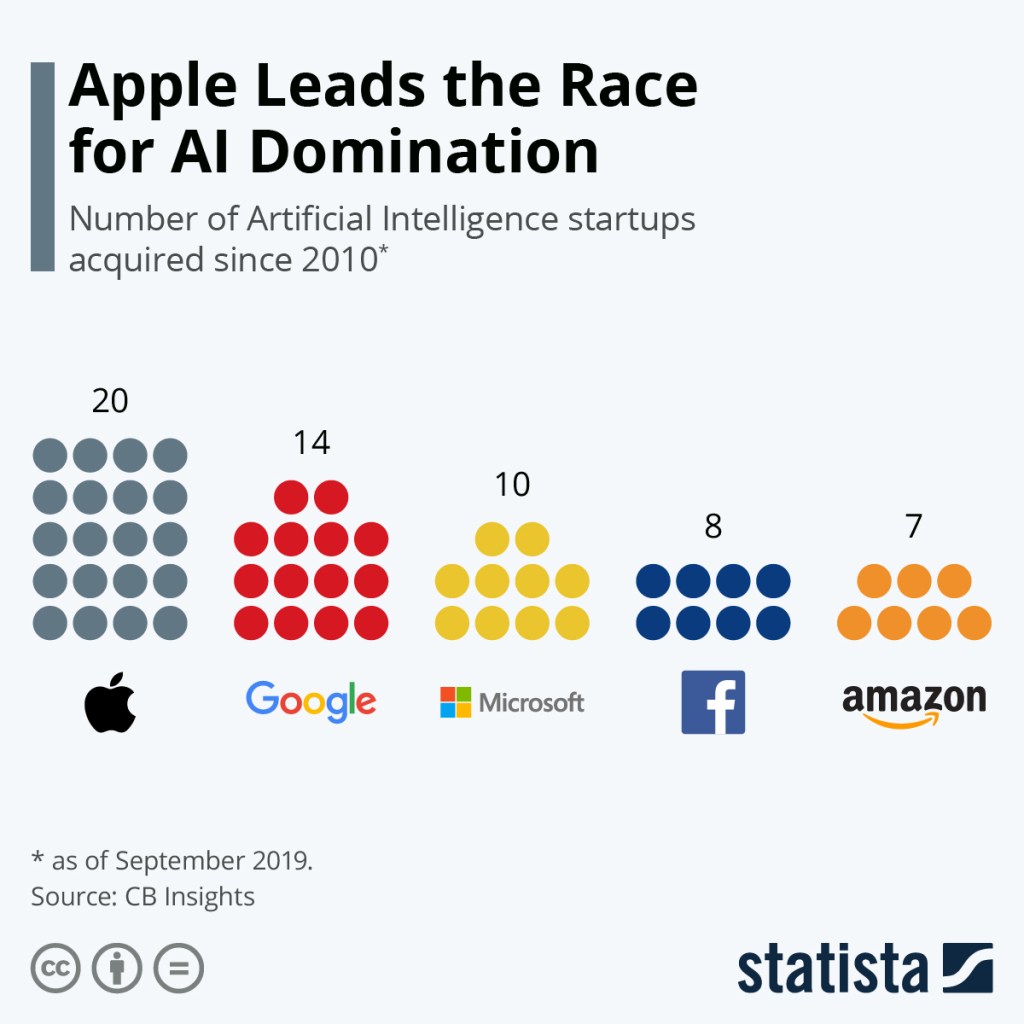
Most retailers and marketers are able using it to create content – instead of sourcing and research original pieces of work – you can ask generative AI for some help. There are definitely more self-check outs in my local supermarket and I haven’t been in the large shopping centres recently but I imagine that we will see more use of technology in retail.
The World Economic Forum has this interesting strategic intelligence interactive took by McGill university, which recognises some of the advantages and disadvantages of AI for business and mentions the impact on the loss of jobs in the human workforce. It also has the impact on our social lives, and the way that entrepreneurship can use AI too.
One of my colleagues recently used ChatGBT for a patent query but apparently the results yield were many but the information was partly incorrect. There are intelligent limits to all the unstructured content that might be there! There are obviously concerns and opportunity for us as library and information professionals to educate and scrutinise the content retrieved for our research and customers. Disinformation and misinformation are the negative aspects of relying too much on AI, especially that which is not programmed to add value and cite reliable sources. This is our professional role and an opportunity to enable digital literacy, educate and use ethical procedures. I had one person mention to me this week that she used AI for her book – I haven’t read it as it is still being written, but I hope the information contained in the book would be able to stand up to scrutiny and evidence, especially if it relates to health and wellbeing.

In the real world, some are taking up the use of generative AI for helping with more routine and mundane tasks. I saw that for social media and marketing – content and creativity can still be created by AI but marketers (like information professionals) will still have to look at ever evolving changes in format, new platforms, algorithm changes. Generative AI tools can be trained to produce content that is closer to a brand’s voice, but they still need a human touch to ensure guidelines are followed. Whilst generative AI can free up time for brand marketing, brands risk damaging trust by posting content that doesn’t sound like it came from the brand. Does this sound familiar? – “Generative AI can help with inspiration, but it isn’t a good fit for these other cases” – (eMarketer – ChatGPT and Generative AI for Social Media Marketing). I love how the report actually warns that people already have low trust on social media so they are encouraging people to not pass off AI generated content as their own. Good advice!

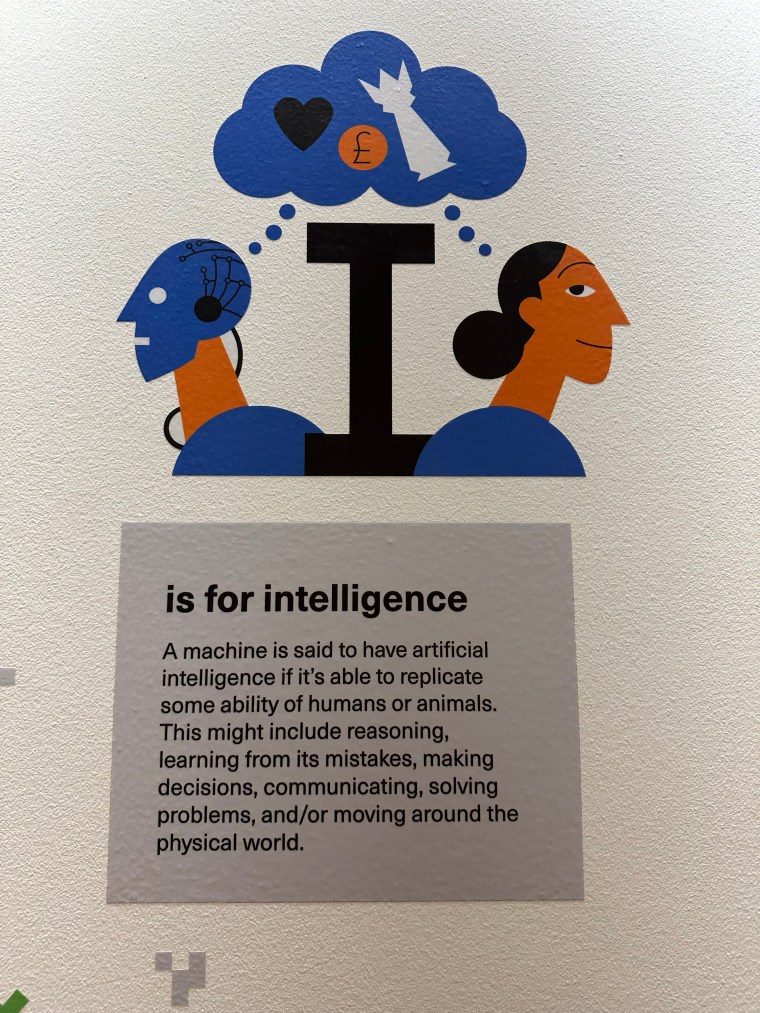

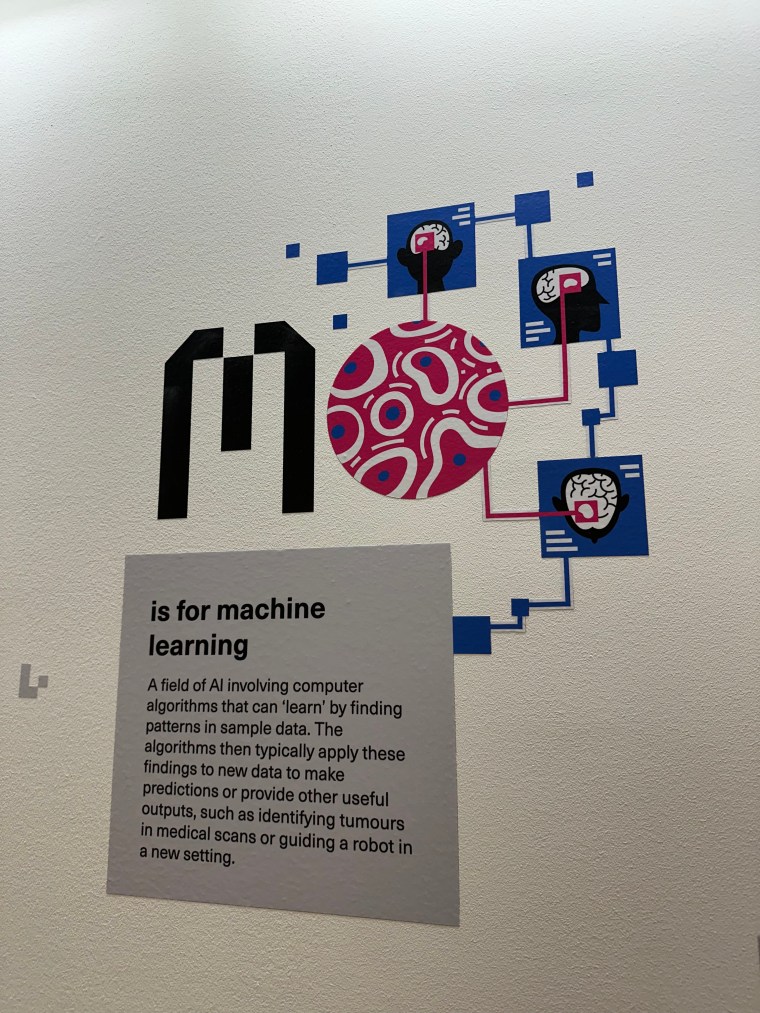

There are many positive initiatives that are being developed for AI, Machine Learning, Chatbots, and other forms of artificial intelligence and data science. I have the benefit of passing by the Alan Turing Institute (the National Institute of Data Science and Artificial Intelligence) very frequently as it is based in the British Library where I work. There are always several initiatives with a focus on human-centric research and innovations, especially as the newly released white paper for data science with a focus on helping society after the pandemic and war. The most recent initiative I saw by the ATI was the use of AI to help with preventing cyberattacks. The best thing about seeing this space and the enigma code machine is that we will always need the best human minds and brains, like Alan Turing, to help us solve some of the world’s biggest problems. This should be a guiding principle for data science and AI.
Although I use technology for my work and I am attached to my iPhone, I don’t feel threaten by AI. Not yet anyway. I know we are talking about it and I have been paying more attention to it. On the SLA Board we mentioned that we should be programming items on the topic, in my day job I have just been asked to prepare a discussion about it for our information services and I just read a few articles in CILIP’s magazine ‘Information Professional’ which reflects my views and calmness about it. I do think there will be threats to some jobs but there will also be some opportunities to use it for basic as well as intensive information and intelligence needs. I will probably revisit this blog post in a few years to see if my calmness was justified. Perhaps I can use artificial intelligence then to programme my brain to look back too – just like in a sci-fi movie. For now, I will continue to encounter new AI developments one step at a time, and hopefully will understand this burning hot topic a little more each time.

 Connecting the Dots
Very helpful post, thanks for this useful information.
LikeLike