
Since the turn of the year, I have been seeing great celebrations for hip-hop culture not just coming from the USA where it originated, but from the global phenomenon that had earned its credentials on the world stage. In recent weeks, I have been learning half-century since the birth of this genre, it is traceable to a house party on 11th August 1973. The party was in an apartment building on Sedgwick Avenue, New York, where a young Clive Campbell – better known as DJ Kool Herc – used two turntables to loop percussive portions of the same record to create a continuous flow of music as mentioned in this celebratory page ‘It’s Bigger than Hip Hop’ by the BBC.

Coincidently, I spend a couple of hours last night listening to the BBC’s dedicated show called the ‘For the Love of Hip Hop’, as well as some great live show from regional Leicester. This just demonstrates how hip-hop has grown organically to a global phenomenon. I must add a disclaimer that I am not an expert on hip-hop, but I’m still learning some music to new artists (thanks to my son). And when I grew up in Trinidad and Tobago – we knew the big hits, but not necessarily some of the rarer music. What I do like is being around to see how the genre grew, and evolved to what it is today.


You can also tell from this timeline that there has been many momentous achievements over the years from the more mainstream song like ‘Rapper’s Delight’ (which even my soul-loving white husband knows), to the first time a hip-hop tune was played on MTV. Since then there have been many stars and clear timeline of albums, awards, and entrepreneurial explosions in the last 50 years.
Hip Hop is obscure, and it is not something that only journalists or musicologists care to research. Most people, whether they like music or not, have come into contact with Hip Hop.
– Nick Siullo in the book ‘Communicating hip-hop: how hip-hop culture shapes popular culture’.

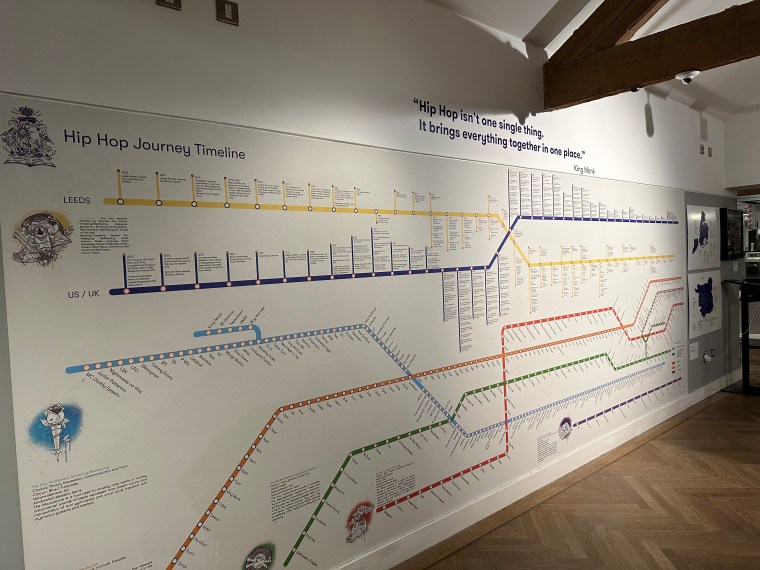


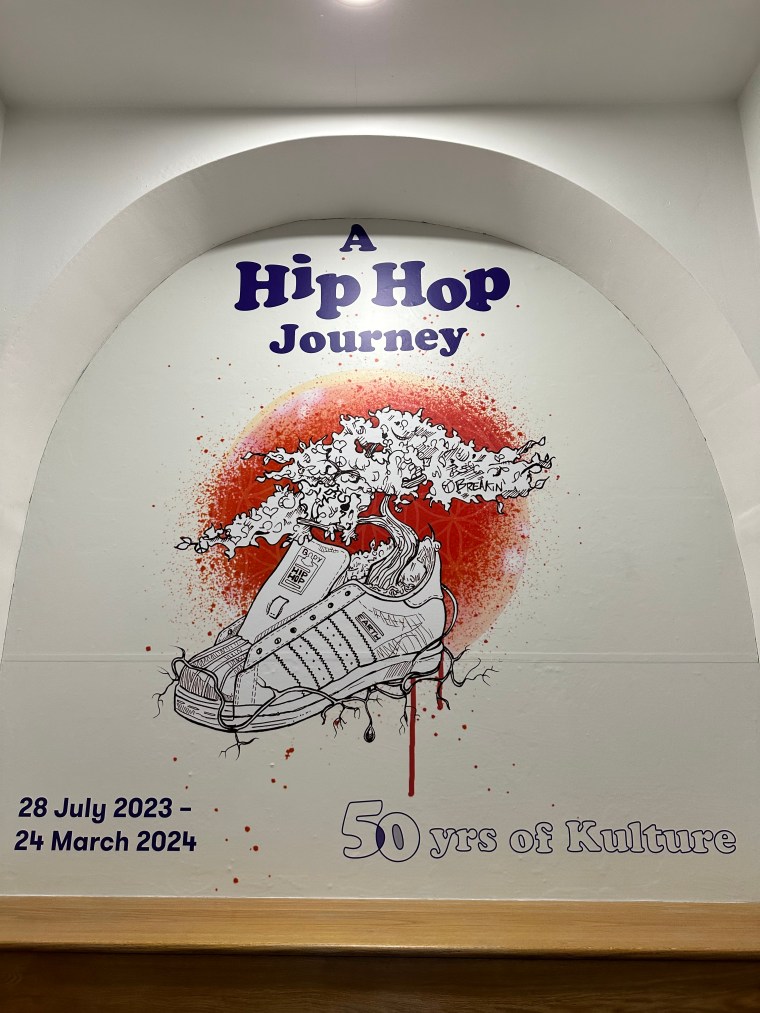
So how can you tell what is hip hop? Like with anything new that has grown so exponentially – it is now a really passion to document this, with hip hop now being looked at from an academic perspective for its’ impact on social change and culture. There is are some great terms mention in the following The Kennedy Center on the key identifiers and features, as well as glossary for the terms used, especially of you want to keep with the flow… or the ‘in crowd’.


The Kennedy Center states in this article that hip-hop scholars attributes these six elements:
- DJing – the artistic handling of beats and music
- MCing, aka rapping – putting spoken word poetry to a beat
- Breaking – hip hop dance form
- Writing – the painting of highly stylized graffiti
- Theatre and Literature – combining hip hop elements and themes in drama, poetry and stories
- Knowledge of self – the moral, social and spiritual principles that inform and inspire hip-hop ways of being.
Source: The Kennedy Center


It is interesting to see that music and self-expression sits at the heart of the genre. Hip Hop has had an immense impact on the world, but it was created by youth culture in the first years with roots in inner city urban life with social and economic struggles, with territorial expression on what would have been a multicultural New York. The invention of a culture enabled people to find a self-expression on these struggles with hope, and punching ambition. In the later years, the genre is blamed for misogyny and for glamourising territorial gang culture, but if this was their reality – it is captured in their lyrics. It is also a relief to see female artists have since developed as superstars too in the genre, and women have earned their place in hip hop history too.
“I developed these theories that all these elements of our urban culture were beginning to seem like one big thing. This was in 1978.”
— Fab 5 Freddy
Hip hop has influenced other cultures and subcultures too. Where there was music – there is dance, fashion, and art. At the same time, New York’s subway trains were public property in the light term for graffiti artists and tags. Street art has always been around but hip-hop also found expression in graphic art and marking of tags by gangs. The is a reference that graffiti started in this link Black Web America: ‘This creative expression is made up of written words used to spread a specific message, whether it be social, political or something a bit more personal from the inner elements of an aerosol spray can. Hip-Hop’s connection to graffiti dates back to the late 1960s, originating in the predominately Black and Latino neighborhoods of New York City where hip-hop music and street subcultures formulated‘.


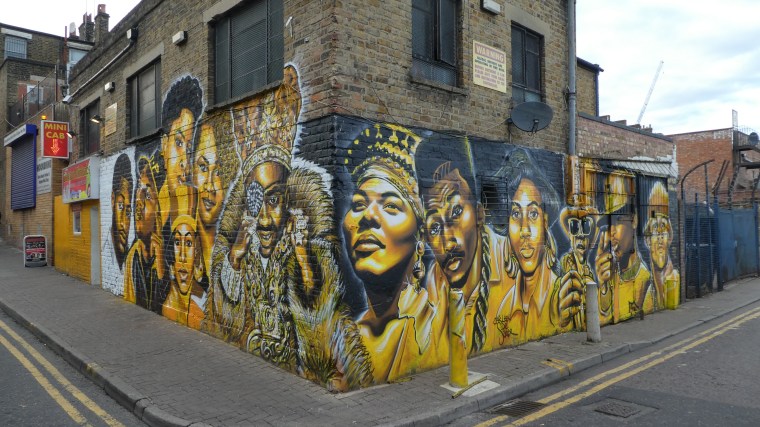

Graffiti still exists but street art has exploded in the last decade in our spaces, and now another independent global artform. I am not able to visit the Bronx, but I know that even London has paid tribute and homage to the subcultures and hip-hop artists. Recently there was also a large paper poster celebrating Notorious B.I.G’s anniversary album ‘Hypnotise’ in my neighbourhood.
In the last 50 years, there has been a plethora of new inventions and innovations on how we consume music. From the mechanical ability and skill to play music in house parties to the technical ability to mix, scratch, bebop, create lyrics – as well as engage and perform. I love how this grassroot movement started, was very low budget, as well as ‘the technology’ not being as sophisticated as it is now in 2023. For the future, one thing guaranteed is that the genre and the mechanics will evolve with time and innovations.


There has been a lot of change in technology with the development of listening and playing musical equipment. From the larger record decks to personal devices tape decks, sound and portable music innovations has changed to ultra-modern listening and entertainment equipment. Dr Dre and Jay-Z, amongst others, are now successful entrepreneurs with a lucrative billion-dollar industry. Dr Dre is known for his production styles as well as creating the headset Beats as well as other innovative products with his company being sold to Apple Inc in 2014.


As expected, there is a lot of resources available online for researching 50 years of Hip Hop! From references shared on this Wikipedia page, to those provided by research organisation and libraries and digital content. Such as this link from Albert S Cool Library and University of Memphis Libraries. I am discovering so much more about the genre and how it has grown from a back yard groove to worldwide celebration of the creativity and expression of lives in other languages and countries. It is a good time to recognise the artist and everyday person who has shared their creativity with us and hope that the genre is around in another 50 years for its 100th Birthday! Happy Birthday Hip Hop!
 Connecting the Dots