Ring out the Old, Ring in with the New

“Ring out the old, ring in the new,
Ring, happy bells, across the snow:
The year is going, let him go;
Ring out the false, ring in the true.”

Alfred Tennyson

I am writing this at a restful festive time after Christmas when most people tend to wind down with family and friends during the season’s celebrations. It is also a time when I mentally close off the year in my mind. I sort of remember things and memories by the year it occurred (be it by association by music, smells or other unconscious triggers). It is also a great time for shopping, spending money on presents, which is great news for the retail industry. I was considering a more serious topic such as what consumer and economic trends to look out for in 2018 as forecasted in some of our business information sources in the library. However, I decided to reflect on a light-hearted look back at an average, but at times, exceptional year for me. I will leave the traditional media and magazines to tell you about the official world review of the year. I am going to cover some of the little things that mattered a lot to me – my iPhone photos are like a visual journal of the year. So, I am ready to say goodbye to 2017.

January – I started with a blog post about ‘Beating the January Blues’, on reflection it seemed that I actually managed to do just that! I saw some amazing Ceilidh dancing at the Southbank on 1st Jan, made my first Gallette Du Rois, celebrated Burns Night with friends, and also had fun at the SLA Europe Quiz. I will be celebrating the Gallette due Rois again, and I am looking forward to the next SLA Europe quiz at a new venue in a few weeks time. You too can join us if you really want to.

February – I seemed to have baked a lot this year going by the photos I’ve taken. I made pancakes for Shrove Tuesday, and a lemon drizzle sponge during a break in February. I attended a Guardian Newspaper supper club at the Geffrye Museum, hosted by the amazing and beautiful Eleanora Galasso, who was also launching her cookbook. Her menu for the evening was interesting and the supper club dining company was friendly. I also went to see Mario Biondi at the Union Chapel. He was great live and used the LIVE feature on Facebook, which also prompted me to use it for the first time to the pleasure of a few of my friends who interacted with me.

March – Spring was in the air and it seems I was getting ready with my neighbours for some neighbourhood spring cleaning, E17 Art Trail plans, and more baking (must do a blog post just on baking!). I also went to Cardiff for the first time for a two-day training course at the Intellectual Property Office. I have now visited three capital cities in the UK, except Belfast. I still want to visit the countryside in Wales again after visiting Monmouthshire over a decade ago.

April – The days got lighter and the spring blooms were out. There were lots of places to see beautiful daffodils and blossoms. I was already beginning to channel the ‘Tree of Life’ submission for the E17 Art Trail by our neighbourhood. We organised a group of volunteers to clean, prepare and source plants for the garden with the advice from the local councillor. I attended Jonathan and Theresa’s fabulous wedding party with the John Ongom Big Band. I went to see the E17 Puppet Show ‘Vikings and Valkyries’ at the William Morris Gallery as they would be performing a street theatre in June for us. I also had a girly R&R (Rest and Relaxation) day with friends in Essex with cream tea as a treat.

May – I prepared a lot for the E17 Art Trail garden and it seemed to go according to plan. It is amazing when you depend on people to work with you voluntary…and you do actually pull off something out of nothing! My neighbours were brilliant and created fabulous designs on terracotta pots and donated plants for our garden. That was heart-warming. It’s December now, and the last time I looked at the garden, there were only about three plant pots that were missing or damaged. The space is used more than before and we have since received further funding to redevelopment and redesign the space. Luckily we have an expert resident architect to help and advise us with the redesign.

I also went to Dublin in May and it was an amazing experience! I was warmly welcomed by my friend Lina, and also the Irish library and information professional community as an SLA Europe representative. I blogged about my trip here.  I still think of the Irish green fields I saw on my trip to and from Dublin to Galway.

June – The launch of the much anticipated E17 Art Trail and we were pleased with our participation in Poets’ Corner E17. Walthamstow went wild for the 1000 Swifts and other collaborative and community creative activities and events. We had lovely weather for the ‘Vikings and Valkyries’ street puppet show on our newly pedestrianised street in the neighbourhood. We also held a fabulous street party.

July – One of the major highlights of my year! I went home to Trinidad and Tobago for my 30th School Reunion. My schoolmates chatted, praised, danced and re-acquainted ourselves, as well as made new memories. After 18 months of planning by a small group, it was amazing and much appreciated. It was also a special time to spend with family and friends. Regardless of all the problems in the country and this world – I see the beauty in this small Caribbean island and know that it is a place I can always proudly call home.

August – It is normally depressing coming back after a summer holiday but I had the Notting Hill Carnival to look forward to. After the Grenfell Tower fire tragedy – it was a devastating and shameful reminder of the disparity in one of the richest part of London in the 21st century. Notting Hill Carnival itself was good fun on a very sunny day and I loved our costumes to the ‘First People’ theme. Two annoying factors were the real threat of an acid attack, and the false reporting of an acid attack. You can never win here.

September – It was back to school, back to work and back to routine. I baked my first Coffee and Walnut cake for the library’s fundraising Macmillan Coffee and Cakes afternoon. As I wasn’t in the office – I still don’t know how it tasted! I also went to Derby for the first time to settle my son into university. It seems like a nice city, if a little quieter than other major cities. I hope to explore more of Derbyshire next year.

October – The darker months were here again and there were Halloween celebrations in town. I went to see the Basquait ‘Boom for Real’ exhibition and Banksy’s Basquait tribute graffiti, which were brilliant. Also at the Barbican, I saw Annoshka Shankar’s live accompaniment to the digitally restored 1920s silent film ‘Shiraz’. It was an unforgettable experience. I also had luck on my side at the SLA Europe gin tasting event, as I won a raffle for three flavours of gin, which I am hoping to try soon.

November – I was lucky and happy to return to Trinidad again for a family wedding and reception. I don’t usually go often and it was worth going to see a modern Indian-Trinidadian wedding and reception. The merging of the east and west cultural influences is special. It was nice to spend time with loved ones again and I had a mini reunion with some school friends. I witnessed some fabulous wedding business ideas and event planners for our unique Trini wedding. It was nice again to dress-up, have my hair and make-up done by professionals. I received nice comments on my outfits. The bride and groom looked utterly beautiful in all the wedding celebrations.

December – Back to work and lots of activities in the library. It was also a reality check to come back from the tropics to very snowy weather. I went to the newly opened Walthamstow Wetlands for a Christmas Carols concert. I had fun at the YSBD Christmas Party theme disco, and so I danced to the end of the year. I have not taken part or planned much in my community this month as I was away, and we are taking a break. Personally and honestly, I feel that something is amiss.

So this sums up an average year for me and I am grateful for the good health and happiness we have. As the days slowly wind up in December, I looked to see what would be the serious United Nations theme for 2018, but apparently there is no theme. We can make it up as we go along! But I am looking forward to their theme for 2019, which will be the year of indigenous languages (hopefully I am still alive!). We do still have high levels of poverty, inequality, prejudices, environmental causes, Brexit, ever-present troubles in the Middle East and parts of the world to keep us preoccupied.

However, we can bring in some new perspectives, peace and control with our personal New Year’s resolutions and hopes. I always try a few new things. For example, I had always hoped to read more each year…and out of the blue recently – one of my neighbours created a book club, which I am a part of. I now make time to read leisurely and have read three books. This blog was also my resolution for 2016, and thankfully I have been able to carry it on for almost two years. The feedback received is motivating and makes it all worthwhile.

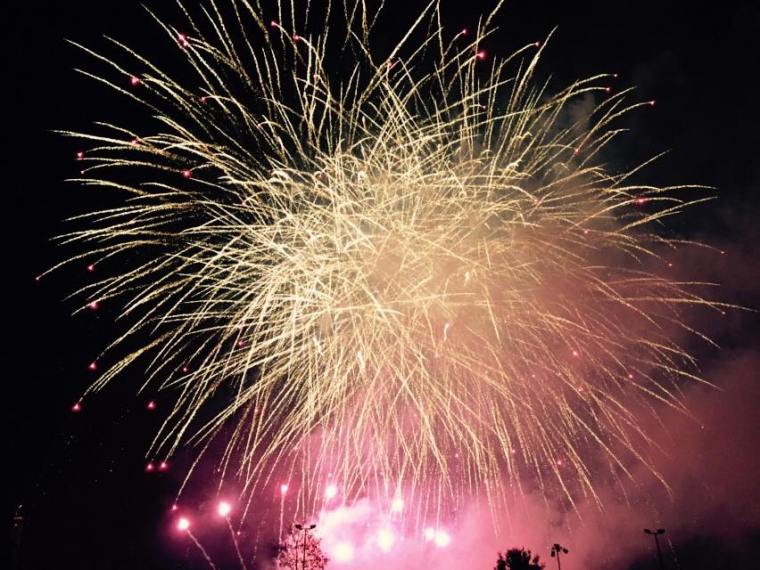
‘Old year’s night’ as we say in the Caribbean, is one way to say a fond farewell to another year. I understand in Italy they literally practice ‘out with the old, in with the new’ by throwing out rubbish on New Year’s Eve to be collected. I hope to do some of that! I still hope to exercise more, learn new skills, and visit parts of the United Kingdom in 2018 that I haven’t been before. I usually spend New Year’s Eve in a house party with close family and friends. In a Princely way…we will be partying like it is 2017 as we say hello to 2018! Soon, all across the world, we’ll watch images of the skies lit up with fireworks to ring in 2018 with a bang. There is nothing left for me to do but to wish you a happy and healthy new year.
1926913_10204950085022052_6477619099047176520_n

Notting Hill Carnival – free to dance on the streets

Notting Hill Carnival is the largest street theatre of its kind in Europe having been developed since the late 1950s in London. It is a great participation celebration for Caribbean heritage, culture and identity that has gradually been adopted and inclusive of other similar cultures in the city. I have blogged about Trinidad Carnival here, and the two carnivals are similar but have their own idiosyncrasies and dynamics. The background and roots of this Carnival is European. Europeans celebrated Carnival before lent for Mardi Gras in the Caribbean colonies, this was eventually practised by the African slaves who brought their own rich African traditions, dance, music and song to the party.  Trinidad carnival is the inspiration for the Notting Hill Carnival but it certainly is a different story.

This slideshow requires JavaScript.

Calypso and Caribbean culture came with immigrants in the Windrush years from the Caribbean, and it is even noted that Lord Kitchener wrote the words to ‘London is the place for me whilst on his journey on a ship across the Atlantic Ocean. There was a high number of Trinidadian immigrants who settled in Notting Hill in the 1950s, which was a relatively run down and cheap area to live at the time. These black communities were intimidated by white youths from ‘Teddy Boy’ gangs in 1958, which caused the Race Riots of 1958. The first ‘Caribbean Carnival’ was organised in 1959 for the black community to help with the legal costs of the arrests made that year. The ‘Caribbean Carnival’ was the brainchild of Claudia Jones, a social activist and writer, who arranged the first carnival indoors in cold January 1959 at the St Pancras Hall in King’s Cross, London. I saw notes that it was in a cabaret style, with a Carnival beauty queen competition, steel pans and a dance hall as the grand finale. This carried on for a few years but did not last as Claudia Jones passed away suddenly and unexpectedly in 1964. Eventually the Carnival moved to Notting Hill where most of the Trinidadians immigrants lived, and then was held in the summer. Fifty years on – it has become a part of the social and cultural calendar for Caribbean, Latin American and African descendants and communities. It has also been laced with race and police tensions throughout this time, which I will mention later.

This year is the 51st year of the carnival, and I will be celebrating it in Notting Hill with family and friends. It is a time of year when you will get messages asking if you are taking part in ‘Mas’ as we fondly call it. Our key community leaders chose a band theme when costumes are prepared, materials sourced, created, and then put it all together in the three months leading up to the bank holiday weekend for Notting Hill carnival. There is a lot more that goes on behind the scene, such as the registering of the band with the London Notting Hill Carnival Enterprises, security passes, vehicle hire, food, drinks, DJs, sound systems, etc. We have intentionally kept our band low-key, affordable and non-commercial with a more close-knit group of volunteers and Mas players. This year we are calling our band theme ‘Mas liberation’, with our costumes designs based on Native American Indians attire. I love digging deeper – I will therefore be channelling my inner Pocahontas as we celebrate the 400th death anniversary in the United Kingdom. We have been dressed as  Cleopatras, Sun Goddesses, Sailors, Queen of Hearts, Aliens, for example in past Carnivals. There certainly is community spirit as you volunteer to help in the creation of the costumes in a team effort, and we tend to meet regularly before and during Carnival.   Generally it is good, happy fun in surprisingly…a Carnival atmosphere.

This slideshow requires JavaScript.

I have honestly witnessed both the good and bad side of Carnival. It has always been a ‘resistance festival and art form’. There are times when you see scenes, and can be in a scary situation, usually later in the evening when the tension and pressure builds with youths and the police. There are some carnivals when the tension is more apparent than others – I distinctly remember the 2011 Carnival being a bit tenser as it was just after the London Riots. Our sound system truck was directed to an alternative route and it took a long time getting home with several helicopters circulating overhead – it felt like a war zone, but I was there with people who were close to me so I kept safe. With a large crowd of one million plus people, there are sometimes scuffles by youths, firm control by the police, body searches, and therefore you really should go with friends to enjoy it and to be safe. It is not all cautionary, we do dance and be merry with spectators…and the police too.

21121836_10213697940792979_1507516625_n
Our Carnival Band photo used in British Transport Police Poster for 2017.

Notting Hill is great for signifying creativity, social cohesion, cultural identity and race relations in the capital. It was reported by the LDA that it brings in approximately £93Million to the UK economy. In ‘The Midnight Robber – the artist of Notting Hill’ published in 2007 for City Hall by Lesley Ferris and Adela Ruth Tompsett, the ex-mayor of London Ken Livingstone states that “London is the home to some of the world’s finest Carnival artists who are now in demand across the world serving as cultural ambassadors for London, the UK and the African diaspora”.

This Carnival has grown organically into a successful and important celebration of the UK’s history with its former colonies, and these new London communities. It should be supported, celebrated and evolve into something that has a lasting legacy rather than just the negative rhetoric that is perpetuated by an ignorant media and some politicians. The Carnival doesn’t look like it will stop in the near future, and frankly…it shouldn’t for the thousands of people who go to this part of London to enjoy it. As quoted on the Black Cultural Archives“Carnival is now part of our English heritage, it is about freedom of expression on the streets. Britain would be a very gloomy place without it.” Winston Findlay, Source: Carnival: a photographic and testimonial history of the Notting Hill Carnival by Ismail Blagrove Jr.

This slideshow requires JavaScript.

Calypso, soca, reggae, steel pan, dance and now samba too are some of the other art forms that I look forward to at Notting Hill Carnival, and you get to see and be part of the crowd engagement on this grand scale. As my research reveals, Trinidadians started the Notting Hill Carnival but other West Indian countries joined in the celebrations, such as the Jamaicans with their sound systems in 1975. The Brazilians, Africans and other communities also add some spices over the years. I remember observing this difference in my first carnival here in 1990. As we know now, Carnival is celebrated all across the world such as in Canada for Caribana, Labor Day in New York, Miami, Japan and my British-Trinidadian friends have been on cultural exchange trips to China too. Rihanna has in recent years been ‘breaking the internet’ (like Kim Kardashian) with her Carnival costumes at Barbados’s Crop Over festival. Have a look at the Carnevale Network social media site too, as they are great for sharing news and longer pieces on the global Carnival scene.

This slideshow requires JavaScript.

It is also a time for Caribbean artists to collaborate with their UK counterparts. I just came back from a soca music gig in London and it certainly put us in the mood for Carnival. It is amazing to see so many people dancing to soca and some dancehall, the crowd may be young British…but they knew all the words and moves to the dance tunes. This is scaled up a thousand times for the masqueraders on the road in Notting Hill.

This slideshow requires JavaScript.

“Carnival is always telling you something. It is a language, if you can understand the language then you can read Carnival” – Clary Salandy, Artist and Theatre Designer.

Carnival also means art, creativity and business. Trinidadian-born Clary Salandy is one of many artists and theatre designers who has worked and showcased her costumes in the UK and internationally for various Carnivals, parades, festivals and community art projects. She engages with the local community to pass on her craft but also believes in this as an art form that includes the community as mention in ‘Incremental Art: Negotiating the route to London’s Notting Hill Carnival’ by Lesley Ferris. I only just discovered her too when I saw her featured in the British Airways in-flight magazine this summer. Clary Salandy has a great way to describe her costumes – “A costume is like a visual poem, whether you are 2 or 88”.

The current political mood and devastating situation with the fire at Grenfell in close proximity has highlighted the Notting Hill Carnival this year, and some parts of the population want the carnival to fail. However, Carnival is a symbol and beacon of hope, unity, brotherhood and Britain at its’ multicultural best. All the critics should remember that, and hope it heals rather than it hurts.

This slideshow requires JavaScript.

“Notting Hill as a Place held a special symbolic significance for the West Indians who regarded it as, in the words of one leader, the nearest thing they had to a liberated territory – implicit references to battles they had fought there against white racists in 1958, and against the police in 1970 and 1976. The carnival continued to exist, its greatest political achievement being that it survived at all, in the face of formidable opposition and pressures operating to subvert it all the time.” Abner Cohen

Regardless of the negative media coverage – Carnival is in healthy hands with young designers and masquerade bands. The Internet and social media have also given traction to the positive benefits for Carnival as an art form, empowerment, freedom and cultural identity. The most difficult part is the obvious media bias, misinformation and tension created by the police and delinquents. Sadly, we know that there is some crime and anti-social behaviour – it has always been a tradition of resistance. However, I have been going to the Notting Hill Carnival and would like to advocate that it is mainly a great, peaceful and happy experience where you can feel connected to that rich heritage, and forget the past troubles. There is no better way to share the Carnival’s brilliance but in a cosmopolitan and tolerant city.

This slideshow requires JavaScript.

I clearly recall that Carnival was used as a positive showcase of multicultural and tolerant Britain in the run up to London 2012. It seems to have changed since then. Ferris states, “Many felt that London’s successful bid for the London 2012 Olympics was enhanced by the Carnival art, which demonstrated a vibrant artistic diversity in the nation’s capital. But there is still a long way to go.”

Understanding, acceptance versus bias and other cultural differences means that it will continue to be controversial in this country (have a look at the news and hashtag #NottingHill on Twitter!). Carnival is not mainstream in this country (as it comes out of European Roman Catholic traditions), but Carnival is still celebrated by various communities across the UK, such as in Leeds, Birmingham and other cities holding annual Caribbean Carnivals. We know that we lack funding and support, but for those who understand and want to be part of this special festival and celebration – we ask that you join us in making a new happier and diverse history for generations to come. It is our time to be free and identify with what is ours too. What better way than with everybody dancing on the street!

This slideshow requires JavaScript.

Trinidad Carnival is Colour

Well, I have finally done it! I have my very own blog after many years of suggestions from friends and acquaintances that I should have my own online space.  I am a fairly prolific social media user, have blogged for work, guest blogged and used collaborative technologies since the 1990’s as work in libraries and information centres.

In the past I am too busy with other things to have time to blog, but I feel the time has come to merge my stories as they become interwoven into one space.  It may be easier for me to do this here due to the info centric, rich connections and experiences I encounter in my simple life, community, work and profession.  Let’s face it … this online space is for everyone to use for good and I also want to use this as an archive for future reference.

For my first post, I wanted to write briefly about Trinidad Carnival which occurs every year two days before Mardi Gras, directly followed by Ash Wednesday and Lent.  It is a time of year where I instinctively feel excited, and try to tune in from wintery cold England to the heat, energy, bursting creativity and vibrant colours or as wef4ffd61ffe17e19013e28c4547029b39 say… bacchanal (derived from bacchus) that is Trinidad Carnival.

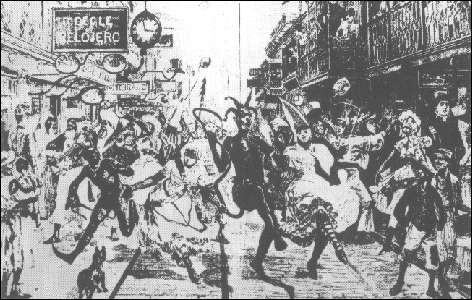
The history of Trinidad Carnival is long and goes back to the 18th Century when the European plantations owners celebrated masquerades before lent.  Their African slaves were not allow to take part but formed their own caboulay celebrations. Here they developed mas’ (abbreviated from masquerade) as we know it now – whereby African musical and dance traditions fused with European masks and costumes into an eclectic and exotic mix.


And so I am writing this in London, but my heart strays away to the land of my birth this time of year. From as early as I can remember, I can remember Carnival! Carnival is part of the Trinidadian (Trini for short) psyche, mindset and makeup (no pun intended). Children would take part in schools by making masks and costumes. Usually schools arrange a bit of a “jump up” dance for the parading of these creations on the Friday before the Carnival weekend. There would be an extra tinge of excitement in the air as it is the start of four days of holidays for the Carnival celebrations. The actual big and commercial celebrations usually start the previous year with the launch of Carnival bands, parties or ‘fete’ as we say, being once a French colony. This is big business now, for when one Carnival finishes, the planning for the next year starts immediately after a short break.

I found some gems of carnival video clips from the 1950s when British Pathe digitised their archive.  The effort that went into the costumes are stunning with wonderful results.  I wondered if they were funded centrally or whether the costumes were made out of their own pockets! Anyway, I love the themes such as American Native Indians, Egyptians and all the other finer details in the mas. In the 1970s and 1980s, I had noticed even then that cameras and broadcasters transmitting the parades to people’s homes and possibly abroad.

As a child, I used to be excited waking up on Carnival weekend as the whole weekend would be a visual and rhythmical treat. Saturdays during the day would be filled watching on television the ‘Kiddies Carnival’ and later that night, some of the steel pan ‘Panorama’ competitions. The show usually finishes late, so I sometimes never saw all of the steel bands. What people don’t realise – the steel bands themselves in Trinidad are massive and consist of scores of musicians and organisers.  The orchestras fill a large part of the epicentre of the competitions at the Queen’s Park Savannah stage. The flag bearers were generally women who danced away to the steel drums on stage and were a treat to watch too – they waved it and shaked it!

On Sunday there would be the Dimanche Gras competition showcasing the large Kings and Queens Carnival costumes and the Calypso competition.  This is no longer the competiton format but it was exciting to see it then over the weekend.  The televised shows always made exciting live viewing and that was very special about Trinidad (this year I listened to live radio via the web in London and have seen live streaming on the web too in the recent years!).   

I remember the costumes being very elaborate and colourful in the late 70s and 80s. Now the costumes are still beautiful but a bit monotonous, as they are mainly bejewelled bikinis with feathers.  Don’t get me wrong – I guess this has made mas more accessible and now everyone can afford to participate in a piece of the action in an all-inclusive Carnival band.  A relative told me that most of the big bands mas are currently manufactured in China. However, I saw a few years ago that some top designers such as Brian Macfarlane still make theatrical theme-based mas, and also there are still organically handmade costumes in some communities across Trinidad.

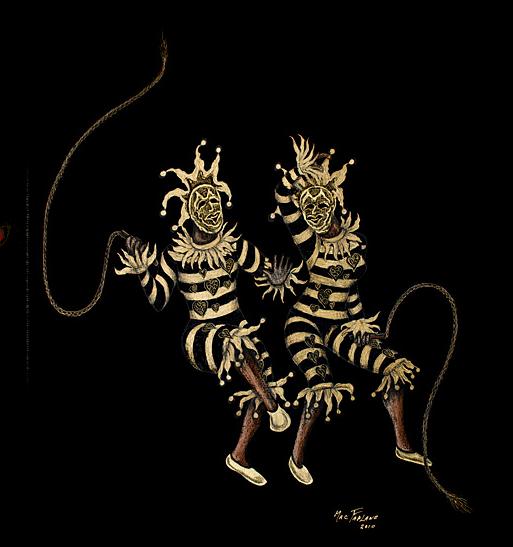
mcfarlane-jab-jab
Jab Jab – Brian MacFarlane.

On Carnival Mondays, we would wake up to young children in my hometown Dow Village wearing their homemade masks.  They will go door to door chanting slogans and making noisy music with a pan and stick expecting small money for their efforts.  Pocket money  was given as an appreciation for their efforts.  Sadly, I understand this tradition doesn’t happen now in my village. From early morning on Carnival Monday when it is still dark, there would be live television broadcasting of J’ouvert – the official start of the adult Carnival on the streets of the cities.  I only attended J’ouvert once in Port-of-Spain circa 1985 with relatives and we got there for about 3am in the dark.  It was amazing to witness and participate in a celebration with people dancing on the streets at that time in the early hours of the morning.  The debauchery, dancing and parading would continue into the daylight of mid-morning. This is broadcasted on live television too, if you can’t go out to the streets. In recent years in London, I love seeing dawn tweets of Trinidad J’ouvert on Twitter.

J’ouvert leads on to the official parades of bands. Historically there is no wasting of time on the start of Carnival and revellers make the most of time before the Ash Wednesdays cool-down.  The rest of the day would be spent watching the Monday parades of bands on the Television.  My village had traditional celebrations such as Jab Jabs (derived from Spanish for diablo) dressed as devils with whips.  Unique to my village, some East Indians in the community would also have a parade to the beat of East Indian tassa drums to the next main town Couva.

On the final day that is Carnival Tuesday, our parents would always take us to Port-of-Spain (my mother’s hometown) to see the mas meeting up with our large family with homemade picnics and snacks for the day including delicacies like our own Trinidadian pilau (mixed rice dish with meat, pigeon peas and vegetables).  There we would be based all day to see the great and traditional masqueraders displayed on the Queen’s Park Savannah stage.  We would see traditional masqueraders such as the Sailor Bands, Midnight Robbers, American Indians, Minstrels, Moko Jumbies on stilts and blue devils covered with blue powder to name a few characters. There too, we saw the great bands of 3000 plus masquerade members by designers such as Raoul Garib, Wayne Berkeley, Stephen Lee Heung and my all time favourite designer – the world renown Peter Minshall.

Peter Minshall not only created beautiful exquisitely designed costumes for Kings, Queens and his band members – he retained the theatrical themes and origins of the mas with performances on the main Queen’s Park Savannah stage. Frequently his costume designs were provocative for social and political commentary with theatre and drama.  For example, I remember vividly on television the King of Carnival performance and showcasing of Mancrab for his band theme ‘The River’ – it was pure drama!  This was aired live on television to the movement and sound of calypso music.  I still think of the year he created the band Rat Race and the vision of hundreds of people dressed as Rats in the ‘savannah’ and on the streets of Port-of-Spain.  It is hard to cover all the beauty, vibrancy and growing up with Trinidad Carnival but they are cherished memories of the creativity and the celebration of our people.

71e9ba6f8dbf6f74f5bf557e14a01e2c
Rat Race by Peter Minshall.

On the business side of Carnival, Minshall is renowned for exporting his talent and creations at major global events such as the Barcelona and Atlanta Georgia Olympic Games Opening ceremonies.  He is also credited for designing the Tall Boy which he patented and invented with Doron Gazit.  It was great to see him also back from a haitus from Carnival in 2016 with his design of ‘The Dying Swan’.

There would be no Carnival without music.  Kaiso and the oral traditions came over with African Slaves and evolved into calypso and eventually to the modern day soca (soul and calypso).  The development of this music genre is innovative and laced with fusion beats and can be social and political commentary but generally is more upbeat, rhythmic with innuendos for having a good time.  Nothing can beat a good calypso to get a fete going or everybody on a dance floor or street. I still actively look forward to the new music releases and social media is a great tool for that hobby.  I remember when I first came to London, I had no clue what the latest releases were as I tend to listen to mainstream British radio and not the UK soca radio stations.  I used to receive cassettes sent over with relatives who went to holiday to Trinidad. Thankfully now I can find music on online radio stations, You Tube and via my own social network.  Forbes recently published a list of Carnival Entrepreneurs with the Trinidad Carnival Powerlist and there is much talk that soca music is finally going mainstream. I hope so, with so many Caribbean Carnivals being celebrated across the globe.

This slideshow requires JavaScript.

At the British Library where I currently work, this is the final week for the dazzling exhibition ‘West Africa: Word, Symbol, Song’. I am extremely grateful to the curators of the exhibition for helping me understand the world and for my own self-discovery as an Indian-Trinidadian. I learnt so much about West African culture and its oral traditions, ancient manuscripts, symbols, fabric, musical instruments, musical history and art forms. It was also an immense pleasure to see the ‘Carnival Queen’ designed by fellow Trinidadian Ray Mahabir on the speaker-box with a nucleus of calypso and soca music curated to visuals of Nottinghill Carnival inside the speaker-box. Being in there, it was one of the moments when you can see all the dots joining up – a world connected. Old with the new.

Being in there, it was one of the moments when you can see all the dots joining up – a world connected. Old with the new.

I feel I can write a book on my experiences on Carnival, which has been dubbed a long time ago as the greatest show on Earth. I borrowed a few books to research from the British Library before my visit last year for Trinidad Carnival, and it has been documented for its social, cultural and delightful impact.

Today in London,  I wanted to remind those who know me that it is Carnival Tuesday and I can’t help my thoughts straying to Trinidad and that infectious energy, freedom, rhythms, empowerment and colour of my country and the people.   Later this year, I look forward to a little bit of that enjoyment at the Notting Hill Carnival in August.

This slideshow requires JavaScript.