Pizza – a renaissance on the high street

There is an on-going pizza revolution in my part of the woods. Pizzerias have become ubiquitous with old and new pizza companies on the market. One of our favourite fast foods seem to be going through a renaissance right now with many independent shops on the high streets. This is not hard to believe as you may ask who doesn’t like pizza? No doubt about – it is popular on most of the planet!

I have always liked pizza even when I lived in Trinidad. We had our own pizza companies such as Mario’s Pizza, Pizza Boys and the familiar global brand Pizza Hut. Going out for pizzas was always something to look forward to when I went to the malls with my friend. I remember also trying to make pizza with roti (Indian flatbread) dough as a teenager. On a memorable school trip to Venezuela, we went to a Pizzeria where our tour guide suggested the ‘house special’. It was a delicious pizza with my first taste of one with anchovies and copious amount of other toppings as compared to those I had known in Trinidad at the time. I also remember a very amorous Venezuelan couple in the restaurant who had us giggling throughout the meal.  I have had my share of pineapple and ham pizzas too, and recently heard that the President of Iceland had to clarify his position on these toppings after a social media storm as mentioned in this Guardian article.

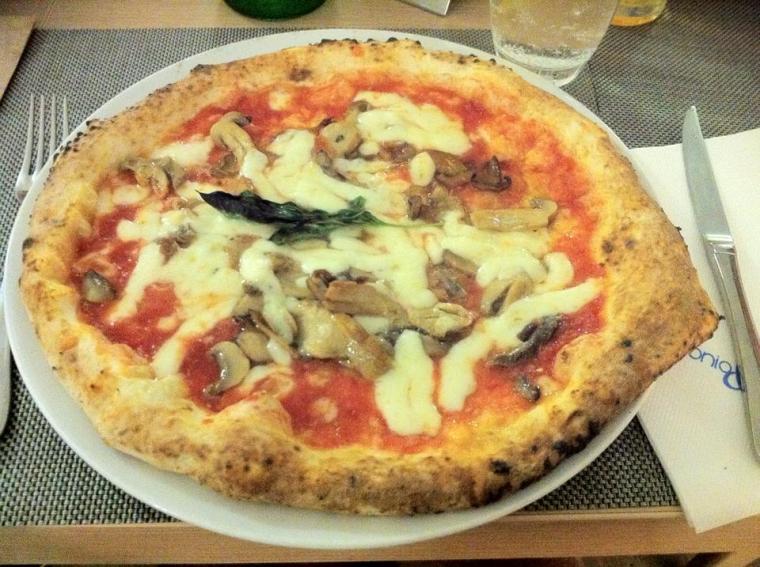
10426852_10204229404165481_6720400936209253549_n
Pizza in a Restaurant in Caserta, Italy.

Fast Forward to London where I have sampled British high street pizzas, and various other independent ones along my way. My husband is Italian and obviously my relatives make fabulous homemade pizzas. My brother-in-law also has an outdoor pizza oven at home and a pop-up pizza business as a ‘hobby’. Our friends own one of the first pizzeria’s in Bedford where they are made in wood-fried ovens, which adds some authenticity to the flavour.

Being married to an Italian, I began to hear and understand the origins of pizza in Italy. Here is a fabulous link on the history of pizza, and it explains the many innovations over the centuries from plain focaccia-like breads to the current form of pizza as we know it. Pizza Margarita was the favourite baked by Raffaele Esposito for Queen Margarita of Savoy as it evoked the colours of the Italian flag – which is topped with seasoned fresh tomato sauce, mozzarella cheese and basil. Buffalo mozzarella is originally from the Campania region of Italy and is the best you will taste anywhere in the world! The buffalo mozzarella is so good…it is served whole as a delicacy, and even the local Italians enjoy and savour it.

This slideshow requires JavaScript.

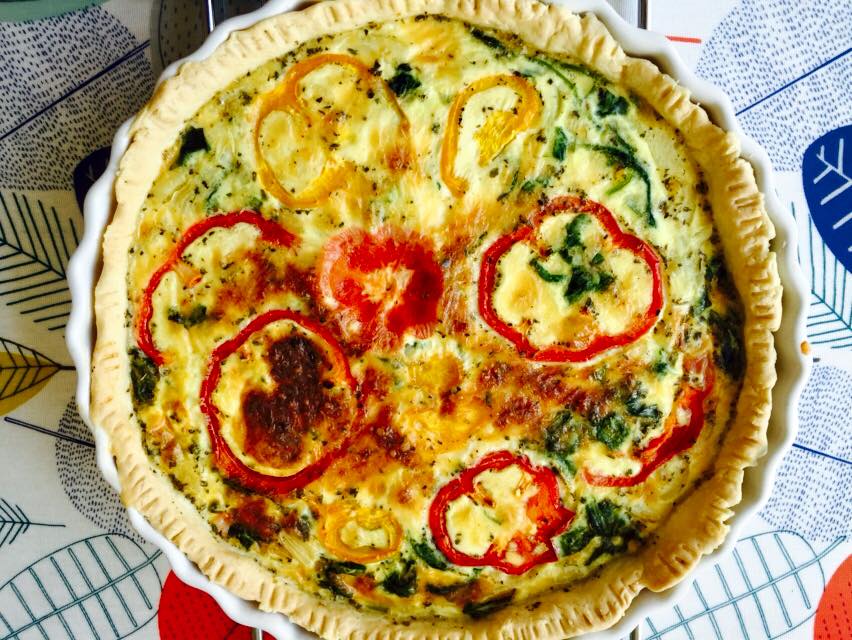
Over the years, I try to make unfussy pizza at home which is simply made with fresh ingredients. I usually plan in advance to get fresh yeast from the supermarket bakery counter. I don’t have a wood-fired oven, but my pizzas are good and usually get positive feedback from family and friends who have tried it. Steady on though…I am not sure I am ready for large-scale pizza making! So I have no ambitions to open my own pizzeria.

13886447_10209955593356632_4287653539853754933_n
One of my pizzas.

There are pop-ups, restaurants and take-away pizzerias all over the world. The market for pizza is thriving, and there are so many ways that it can become a viable business.  I found that there are several market research reports on this, where in the UK alone – sales for pizza has revenues of £2.7Billion and there was a predictive 9.5% growth in dining-in restaurants. According to Mintel Research figures for 2016, the long term forecasts expects the industry to grow by 34% from 2016 to 2021. It is no wonder that it seems to be one of the most popular types of businesses in the food market,  and in our high streets. This insight from one of Mintel’s analysts states…

“Digital innovation and authentic dishes made from simple and fresh ingredients are transforming pizza and pasta into a destination business, helped by the expansive store presence of leading players. Independent players may be hit by competition from the swelling multitude of new entrants and deli-and-dining formats that are driving more customers into store.” – Trish Caddy, Foodservice Analyst. Mintel.


In the last four years, there has been regeneration of the high street in my neighbourhood, which also introduced some new independent Pizzeria players such as:

Nuovo Mondragone – a local independent Italian restaurant who make fabulous pizzas and also great calzones. Their main restaurant is situated in the scenic village area of Walthamstow.

Sodo Pizza Café – a London independent pizza chain who took over the building previously used for a local café (where I used to go dancing sometimes!). The pizzas are good, and I particularly like their use of social media to remind us that they have specials on during throughout the week.

Peppe’s Pop-up – Peppe has been the longest running pizzeria on our high road situated outside the local community CAMRA award winning Rose and Crown Pub. Their pizzas are amazing, and Peppe’s pizza spinning is mindboggling.

Yard Sale Pizza – And the newest pizzeria on the block is this chain in London. I haven’t had time to try it as yet but going by tweets in the neighbourhood…the pizzas look amazing and everyone is excited!

One of my best experiences of pizza dining was at the Pizza Express Jazz Club last year. It was first opened in 1969 by company founder Peter Boizot, and is still grooving strong today. As you would expect, some new and exceptional artists and musicians have played there over the years. I went to see a Motown special (yes I hear you, I know that it was not traditional Jazz!) which was upbeat and fun. The dining is intimate and cosy with dimmed lights, and the ambience as good as a traditional Jazz club.  The added bonus is that they do pizza (which I didn’t have) and the service excellent too. It might be an ideal setting if you are looking for a jazz club experience after the hugely popular film of the moment…La La Land.

I am not the only one excited about pizzas. Earlier this month, National Pizza Day was celebrated highlighting all the new independent restaurants in town, and there is also National Pizza Month celebrated all throughout the month in October in the USA. The pizza vending machine also exists! Seriously, everyone has personal pizza favourites and it really is food fit for us all to enjoy. Pizza sells itself. It will always be around for hundreds of years to come…I hope.

This slideshow requires JavaScript.

Beat the January Blues – starting the year with a Bang!

robert-burns
Robert Burns

Should auld acquaintance be forgot,

And never brought to mind?

Should auld acquaintance be forgot

And auld lang syne

For auld lang syne, my dear

For auld lang syne

We’ll tale a cop o’ kindness yer

For auld lang syne

Auld Lyne Ayne by Robert Burns.


It has been a few weeks since we sang those words by the Scottish poet Robert Burns, but it is an appropriate reminder for how we want to carry on in the New Year. Christmas and the festive cheer are finally over but its’ excess can make us feel down and a bit underwhelmed in January. The weather is still cold, but like a lot of us – you may want to get going and set some self-imposed resolutions you want to try. Some of these recur every year and personally I always hope to get fitter, read more, eat less, save more, spend less, be kind, more volunteering, etc. I am not sure about you, but I am still trying to stick to these at the end of January! Stacia Pierce @StaciaPierce, a life coach to women entrepreneurs, is one of my Twitter followers and shared this motivational new year goals picture below and blog post on ‘Focus: the key to reaching our goals’. I quite like it as a visual reminder.

resolutions
Photo: Stacia Pierce’s Blog

However in January, there are still a few celebrations that are great for beating the well-known ‘January Blues’ that I am going to mention on here. Firstly in my neighbourhood, we had our second all-day soul disco party around my corner on new years day! It is a great way to start the new year in a local family friendly environment. I popped in the last two years for a boogie, and it was so nice to see people in the community dancing away the beginning of a new year. This is usually arrange by local deejays and community organisers in the Walthamstow Trades Hall.

This slideshow requires JavaScript.

Next, I started celebrating Epiphany after over a decade ago when my French friend, Veronique, introduced us to La Fetes Des Rois with the cake Gallette Des Rois (King’s Cake). It is a national celebration in France and some continental European countries have a public holiday on the 6th January for Epiphany. It is a delicious cake and represents the arrival of the Three Wise Men who brought presents for baby Jesus on the 12th Day of Christmas.  The Gallete Des Rois is a fairly simple cake to make and you can find the recipe easily on the web. The best tradition of the cake is sharing it with close ones over a cup of tea or coffee. We play a fun game of getting the youngest child go under the table to randomly choose who should get the next slice of the cake. This is good fun as (1) it normally holds a token of good luck for the year ahead, and (2) you get to wear a crown for that day. It is a sweet tradition, and I am so grateful for my friend for introducing it to my family and I. It is not dissimilar to ‘Twelfth Day‘ which is another tradition that used to be practiced in the United Kingdom with coins in puddings.

This year, I made my first Gallette Des Rois to celebrate at home with Veronique. It will probably be a tradition I will continue after celebrating it for more than a decade. If you would like to try the Gallette Des Rois – you can order the gallette in advance from the French Patisserie Paul. I also saw this month that there are a few restaurants in London that were celebrating it – so you can give this feast a try next year.

This slideshow requires JavaScript.

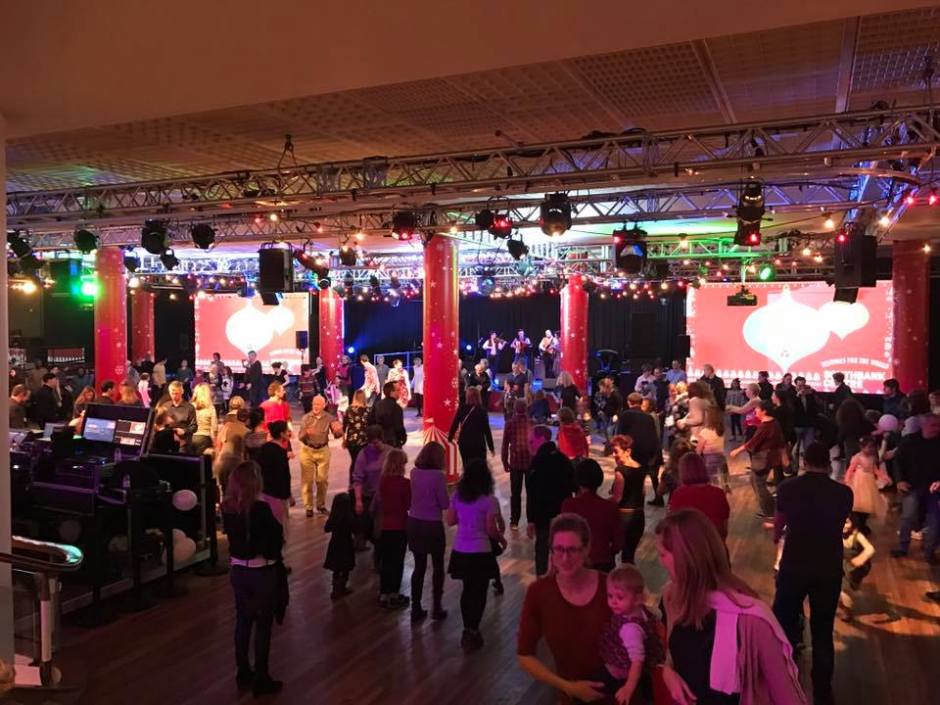
Another January celebration that I now look forward to is Burns Night, which is held in honour of the Scottish Poet Robert Burns on or around the 25th January. Robert Burns is Scotland’s most revered and famous poet – he is the same poet of ‘Auld Lyne’s Ayne’ as mentioned above. In the year 2001, I had my first experienced of a magnificent Burns Night party at the Waldrof Hotel. The venue was stunning with a live Ceilidh Band for some ‘Highland Fling’ dancing. Some of the men were dressed in Kilts and it will remain a memorable and fun experience for my colleagues and I at the time. Coincidently, on New Years Day this year, we stumbled upon the Winter Festival at the Southbank Centre with the Ceilidh Liberation Front band and dancing en masse in the foyer (see main header photo).

More recently, my Scottish friends invite us over for Burns Night and usually make the national dish – Haggis, mashed swede, mashed potatoes and cranachan with some of their own lovely traditions. Haggis tastes like spicy mince and it deservedly gets all the attention on this auspicious night! Robert Burns wrote many literary greats including his ‘Address to a Haggis’,  whereby the haggis usually is brought into the room by the chief, lead by a piper followed by toasts, poems and song, ending in the singing of Auld Lang Syne.

If you would like to celebrate this next year at home – Delia Smith has some tips on her website, and you can buy haggis from some supermarkets. There were also a few Burns Night celebrations in London, such as at Kerb Street Market. There is no excuse for you to join in the Scottish fun!

Burns Night is also a night when you can get in the spirit to partake of a “wee dram” of Whisky – the great Scottish export reliant and successful in international trade. The Scotch whisky industry has a “reputation as a global powerhouse, accounting for the largest volume of exports in the Scottish Manufacturing sector”. The current revenue is £5.1 Billion with 151 businesses whereby the spirits industry expects to grow by 2% in the current year as the depreciating pound lifts exports, according to the report ‘Spirits Production in the UK’ 2016 by IBIS World. Let’s toast to that!

Whisky – the great Scottish export reliant and successful in international trade. The Scotch whisky industry has a “reputation as a global powerhouse, accounting for the largest volume of exports in the Scottish Manufacturing sector”. Spirits Production in the UK – IBIS World 2016.

And my final January celebration is the annual Winter Warmer SLA Europe Quiz. It is a great time to meet friends, guests and fellow information professionals with a lot of fun, food and drink in an informal networking event. An excellent and funny quizmaster called AskTony runs this quiz. The general knowledge questions are hard (some are easy), random and themed with video and music clips – a librarian’s dream. I always come away with learning all those useless facts I didn’t know before! The connections quiz round is the one that make your brain cells frizz with excitement or dread! I have been lucky to be in the winning team for a few years, and win or lose…it is a brilliant night that I can recommend to you for your friends or colleagues.

So, I have had a lot of ‘January’ fun and I seem to be celebrating non-stop this year already. However, it is a time when I also think of serious goals for myself such as those mentioned in my opening paragraph. They are resolutions that I recycle each year and I am forever trying to adhere to them – but honestly it is difficult. Last year I made a resolution to myself to start my own blog. Evidently on here, I am pleased that this is my first full year of blogging. I am grateful for your comments, feedback and positive encouragement. I am happy and will continue to share a bit of my world with you, and together we can keep those ‘blues’ at bay.

This Christmas…Christmas is Love.

It’s December and most of the world is celebrating the festive Christmas season. It truly is a magical time of year and we all will have special memories, whether it be at home, school, work and in our neighbourhoods. There is so much to enjoy, indulge and be thankful, and it is great to have time in the year ideally spent with family and friends.

I grew up in a tropical island in the Caribbean but although we did not have cold snowy weather, it was just as festive and special as in colder countries. We would look forward to choosing or asking for toys that were advertised on Television, in local shops and shopping malls.  My parents actually dedicated a day for looking at the shops downtown in the capital Port-of-Spain. Schools prepared us to sing carols weeks in advance, hosted Christmas parties and performance shows that were high-points both for children and parents. In secondary school, we had a fabulous variety show at Christmas, which was a great opportunity to showcase young talent. I still remember some of the dances by students and it forms our collective memories of a time gone by.

10359918_10205015611780180_8121421033338200622_n
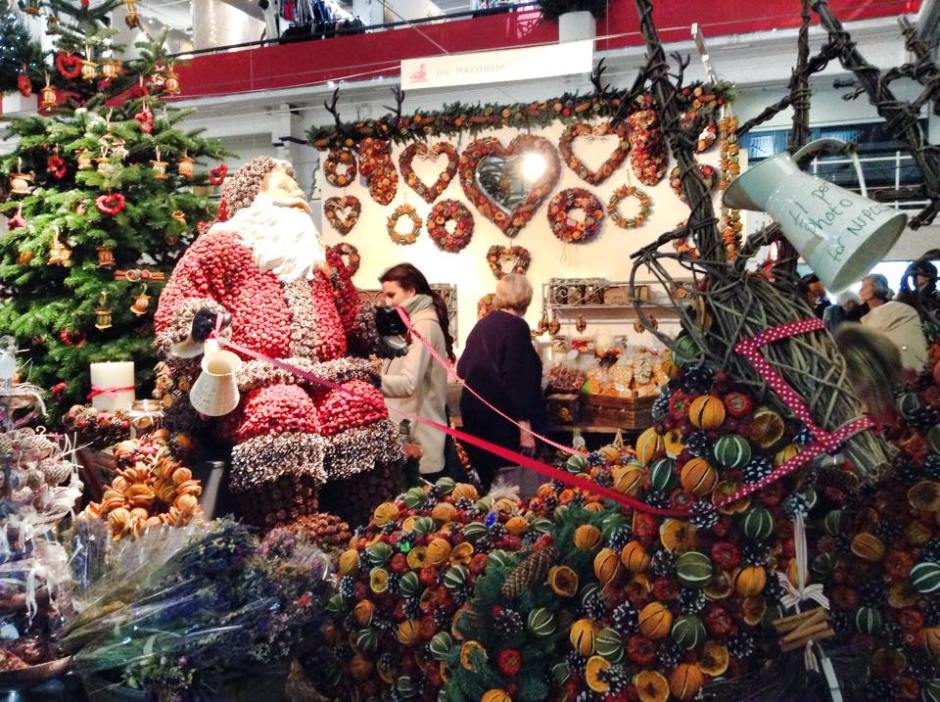
Homely Scene at a Christmas Show – Business Design Centre, Islington.

We had fun and special celebrations with neighbours as children too. We would go from home to home to partake of food and drink until it was too late at night – and then the next evening, we would carry on from where we left off. As teenagers in the 1980s, we also had fabulous trendy disco parties that were very popular at our house. All the teenagers would pull together to organise the Christmas party with the approval of our parents.  It was very trusting of my parents to allow us to host this and my mother would again help with the cooking en masse. Everyone would work towards decorating the back yard with coconut branches for a boogie, and set up of the DJ sound system. It was very exciting. We did this for a number of years with about a hundred people attending by invitation only, and so had hired police security too.  Quiet time spent with family was very special and some of my most treasured memories.

Trinidad is still very much into Christmas traditions religiously, spiritually and culturally. We have a large proportion of the population who are Christians but regardless of religious background –  most of the country celebrates Christmas with home cleaning, decorations, food, drink, music and song. One unique aspect of a ‘Trini Christmas’ is Parang Music.  Originally from Venezuela, it is folk music that was brought to Trinidad by migrants who were primarily of Amerindian, Spanish and African heritage. It is mainly sung in Spanish and I read that it developed from musicians and singers going from door to door and street to streets for ‘fetes’ spreading the Christmas story in song. The villagers would offer food and drink to the serenading Paranderos. This genre of music is truly amazing, upbeat and even better to hear live! I haven’t heard any live Parang since I came to London, but I still like using You Tube to listen to music (you may have noticed!). The Latin fusion beats give the music a rhythm that even though the message and lyrics may be religious – the contagious beats and joy may make you want to move your feet! The music has evolved into what is now called Soca Parang.

singingfrancine
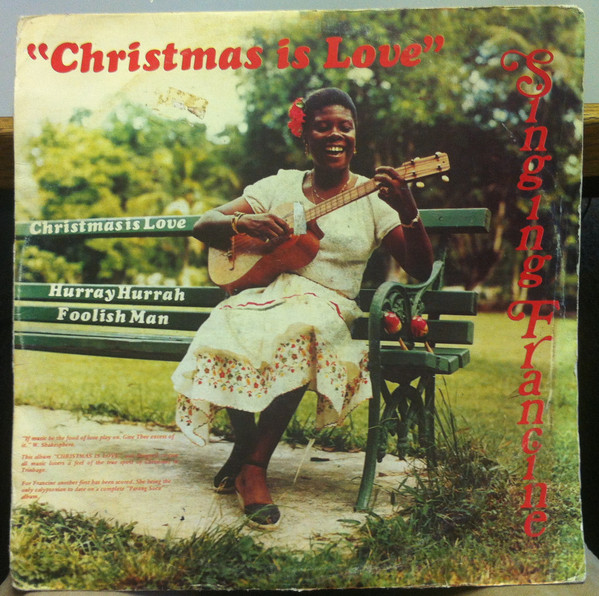
Classic Soca Parang Album ‘Christmas is Love’ by Singing Francine.

One of my favourite Vinyl albums is ‘Christmas is Love’ by Singing Francine which was bought by my father. Apparently the music is still played today as it contains the classics songs ‘Parang Parang’, ‘Hurray Hurrah’ and ‘Ay Ay Maria’. I heard recently in this article that vinyls have superseded downloads in the UK, and this LP would definitely be on my Christmas wish list should I go back to playing records.

Christmas in my neighbourhood in London is buoyant with activity and community spirit. For many years, the annual Lloyd Park Children’s Charity Winter Fayre was a great way to start the Christmas celebrations with Santa’s Grotto, Games, Food, and Children’s activity and market stalls. It was always festive fun but also a good fundraising initiative for local families and the community.

This slideshow requires JavaScript.

This year in my neighbourhood known as the Poets’ Corner E17 area of Walthamstow, we hosted our first Christmas Market in a newly pedestrainised road layout. The stalls included products such as local honey and wax, graphic designers and artists crafts, charity groups such as La Leche League, and a community table with the funds going to a local charity called Haven House. We also had a programme of local talent such as Irish Dancers, Vestry School of Dance, Greenleaf School Choir and our own eager Poets’ Corner E17 Choir which was accompanied by the Salvation Army Band as shown our blog.

This slideshow requires JavaScript.

Both of these winter events are not held in churches but they are great examples of market stalls, local businesses and community groups coming together to celebrate the wonder that is Christmas.

Christmas is obviously a time for selling, giving and gifting. On a commercial note, I briefly researched what businesses should expect at this time of year and there are a few prices on Euromonitor’s blog ‘Christmas Shopping Trends 2016’.  This is informative for consumer spending patterns with the top five goods shopped for in order are: (1) Clothing and Footwear (2) Toiletries and Perfume (3) Food and Drink (4) Toys and Games (5) Books.   It is also interesting to know that 86% of those persons surveyed also bought in store, and 76% shopped online. If you use the ‘Click and Collect’ shop services – you know how convenient it can be! It is nice to see there are both business cases for supporting the high street, and online businesses. My neighbourhood is also making a concerted effort to support local businesses with a free courier delivery service and shop local campaign.

Mintel market research ‘Christmas Shopping Habits 2016’ reports that November’s Black Friday, which is a predominantly American shopping day, has had an impact on UK spending and retail patterns in recent years with some shops taking part. Some shops prefer to still focus on the December sales period. Even I bought something on promotion this year for Black Friday as I got 20% of a jacket I had my eyes on.

And Christmas would not be Christmas without food and drink. I love baking at this time of year and there is something so comforting, reassuring and nostalgic about the scent of Christmas. My mother, aunties and neighbours got us into baking as children. We would help with breaking organic eggs (at the time we all had our own chickens) and then taking turns in mixing the cake ingredients. This was before my mother got a food processor which made baking easier but less of a communal fun ritual. There was something special about those cakes – not sure of it was the eggs, sugar or Trinidadian rum! I now do my own baking such as mince pies and Trinidadian Christmas Cake, but there are also Panettone around given by Italian relatives.

Christmas dishes are unique to each countries of the world but the English Christmas dishes are probably one of its’ best culinary traditions. I look forward each year to Roast Turkey, Pigs in Blanket (Sausages wrapped in Bacon), Stuffing, Yorkshire Puddings, Vegetables and Gravy with Cranberry Sauce and Bread Sauce (which I am not so keen on). Christmas Crackers are also good fun around the table! I have grown to like Christmas pudding and it is similar to Trinidadian Christmas Cake. I love spending time with family and friends at this time of year like everyone up until the New Year Celebrations. I do miss Trinidad but I hope I can spend Christmas there one day again in the future.

There has been so much going on in our troubled world and we are still nowhere near that elusive world peace. But still…Christmas has many and the best peaceful, thoughtful and universal human aspects to it for which we can keep hope. In these reflective lines, I have given you a flavour of my own seasonal experiences. You would have your own to share I am sure. This Christmas, my sincerest wish is for you to have a jolly time, spread the joy and peace of the season. And for the coming new year – sending another wish for a Happy 2017.


Diwali – Celebrating the Festival of Lights

In the United Kingdom, you can see the onset of the changing season with the changes in the environment – colours of leaves on shrubs and trees, falling leaves, perennial shrubs with winter berries, and the drying and withering of the summer blooms and greenery. As those autumnal weather and winds come in October, it signals the end of summer but there are a few celebrations that I like that make me optimistic for the new colder and darker seasons. It is the time of year that I can look forward to celebrating Diwali at home, in my small way.

Diwali may be spelt in English differently as Divali or Deepawali, but in essence it is the Festival of Lights that has been celebrated in India for thousand of years. As a child in Trinidad, Diwali was one of the highlights of the year and usually occurs in late October or early November. It is one of Indian Hindu traditional festivals that is still practised to this day in Trinidad by East Indian migrants.

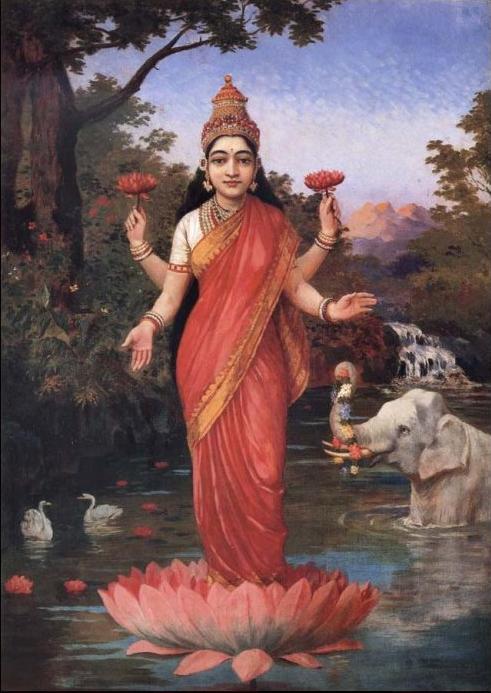
In the 1970’s and 1980’s, there was a slow build up to Diwali by local community groups, businesses and other official celebrations in temples and fairs. In our village, the villagers used to plan weeks in advance to cut bamboo rods from local forests. The giant bamboo rods were split for their natural groves, which were then used to rest and decorated lit deeyas (clay pots). The bamboos were cut and shaped in various artistic ways, and in arches that ran along the streets. The deeyas were light with oil and cotton wicks, then set alight at approximately 18:00 hours when the sun was setting at this time of year. It is also believed that the Goddess Lakshmi enters homes at that time with her light.

ravi_varma-lakshmi
Goddess Lakshmi

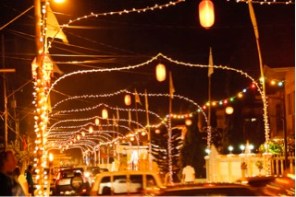
Diwali is allegedly a traditional held on one of the “darkest night of the year”. Growing up in Trinidad – our streets would be cleaned, swept, weeded, pavement white-washed and homemade paper buntings would be placed from one end of the street to the other. Our street also had a musical stage and entertainment at one end including prizes sponsored by local business for various categories such as a Diwali Queen. I am not sure if our street started the Diwali ‘streets’ celebration (I guess it was as we were the hip ones!) – however it was a tradition that was influential. Eventually most of the village’s streets were decorated with bamboo arches with lit deeyas. It was truly amazing to see and experience the beauty of the lights! There was immense energy with people in thousands walking along the streets. Seriously…there used to be traffic jams on our street with the sheer quantity of people walking and cars on the streets to see the Diwali lights. As a child, I used to love walking around the streets and meeting other neighbours, family and friends. They were extra-special times and the memories are for us to cherish!

Eventually most of the village’s streets were decorated with bamboo arches with lit deeyas. It was a truly amazing to see and experience the beauty of the lights! There was immense energy with people in thousands walking along the streets. Seriously…there used to be traffic jams on our street with the sheer quantity of people walking and cars on the streets to see the Diwali lights.  …on Diwali.

There would be visitors from neighbouring villages and towns, including my own relatives from Port-of-Spain would come to see the lights, as well as the lovely delicious vegetarian food that was prepared at home that day. It was also a time to invite friends who don’t normally celebrate Diwali. My parents would intentionally invite non-Hindus to partake of our hospitality. Personally, it is also a time for remembering and being grateful for what it means to have a home and a loving family. Probably the same warm feeling we have at Christmas, Eid or other religious or cultural occasions. This tradition continued for about 10 years in my village, and sadly I don’t think it happens now. I do know that there is a Diwali Nagar village at this time of year, which started decades ago just before I left Trinidad.

Diwali in the home usually meant a time to ‘spring clean’ the house, vegetables and sweets were prepared in advance, and any precious time was used to prepare for the activities for the day…and night. When I initially came to England, I missed home a lot due to this lifestyle, traditions and the many multicultural festivals we celebrated. It is a time that I remember family, especially my father and his unique Diwali traditions. They were extra special to me, and his way of doing things was one of the best examples of family values and homeliness.

There were parks and fields that also celebrated the festivals as fairs with displays of lights and entertainment with song, music and Indian dance. The radio frequently played Diwali songs. Companies and local communities used to host Diwali with live entertainment and food stalls with the beautifully designed bamboos in their various styles and shapes. Celebrations also included sparklers, firecrackers, fireworks and Bursting Bamboo (making loud noises with petrol, fire and bamboos which comes with a health and safety warning). These were usually held in fields and open spaces as they are too nowadays.

At a corporate Diwali celebration one year, I was unwillingly judged to be the Diwali Queen to my horror for the Caroni 1975 Ltd at Brechin Castle Diwali Celebrations! But on the positive side, I won a lovely sari and some money. I still like wearing a sari and Indian wear when possible – and Diwali is an ideal time to do so.

I was really pleased when the Trinidad and Tobago High Commissioner to London, The Right Honourable Garvin Nicholas, held a Diwali Celebration at his official Residence in London a few years ago. The deeyas were from Trinidad and it was really delightful to see them lit around his official residence and for him to invite ex-patriots to his home. It was great to hear the religious ceremony, as well as to partake of the Diwali food and sweets.


Generally in India, Diwali is still celebrated as a grateful close to the financial year, and signals the aspirations and blessings for the coming year. When I joined the British Library, it was also the start of the Mughal Exhibition. I honestly did not know much about the Mughal Empire, as our education of India in Trinidad tends to rightly focus on Indentureship of Indians to the Caribbean.

Since the exhibition, I am certainly more aware of the Mughal Empire and life in that time. It was amazing to see their artwork in manuscripts and there are several pictures with Diwali, Holi and other celebrations depicted. The opening party for the Mughal Exhibition was also a memorable experience of Indian culture that reminded me of Trinidad.

This slideshow requires JavaScript.

For these reasons, Diwali is one autumnal celebration that I look forward to at this time of year. I like when contacts share current photos on social media of Diwali in Trinidad, as I still see how it is celebrated and how it has developed over the years since I left. I usually have to ask Trinidadian relatives what is the date for Diwali so that I celebrate it in unison with them. It is a public holiday in Trinidad and I usually try to ‘fast’ for a few days by eating vegetarian food. I also prepare vegetarian dishes and sweets for Diwali night. I usually make Prasad as an offering – which is a sweet delicacy. I also light candles, sometimes in decorated jams jars as I can’t find deeyas here.  It is a time for me to give thanks for what I have and yes…even say a little prayer. This is my small way of continuing that tradition, rituals and hope for light to triumph darkness for the earth and my loved ones, but also for everyone all over the world.

A Summer adventure in New York

Sometimes when I read The Guardian’s Q&A question What is your earliest memory?, I am surprised that people remember moments as late as when they were three or four years old. On this, I have a crisp memory and remember symmetry in dreams when I was a toddler. I am not sure if this is unusual. Apart from that, one of my earliest childhood memories is telling family “I want to go to New York!”. My mother would attest to that. I always dreamt of travelling as a child, and New York was on top of my list. I’ve never made it until now in my 40’s, and this was also my first ever visit to the USA.

Growing up in Trinidad in the 1970’s and 1980’s, you really could not avoid being seduced and attracted by the media images of the USA. We had exposure to numerous American television programmes and film, such as, Sesame Street (aired morning and afternoon), Laverne and Shirley, Saturday Night Fever, Grease, Taxi, Working Girl, etc. There are far too many other songs, films and books that represent the country and cities. New York to this day is still tops and will always be a magnet for these creative outputs. Here are some of my highlights of my recent visit ‘across the pond’ with family this summer.

My first impression at the airport was a bit of apprehension for being fingerprinted and photographed at the immigration desk, which seems like a normal Home Land Security procedure for visitors. However, trepidation was quickly replaced with genuine awe on the first sight of the city as we approached on a Go Link shuttle bus from New Jersey. There was an amazing moon above the night skyline of skyscrapers in Manhattan – I couldn’t help thinking of the film tune Arthur’s Theme with the line ‘…Caught between the moon and New York City’. As there was traffic, our shuttle driver also took us for an extended drive around the buzzing and luminous Saturday nightlife. We saw famous landmarks such as the Lincoln Centre, Times Square, Central Park and recognisable famous streets.

This slideshow requires JavaScript.

Day One – Close to the hotel was the impressive art deco Chrysler building, and it is breath-taking to see this many times throughout the next week. For Sunday brunch, we tried Scotty’s Diner on Lexington Avenue. It was very busy around 10:00am with people having breakfast, which I presume was a Sunday morning tradition. It was interesting to observe the dishes being served such as French toast and pancakes with a variety of toppings. The portions are definitely bigger there!  Therefore I stuck to a muffin in preparation for the big lunch that came later at friends.

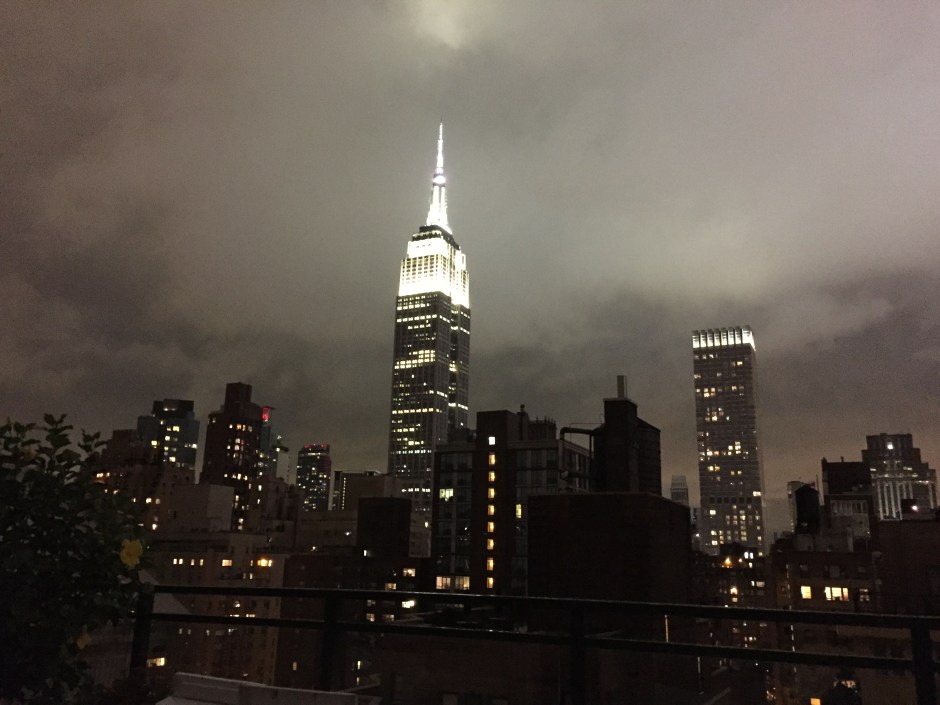
Next was the trip to Queens to visit family friends and it was an adventure from the start. The walk to Penn Station was about seven blocks but not far away to walk. Again, it was amazing to see the shops at ground level but also to look up at the amazing architecture. It was a fabulous surprise to see on route one of the world’s most famous and tallest buildings – The Empire State Building.

It was the first time I used the city’s public transport. The Long Island Rail train ticket was reasonably priced to take us to Queens and seemed to run quite frequently for a Sunday. It was packed with young people heading to the Babylon Festival and we had a friendly couple who sat next to us. The young man even checked his app to tell us when our train was due to arrive in Sutphin Boulevard. The station exit that we came out had an amazing tribute to Jazz Legends of Queens. Apparently, New Orleans may be the birthplace of Jazz…but Queens is proud to proclaim that it is “the home of Jazz”. There is even a Queens Jazz Trail. I also noticed that ‘On the Road’ author, Jack Kerouac, was also a past resident.

It was also great to spend time with very dear friends and to see the suburban homes and gardens in the neighbourhood. There was a Punjabi celebration in a park closeby and according to Wikipedia, Queens is now an ethnically mixed community.

Day Two – We decided to use the buses and to walk around Little Italy, Chinatown and the Lower East Side of Manhattan. There were no location plotters in the buses, so you had to play attention for your stop which was considerably easy due to the street grid system. I love that about New York! I think this systematic urban planning for a new city has fabulous benefits and must have been exciting for the generations that made the modern city.

As we stopped near Bleecker Street, there was street art that resonated the social and cultural heritage, including the splendid punk band  The Ramones, and others leading all the way to Little Italy. Little Italy is a must to visit, especially if like me, you have Italian connections or relatives. This is where Italian migrants settled, and although now they may have moved out of the area – it really was incredible to see the sights, story and to imagine what life was like then. Little Italy also runs parallel to Chinatown, and therefore it was interesting to see the similarities with another migrant community.

Little Italy is a must to visit, especially if like me, you have Italian connections or relatives. This is where Italian migrants settled, and although now they may have moved out of the area – it really was incredible to see the sights, story and to imagine what life was like then. …On Little Italy. 

Next was a walk to the shore through the financial district past Wall Street. The financial district had banners up boasting that it was the Best in the World’s Capital Market. As I walked through with my business information hat on – I also thought of the Wall Street Journal and NASDAQ.

A short walk away is the station for the Staten Island Ferry, which is free to use and runs every 30 minutes. It is interesting to read why it is free now, as it wasn’t always free. The wind was blustery on the ferry but the views of the city and the Statue of Liberty are breath-taking and worth a fortune for a free ride!

After the round trip back to the Manhattan shore, we walked up to the 9/11 Memorial. As I approached the memorial, my exhilarating holiday mood changed to sombre and reflection. Taking in the scale of Ground Zero and remembering the television images on that terribly shocking and sad day kept crossing my mind. It is surreal, but also strangely connections you to those tragic moments when history changed. I was there for the thousands of people who lost their lives on that day. It was both a pilgrimage, and a duty to pay my respect at the 9/11 Memorial.

That day ended with a last walk along Broadway all the way to 37th street. It took about two hours but it was fabulous to go past the buildings, the African Burial Ground, Dean and De Luca Deli (from the film Manhattan), various shops and New Yorkers. It was nice just to observe people going about their normal business and leisure activities. It is fabulous to look up at the very tall buildings as you walk along the pavements on the ground. Again, I kept thinking of the people who had designed and planned the city in the past and how fulfilling it must have been to create this amazing city with towering architecture.

Day Three – Having worked in libraries and information centres, the next day I went to see the United Nations (UN) Headquarters from the exterior with it’s famous block architecture and international flags. You can get free tickets to see the visitors centre but time was short to spend a long time there. For many years and even now, I still use UN publications and their website for information. I have also blogged at work about their Year of Pulses 2016.

Next we walked along 42nd Street past the Woodstock Hotel where apparently my entrepreneur grandfather stayed on a business trip in the 1950s. And then we walked to 41st Street towards the New York Public Library (NYPL) on Library Walk. There was a great build-up of awe on the street approaching the library with plaques on the ground aptly designed with heart-warming and uplifting proses, excerpts and quotes on books, libraries, knowledge and information. The Library was close to our hotel and it inspired me a few times that week.

The NYPL building itself is designed in an European classic architecture and built on a spot that was once a water reservoir. I only had time to see one of the reading rooms but spent some time in the library’s shop too. It was very similar to the British Library’s shop and I bought some souvenirs. One tip – the NYPL (Twitter @nypl) has a fabulous Twitter feed that you should follow!

Just behind the library was the fabulous Bryant Park. My first visit was at lunchtime and it was fabulous to see the park being used during the lunch break by workers, people playing chess or just enjoying the warm summer outdoors. There was also live music one evening, and it was really awesome to take it all in with lofty buildings surrounding the park.

Times Square was a close walk away and good to see during the day and night. Coincidently, there was recently a BBC Two ‘New York – America’s Busiest City’ series that explained that Times Square initially was home to the New York Times, hence its’ name. The advertising boards have been a part of its’ peppered history and seedy days, but has been recovered to be a focal point for digital advertising boards, news feeds for advertisers and live news broadcasts. Day and night – it seemed to be a tourist hotspot.

Day Four – We took the subway this time to Queens and again it was an opportunity to use public transport. Grand Central Station was not far and as you enter – you are impressed by the décor, the lights, astronomical ceiling mural and station elegance. There is an Oyster Bar apparently too, but I did not get a chance to see it. The journey to Queens was my first time on the subway and it is different, as well as similar, to the London Underground and other underground networks I have used. You literally go from deep underground to way overhead above ground rail tracks! New Yorkers were happy to help confirm and to give me directions. Knowing me, I still had time to look out for poetry, art and buskers.

I was meeting friends again and was picked up from Liberty station in Queens. It is the place in New York where the West Indies meets the East Indies. The shops represent a multicultural community – the melting pot that Trinidadian Angela Hunte wrote about in the song ‘Empire State of Mind’ sung by Jay-Z and Alicia Keys. The food that my friends cooked or bought were on par to that in the Caribbean. It seemed like a home from home to the Trinidadian community there.

The shops represent a multicultural community – the melting pot that Trinidadian Angela Hunte wrote about in the song ‘Empire State of Mind’ sung by Jay-Z and Alicia Keys. The food that my friends cooked or bought was on par to that in the Caribbean. It seemed like a home from home to the Trinidadian community there.

Day Five – After a fleeting visit on the bus to the Museum of Modern Art and a walk to Central Park, I was excited to dedicate some time to seeing the park and to having a Hot Dog! The park was created for the public health and wellbeing for the residents of the city. It is also fascinating to see in the BBC Two documentary the number of animal and plants species that have to be cared for and the enormous amount of work that needs to be carried out to maintain a park that size. The park is beautiful with lush green trees, picnic areas, street entertainers, space etc. I particularly liked the ‘Literary Walk’ with statues of favourite dead people such as Christopher Columbus, William Shakespeare and Robert Burns. The park is too big to see even in one day, but it is a must to see the contrast between the green spaces and the skyscrapers that surround it.  I also had a Hot Dog by the famous Nathan Hot Dog company, as recommended by one of the park guides.

Later that day we took a train to Mount Vernon in Westchester County, which passed through Harlem and over the Hudson River. I couldn’t help thinking of the negative reputation the Bronx had in the past, but ironically and more positively the music, dance (e.g. Harlem Shuffle and Break Dancing) and art that it inspires. Apparently it is still a place of contrasting communities with gentrification creeping into areas that were once neglected parts of Harlem. On arrival in Mount Vernon on the other hand, it seemed more affluent and picturesque. The best of both worlds, it is not far from Manhattan and within reach to the city for commuters.

Day Six – I had also dedicated a day to shopping at Macy’s. It was nice to spend quality time with my mother shopping. I didn’t go on a silly spending spree but it was still kind of my mother to buy me a dress in the summer sale. It was interesting to see a ‘sale checker’ in Macy’s. I haven’t seen this facility for shoppers anywhere before. It was great for checking prices when items get mixed up or are reduced further in the sales. It was also nice of the sales staff to offer us the Charity Weekend Card at $5.00, which allowed us to have a further 25% off the price of purchases. I was really pleased with the final sales and discounted prices. So the New York shopping sales is not a myth, even with the current sterling to US dollar exchange rate.

I rarely use Taxis in London, but I used the iconic Yellow Taxis with my mother. There were lots of them around, reasonably priced compared to London and are frequently used in Manhattan. The fierce competition between Uber and these traditional taxis on the road is also mentioned in the BBC Two documentary.

I also liked the SMART City initiatives and innovations I saw such as the street platforms for checking your ‘on the go’ connections, device charging points etc. There are also digital boards to keep New Yorkers and neighbourhoods informed.

The most negative aspect of the visit was the high quantity of homeless people in the city. Sadly, homelessness is everywhere in First and Third World countries. But I hope that they are cared for by the organisations responsible everywhere, especially in countries with cold winters.

On reflection, New York is one of those places where you just have to visit! I imagine it will be interesting whatever time of year you want to go, and there are many museums and shopping that would be better in the colder seasons. It is still one of the world’s greatest cities, and I hope to visit it again another time to have another bite of that Big Apple.

Eye-catching Street Art for All

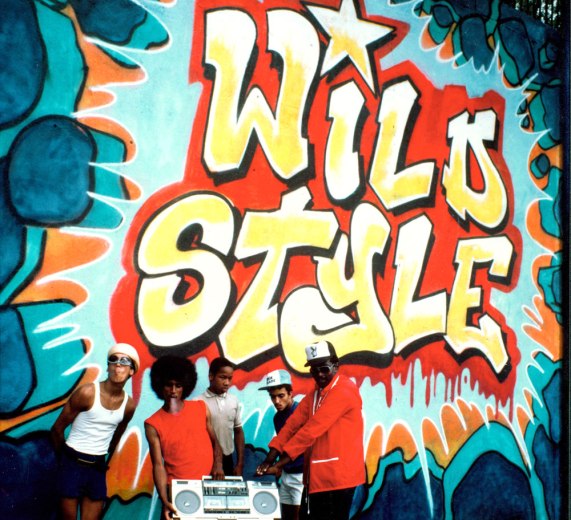
In recent years, there has been an explosion of colour and creativity with eye-catching street art across the globe. I have had an appreciation of this art form for a long time as it is usually thought provoking, skilful and beautiful. This probably stems from seeing the cult hip-hop and rap movie ‘Wild Style’ set in New York in the early 1980s. Do look at the introduction to the film to understand how this stayed with me. Graffiti on underground trains were one of the first types of graffiti street art, tags, murals, stencils etc. When I moved to London there were a few to be seen, but certainly there have been an increase in the visual landscape in parts of London and other parts of the world I have visited recently.

wild-style-e-flyer-old-logo-HIGH-RES
Cult Film ‘Wild Style’.

Graffiti and street art are not a new phenomenon. As with ancient civilisations, humans were writing on walls to decorate them, convey messages and for pure art. In Pompeii, we have seen evidence that graffiti was written on the walls in what would have been a bustling city. In the brothels, there were graphic drawings on the walls on the types of services that were available. There are parts of the world where art must have been drawn on walls or caves with primitive instruments.

10368193_10204244909873114_2895964038190550064_n
Graffiti in Pompeii.

In recent years, there have been real stories of how street art has moved from a covert hobby to a legitimate art form. Whilst researching the topic I found the article The Law of Banksy: Who owns Street Art’ in University of Chicago Law Review by Peter N Salib, who goes into the details of street art for its social value and benefits to the community. He also discusses the financial and commercial value of street art to communities. The rights of property and creative intellectual property rights of the artists are explained in depth.

Banksy is a world-renowned artist, and so he has been keen to give voice to a world that is at times – unfair, corrupt and downright self-destructive. I love it when he collaborates anonymously and supports causes that make me think, shakes up the status quo, or that which is simply sublime. I have only seen a couple of his works close up. One of those was in Tottenham, where the artwork on the wall was removed and sold off for a large profit. I guess that is just the way of the world.

175191_1785641251008_3023219_o
Banksy’s ‘No Ball Games’ Street Art before it was removed in Tottenham.

There are many street artists doing this across the world as you may have noticed on social media. The Berlin Wall and Belfast have been galleries for fabulous street art and graffiti – that have changed the narrative of their recent darker past. I haven’t visited these two cities but their street art culture is very much an attraction and a valid reason for me to want to visit these cities one day.

The Berlin Wall and Belfast have been galleries for fabulous street art and graffiti – that have changed the narrative of their recent darker past. …On global street art.

I particularly like the German street artist Alias too, as a few years ago we had one of his thought-provoking calendars. I actually got excited at the beginning of each month to see what he had to offer as we turned the page each month in the calendar. To see if his art has the same affect on you – see his website for some of his street art!

The best way to see street art is to get out and take a walk. If you would like an informed guide, tours are available in clusters of London. A couple of years ago Rachel Kolsky, of Go London Tours, gave members of SLA Europe a walking tour of the East End of London. It was an added benefit to stumble across all the street art near Brick Lane. You can see the photos here on SLA Europe’s Flickr account.

In Hoxton, Shoreditch and Dalston in London – I usually have to glance at the magnificent artwork as I drive through the city. However, I have been specifically on my own walks to look and photograph street art. The whole creative energy and regeneration of the area has taken place for over a period of 16 years. I have seen changes from edgy rundown buildings to current hip venues and offices. The hoarding boards come in handy to create street art, but there are also many building walls with street art in a concentrated area.

There are many other remarkable areas of street art – such as Camden, Hackney, Islington, along the River Lea, and even closer than close, in my neighbourhood in Walthamstow!

In my neighbourhood, there has been a gradual increase in the number of street art visible around our corner. It is a fact that Walthamstow has seen a lot of regeneration, and the dreaded gentrification (which I am all for!). But also the new street art has created genuine community interest and pride in our environment. Wood Street Walls (Twitter @woodstreetwalls)  is based in my area and have worked with local businesses and buildings to add community colour, statements, beautification and identity with the local area. I can now walk five minutes to see some amazing artwork outside on walls of local pubs, cafes, shop shutters, parks etc.

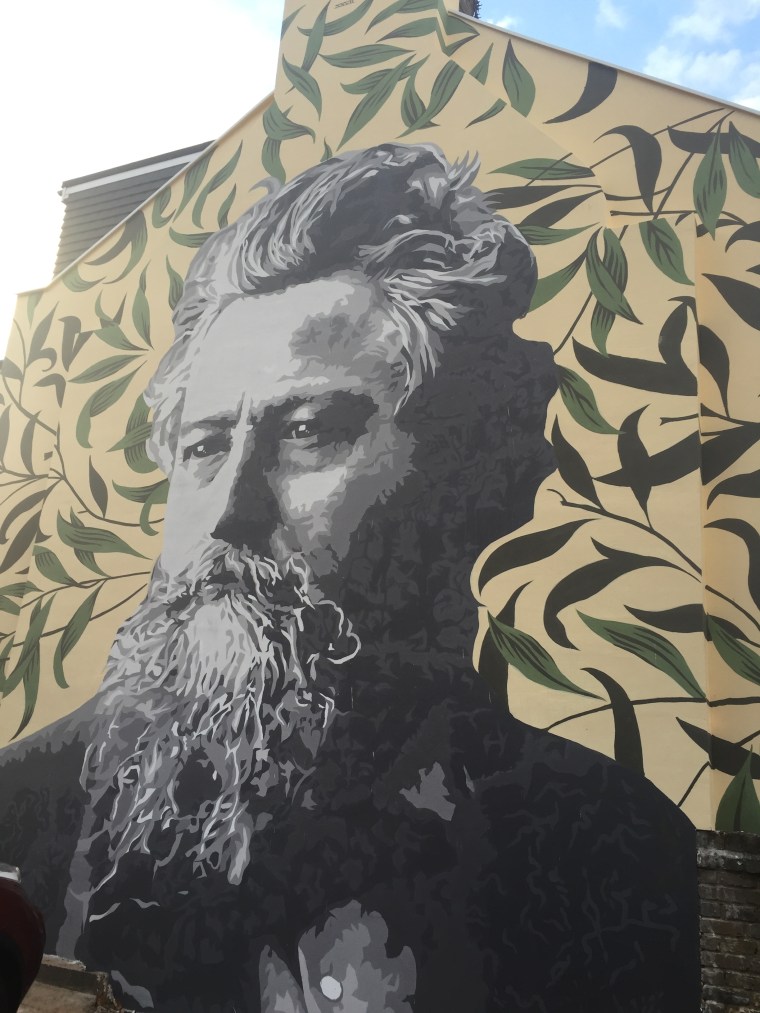
As with most art forms, the community has been great in supporting artists. However funding and space for art works is still lacking, and therefore artists still require the assistance for local and central government. Street Art is fine if the walls are approved but artist also want a space for their art and therefore local authorities should be able to facilitate affordable artist spaces and studios. A couple of business engagement aspects I like are the crowdsourcing campaign by Wood Street Wall for the residents to ‘Pick Their Pattern’ of an image of William Morris that they wished to be painted on a wall near the William Morris Gallery. And campaigns that ran to crowdfund for specific art projects.

IMG_9669
Completed William Morris crowdsourced ‘Pick a Pattern’.

If you are without these in your environment – you can get a copy of the book ‘London Graffiti and Street Art’ by Joe Epstein. It contains great photographs of street art across London, but also some inspirational and admirable quotes from street artists and what their art means to them.

One fabulous quote in this book by artist Zaki Dee 163 – The Chrome Angelz/The Others is: “Having been born in London, and grown up here in the 70’s and 80’s, through the 90’s, I was lucky enough to have been involved in, arguably, the three biggest movements of the last 40 or 50 years. From Punk and New Wave, into Hip Hop, through to the House/Rave scenes – and it’s no coincidence that London was at the forefront of all these subs-cultures when they first exploded onto these shores. After all this time, the UK graff scene is still going strong, and in London you can see some of the best work this country has to offer.”

It is fantastic and uplifting to see street art in clusters, isolated or even in the most unexpected places. They are a joy to behold! And just to keep us hooked…street art changes over time, and so it is worth going back occasionally to see new displays that are freely available to us all.

Indulgent Flavours with Food Fusion

I really enjoy when people start talking about fusion foods and dishes as I feel quite at home on this subject. It has always been one of my passions. As a Trinidadian, it comes naturally as a direct result of centuries of our collective history, geography, culture and more recently due to globalisation.

In relatively small islands in the Caribbean, Trinidadian cuisine has been allowed to fuse for centuries by its rich history, multiculturalism and the diversity of its people. The islands’ heritage were made up of Amerindians, Africans, Indians, Europeans, Chinese, South Americans, Syrians and Lebanese – the fusion of cultures and different ethnicities have influenced its cuisine as well as other elements like its music. Trinidadian food writer, Wendy Rahamut, wrote in her cookbook ‘Caribbean Flavors’ that “each of these cultures has left its own unique mark on the food of the region evolving in their own way to produce a new type of fusion cuisine that is mouth-watering, spicy and delicious.”

“Each of these cultures has left its own unique mark on the food of the region evolving in their own way to produce a new type of fusion cuisine that is mouth-watering, spicy and delicious.”

-Wendy Rahamut wrote in her cookbook ‘Caribbean Flavors’ 

Over 27 years ago in 1989, Alan Davidson described Trinidadian food in an article ‘Cooking up a Rainbow’ for The Sunday Times as “Food in Trinidad is an attractive hodgepodge and it does reflect the ethnic mix.” Right up to date to the present, this is also very much happening in Trinidad with new generations tapping into the richness and uniqueness of the islands as mentioned in this article ‘The Trinidadian Eating Experience’.

As a differentiation between world cuisine and fusion food – world food is when the dishes remain pure to its identity but are consumed by other groups. On the other hand, fusion food is when the ingredients, culinary techniques, skills and most of all…tasteful flavours have been merged and/or used to enhance a particular dish. I am not a food industry expert to define it as such, but it certainly seems to me that is the result with fusion food.

1102639_10201615324175115_178798654_o
Trinidadian Food at my friend Sherry’s House Party in Trinidad.

I grew up in an East Indian home but long before then, there were other cultural ingredients in our makeup that was accessible which meant that we adopted and adapted different styles and influences over 200 years. A typical Sunday lunch in Trinidad can be rice, callaloo (spinach dish with an assortment of vegetables, crabs and coconut milk), stew meat, roti (flatbread originating from Asia), and macaroni pie with fresh salad – there are continents of the world connected just on that one special plate! Not only is this fusion food – it is soul food!

There are continents of the world connected just on that one special plate! Not only is this fusion food – it is soul food! …on Trinidadian Food.

My love of food got more interesting when I moved to North London as a student. My family and friends exposed me to all types of restaurants and cuisine ranging from Greek-Cypriot, Turkish, Italian, Nigerian, Asian, Bengali and some traditional English dishes. It seems that fusion food has evolved in my time here too, with mixing and experimentation occurring to this day. Everyone can observe (and even better, taste!) that London is a fully cosmopolitan capital and so the city is lucky to offer these flavours to accent some of the best diversity of world cuisine.

10454300_10203871090887873_4423507203693142615_n
Sushi – I made after a Lesson in 2014.

Continue reading “Indulgent Flavours with Food Fusion”

Festivals and the Living is Easy

I have just returned from the International Festival of Business 2016 in Liverpool. This was an amazing opportunity for the Business and IP Centre to coordinate business advice clinics with regional Business & IP Centres in the network in the ‘Business Advisor Lounge’ at the newly opened National Exhibition Centre. The centre officially opened the same day as my visit by Queen Elizabeth II HRH, and I was told by colleagues that there was a lot of excitement having such a high profile respected world leader visit earlier that same day.

I was quite happy to go back to Liverpool again after visiting Anfield Football Stadium on the outskirts of Liverpool for a Euro 2000 football qualifier with Wales against Italy in 1998, as the Welsh Millennium Stadium was under construction. I didn’t see much of the city then, but I recently went back to for work for the day to Liverpool Centre Library to meet their staff at the Business & IP Centre Liverpool.  As a city, Liverpool has benefited in regeneration from a lot of investment in the public realm, and it looks shiny and fabulous on the two sunny days I was there. There is old architecture mixed with the new, Beatles tributes everywhere, the Mersey River, Albert Docks and attractive pedestrianised shopping areas. It is definitely a city worth visiting!


The International Festival of Business had a few highlights for me:

  • The Business & IP Centre held an Inspiring Entrepreneurs event on ‘Going Global’ with an excellent panel of entrepreneurs with some practical insight and tips for taking your business global.
  • PricewaterhouseCoopers had a stall at the festival to the theme ‘The Next Chapter’ as it was in my full view all day – and kept reminding me of my time working for them. When I worked at PwC, there was a good-hearted joke that you can go anywhere in the world and still encounter a PwC experience or meet someone with a connection with them!
  • The UK Trade and Investment and HSBC both had massive presence in the exhibition space for attracting inward investment, advice for exporting and creating business connections. Whilst I was there, the theme for the festival last week was ‘Energy and Environment’.  It was interesting to see the innovative productions on display and the eco-friendly and green initiatives.

As I was working in the Business Advice Lounge to give information to businesses – I was unable to attend other events on simultaneously. However, it was a brilliant opportunity to collaborate with our partners in Business & IP Centre Sheffield and with The Intellectual Property Office (IPO).

I have just told you a brief review on a serious business festival, but I am going to use this opportunity to write about the Summer music and arts festivals bloom in the United Kingdom. My childhood friends would remember that I love music, dancing, listening to the radio, going to live concerts and shows. It was this very same vice that was one of the attractions for me coming to London in the first place to study. Think of the heady 1980’s with Live Aid and MTV that were broadcast across the globe – Trinidad & Tobago never missed a thing! And so I was seduced by this global pop culture.

Festivals are big business and ubiquitous in the last 12 years. This summer, I saw many festival articles, poster advertisements in the London Underground and promoted on the radio. There are a few articles on the industry that have caught my eyes. The Guardian Newspaper informs that the industry attracts foreign visitors and that overseas visitors spent £852 a visit.  The article also refers to an industry report ‘The Real Cost of Festivals’ by Parcelhero and states that 40% of British went to one festival and we collectively spent £2.1 Billion Pounds.

There is always excitement in who is going to headline the main stage at Glastonbury to rock out the crowd, and it seems that the line up of artistes is crucial in this competitive market. The line-up and offerings must be attractive to sustain its clientele.

Coachella, the biggest festival in the world, sells 198,000 tickets and pulls in $84 million for the Californian event. The UK’s largest festival – Glastonbury – has a turnover of £37m but sees profits of just £86,000: less than 50p per ticket.

Source: ‘The Real Cost of Festivals’ by Parcelhero.

At work, I also have access to the Mintel market intelligence reports that I used to research the industry. Mintel’s ‘Music Festivals’ which states that festivals and concerts have been the fastest growing area of leisure spending over the last five years to 2015.  There is also a fun and informative article by a member of staff on The IPO’s blog on Festivals.

Locally, I have participated in the Walthamstow Garden Party, a community festival which is hosted by the Barbican Centre in London. The Barbican with the local council and community groups ( arts, artists, craft-makers and businesses) coordinate the festival. They all have been successful  in delivering a fine show with headliners such as Tiken Jah Fakoly, Femi Kuti, The Brand New Heavies and The Asian Dub Foundation (due July 2016).

As the Fundraising and Events Chair at The Lloyd Park Centre – we have hosted the Mini-Garden Party offering as a family friendly space. The garden party is great for showcasing the newly award winning park redevelopments (including the skate park and William Morris Gallery), ‘Useful and Beautiful’ creative local arts and crafts, fitness groups, real food market, poetry, music, DJs, disco and many other businesses. Personally, I think it has been successful with visitor numbers at 30000 per annum. The organisers have given the opportunity for the Barbican, Waltham Forest Council and local groups to collaborate, and get to know each other better to put on a fantastic community festival which is open and free for all. Yes…I said free!

Love Supreme Festival is held in Glynde and is hosted by Jazz FM.  The name is inspired by John Coltrane’s ‘Love Supreme’. Glynde is not to be confused with Glyndebourne that is famous for opera but you do have to pass through there to get to the festival.  This festival is aimed at the family friendly market and is in a very scenic field in Sussex. I have been a fan of Jazz FM for a while, as my ex-colleagues will tell you. Three years ago I tried the station’s competition for festival tickets for fun …and I actually won two free camping tickets!! There was no way I couldn’t go! I ended up going with two friends and our children.

For Love Supreme, I normally pitch a tent (glamping is too expensive for me!) with the help of my dear friends. This is my third year there and I am looking forward to the Funky Sensation Party on the Friday night. It is nice to be there in the inaugural night when campers are settling in before the busyness of the next two days. It is pure pleasure to see people filling in the Arena tent and dancing to Jazz, Soul and Hip Hop (correct me if I am wrong please). People dancing, the energy and movement remind me of Trinidadian Fetes or Parties where everyone just want to dance!

People dancing, the energy and movement remind me of Trinidadian Fetes or Parties where everyone just want to dance! …on Love Supreme Festival

I have been listening to Jazz for a few years before the digital age. Listening to radio stations on apps and digital broadcasting will enlighten jazz lovers to the biographies of the artistes, history of the song and allows you to share your (impulsive) experiences on social media. This is a very powerful immersive experience, so I am constantly trying to resist sharing songs – but have little control as you may noticed. I am sure you have experienced this too. I have written about this user experience in a blog post for work ‘Rock Stars to Classical Orchestras’ at the British Library. I think this must make me a fan, groupie or in this case – a ‘Jazzhead’. I am already trying to coordinate and organise which acts I am looking forward to seeing at which stage in the festival and at what time, so that I can see and not miss them! 

Feel it in your heart and feel it in your soul
Let the music take control
We’re going to party, limin’, fiesta, forever…

‘All Night Long’ by Lionel Ritchie.

One point that I would like to make is that festivals are fabulous outlets for businesses. I love all the various international food stalls being a foodie, fashion stalls, bookshops, coffee shops, bars etc. I understand there is going to be a new beauty salon and banquet style dining on offer this year. This must be a great opportunity for businesses with so many festivals in the United Kingdom. I would like to try another festival another time such as Glastonbury, Latitude and Womad. Womad is extra special to me as The British Library has recorded it for over 30 years.

Soon I will be there, lost in the music and experience with good friends (especially in the chaotic times of Brexit!). I hope you will forgive me for this self-indulgence.  It is one of my guiltiest pleasures and so I must try to behave. My only wish is that we’ll have some sunshine there.

On the beat with Community Action

It takes a Village to raise a Child – African Proverb

I was born and grew up in a village in Trinidad but I was certainly no country bumpkin! The village, Dow Village, was smallish in size but mighty in activity and life.

Diwali
Diwali Street Scene in Trinidad

We were very busy with several multi-cultural, multi-religious, traditional and modern activities, events and celebrations. As I look back at those early childhood years of village life on a Caribbean Island, I realise that we had a special community energy and participation in many aspects. We had bazaars and raffles to raise funds for various initiatives towards sports days, construction of buildings, treatment for unwell villagers, the Temple’s fund, local schools, re-enactment of Ramlila, Diwali Celebrations, Christmas, Eid-al-Fitr, Holi (Phagwah), street and house parties, and other events (please let me know if I forgot any!).  Some of the activities we held would entail selling fresh food, tea parties, Bar-B-Ques, Curry-Qs, playing games, and various entertainment ranging from sound systems to live music (such as tassa drums, Indian Orchestral to local Rock Bands). The village then was busy with life – it never felt boring or backwards.

Residents left their doors unlocked and gates open with low crime levels. Everybody knew everybody and it was used to our advantage – to build our community, to watch out for each other, to have pride in our neighbourhood.   There were bad points occasionally with fallouts but generally my village has stood the test of time. Up to now, I love my neighbours in Dow Village and I am sure that they love me too. We experienced everything from life to death and we can still touch base with each other wherever we are in the world with modern technology. Some of us may have left our villages for the wider world but David Rudder and Carl Jacobs sing in the Calypso ‘Trini to De Bone’:

“There’s no place like home some people say
Though some have to leave to make their way
But in their hearts I know their destiny
To come home and big up dey country” – Trini to De Bone.

I came to study in London over twenty-five years ago and lived in Hornsey and Tottenham initially. I used to hang out in Holloway, Highbury, Stoke Newington and Islington. It was interesting from the offset to experience so many cultures, tribes, languages and communities in North London. These ranged from North Londoners, Cockneys, Post-Punks, Irish, Greek Cypriots, Turkish, Kurdish, Nigerians, West Indians and lots more other ethnicities. It was a new melting pot for me to take in.

I eventually ended up in Walthamstow and was sceptical to move to East London as I had grown used to North and North East London. However, the timing was right again. Walthamstow still had affordable family homes, green spaces, and convenient travel links and a community feel about it. Moving to live here was a very good decision in the long term, and so the community story continues.

Walthamstow was recorded c. 1075 as Wilcumestowe (“the Place of Welcome”) and in the Domesday Book of 1086 as Wilcumestou. It does lie geographically on the edges of London and was a route between London and Waltham Abbey. Today that welcoming community spirit is still alive and kicking in Walthamstow. There are many remarkable things about the town and a few of them include:

  • The famous Walthamstow Market which is renowned for being the longest street market in Europe. I understand it has changed over the years but you can still get great bargains.
  • William Morris Gallery in gorgeous Lloyd Park, which was once the home of William Morris, world renowned designer, craftsman, poet, writer and socialist. His creations, ethos and influence are still relevant and inspiring today.
  • The Village area has old buildings and quaint houses which make you wonder about the past and the people who lived there. There lies too the Vestry House Museum which has permanent and temporary exhibitions, a community room and beautiful garden. I have been on guided walks with Joanne Moncrieff‘s Westminster Walks, who tells you all the facts about the buildings and area to bring them alive.
WGP-LPC2015
Storytelling by Mike at the Walthamstow Garden Party, The Lloyd Park Centre.

There are two community initiatives that I actively contribute to: The Lloyd Park Centre charity and the Poets’ Corner Residents Associations. Since 2004 at The Lloyd Park Centre, I have been a Management Committee and Fundraising and Events Group member. After many years thinking of helping in a local charity, the timing was right to start. I was inspired to get involved when I heard that this organisation was formed by volunteers in the 1980’s and still depended on community participation in its constitution, operation and strategic direction. It is also the lifetime commitment of inspiring Pauline Thomas MBE. The organisation’s history and commitment over the years is very admirable. In my time there, it has moved from portable cabins to an environmentally purpose-built designed building, and its financial turnover has doubled. I have seen it grow from strength to strength in offering children and family services such as day care, holiday clubs, baby clinics, Dad’s Club, Twins Club, Grandparents support, Autism support, outreach and a franchise of Dolly Parton’s Imagination Mobile Library to a deprived community.
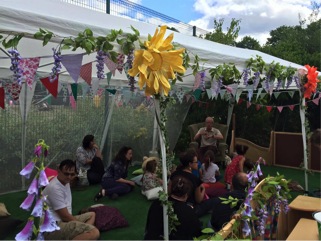
I have volunteered consistently for all these years and have been very ‘hands on’ in attending regular meetings, helping when and where I can with my skills, knowledge and most of all…my time. Committee meetings are not so daunting as you are briefed and guided by the other committee members who are already there. As time goes by, I have learnt from the organisation and challenged myself to activities that I wasn’t aware I could do – for example, I cooked for 200 people in their kitchen for a fundraiser! Generally I plan, organise and run events in my own time and all other activities that a local busy charity requires. I have to hone in on my organisational skills as this is not my day job and from my use of social media – you can see what I get up too! As with everything, nothing stays the same and the organisation is constantly evolving, improving and taking on new challenges.

I am proud that when I worked at PricewaterhouseCoopers I won a financial award for volunteering as part of their Community Affairs programme (Hello David!). They have a long history of Corporate Social Responsibility. I also have won the charity’s Volunteer and Fundraiser award a few times. However, it means a lot more than that to me. Over the years, my volunteering was a team effort to raise money and my goals really were to give support, help as much as I can and to be engaged in an organisation that has made a huge contribution to the local community and families for over 30 years. The last 12 years have been fun, satisfying and helped me developed outside of my day job and profession. It has relit that community flame that I had as a child in Trinidad.

Child is the Father of Man – William Wordsworth

I was made redundant about four years ago when I needed to re-focus my energies and give back to the place where I live once again. Luckily I had the time to volunteer in my neighbourhood residents associations when we were planning our London 2012 ‘Milimpics’ street party. We have our own Poets’ Corner blog and social media channels that have been going since 2012. We have since rebranded to Poets’ Corner E17, as there are streets named after Poets and we are on a corner. We have been constantly engaged in transformational regeneration initiatives that are happening on our doorsteps!

We are also very keen to support local businesses and love our high street. I have seen derelict shops being taken over as pop-up shops to permanent retail outlets. In the last few months – there are several new high street shops emerging such as coffee shops, art shop, craft beer, chocolate shop, giftware, Italian deli and hairdressers. Local venues Ye Olde Rose and Crown, The Bell Pub and Mirth Marvel Maud are used as meeting social places and also are at the heart of the nightlife. The last five years have been amazing, heart-warming, social and definitely local.


10369605_10203719881467732_1345985400225628703_n
Little Free Library Project – in Poets’ Corner.

We have continued the spirit of London 2012 Olympics with many activities including an annual street party simultaneous as the national Big Lunch celebrations, spring cleaning (which has made me obsessive about dumped rubbish and litter!), crime-watching, Halloween Party, Puppet Show and fabulous Christmas Carolling on the street. We have also taken part in the magnificent E17 Art Trail which has made us work collaboratively to display Estate Agents boards as ‘Poets for Sale’ with poems in our front gardens. For the 2015 project, we created ‘I want to tell you a story…’ stories on places on Walthamstow. Residents Barry and Lesley Coidan have been the driving force for a lot of these initiatives and deserve special recognition and appreciation. Before I forget to mention – we also have two Little Free Libraries in the neighbourhood, which started in Walthamstow for the United Kingdom (original idea is from the USA).

poets-for-sale


Why am I telling you this? I enjoy taking part in community events. I also think there is a special energy that I have been lucky to experience in my homeland of Trinidad many years ago, and here now in Walthamstow. It is very fulfilling and reassuring that we have neighbours and people in the community that we can rely on, pull together and to contribute to our society on wider urban issues, such as crime prevention, sustainability, environment, economy, culture, festivities and general awesomeness.  You just have to remember the terrible London riots of 2011 to recall what it is like when neighbourhoods fall apart and communities are at threat when you take your eyes of the ball.

I don’t have my own business but if I did – it would be based on the arts, crafts or food in the community. Volunteering has made me certain about that and myself. With Utopian and socially ethical views, I would feel compelled to consider where I live, the people it is going to affect, how we can work together to make our part of the world better for ourselves but also for my immediate neighbours.

Anyway, I really love taking part in the fun, and all the exciting energy and buzz of Walthamstow. We are celebrating our next Brazilian theme street party soon in tuned to the Brazil 2016 Olympics. And so the beat goes on, and on.

Networking in a small world

One of the best aspects of working in Business Information is that both information suppliers and professional organisations are generous and committed to helping clients and members to network and get to know each other.  I have been fortunate to be going to these events across London for more than twenty years, and relish seeing old friends and making new acquaintances.

In the 1990s and 2000s, the City Information Group was a professional association that hosted networking and social events across London in fabulous locations.  Some of the memorable events were held at The Dorchester Hotel, The Conservatory at the Barbican, an Art Gallery in Bermondsey and the Dover Street Arts Club (Yes my friends, I still remember the quail eggs canapés and potent wine).  Most of these events were sponsored by information and online services providers. So it was a very cost effective way for me to network, discuss interesting topics and purely for having some fun (I see nothing wrong with that!).  Most of all, I still see myself as a tourist in London and so enjoy going to new venues.  Sadly, the City Information Group no longer exists.

I have been a member of SLA Europe for 14 years and they are great at arranging networking events, educational seminars and tours across London. I get so much value for money from my membership, and honestly, I am not just saying that because I am their Membership Chair.  SLA Europe are always hosting events that are on the cusp of the information profession and industry SLA_Europe Logosector, such as ‘The Future of News’, ‘Tweeting while you work’, ‘The Evolving Value of Information Management’ etc.  Their programme of events over the years has been exceptional for networking and for visiting interesting buildings such as Dow Jones at their News Room, Nomura Bank on the Thames riverside and the quirky Barber Surgeon’s Hall in the city. Some of these venues shown on SLA Europe’s Flickr account are private offices or corporate venues to hire, and therefore they would not normally be open to the public.  There have been many more fun and interesting events over the years but I can’t remember them all. Along my same train of thought, here is a handy recent SLA Europe event review written by Vicky Sculfor with Top Five Tips for Networking.
“We are shifting from people who manage collections to people who manage connections.” – Deb Schwarz. SLA.

Timely too, is a relevant article and quote above from Deb Schwarz in SLA headquarters’ journal ‘The Connected Librarian – More than Social Media’, Information Outlook, March-April 2016. Deb evaluated from her colleagues that the “guide to the future of our profession” are:

  1. The connected librarian is about building and strengthening relationships, both within and outside the profession as well as personal and virtual.
  2. The connected librarian creates and maintains a linkage to time—past, present, and future.
  3. The connected librarian links people to increasingly diverse types and voluminous amounts of information.

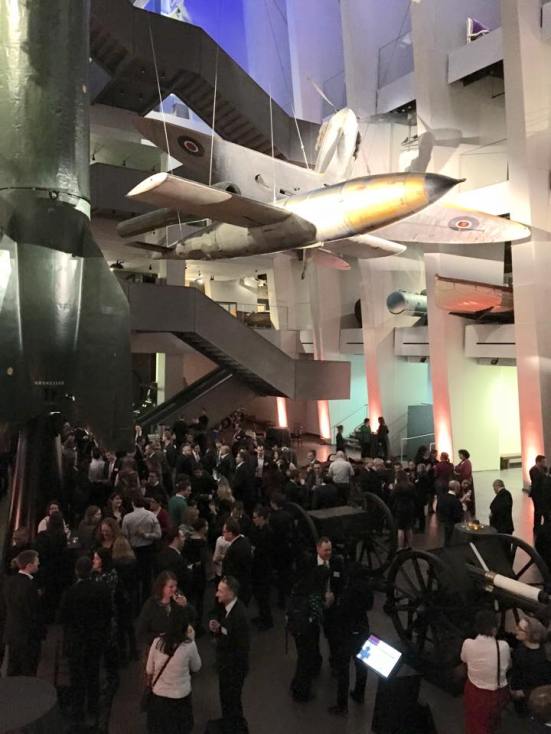
Bureau Van Dijk (BvD), an online provider for business intelligence and company data, host two parties a year for their clients, often in museums. I try to make sure that these are in my diary! Some of these museums have been so remarkable, that I want to mention them specially:

  • Imperial War Museum (IWM) – covers conflicts, especially those involving Britain and the Commonwealth, from the First World War to the present day. The IWM was renovated recently and it was special to be there in 2014 on the 100th anniversary of the first world war.

    10502216_10205668221135006_1480443024503753387_n
    A V1 Doodle Bug hanging over the BvD party at the Imperial War Museum
  • Hunterian Museum at The Royal College Of Surgeons – has unrivalled collections of human and non-human anatomical and pathological specimens, models, instruments, painting and sculptures that reveal the art and science of surgery from the 17th century to the present day. This was the most surreal venue to network! Where you are surrounded by thousands of glass medical specimens whilst mingling and drinking canapés! The display meant I could not manage to eat in there but it is a must to see, if you like that sort of thing.

    Crocodile and egg from Hunterian Collection2
    Hunterian Museum
  • The Natural History Museum– has 80 million specimens spanning billions of years.  It is always amusing and enchanting regardless of the time of year or how many times you go.  In 1995, I went behind the scenes on a private tour with a Brazilian Marine Biologist relative who was visiting London. We were shown extinct specimens that are inaccessible to the public.
11209456_10207523672080120_3649364056320123422_n
The Natural History Museum
  • Wallace Collection – has unsurpassed displays of French 18th-century painting, furniture and porcelain with superb Old Master paintings. Earlier this year, we were impressed by the grandeur and exquisite French styled rooms and artefacts of a bygone era.  It really is special, educational and heartwarming that we still have these treasures in museums for our collective history.
IMG_6884
Selfie with Colleagues in the Boudoir at the Wallace Collection

As I conclude, Librarians and informational professionals are one of the most connected professionals.  Long before the Internet and LinkedIn, we have relied on our network for career development, to share information and knowledge.  As professionals, we are still active face-to-face as well as tuned in virtually, and use this interconnected and interoperable network in an increasingly small world. Be it in search of good, sad or bad news and information – we are able to rely on our network to find, provide and support each other to show that we can help or that we care.  Some sceptics may disagree.  One thing is for sure – Librarians are certainly not boring!

For these reasons, I am a staunch believer in the idea of Six Degrees of Separation where people are linked in the connectivity of a modern but also digital world. I once helped to host a seminar entitled ‘Creating Connections’, where we demonstrated that people are linked from high official positions to people in the most remote places on Earth! But seriously, you can read more on this idea as there is much written on it in books and on the Internet.

When I need to extol the benefits of my profession – I always say that these social person-to-person networking events are a great opportunity for personal development and for business.  Networking is a dedicated and fun time where reconnections and new connections with people are made with great camaraderie in quirky, grand and historic buildings, usually with food and drink.

I hope I have convinced you. What are you waiting for?