I really enjoy when people start talking about fusion foods and dishes as I feel quite at home on this subject. It has always been one of my passions. As a Trinidadian, it comes naturally as a direct result of centuries of our collective history, geography, culture and more recently due to globalisation.
In relatively small islands in the Caribbean, Trinidadian cuisine has been allowed to fuse for centuries by its rich history, multiculturalism and the diversity of its people. The islands’ heritage were made up of Amerindians, Africans, Indians, Europeans, Chinese, South Americans, Syrians and Lebanese – the fusion of cultures and different ethnicities have influenced its cuisine as well as other elements like its music. Trinidadian food writer, Wendy Rahamut, wrote in her cookbook ‘Caribbean Flavors’ that “each of these cultures has left its own unique mark on the food of the region evolving in their own way to produce a new type of fusion cuisine that is mouth-watering, spicy and delicious.”
“Each of these cultures has left its own unique mark on the food of the region evolving in their own way to produce a new type of fusion cuisine that is mouth-watering, spicy and delicious.”
Over 27 years ago in 1989, Alan Davidson described Trinidadian food in an article ‘Cooking up a Rainbow’ for The Sunday Times as “Food in Trinidad is an attractive hodgepodge and it does reflect the ethnic mix.” Right up to date to the present, this is also very much happening in Trinidad with new generations tapping into the richness and uniqueness of the islands as mentioned in this article ‘The Trinidadian Eating Experience’.
As a differentiation between world cuisine and fusion food – world food is when the dishes remain pure to its identity but are consumed by other groups. On the other hand, fusion food is when the ingredients, culinary techniques, skills and most of all…tasteful flavours have been merged and/or used to enhance a particular dish. I am not a food industry expert to define it as such, but it certainly seems to me that is the result with fusion food.
Trinidadian Food at my friend Sherry’s House Party in Trinidad.
I grew up in an East Indian home but long before then, there were other cultural ingredients in our makeup that was accessible which meant that we adopted and adapted different styles and influences over 200 years. A typical Sunday lunch in Trinidad can be rice, callaloo (spinach dish with an assortment of vegetables, crabs and coconut milk), stew meat, roti (flatbread originating from Asia), and macaroni pie with fresh salad – there are continents of the world connected just on that one special plate! Not only is this fusion food – it is soul food!
There are continents of the world connected just on that one special plate! Not only is this fusion food – it is soul food! …on Trinidadian Food.
My love of food got more interesting when I moved to North London as a student. My family and friends exposed me to all types of restaurants and cuisine ranging from Greek-Cypriot, Turkish, Italian, Nigerian, Asian, Bengali and some traditional English dishes. It seems that fusion food has evolved in my time here too, with mixing and experimentation occurring to this day. Everyone can observe (and even better, taste!) that London is a fully cosmopolitan capital and so the city is lucky to offer these flavours to accent some of the best diversity of world cuisine.
I have just returned from the International Festival of Business 2016 in Liverpool. This was an amazing opportunity for the Business and IP Centre to coordinate business advice clinics with regional Business & IP Centres in the network in the ‘Business Advisor Lounge’ at the newly opened National Exhibition Centre. The centre officially opened the same day as my visit by Queen Elizabeth II HRH, and I was told by colleagues that there was a lot of excitement having such a high profile respected world leader visit earlier that same day.
I was quite happy to go back to Liverpool again after visiting Anfield Football Stadium on the outskirts of Liverpool for a Euro 2000 football qualifier with Wales against Italy in 1998, as the Welsh Millennium Stadium was under construction. I didn’t see much of the city then, but I recently went back to for work for the day to Liverpool Centre Library to meet their staff at the Business & IP Centre Liverpool. As a city, Liverpool has benefited in regeneration from a lot of investment in the public realm, and it looks shiny and fabulous on the two sunny days I was there. There is old architecture mixed with the new, Beatles tributes everywhere, the Mersey River, Albert Docks and attractive pedestrianised shopping areas. It is definitely a city worth visiting!
Liverpool
The International Festival of Business had a few highlights for me:
The Business & IP Centre held an Inspiring Entrepreneurs event on ‘Going Global’ with an excellent panel of entrepreneurs with some practical insight and tips for taking your business global.
I attended a talk by the Global Visionary Women’s Network Convention with motivational speaker Queen Naa Tso Soyoo I from Ghana. Her talk and story on transformational leadership was interesting and passionate. I particularly liked her point that regal leaders had to earn their status rather than expect it.
PricewaterhouseCoopers had a stall at the festival to the theme ‘The Next Chapter’ as it was in my full view all day – and kept reminding me of my time working for them. When I worked at PwC, there was a good-hearted joke that you can go anywhere in the world and still encounter a PwC experience or meet someone with a connection with them!
The UK Trade and Investment and HSBC both had massive presence in the exhibition space for attracting inward investment, advice for exporting and creating business connections. Whilst I was there, the theme for the festival last week was ‘Energy and Environment’. It was interesting to see the innovative productions on display and the eco-friendly and green initiatives.
As I was working in the Business Advice Lounge to give information to businesses – I was unable to attend other events on simultaneously. However, it was a brilliant opportunity to collaborate with our partners in Business & IP Centre Sheffield and with The Intellectual Property Office (IPO).
I have just told you a brief review on a serious business festival, but I am going to use this opportunity to write about the Summer music and arts festivals bloom in the United Kingdom. My childhood friends would remember that I love music, dancing, listening to the radio, going to live concerts and shows. It was this very same vice that was one of the attractions for me coming to London in the first place to study. Think of the heady 1980’s with Live Aid and MTV that were broadcast across the globe – Trinidad & Tobago never missed a thing! And so I was seduced by this global pop culture.
Walthamstow Garden Party.
Festivals are big business and ubiquitous in the last 12 years. This summer, I saw many festival articles, poster advertisements in the London Underground and promoted on the radio. There are a few articles on the industry that have caught my eyes. The Guardian Newspaper informs that the industry attracts foreign visitors and that overseas visitors spent £852 a visit. The article also refers to an industry report ‘The Real Cost of Festivals’ by Parcelhero and states that 40% of British went to one festival and we collectively spent £2.1 Billion Pounds.
There is always excitement in who is going to headline the main stage at Glastonbury to rock out the crowd, and it seems that the line up of artistes is crucial in this competitive market. The line-up and offerings must be attractive to sustain its clientele.
Coachella, the biggest festival in the world, sells 198,000 tickets and pulls in $84 million for the Californian event. The UK’s largest festival – Glastonbury – has a turnover of £37m but sees profits of just £86,000: less than 50p per ticket.
Source: ‘The Real Cost of Festivals’ by Parcelhero.
At work, I also have access to the Mintel market intelligence reports that I used to research the industry. Mintel’s ‘Music Festivals’ which states that festivals and concerts have been the fastest growing area of leisure spending over the last five years to 2015. There is also a fun and informative article by a member of staff on The IPO’s blog on Festivals.
Locally, I have participated in the Walthamstow Garden Party, a community festival which is hosted by the Barbican Centre in London. The Barbican with the local council and community groups ( arts, artists, craft-makers and businesses) coordinate the festival. They all have been successful in delivering a fine show with headliners such as Tiken Jah Fakoly, Femi Kuti, The Brand New Heavies and The Asian Dub Foundation (due July 2016).
As the Fundraising and Events Chair at The Lloyd Park Centre – we have hosted the Mini-Garden Party offering as a family friendly space. The garden party is great for showcasing the newly award winning park redevelopments (including the skate park and William Morris Gallery), ‘Useful and Beautiful’ creative local arts and crafts, fitness groups, real food market, poetry, music, DJs, disco and many other businesses. Personally, I think it has been successful with visitor numbers at 30000 per annum. The organisers have given the opportunity for the Barbican, Waltham Forest Council and local groups to collaborate, and get to know each other better to put on a fantastic community festival which is open and free for all. Yes…I said free!
Jazz FM’s Love Supreme Festival.
Love Supreme Festival is held in Glynde and is hosted by Jazz FM. The name is inspired by John Coltrane’s ‘Love Supreme’. Glynde is not to be confused with Glyndebourne that is famous for opera but you do have to pass through there to get to the festival. This festival is aimed at the family friendly market and is in a very scenic field in Sussex. I have been a fan of Jazz FM for a while, as my ex-colleagues will tell you. Three years ago I tried the station’s competition for festival tickets for fun …and I actually won two free camping tickets!! There was no way I couldn’t go! I ended up going with two friends and our children.
For Love Supreme, I normally pitch a tent (glamping is too expensive for me!) with the help of my dear friends. This is my third year there and I am looking forward to the Funky Sensation Party on the Friday night. It is nice to be there in the inaugural night when campers are settling in before the busyness of the next two days. It is pure pleasure to see people filling in the Arena tent and dancing to Jazz, Soul and Hip Hop (correct me if I am wrong please). People dancing, the energy and movement remind me of Trinidadian Fetes or Parties where everyone just want to dance!
People dancing, the energy and movement remind me of Trinidadian Fetes or Parties where everyone just want to dance! …on Love Supreme Festival
I have been listening to Jazz for a few years before the digital age. Listening to radio stations on apps and digital broadcasting will enlighten jazz lovers to the biographies of the artistes, history of the song and allows you to share your (impulsive) experiences on social media. This is a very powerful immersive experience, so I am constantly trying to resist sharing songs – but have little control as you may noticed. I am sure you have experienced this too. I have written about this user experience in a blog post for work ‘Rock Stars to Classical Orchestras’ at the British Library. I think this must make me a fan, groupie or in this case – a ‘Jazzhead’. I am already trying to coordinate and organise which acts I am looking forward to seeing at which stage in the festival and at what time, so that I can see and not miss them!
Feel it in your heart and feel it in your soul
Let the music take control
We’re going to party, limin’, fiesta, forever…
‘All Night Long’ by Lionel Ritchie.
One point that I would like to make is that festivals are fabulous outlets for businesses. I love all the various international food stalls being a foodie, fashion stalls, bookshops, coffee shops, bars etc. I understand there is going to be a new beauty salon and banquet style dining on offer this year. This must be a great opportunity for businesses with so many festivals in the United Kingdom. I would like to try another festival another time such as Glastonbury, Latitude and Womad. Womad is extra special to me as The British Library has recorded it for over 30 years.
Soon I will be there, lost in the music and experience with good friends (especially in the chaotic times of Brexit!). I hope you will forgive me for this self-indulgence. It is one of my guiltiest pleasures and so I must try to behave. My only wish is that we’ll have some sunshine there.
One of the best aspects of working in Business Information is that both information suppliers and professional organisations are generous and committed to helping clients and members to network and get to know each other. I have been fortunate to be going to these events across London for more than twenty years, and relish seeing old friends and making new acquaintances.
In the 1990s and 2000s, the City Information Group was a professional association that hosted networking and social events across London in fabulous locations. Some of the memorable events were held at The Dorchester Hotel, The Conservatory at the Barbican, an Art Gallery in Bermondsey and the Dover Street Arts Club (Yes my friends, I still remember the quail eggs canapés and potent wine). Most of these events were sponsored by information and online services providers. So it was a very cost effective way for me to network, discuss interesting topics and purely for having some fun (I see nothing wrong with that!). Most of all, I still see myself as a tourist in London and so enjoy going to new venues. Sadly, the City Information Group no longer exists.
I have been a member of SLA Europe for 14 years and they are great at arranging networking events, educational seminars and tours across London. I get so much value for money from my membership, and honestly, I am not just saying that because I am their Membership Chair. SLA Europe are always hosting events that are on the cusp of the information profession and industry sector, such as ‘The Future of News’, ‘Tweeting while you work’, ‘The Evolving Value of Information Management’ etc. Their programme of events over the years has been exceptional for networking and for visiting interesting buildings such as Dow Jones at their News Room, Nomura Bank on the Thames riverside and the quirky Barber Surgeon’s Hall in the city. Some of these venues shown on SLA Europe’s Flickr account are private offices or corporate venues to hire, and therefore they would not normally be open to the public. There have been many more fun and interesting events over the years but I can’t remember them all. Along my same train of thought, here is a handy recent SLA Europe event review written by Vicky Sculfor with Top Five Tips for Networking.
“We are shifting from people who manage collections to people who manage connections.” – Deb Schwarz. SLA.
Timely too, is a relevant article and quote above from Deb Schwarz in SLA headquarters’ journal ‘The Connected Librarian – More than Social Media’, Information Outlook, March-April 2016. Deb evaluated from her colleagues that the “guide to the future of our profession” are:
The connected librarian is about building and strengthening relationships, both within and outside the profession as well as personal and virtual.
The connected librarian creates and maintains a linkage to time—past, present, and future.
The connected librarian links people to increasingly diverse types and voluminous amounts of information.
Bureau Van Dijk (BvD), an online provider for business intelligence and company data, host two parties a year for their clients, often in museums. I try to make sure that these are in my diary! Some of these museums have been so remarkable, that I want to mention them specially:
Imperial War Museum (IWM) – covers conflicts, especially those involving Britain and the Commonwealth, from the First World War to the present day. The IWM was renovated recently and it was special to be there in 2014 on the 100th anniversary of the first world war.
A V1 Doodle Bug hanging over the BvD party at the Imperial War Museum
Hunterian Museum at The Royal College Of Surgeons – has unrivalled collections of human and non-human anatomical and pathological specimens, models, instruments, painting and sculptures that reveal the art and science of surgery from the 17th century to the present day. This was the most surreal venue to network! Where you are surrounded by thousands of glass medical specimens whilst mingling and drinking canapés! The display meant I could not manage to eat in there but it is a must to see, if you like that sort of thing.
Hunterian Museum
The Natural History Museum– has 80 million specimens spanning billions of years. It is always amusing and enchanting regardless of the time of year or how many times you go. In 1995, I went behind the scenes on a private tour with a Brazilian Marine Biologist relative who was visiting London. We were shown extinct specimens that are inaccessible to the public.
The Natural History Museum
Wallace Collection – has unsurpassed displays of French 18th-century painting, furniture and porcelain with superb Old Master paintings. Earlier this year, we were impressed by the grandeur and exquisite French styled rooms and artefacts of a bygone era. It really is special, educational and heartwarming that we still have these treasures in museums for our collective history.
Selfie with Colleagues in the Boudoir at the Wallace Collection
As I conclude, Librarians and informational professionals are one of the most connected professionals. Long before the Internet and LinkedIn, we have relied on our network for career development, to share information and knowledge. As professionals, we are still active face-to-face as well as tuned in virtually, and use this interconnected and interoperable network in an increasingly small world. Be it in search of good, sad or bad news and information – we are able to rely on our network to find, provide and support each other to show that we can help or that we care. Some sceptics may disagree. One thing is for sure – Librarians are certainly not boring!
For these reasons, I am a staunch believer in the idea of Six Degrees of Separation where people are linked in the connectivity of a modern but also digital world. I once helped to host a seminar entitled ‘Creating Connections’, where we demonstrated that people are linked from high official positions to people in the most remote places on Earth! But seriously, you can read more on this idea as there is much written on it in books and on the Internet.
When I need to extol the benefits of my profession – I always say that these social person-to-person networking events are a great opportunity for personal development and for business. Networking is a dedicated and fun time where reconnections and new connections with people are made with great camaraderie in quirky, grand and historic buildings, usually with food and drink.
I hope I have convinced you. What are you waiting for?
Well, I have finally done it! I have my very own blog after many years of suggestions from friends and acquaintances that I should have my own online space. I am a fairly prolific social media user, have blogged for work, guest blogged and used collaborative technologies since the 1990’s as work in libraries and information centres.
In the past I am too busy with other things to have time to blog, but I feel the time has come to merge my stories as they become interwoven into one space. It may be easier for me to do this here due to the info centric, rich connections and experiences I encounter in my simple life, community, work and profession. Let’s face it … this online space is for everyone to use for good and I also want to use this as an archive for future reference.
For my first post, I wanted to write briefly about Trinidad Carnival which occurs every year two days before Mardi Gras, directly followed by Ash Wednesday and Lent. It is a time of year where I instinctively feel excited, and try to tune in from wintery cold England to the heat, energy, bursting creativity and vibrant colours or as we say… bacchanal (derived from bacchus) that is Trinidad Carnival.
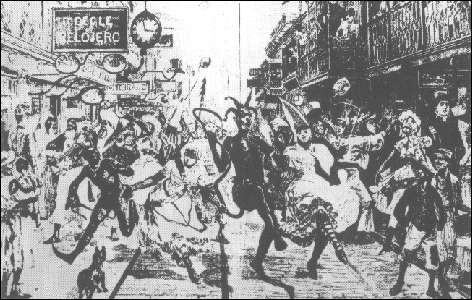
The history of Trinidad Carnival is long and goes back to the 18th Century when the European plantations owners celebrated masquerades before lent. Their African slaves were not allow to take part but formed their own caboulay celebrations. Here they developed mas’ (abbreviated from masquerade) as we know it now – whereby African musical and dance traditions fused with European masks and costumes into an eclectic and exotic mix.
And so I am writing this in London, but my heart strays away to the land of my birth this time of year. From as early as I can remember, I can remember Carnival! Carnival is part of the Trinidadian (Trini for short) psyche, mindset and makeup (no pun intended). Children would take part in schools by making masks and costumes. Usually schools arrange a bit of a “jump up” dance for the parading of these creations on the Friday before the Carnival weekend. There would be an extra tinge of excitement in the air as it is the start of four days of holidays for the Carnival celebrations. The actual big and commercial celebrations usually start the previous year with the launch of Carnival bands, parties or ‘fete’ as we say, being once a French colony. This is big business now, for when one Carnival finishes, the planning for the next year starts immediately after a short break.
I found some gems of carnival video clips from the 1950s when British Pathe digitised their archive. The effort that went into the costumes are stunning with wonderful results. I wondered if they were funded centrally or whether the costumes were made out of their own pockets! Anyway, I love the themes such as American Native Indians, Egyptians and all the other finer details in the mas. In the 1970s and 1980s, I had noticed even then that cameras and broadcasters transmitting the parades to people’s homes and possibly abroad.
As a child, I used to be excited waking up on Carnival weekend as the whole weekend would be a visual and rhythmical treat. Saturdays during the day would be filled watching on television the ‘Kiddies Carnival’ and later that night, some of the steel pan ‘Panorama’ competitions. The show usually finishes late, so I sometimes never saw all of the steel bands. What people don’t realise – the steel bands themselves in Trinidad are massive and consist of scores of musicians and organisers. The orchestras fill a large part of the epicentre of the competitions at the Queen’s Park Savannah stage. The flag bearers were generally women who danced away to the steel drums on stage and were a treat to watch too – they waved it and shaked it!
On Sunday there would be the Dimanche Gras competition showcasing the large Kings and Queens Carnival costumes and the Calypso competition. This is no longer the competiton format but it was exciting to see it then over the weekend. The televised shows always made exciting live viewing and that was very special about Trinidad (this year I listened to live radio via the web in London and have seen live streaming on the web too in the recent years!).
I remember the costumes being very elaborate and colourful in the late 70s and 80s. Now the costumes are still beautiful but a bit monotonous, as they are mainly bejewelled bikinis with feathers. Don’t get me wrong – I guess this has made mas more accessible and now everyone can afford to participate in a piece of the action in an all-inclusive Carnival band. A relative told me that most of the big bands mas are currently manufactured in China. However, I saw a few years ago that some top designers such as Brian Macfarlane still make theatrical theme-based mas, and also there are still organically handmade costumes in some communities across Trinidad.
Jab Jab – Brian MacFarlane.
On Carnival Mondays, we would wake up to young children in my hometown Dow Village wearing their homemade masks. They will go door to door chanting slogans and making noisy music with a pan and stick expecting small money for their efforts. Pocket money was given as an appreciation for their efforts. Sadly, I understand this tradition doesn’t happen now in my village. From early morning on Carnival Monday when it is still dark, there would be live television broadcasting of J’ouvert – the official start of the adult Carnival on the streets of the cities. I only attended J’ouvert once in Port-of-Spain circa 1985 with relatives and we got there for about 3am in the dark. It was amazing to witness and participate in a celebration with people dancing on the streets at that time in the early hours of the morning. The debauchery, dancing and parading would continue into the daylight of mid-morning. This is broadcasted on live television too, if you can’t go out to the streets. In recent years in London, I love seeing dawn tweets of Trinidad J’ouvert on Twitter.
J’ouvert leads on to the official parades of bands. Historically there is no wasting of time on the start of Carnival and revellers make the most of time before the Ash Wednesdays cool-down. The rest of the day would be spent watching the Monday parades of bands on the Television. My village had traditional celebrations such as Jab Jabs (derived from Spanish for diablo) dressed as devils with whips. Unique to my village, some East Indians in the community would also have a parade to the beat of East Indian tassa drums to the next main town Couva.
On the final day that is Carnival Tuesday, our parents would always take us to Port-of-Spain (my mother’s hometown) to see the mas meeting up with our large family with homemade picnics and snacks for the day including delicacies like our own Trinidadian pilau (mixed rice dish with meat, pigeon peas and vegetables). There we would be based all day to see the great and traditional masqueraders displayed on the Queen’s Park Savannah stage. We would see traditional masqueraders such as the Sailor Bands, Midnight Robbers, American Indians, Minstrels, Moko Jumbies on stilts and blue devils covered with blue powder to name a few characters. There too, we saw the great bands of 3000 plus masquerade members by designers such as Raoul Garib, Wayne Berkeley, Stephen Lee Heung and my all time favourite designer – the world renown Peter Minshall.
Peter Minshall not only created beautiful exquisitely designed costumes for Kings, Queens and his band members – he retained the theatrical themes and origins of the mas with performances on the main Queen’s Park Savannah stage. Frequently his costume designs were provocative for social and political commentary with theatre and drama. For example, I remember vividly on television the King of Carnival performance and showcasing of Mancrab for his band theme ‘The River’ – it was pure drama! This was aired live on television to the movement and sound of calypso music. I still think of the year he created the band Rat Race and the vision of hundreds of people dressed as Rats in the ‘savannah’ and on the streets of Port-of-Spain. It is hard to cover all the beauty, vibrancy and growing up with Trinidad Carnival but they are cherished memories of the creativity and the celebration of our people.
Rat Race by Peter Minshall.
On the business side of Carnival, Minshall is renowned for exporting his talent and creations at major global events such as the Barcelona and Atlanta Georgia Olympic Games Opening ceremonies. He is also credited for designing the Tall Boy which he patented and invented with Doron Gazit. It was great to see him also back from a haitus from Carnival in 2016 with his design of ‘The Dying Swan’.
There would be no Carnival without music. Kaiso and the oral traditions came over with African Slaves and evolved into calypso and eventually to the modern day soca (soul and calypso). The development of this music genre is innovative and laced with fusion beats and can be social and political commentary but generally is more upbeat, rhythmic with innuendos for having a good time. Nothing can beat a good calypso to get a fete going or everybody on a dance floor or street. I still actively look forward to the new music releases and social media is a great tool for that hobby. I remember when I first came to London, I had no clue what the latest releases were as I tend to listen to mainstream British radio and not the UK soca radio stations. I used to receive cassettes sent over with relatives who went to holiday to Trinidad. Thankfully now I can find music on online radio stations, You Tube and via my own social network. Forbes recently published a list of Carnival Entrepreneurs with the Trinidad Carnival Powerlist and there is much talk that soca music is finally going mainstream. I hope so, with so many Caribbean Carnivals being celebrated across the globe.
This slideshow requires JavaScript.
At the British Library where I currently work, this is the final week for the dazzling exhibition ‘West Africa: Word, Symbol, Song’. I am extremely grateful to the curators of the exhibition for helping me understand the world and for my own self-discovery as an Indian-Trinidadian. I learnt so much about West African culture and its oral traditions, ancient manuscripts, symbols, fabric, musical instruments, musical history and art forms. It was also an immense pleasure to see the ‘Carnival Queen’ designed by fellow Trinidadian Ray Mahabir on the speaker-box with a nucleus of calypso and soca music curated to visuals of Nottinghill Carnival inside the speaker-box. Being in there, it was one of the moments when you can see all the dots joining up – a world connected. Old with the new.
Being in there, it was one of the moments when you can see all the dots joining up – a world connected. Old with the new.
I feel I can write a book on my experiences on Carnival, which has been dubbed a long time ago as the greatest show on Earth. I borrowed a few books to research from the British Library before my visit last year for Trinidad Carnival, and it has been documented for its social, cultural and delightful impact.
Today in London, I wanted to remind those who know me that it is Carnival Tuesday and I can’t help my thoughts straying to Trinidad and that infectious energy, freedom, rhythms, empowerment and colour of my country and the people. Later this year, I look forward to a little bit of that enjoyment at the Notting Hill Carnival in August.



 sector, such as ‘The Future of News’, ‘Tweeting while you work’, ‘The Evolving Value of Information Management’ etc. Their programme of events over the years has been exceptional for networking and for visiting interesting buildings such as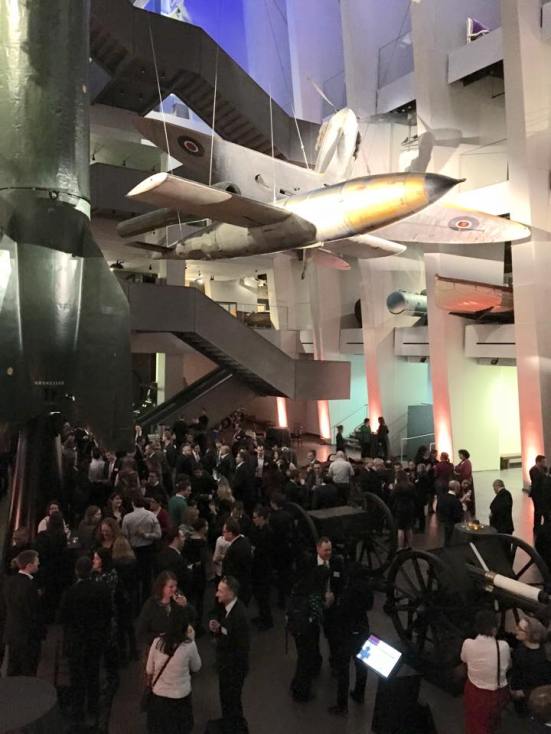


 say…
say… 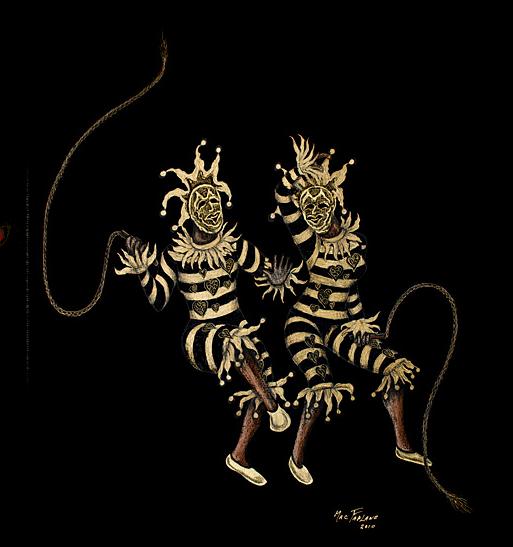

 Connecting the Dots