Works in Business Information. An Information and Music fanatic, mostly. And here is where I have decided to put more. After many years of friends' suggestions that I create a blog, I decided to have my own. I have written posts for the Business & IP Centre and some guest posts on other sites. I am Trinidadian and have lived in London for over 30 years. I have many years of working in libraries and information centres. I actively volunteer in my community. Feel free to comment on my scribbles.
It is that time again when I am thinking what shall I blog about. I really have not been out much later since the post festive season and a busy time generally. The weather has not been great too and therefore I am looking forward to Spring! The inspiration for this blog came from my journey on the train to work when I spotted an advert for HelloFresh for restore the balance. This resonated with me as I was preparing some work about burnout and finding a balance the weeks before. I think the whole world feels a bit too war torn and bruised and you really have to seek out humanity. There has been a lot more discussed on making choices that improve and maintain our wellbeing, as well as kindness at the core of what we do.
I will explore five tips to pledge to myself – I can’t promise I will stick to it but it is a note-to-self. Here goes…
Wellbeing and Healthy Living – It will be five years since the pandemic and on a professional aside, there are still significant changes that have not made life easy or straightforward. I have learnt to look after myself and my wellbeing for over 18 years of constant change that may not have always made me feel settled. One of the positives of this is that I have gained resilience but I still have to remind myself to stop, take some hours for myself or do something that I enjoy. I would like to spend more time going to a spa or for a massage like some of my female friends, but again it is the time required to do this. I hope I can put this on my to-do list every day.
Exercise – should be at the centre of all our lives and I admire people who set aside time to go for a run, get on their bike, hot the gym or any physical activity that would maintain and improve their quality of life. I stopped my gym membership over a decade ago but since then I have tried to keep busy by doing Pilates, walking, swimming and cycling. I can still all of these but I need to ensure that I add time in the week, and especially at the weekend to do this. I am looking forward to Spring when I know it will be easier for me to step out and trying some more physical activities. Hopefully I can fit some of this fresh air and exercise as soon as tomorrow with my first weekend with little planned.
Good Nutrition – requires some proactivity and planning. I don’t eat junk food (perhaps only once a week I get a take away) but I have been eating things on the go in the office or getting home later to leftovers which may not be suitable for me to eat. I do like salads and fresher foods but being in the heart of winter, I gravitate to warm and comfort foods I am married to an Italian – so I have to keep my pasta intake in check as it could be 3-4 a week if we eat the same meals all week. I need to get back to preparing meals at night or as someone pointed out recently, I can get a salad at a discount rate in the staff canteen. At home, I need to ensure that I put my items on the shopping list so that I plan my meals ahead. Wish me luck!
Socialising – and spending time with friends is definitely what I do when I have time. However, I had a busy autumn and cold winter so I have not socialised much lately. I am pleased to get texts from my friends in the last couple of days for us to meet up. I have also arrange a meet up with my close friend in the next couple of weeks. My school friends from the Caribbean are also visiting me in Spring and with a couple of trips planned. So I have no excuse but to organise some fun, entertaining and even sightseeing. Spending quality time with family and friends so boost our moods (I know not all the time). There is only limited time on this earth and I am counting my blessings all the time.
Celebrate the small stuff – as I mentioned above, there is a whole lot of craziness going on in the world. I literally have to zone-out from terrible things that we see in the news and it has changed for the worst in recent years. It is not that I am a realist. Instead I am reminding myself of beauty, joy, kindness and love. I reminds me when there were other tube posters with ‘Random Acts of Kindness’ which I loved. I am not very so active in community events at present but the best part of kindness helps me think of the role models I have and the way they may have done something because it needed to be done, given or shared. Kindness is also natural and ingrained where you may not have even had time to think of a reaction. So it really to build in this inner compass to help you when times are tough. I am especially pleased to see that this is talked about a lot more in leadership styles and it is safe to show compassion, manners and good old fashion principles.
So these are notes to myself and they seem sensible and not too difficult to follow. Hopefully I am setting up myself to succeed and hopefully my life would be a little but richer because of this list. Wish me luck!
I have had a lot of time in the last week to relax and enjoy time with family, friends and pets. On reflection at the year at this time of year, there has been a lot that happened in a professional level, and I made a conscious effort to find some time to see more of England. You can see from my previous blogs posts that I have been busy with professional activities and some fun and travel thrown in. This year was busier than expected, and little did I know that I would be unable to have lots of free time.
Some of the highlights are mentioned here for my own reminder of a year well-spent.
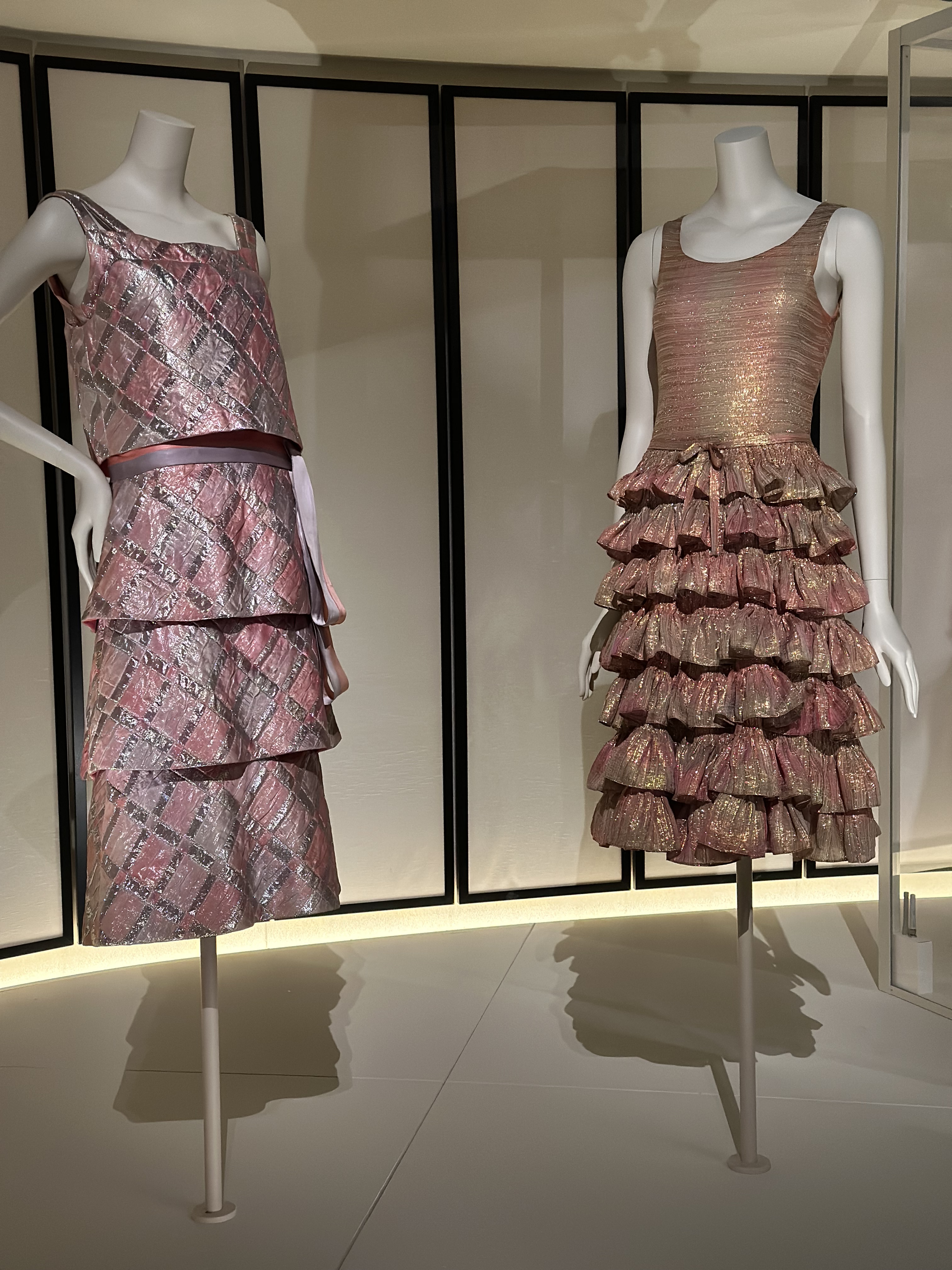
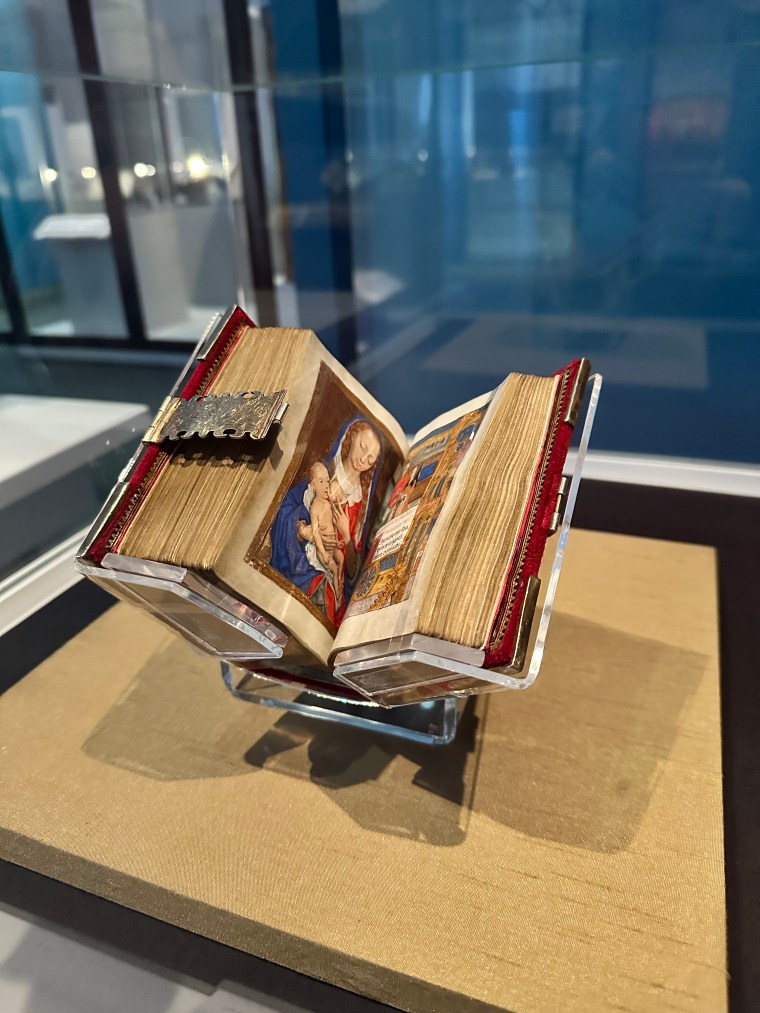
It was also great to start the year visiting the Chanel exhibition at the V&A Museum. The dresses on display were like works of art and the exhibition enlightened me on Chanel’s impact on design and fashion from the little black dress, ball gowns, trousers, and the classic suits she is famous for to this present day. I have recently visited the Medieval Women exhibition at the British Library, and this reminded me of women who have been doing fascinating innovative activities throughout time but whose stories are not always told. For example, it was great to smell some of the scents made in the medieval ages that would not seem out of place in this current age. There is definitely a deeper appreciation for those who have gone before us.
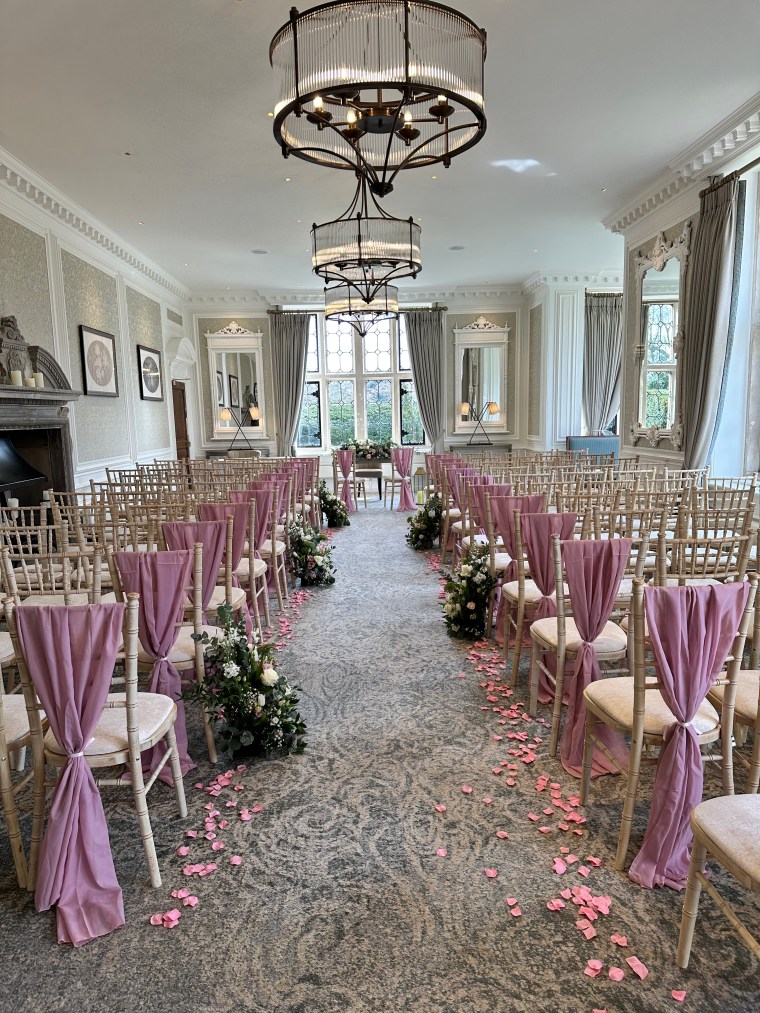
One of them was getting ready for a wedding in the family where I had my first away weekend for a hen party. It seemed like ages ago but spending January doing fun things with family was a great start to the year. In Birmingham, we looked at movies, danced, tried new drinks, had brunch and had a cake completion. I do remember all the lovely pink theme items and even now when I wear my bright pink top – I still get compliments when I wear it and I feel oblige to say that I bought it for a hen party. Fast forward a few months, and the wedding was also a lot of fun! It was great to spend time with family for a big occasion like an Italian-South African wedding with delicious food, good music, dancing in a lovely venue.
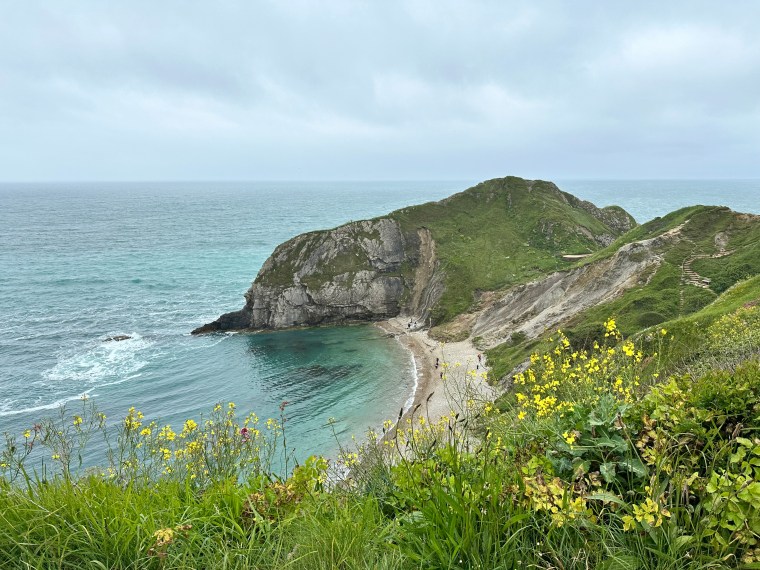
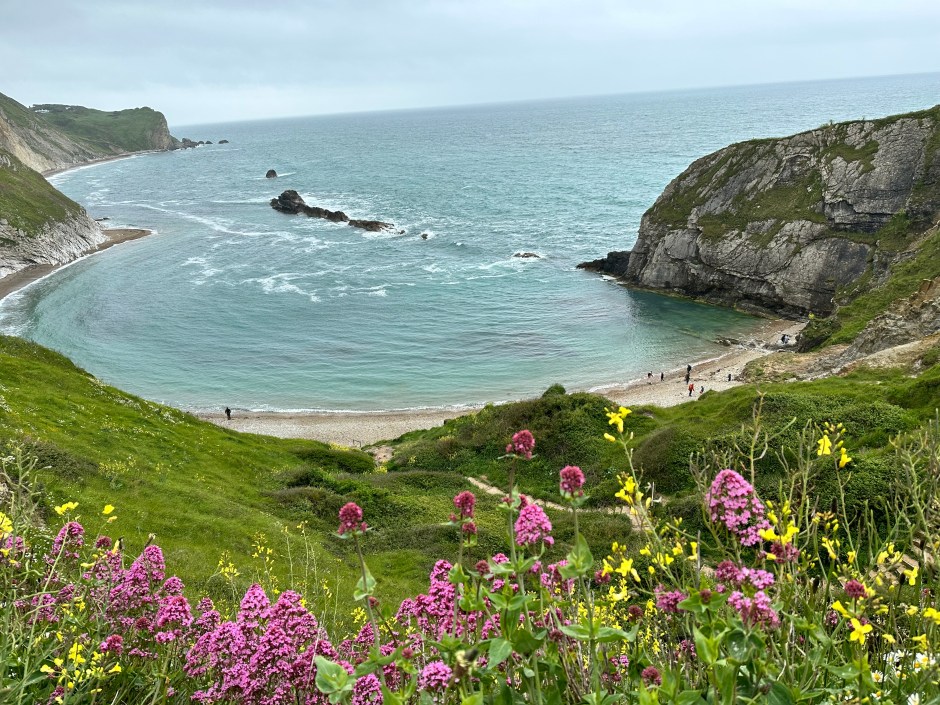
I try to find a balance with work and life. This year I wanted to visit some places where I haven’t been before and they were Bournemouth, Dorset, Swanage, Shaftesbury and more recently Oxford and parts of the Cotswold. I spent a few nights in the south coast in Spring where we were able to see a few coastal towns. It was good to be by the seaside and get out of London. I really loved seeing the Dorset countryside and the Jurassic coast. Durdle Door was such a busy place in lockdown that it made all the headlines and therefore I was able to add it to my list to see this year. It was a natural geographic spectacular and I still find it amazing seeing people trekking across the steep cliff tops – they have my immense admiration!
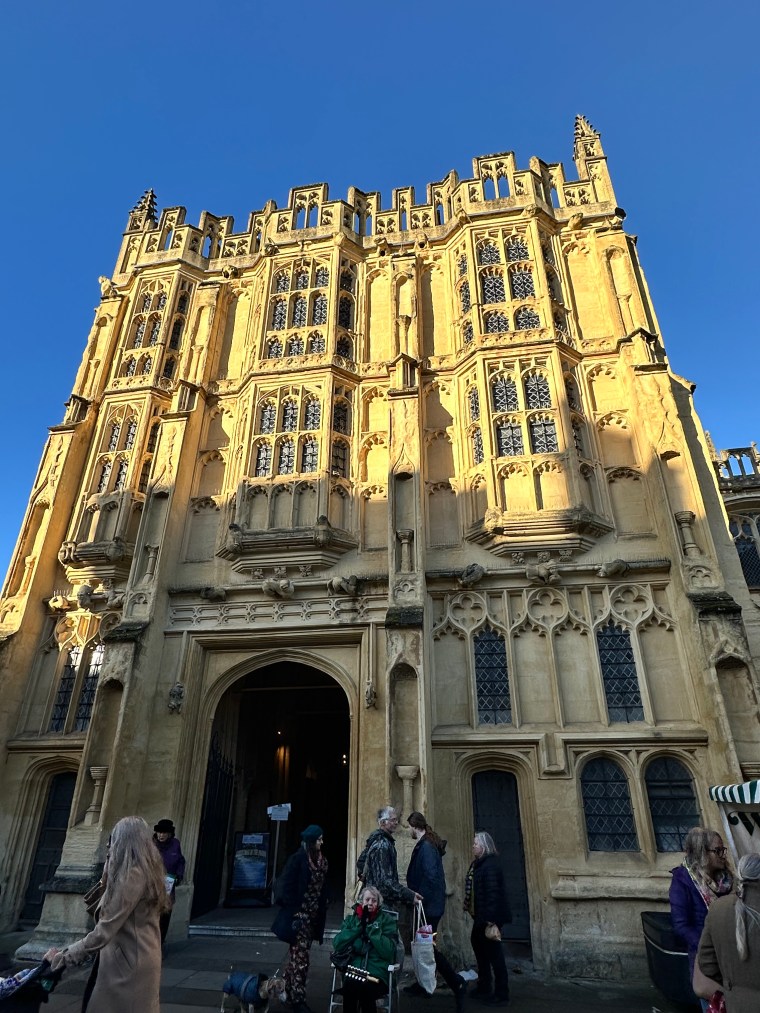
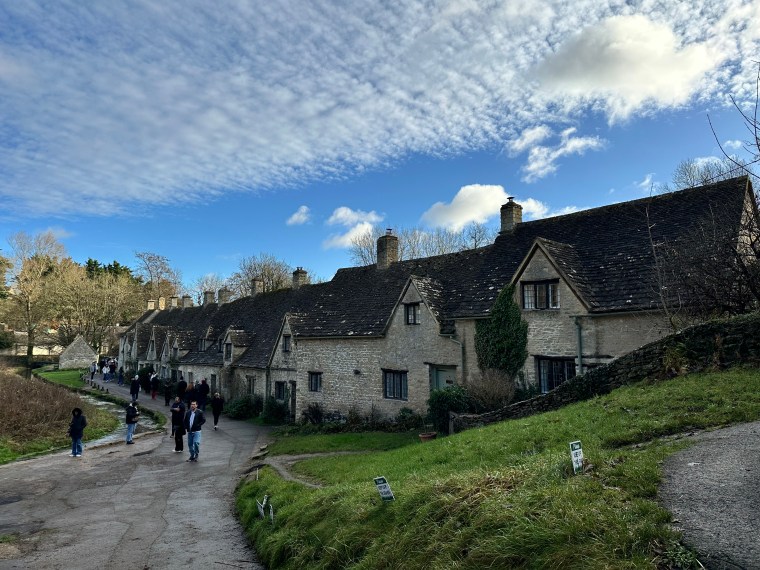
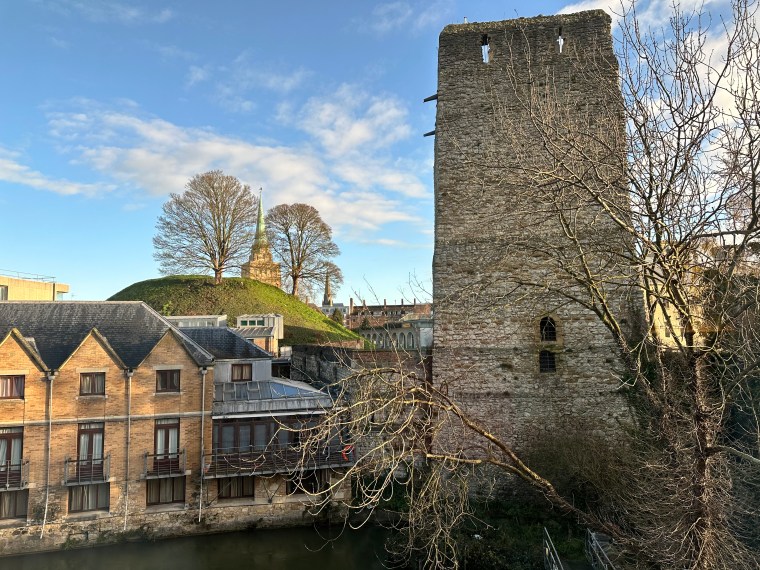
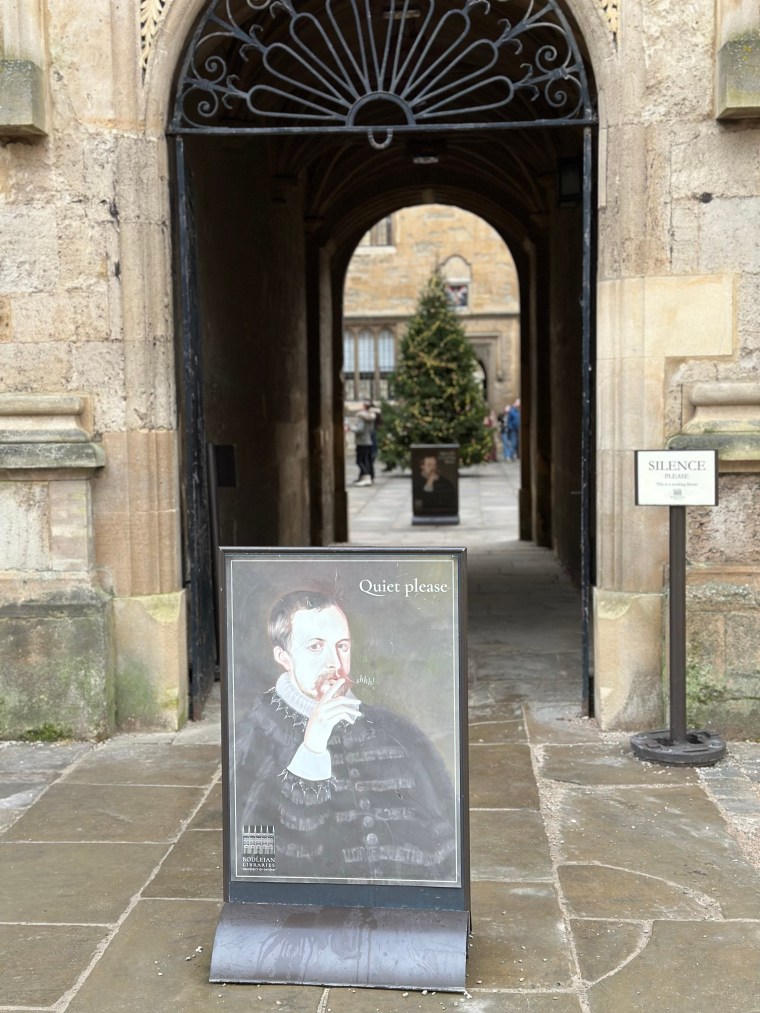
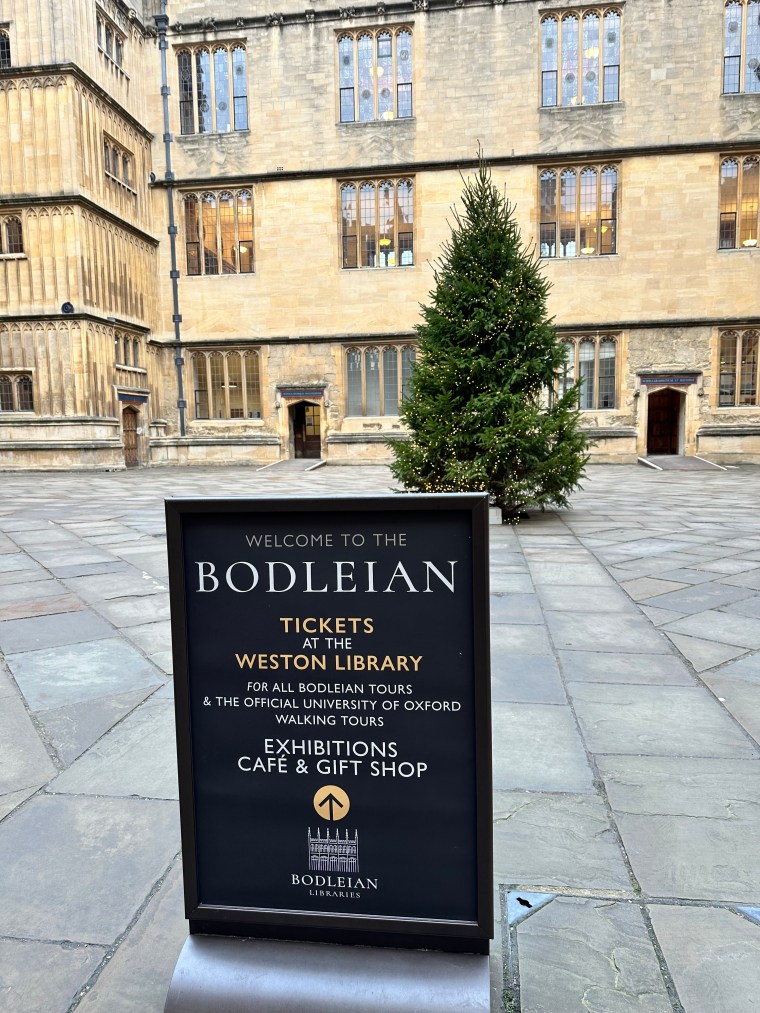
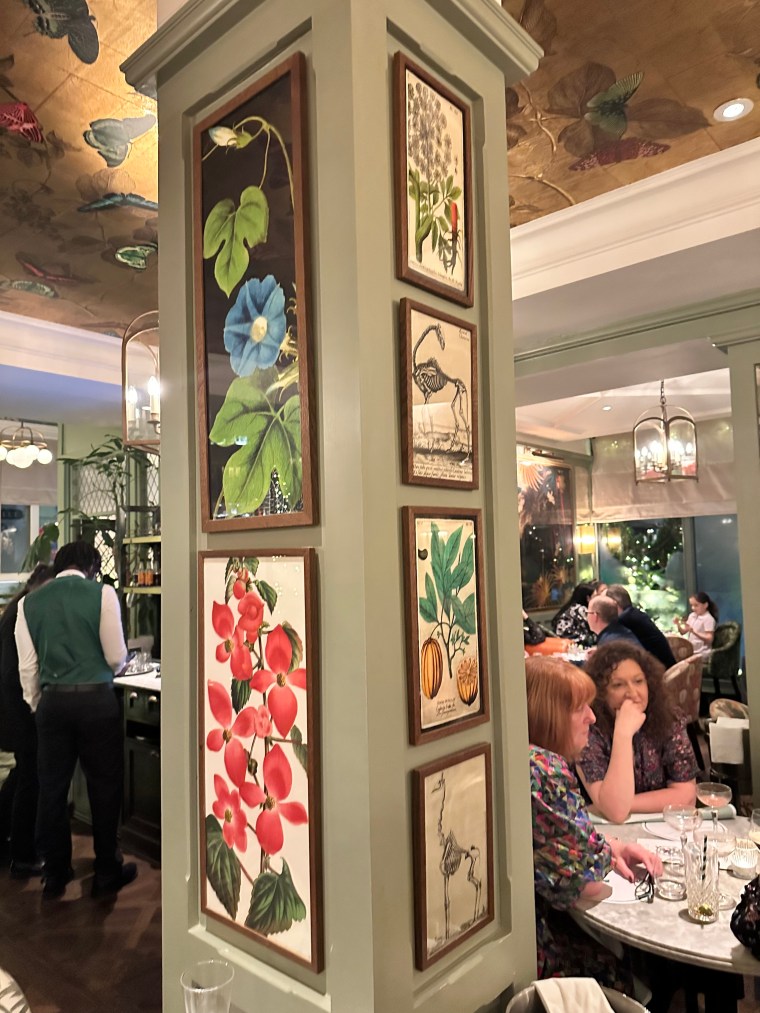
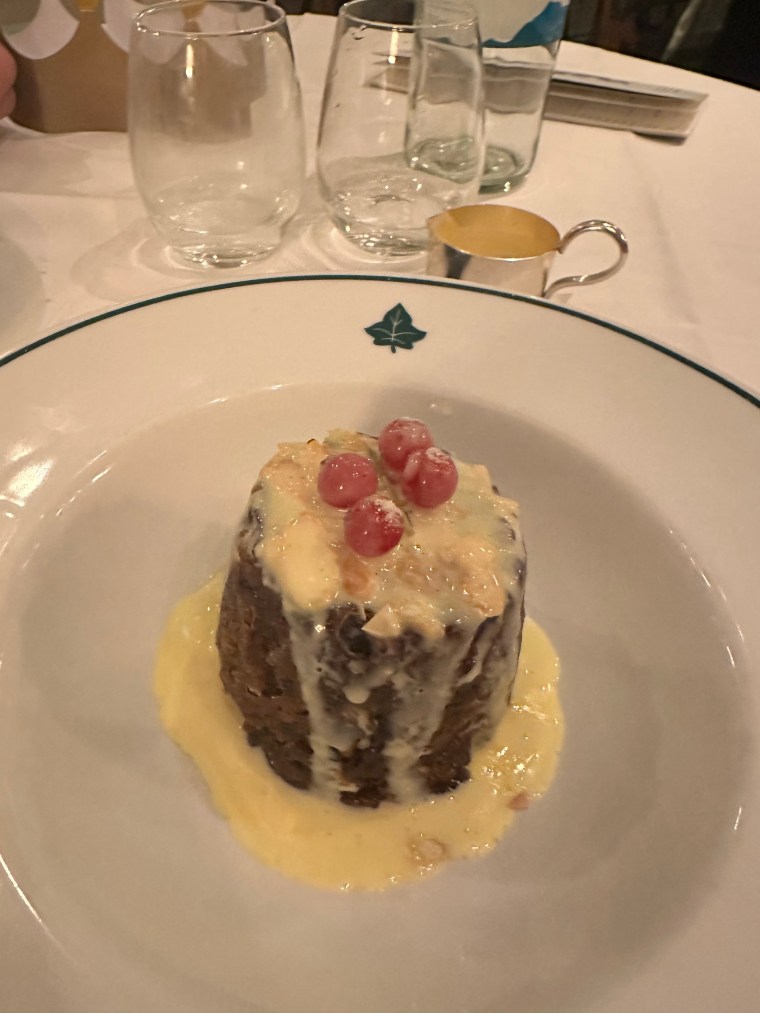
Recently, I also visited Oxford as I have never been – apart for a visit to Abingdon for a library resources supplier visit in the 2000s. It was great to spend time around such a famous city and we made an extra effort to try some nice local restaurants such as Brassiere Blanc (not to be confused with the more exclusive Le Manoir aux Quat’Saisons ) and The Ivy Brassiere. The architecture and local areas were great to see. We didn’t have time to do the world renown tour of the Oxford Colleges but it was nice to see the Bodleian Library and building along the city centre. I do hope to visit for work related visits in the future so just taking in the sights and town were good on this occasion. I also wanted to visit the surrounding area and thankfully the weather was great for driving to the picturesque village of Bibury and Cirencester which were in an area known as the Cotwolds.
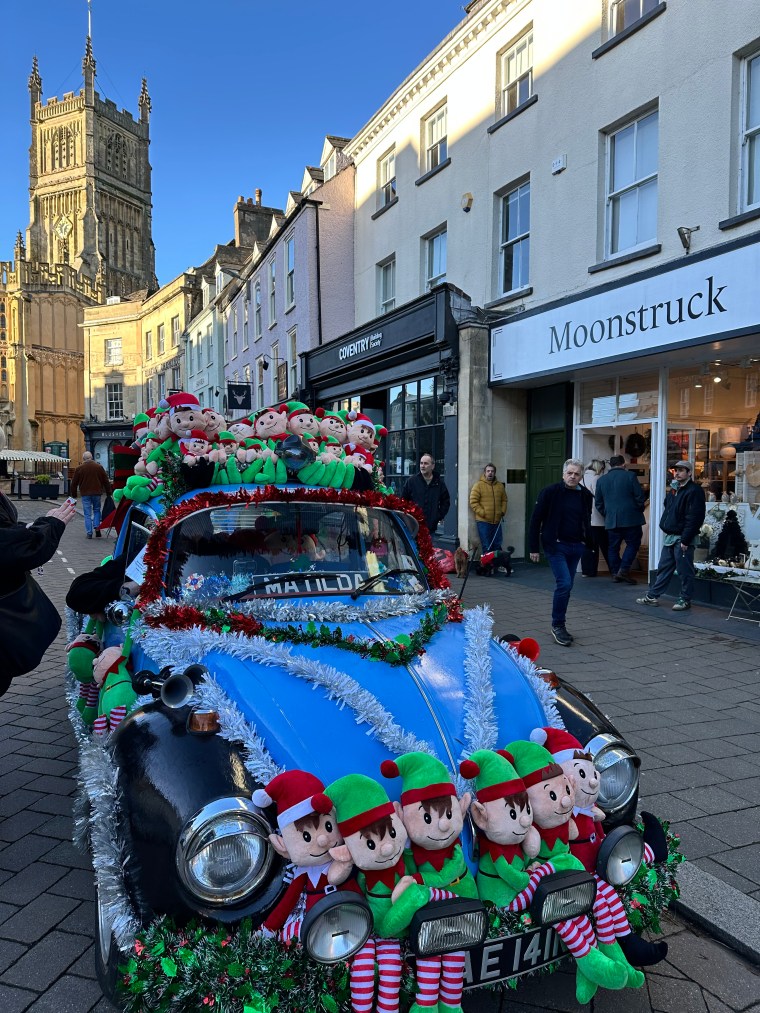
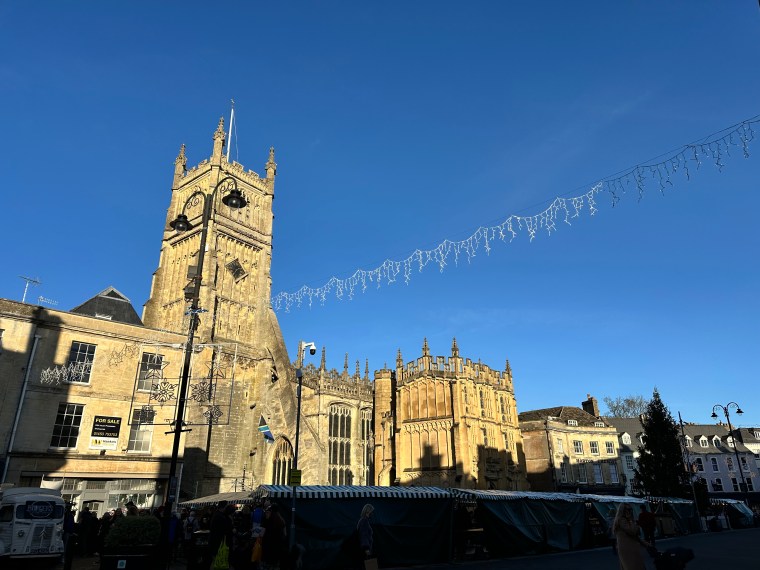
It is very pretty around there and although it was December – it was nice to see. I imagine it will be more beautiful in summer when all the flowers are in bloom. Cirencester was bigger town and obviously the residents looked more affluent and well-to-do. There were great shops and a town square burst with activity for a Christmas market, festive choir and musical band as well as some street stalls. We were really pleased to fit in Bibury and Cirencester in the day and return to Oxford by sundown. The Ivy Brassiere restaurant was really good and the food excellent with great atmosphere, décor and service. I look forward to trying in 2025, the one in London as my recommended by my husband. There are still some places in England that I have to visit, and hopefully I can do that in the near future.
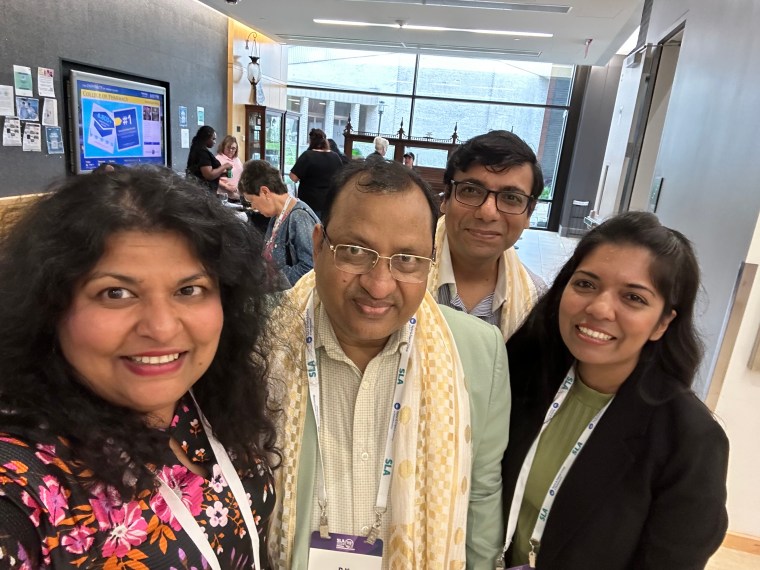
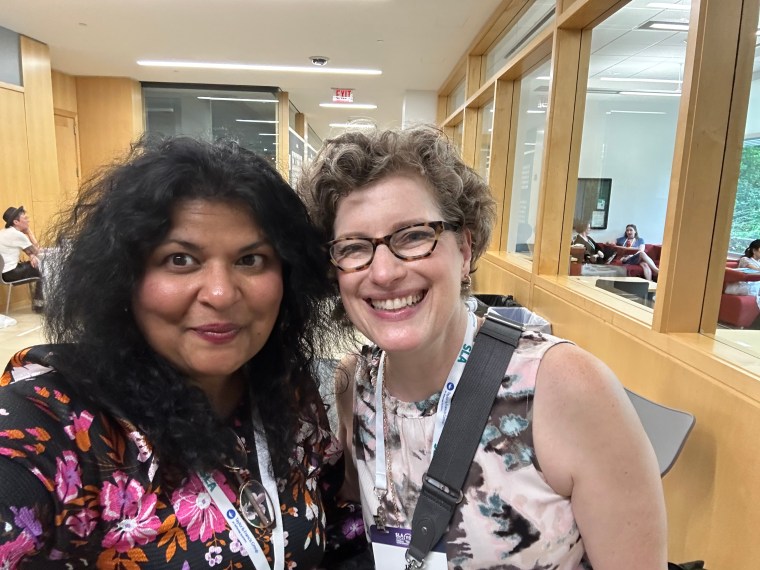
The two other big trips to the University of Rhode Island, Boston and Italy were great. SLA had a really great conference in Rhode Island – from the programming, the venue and grounds, to the attendees having a great time at the social and networking events. The talks and presentations were certainly empowering, especially with regards to newer trends in Artificial Intelligence to best practice in various information systems showcased. I met old friends and made some new ones along the way. That part of the country is beautiful – and I am lucky to have a cousin who went out of her way to welcome me. I was great spending time with family in the surrounding areas and visiting areas I was researching before my visit. I am truly grateful for their time and efforts. I hope I can do the same for them in future.
I had a few weeks of work on my return from the USA and then it exciting to visit Italy. In 2023, I was very busy being SLA President on top of my work and family life, so my reward to myself was to have a summer holiday in Italy this year. Looking back, it was such a great holiday to relax and observe life and the beauty under the Italian sunshine. I am a little bias, and there is so much I find interesting when I visit Italy that I never get bored of visiting. I am already planning my next summer visit to Italy or perhaps a city break.
Without a doubt, I have been very busy with work and all the demands a busy schedule requires. On reflection, I am thankful that all is fine for now. I know that next month I will no longer be on the SLA Board – this has been an opportunity of a lifetime and therefore I have been fully commitment to my role and the cause. I will gain some extra time in the new year, and will still be involved with SLA and SLA Europe in other roles and activities. I know the turn of new year will also be a busy time, but I will remind myself to take it each day at a time and look to the future with faith and belief that it will all work out in the end. Touch wood!
I have made time for some leisure time the last few weeks and happy to cover some of these here. I was able get some of the seasonal fun on colder days and nights as well as to see a couple of exhibitions that were easy to access.
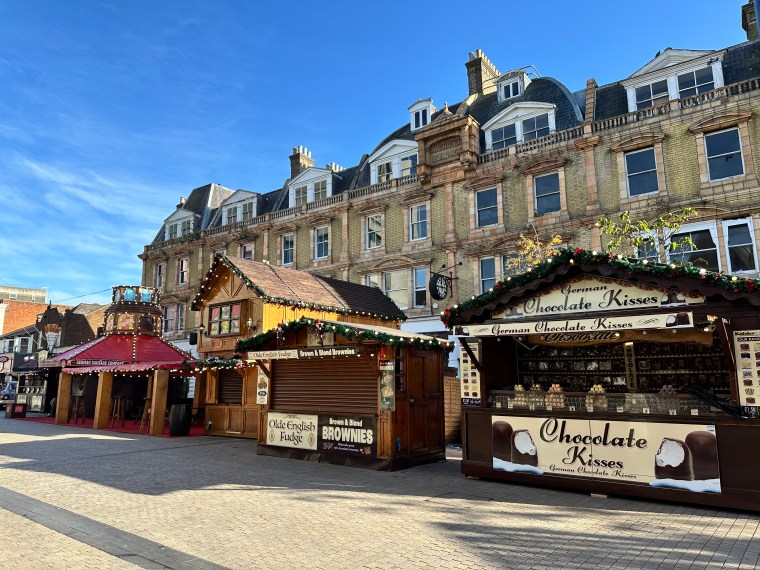
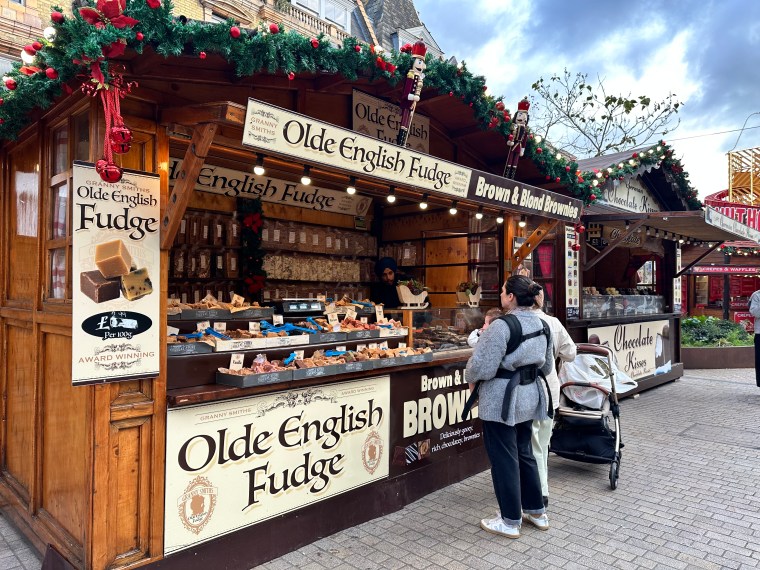
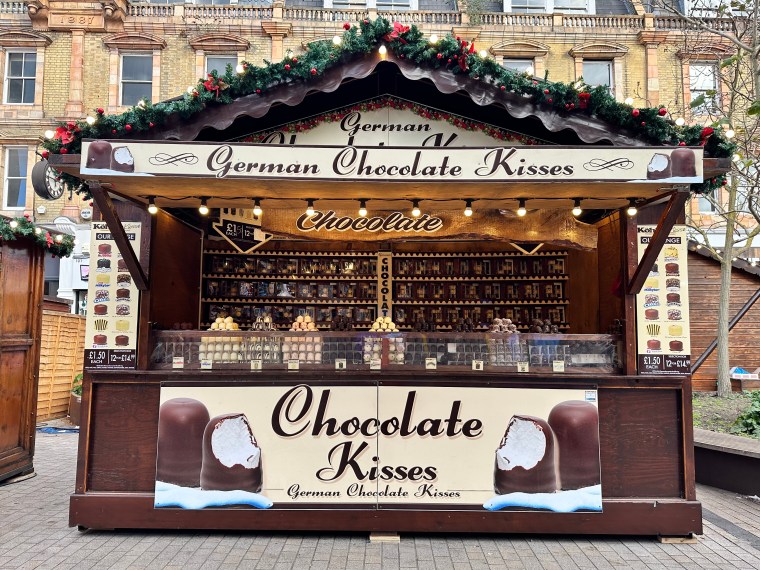
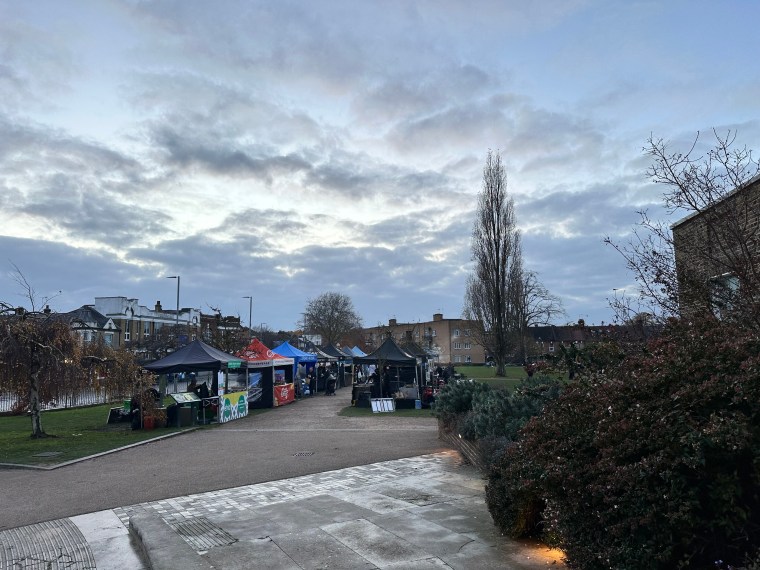
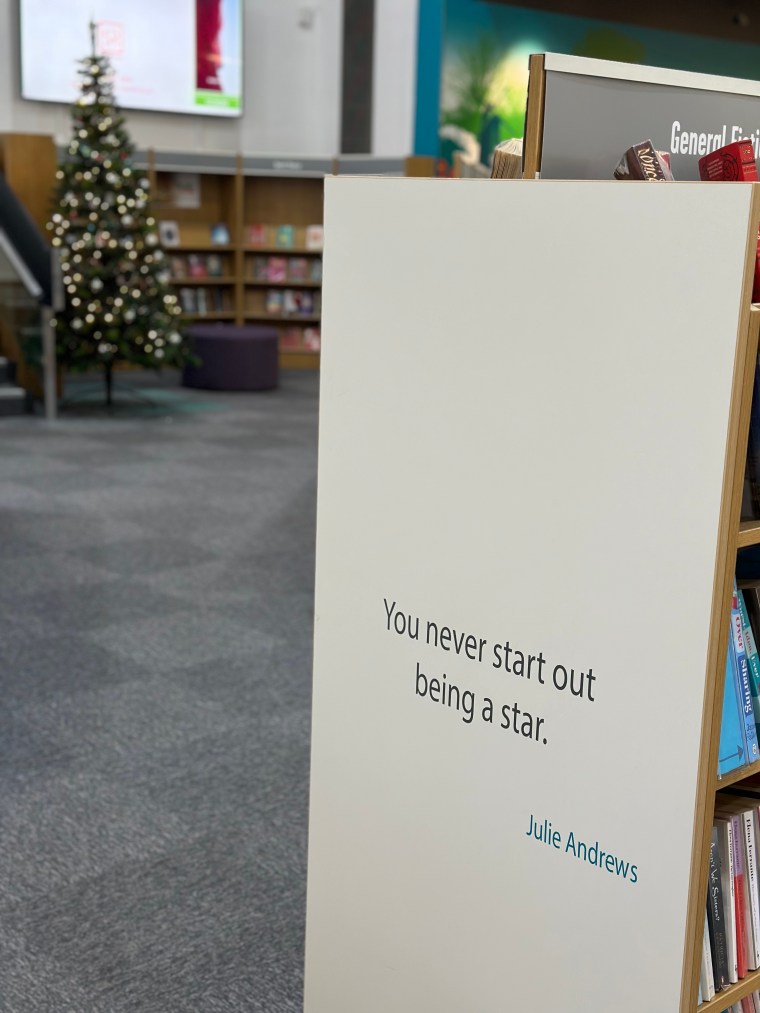
Although I was in Bromley for a work-related workshop, I was saw wintry scenes from the German market on the high street and Bromley library ready for the season with a Christmas tree indoors. The German market has some interesting stalls for beer and sweet lovers but it was early afternoon when I went past, and therefore I didn’t stay to sample some goodies but there were other shoppers checking out the stalls. Another time when I am not so busy, I would love to travel to another European city to experience their Winter markets. We are seeing them more in London and I remember seeing on the Southbank about 10 years ago.
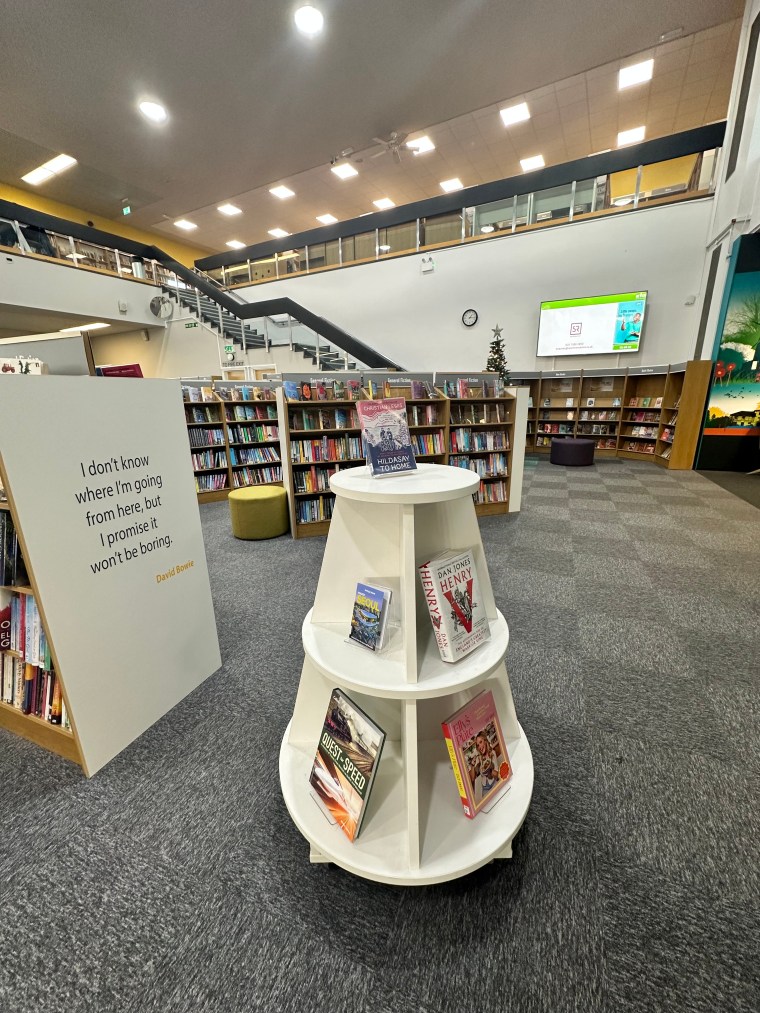
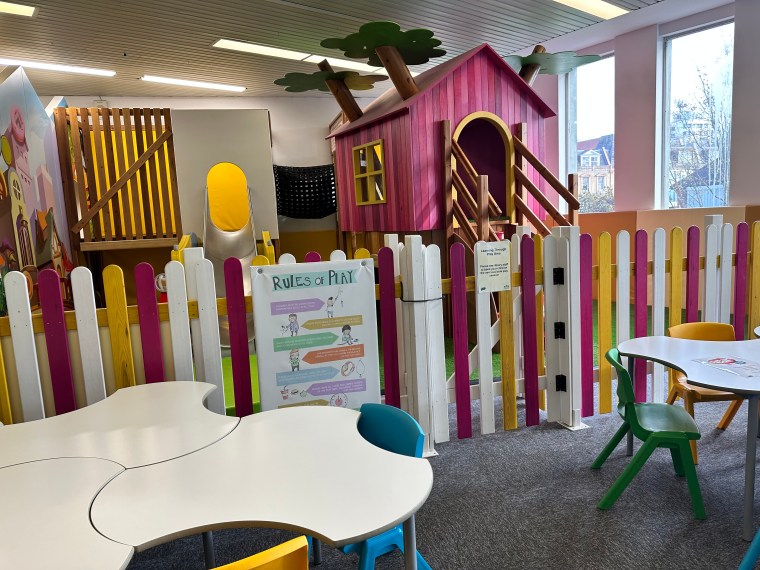
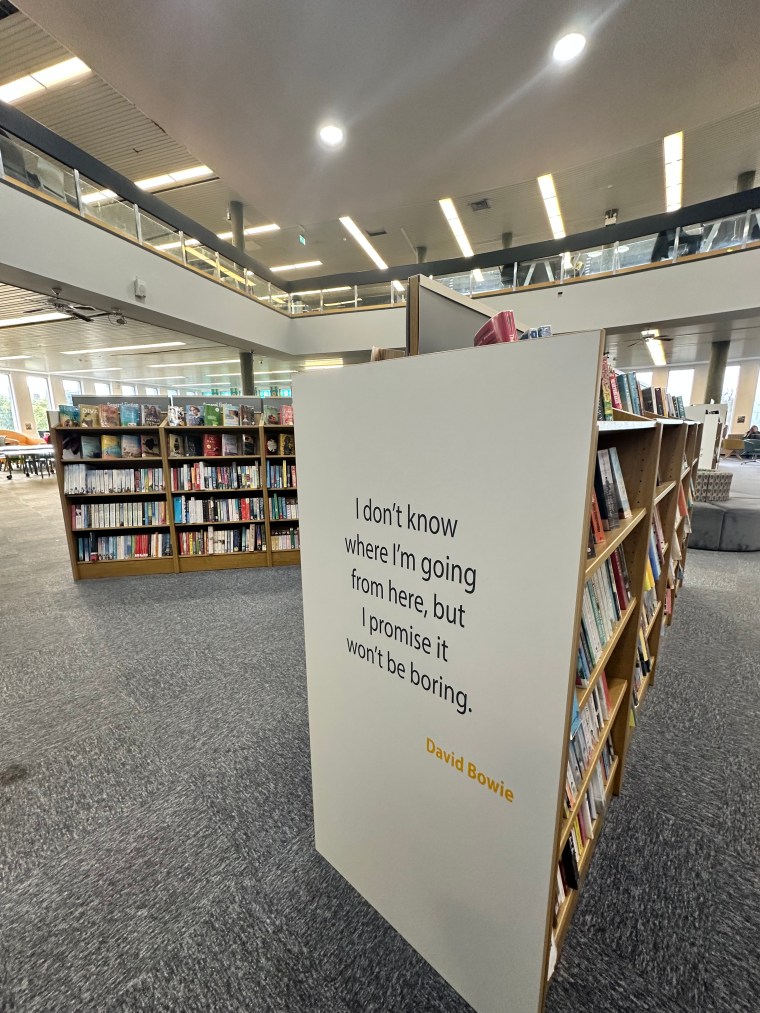
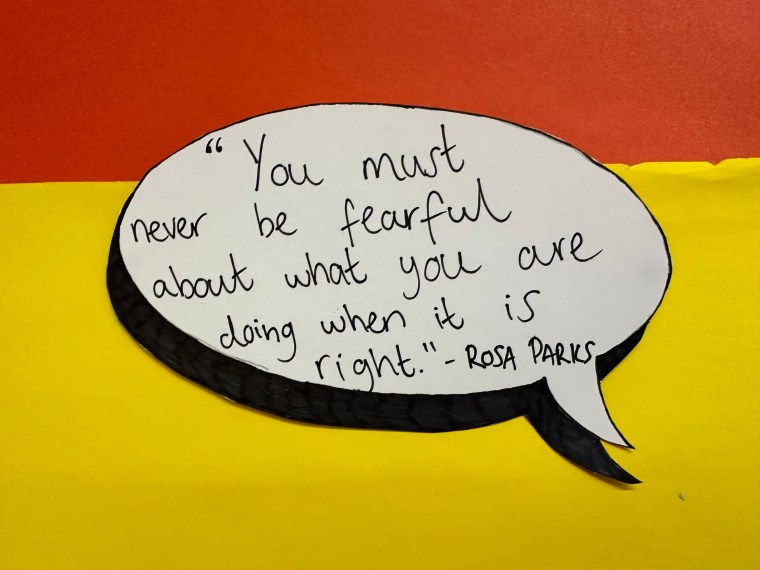
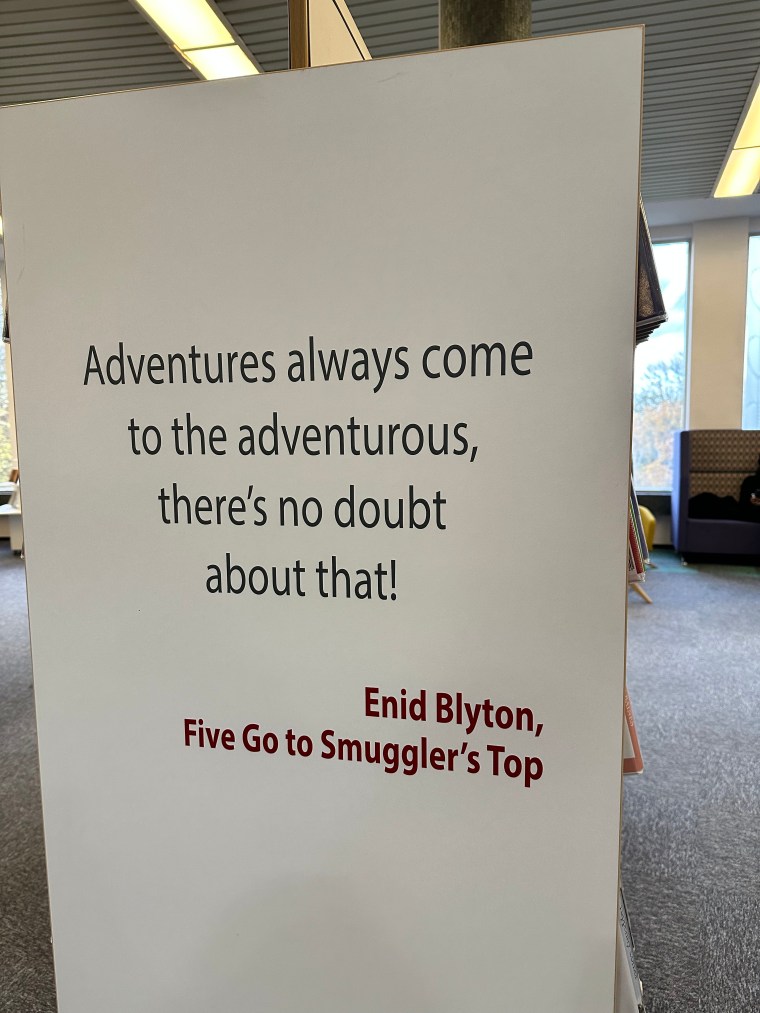
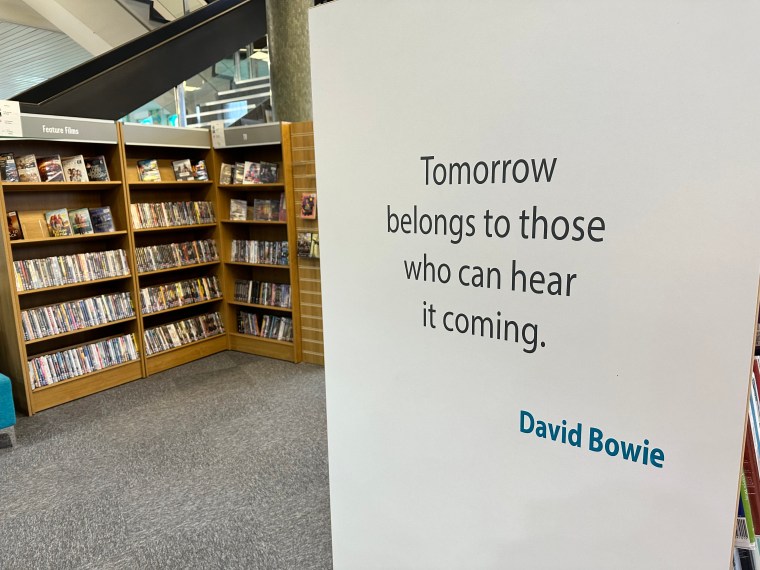
The festive scenes inside the library was wonderful and I like seeing all age groups using the Bromley library. There were some great local inventions, inspiring quotes and books but also local heroes displayed around the library. There was homage to David Bowie – I knew he was born in Brixton but apparently his parents moved to Bromley South where he lived to until 1969. I like local history and finding out of the people who lived there in the past. It is amazing that the quote perked my curiosity to find out more about his connection with the area. I am due to go back to Bromley in the new year and hopefully I will find time to learn something else about the area.
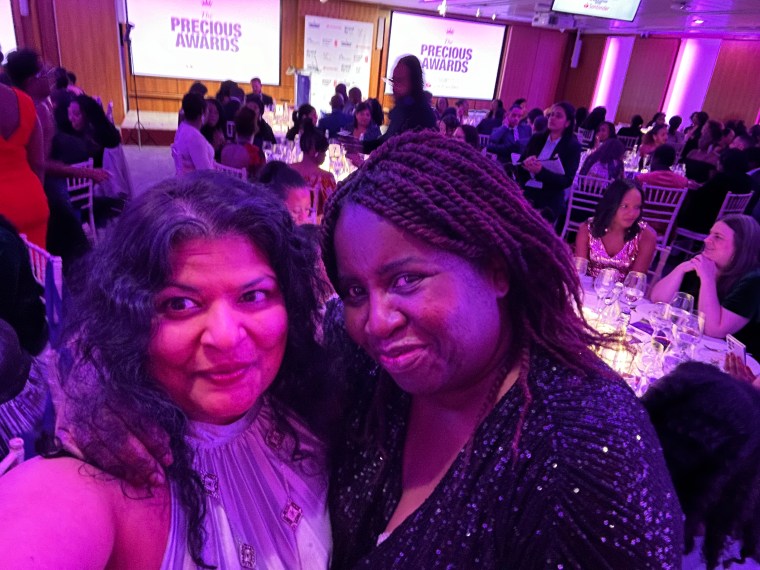
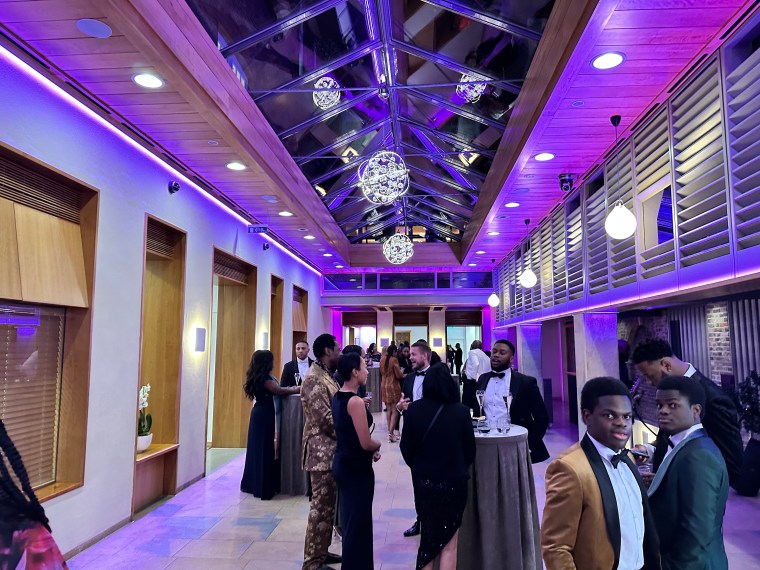
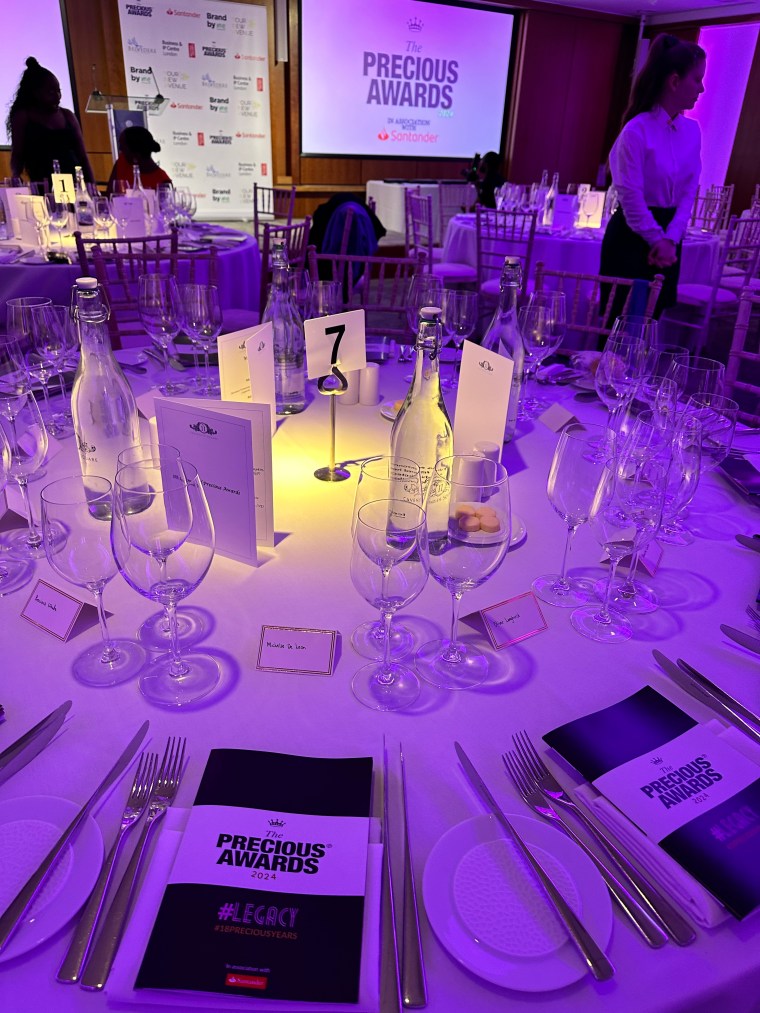
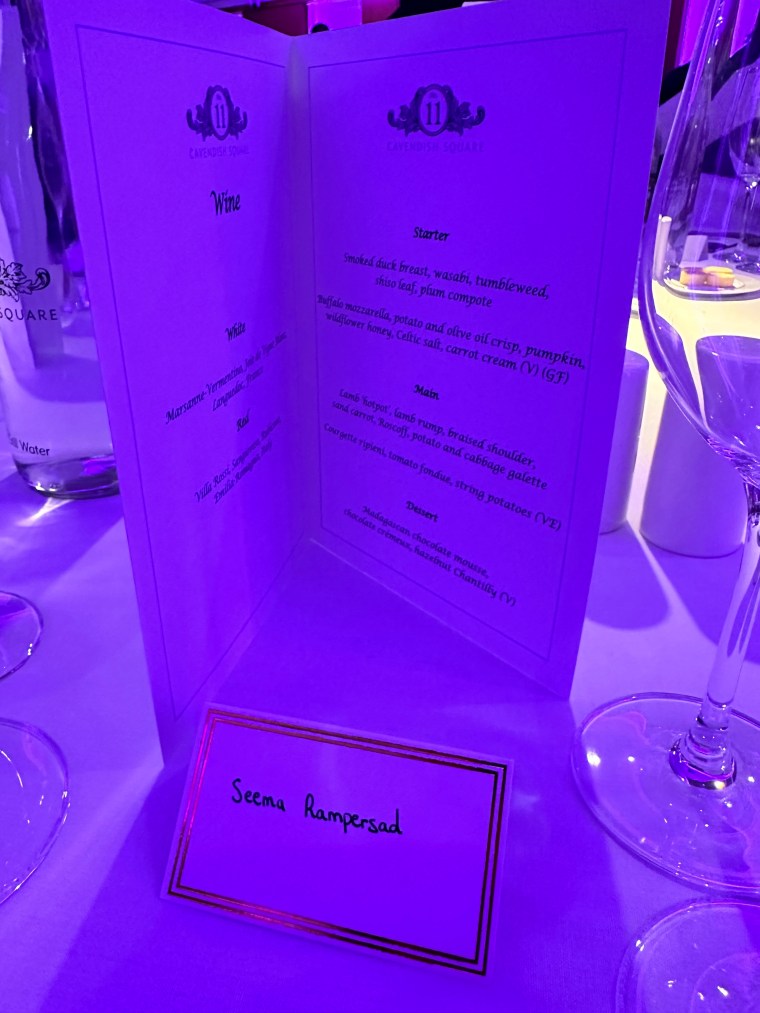
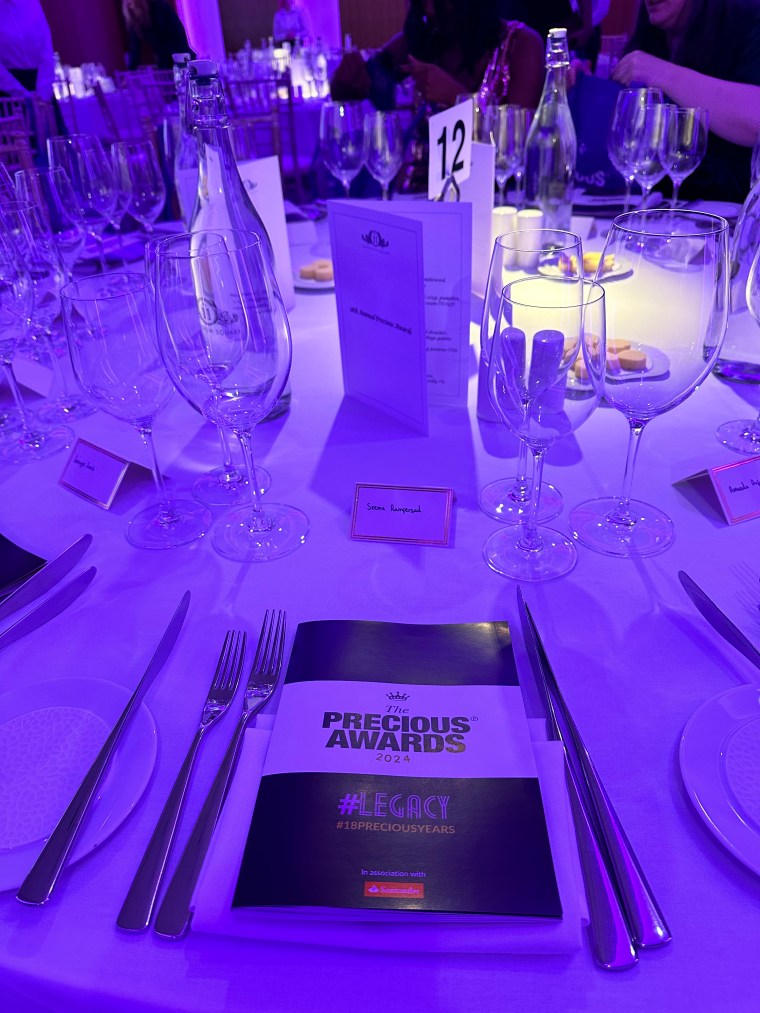
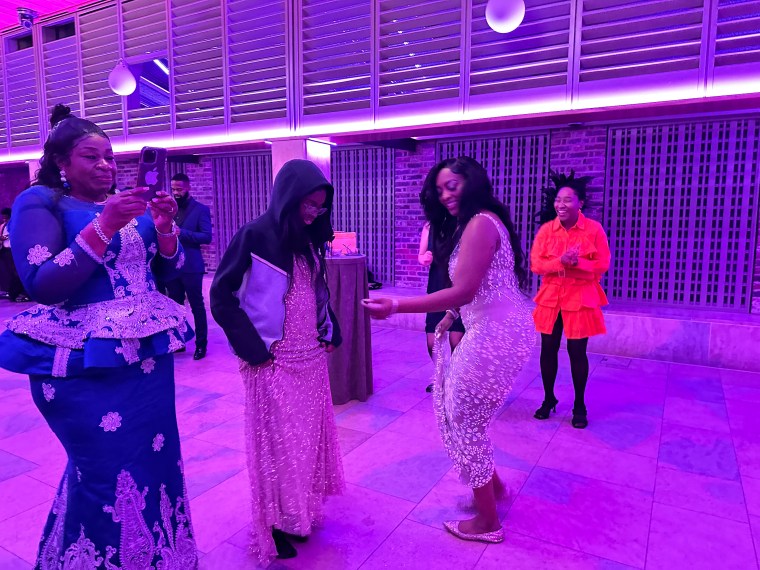
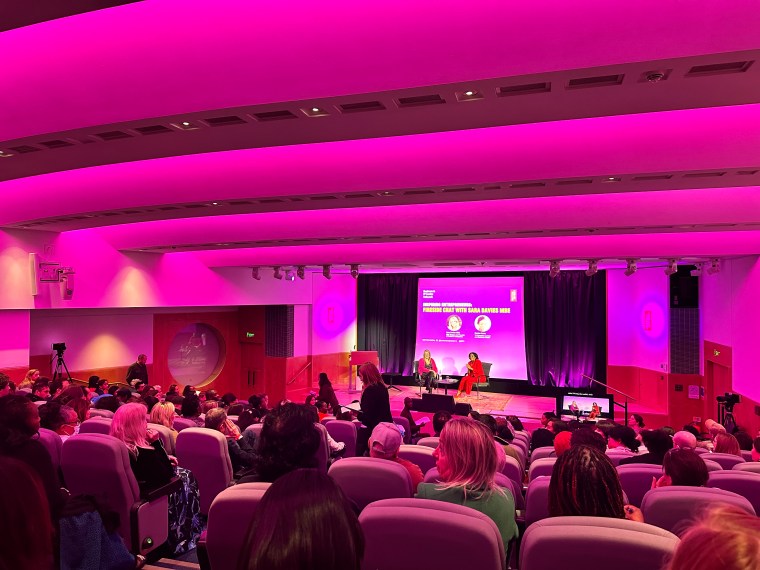
I was invited to attend the Precious Awards held by the wonderful Foluke Akinlose. It was a great night to meet inspirational people of colour. The venue was in Central London and a short walk from the tube station. The reception and networking dinner were amazing to see and meet so many women who are excelling in their choose fields and areas. Everyone was dressed for the evening and I saw some amazing fashion with some warm greetings from those in attendance.
The Precious Awards is a great example of showcasing talent and achievements of persons whose stories don’t usually get told, or for women of colour who usually have to work harder to get the recognition they deserve in their areas of expertise.
Over the three hours, there was some great chat, dinner and acceptance speeches from organisations and women who are creating spaces and pushing forward with progressive work from business, science, arts, academic, etc. I took some notes on the awardee speeches, such as women – ‘Sitting in a seat at the table, and occupying the space and belonging in it”. It was a sermon on how to celebrate hard work, sacrifice and to come out as winners on the other side. Most of the stories spoke of uplifting themselves but also leaving the ladder so that others can be uplifted. Many spoke of the families that have been there to enable to succeed – and the power and energy in the room was warm and real. I was working the next day, so I did not want to stay out too late but I did have a little boogie at the end before I headed back to London Underground at midnight.
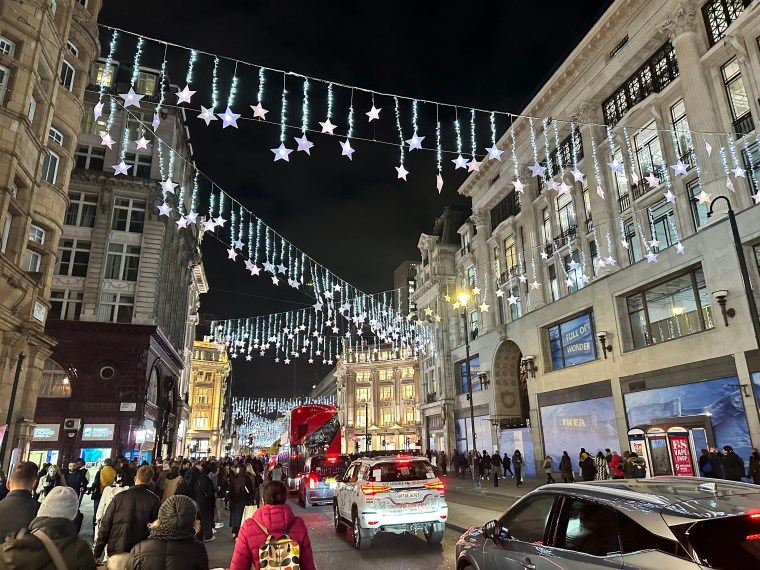
And before I forget, it was good to see the Christmas lights on Oxford Street. It was a sign that the nights are definitely darker with all the bright lights visible, and that the festive season is just around the corner on one of the busiest streets of the year. I hope I can pop down in December to get some of the festive vibes – I can tell that it is still popular with the number of the users on the Victoria London Underground late at night this time of year.
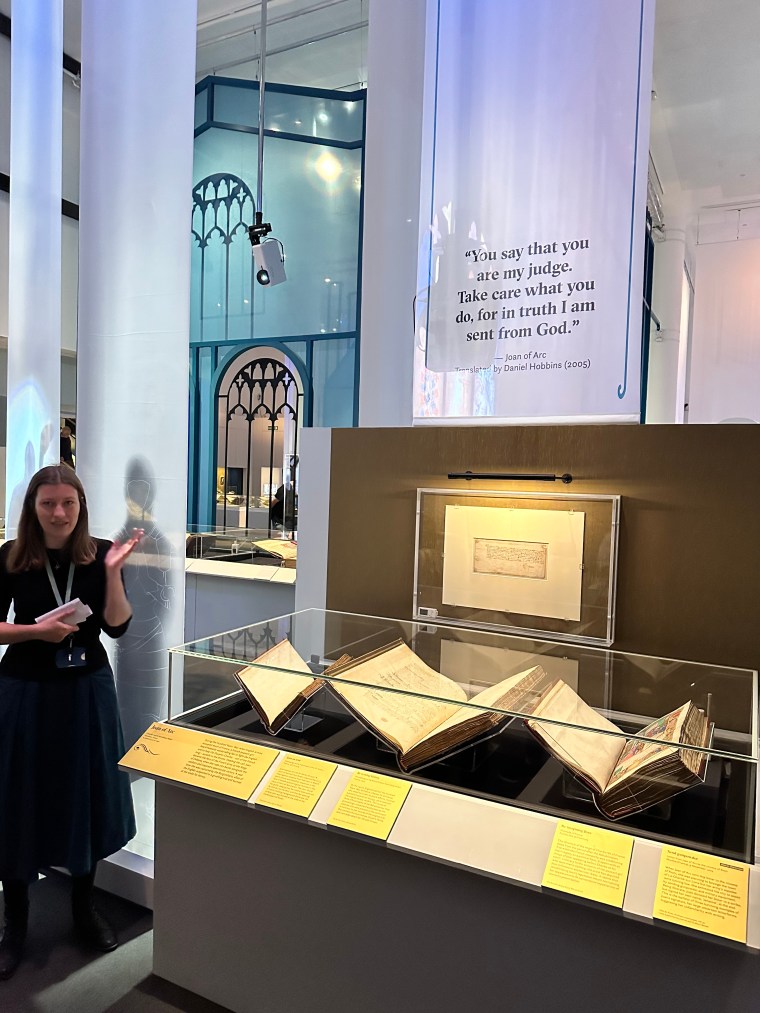
It seems appropriate for me to fast forward here to the Medieval Women exhibition at the British Library. One of the privileges of working for a national library the ability to see most of the exhibitions but also to have staff tours and talks with the curators that bring to life the stories, fact and context of the items on display. In secondary school in the Caribbean, we studied the Renaissance which was an era of social change, renewal and creativity but we briefly touch on the Medieval times before this period. It was interesting to see evidence of written literature and scripts that spoke about the lives of women and society at that time. On the opening night of the exhibition I was heard some beautiful Medieval singing by a life choir.
Obviously, we have been evolving but it was good to see women being represented from drawing and text from childbearing, self-care, to love, marriage, work and importance from their lives at home and work. There were displays of scented aromas created by women as they used flowers and herbs for perfume, for helping with well-being and beauty routines. To them being mentioned in prayers and marriage agreements. Some of my favourite items I saw are:
Well, I smelt the beautiful Italian perfume made of herbs and flowers that will be just as luscious if it was bottled and sold today.
The books that displayed graphic symbols of fertility, sexuality and the female form
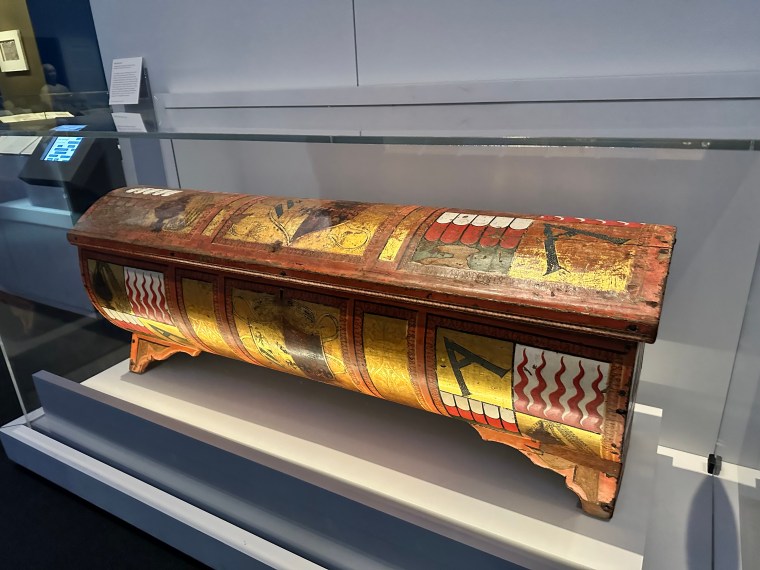
The chest that was created for when a noble woman moved to be with her husband in medieval Italy
The jewellery of a queen in the beautiful form of a heart
The evidence of nuns working and dedicating their lives to the church
A signature of Joan of Arc and her symbol of national significance to France
And the amazing scroll that was put together for women who were saying goodbye on the death to Lucy of Hedingham from the 1200s
I hope I can go back to see the exhibition before it closes in February and that I am able to attend some of the talks that usually accompany the exhibition.
One of the highlights of this month was also our Start-Up Day at the British Library. It was full day of events to inspire and support business start-ups. We have been hosting these events for a while and it was great to see the steady flow of attendees who wanted hear from other successful founders and entrepreneurs. With my colleagues, I like helping customers to navigate our resources and the expertise available. I also like hearing from successful entrepreneurs who tell how they are applying some of the practical tips we show to our customers, such as business planning, creating value, building brands and the authentic voice and stories they have with the failures and successes that come with building businesses. I found the speakers to be funny and interesting this time, and it was great to see so many people after the recent years of only online events.
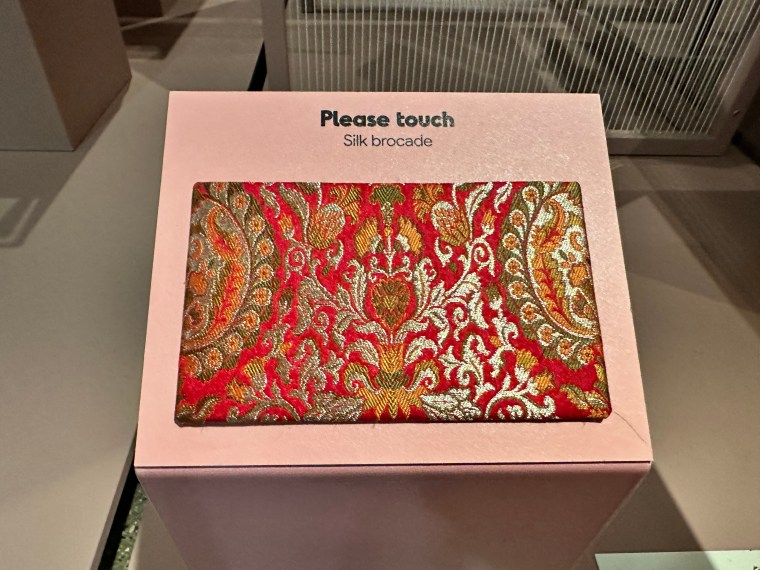
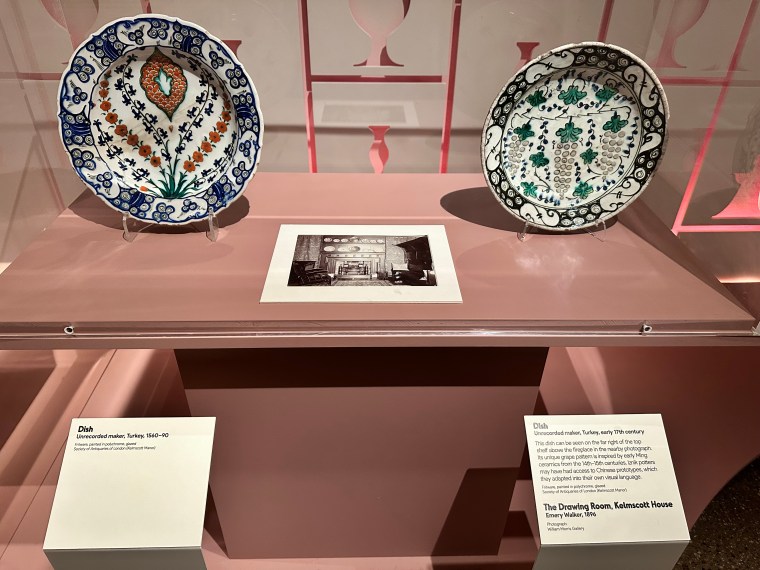
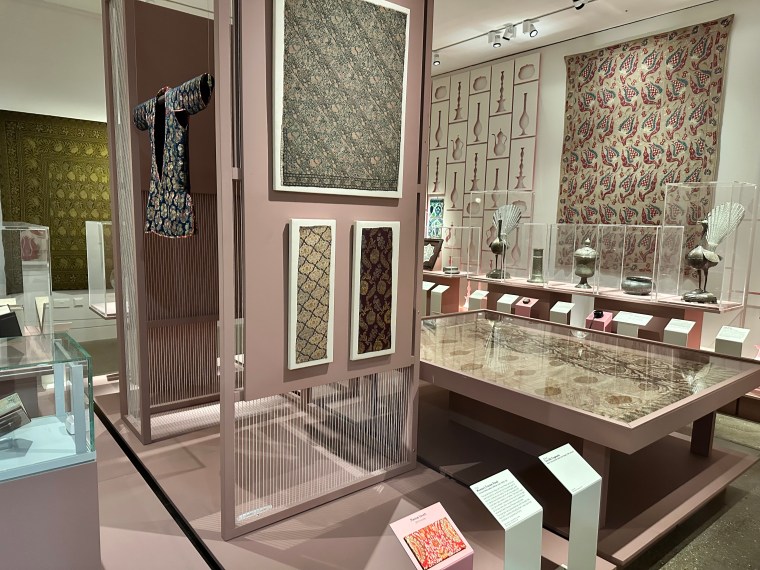
I have had a few social events this year but today I visited the William Morris Gallery to view their exhibition on ‘William Morris and the Islamic World’. It was good to see the link with creativity and designs from Islamic traditions link to Morris’s designs. It was the first time I saw there is a meaning to the Turkish word Isnik. When I went to university, there was a nearby Turkish restaurant with this name which nice tiles décor and it made me realise the link with the word and the name of restaurant. Their website also mentions the ‘Iznik is not only renowned for its ceramics and history but also for its culinary heritage. I hope to try it out soon.
As we go into the full festive season, I am likely to be busy with work but also out any about with friends and family. I hope to write a reflection of 2024 in my next post. In the meantime all the best for the season and I hope you and yours celebrate with warmth and happiness at this special time of the year.
I have not spent a lot of time doing social and fun things since my summer holidays and therefore I have a lot more to say on libraries and the work I have been doing lately.
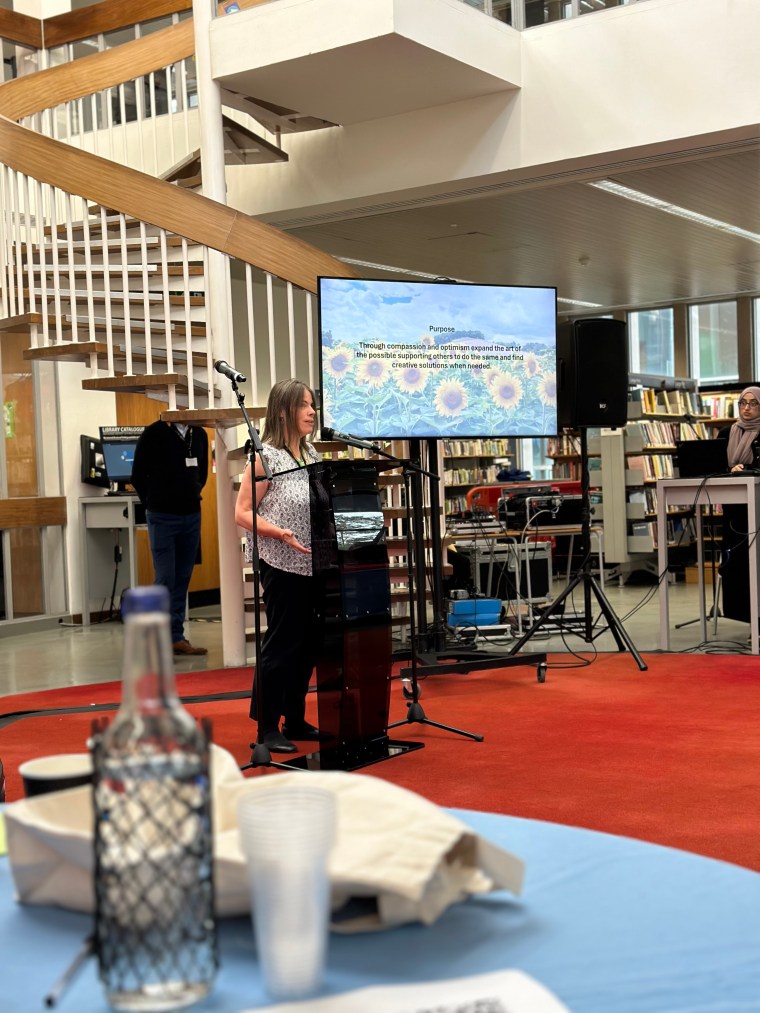
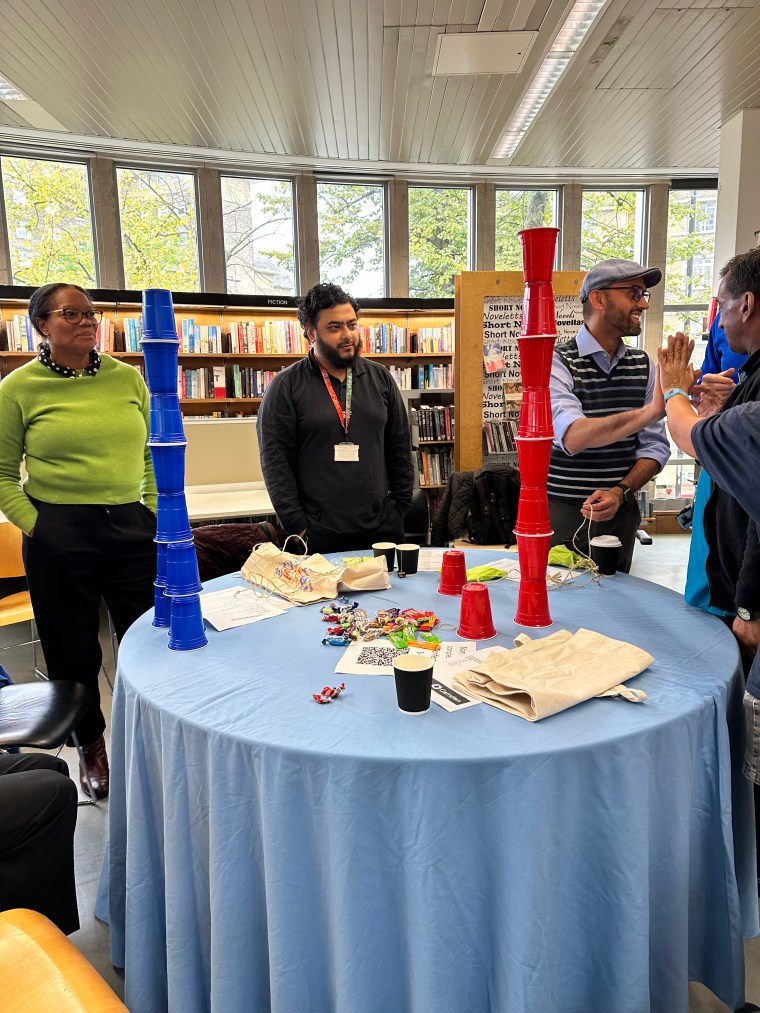
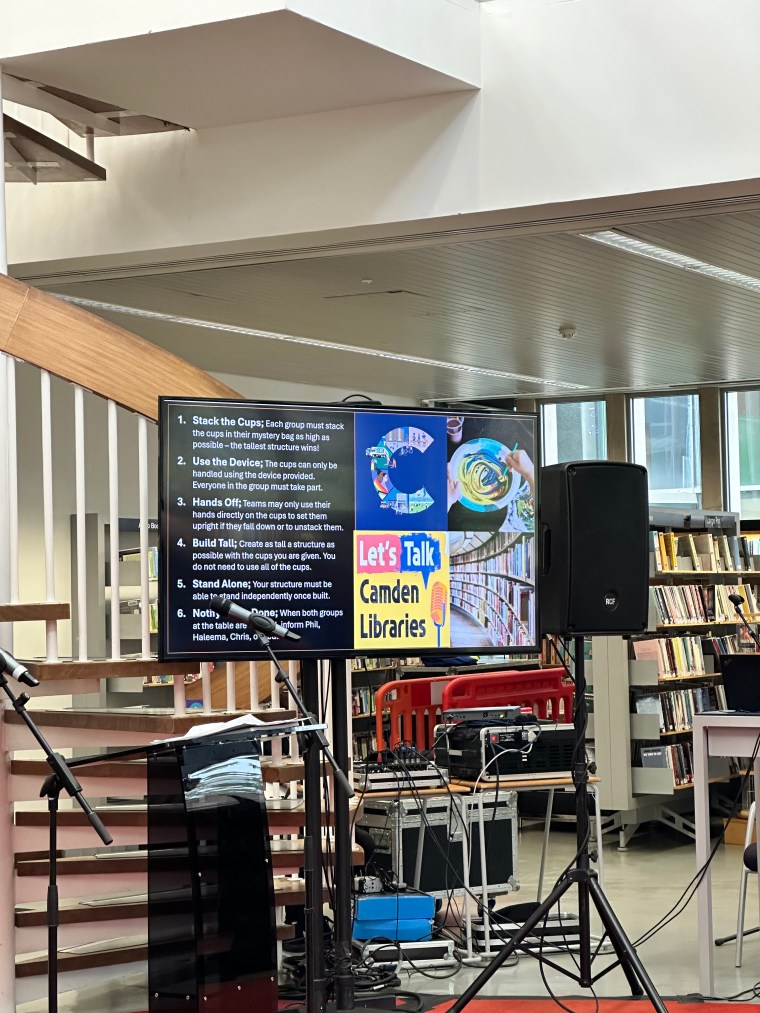
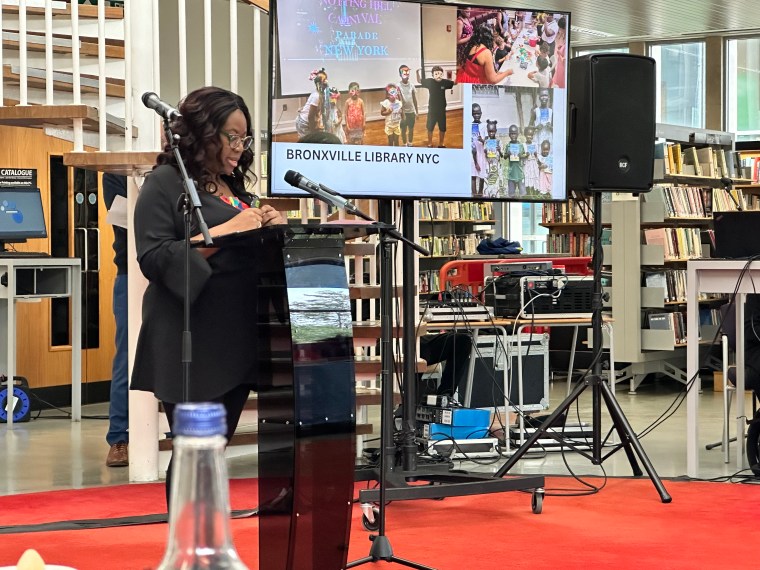
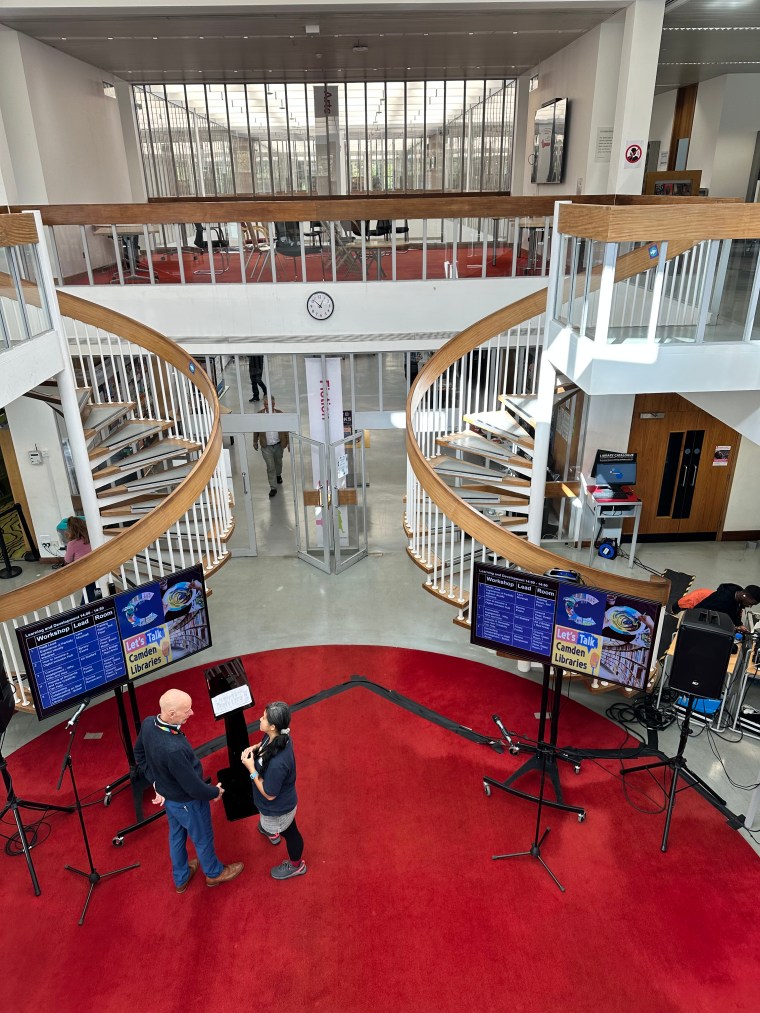
This month though I have been energised and as enthusiastic as usual. I was invited to attend the Camden Libraries Staff Conference. The conference had a programme of interesting and motivational work by teams and staff on the work that they do with their various branches across the borough. The day started with an icebreaking team working game for us to build a structure our of paper cups that would be judged to be the highest. I haven’t been to large team building days recently but it certainly was good as an icebreaker to get to know people better. We also had Head of Camden Libraries, Fiona Tarn, address staff and guest at the conference on her purpose for the work that she does. This truly was inspirational to me as I have tried to use the same angle of the ‘why’ are you working in libraries. Sometime you have people who work in libraries because it is a job, for others it is a lifetime of work or purpose for their goals to help as much as we can in our roles in libraries …physical or virtual. Therefore, I have since mentioned this a few times to my library world contacts and colleagues.
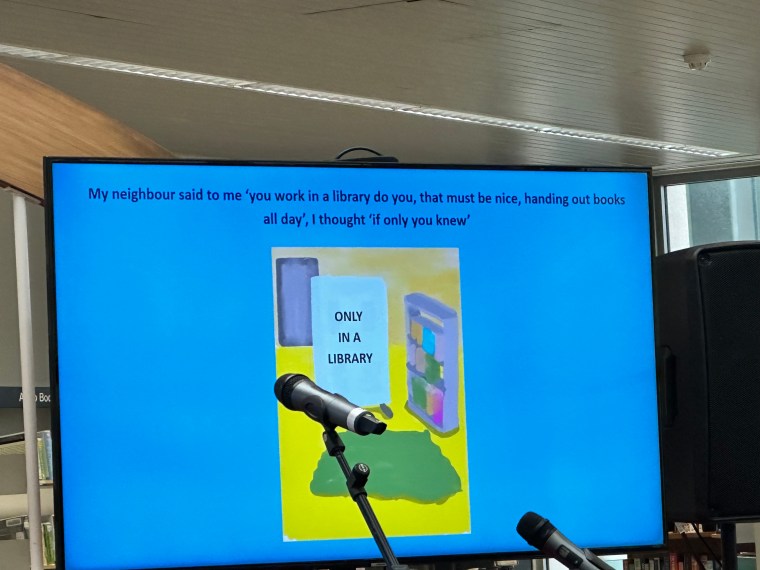
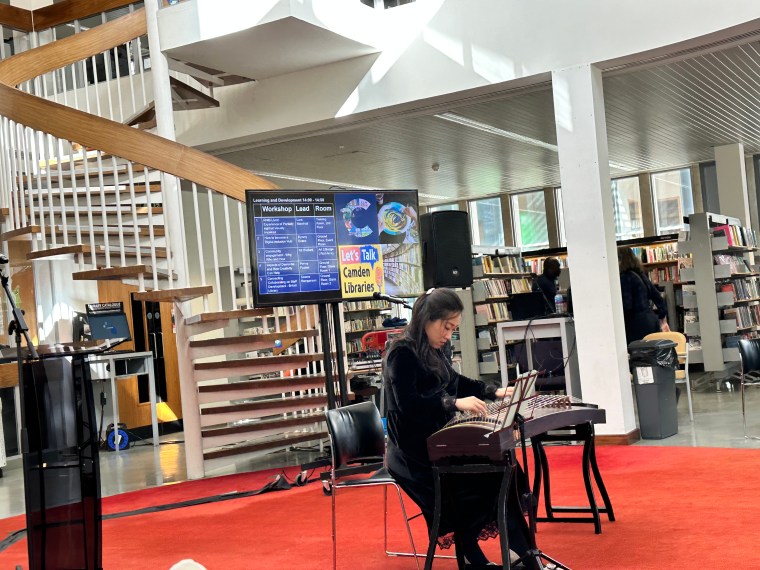
Another beneficial aspect at this conference was to see all variety of library services and the community outreach that are provided by Camden Libraries. We heard staff mentioned story times with children, children’s library, launch their reading strategy, start businesses, poetry bus for elderly adults, podcast and radio station, music service and not forgetting their physical spaces, collection and archives. I was again inspired by their story teller on the ‘Libraryverse’ especially from an enquires point of view on the typical questions and answers provided to customers by their staff. We were treated to live Asian music during the lunch break.
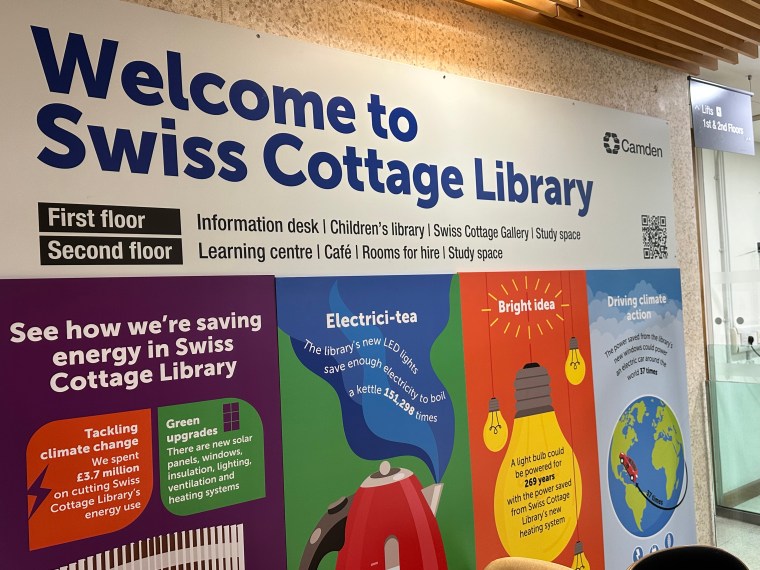
We were treated to a tour of their archives at the Swiss Cottage Library. There was also a piano in the main entrance as well as a beautifully built 1960s building in the shape of book ends! I prepared and ran a workshop on collaboration with their staff who were welcoming and great throughout the day. The library was closed for the training but it was nice to see a lady bringing her young child after school to use the space – it was good to know that on a normal day – this would have been a part of their routine.
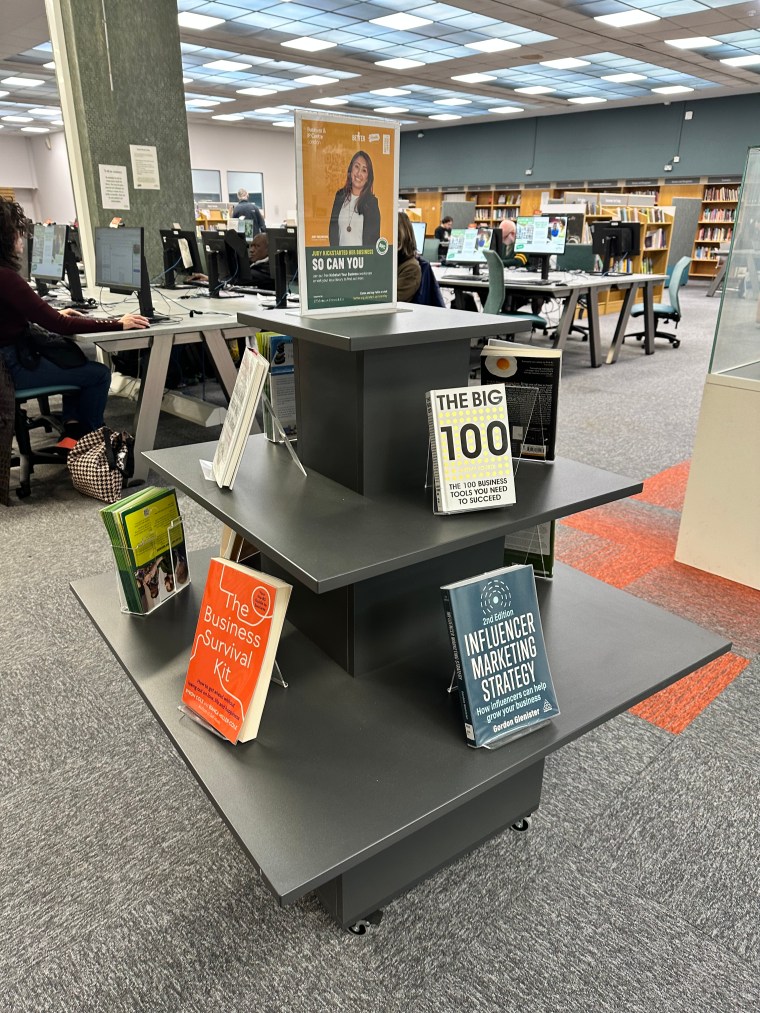
And as part of my normal work, I visit other libraries to deliver business and IP workshops with my colleagues. I have been several times recently to Catford Library which is open planned in a shopping centre. There are always curated books on display and it does make you want to set aside time to read the books showcased. In my business workshop, the Catford Library staff mentioned that their library card gives you access to eBooks, magazines, newspapers, and other resource via their Libby App and Press Reader. That very night I was excited to look at some of my favourite magazines and newspapers available to view on my own devices. I haven’t borrowed any eBooks from my local library, who runs the same scheme, but once I get more time – I am looking forward to reading more with new found resources from local public libraries.
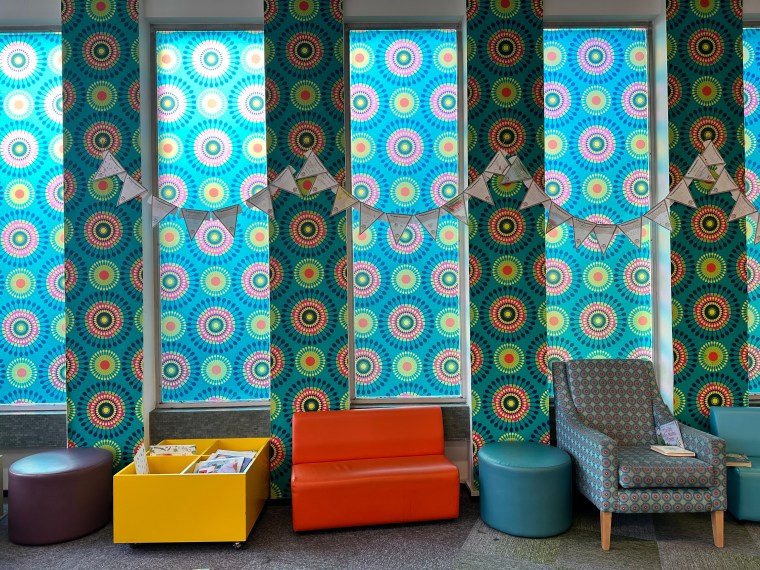
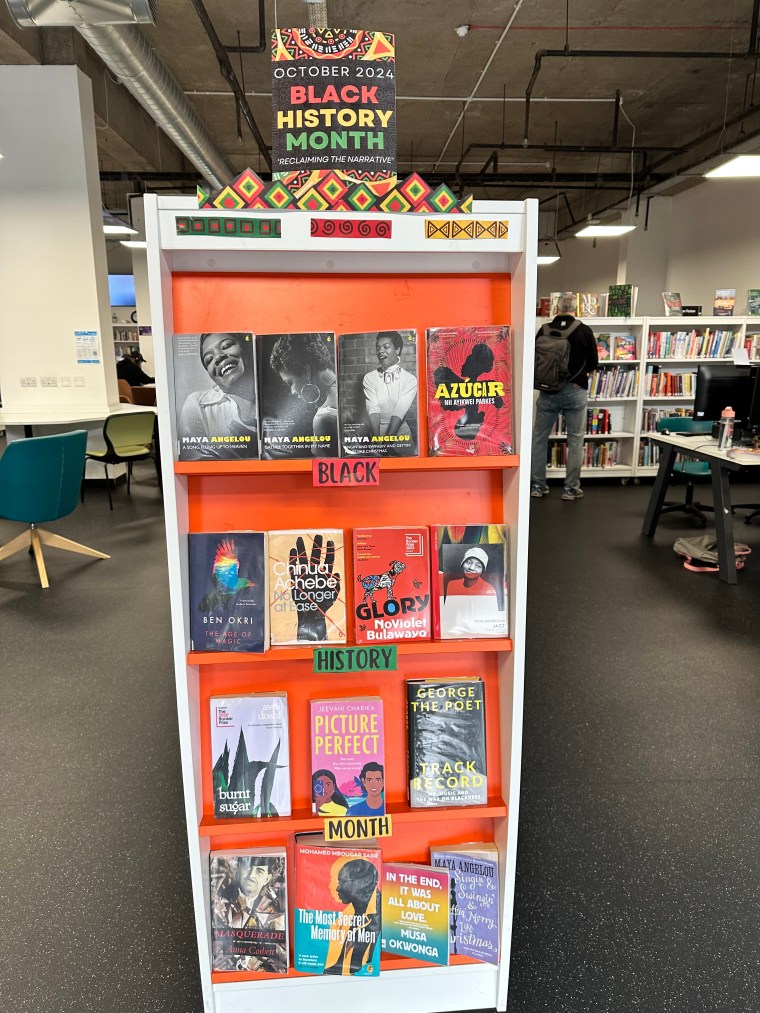
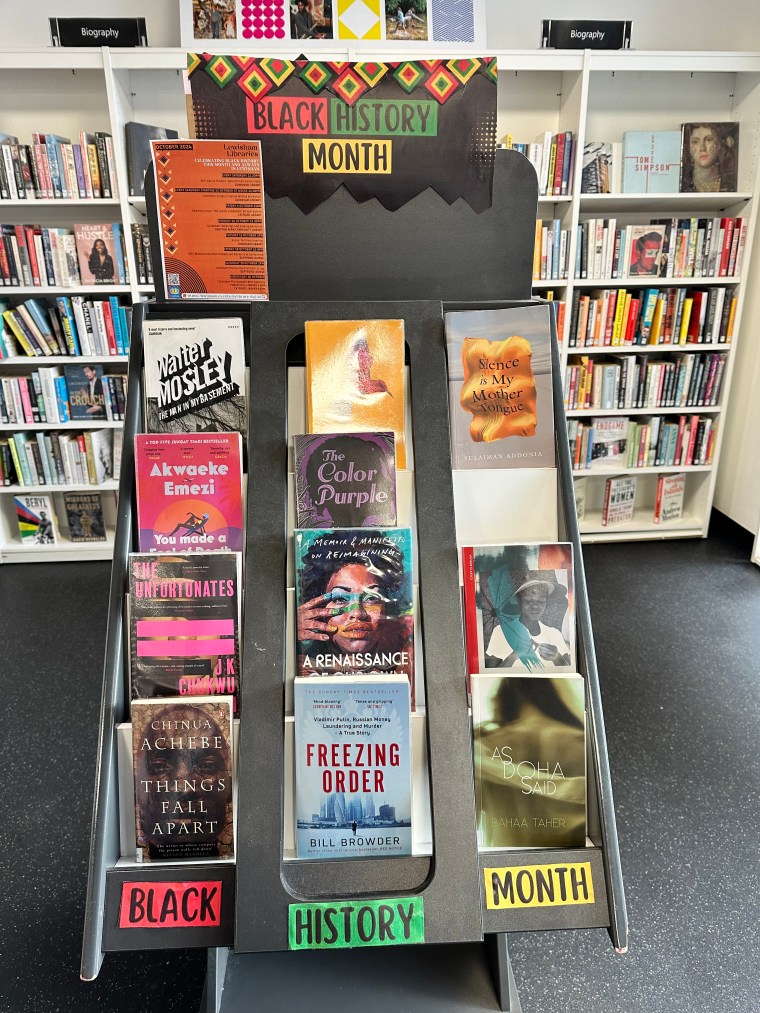
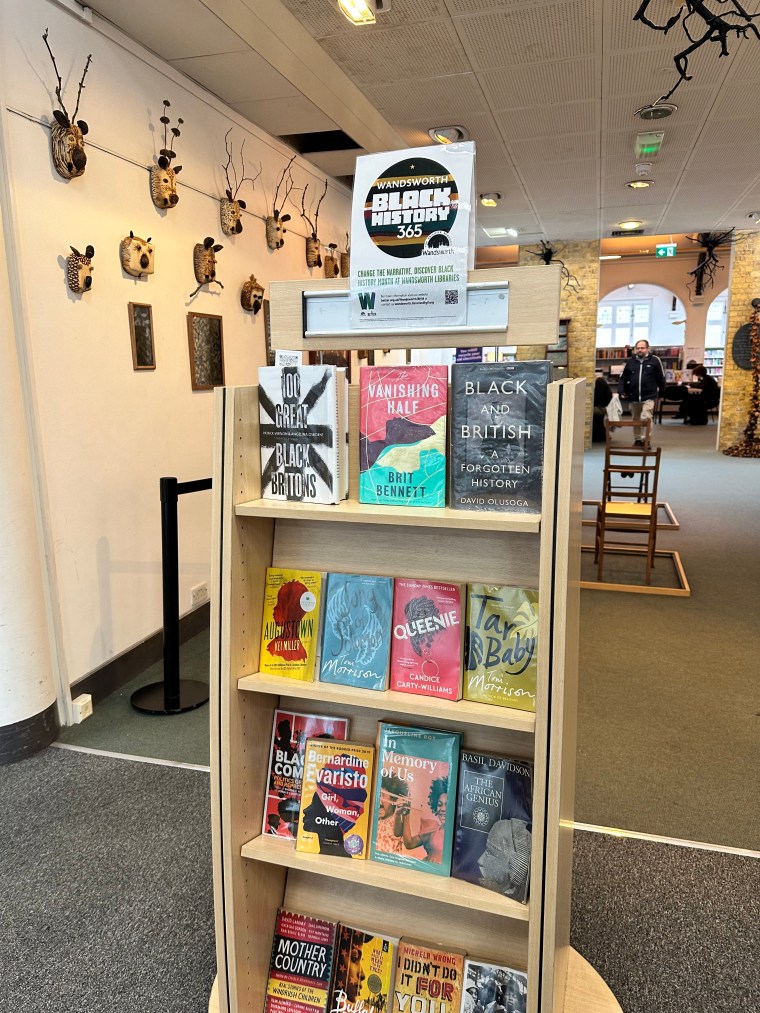
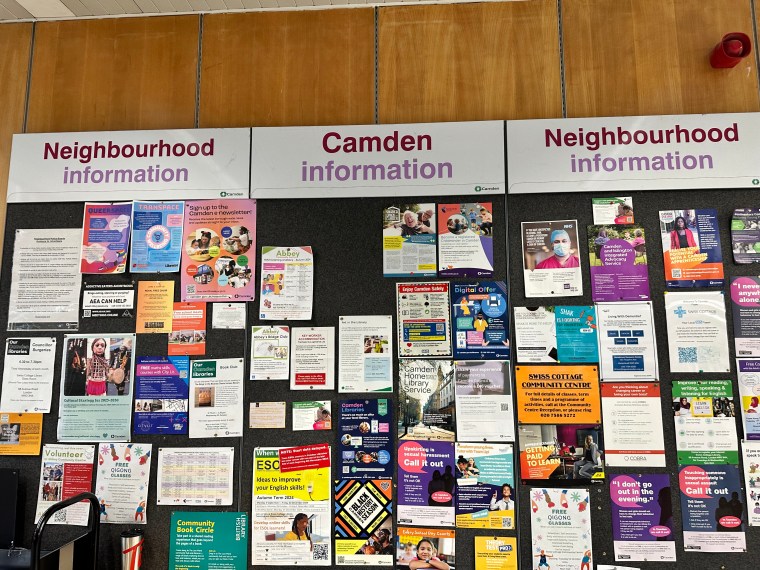
I sometime have to get up earlier than usual to visit libraries for work. Last week was my first trip to Putney Library for a business workshop. It was good to see their layout and customers who were using the space for working too. There was another Black History Month displace with a safari African theme which beautiful art objects displayed on the wall. Nowadays, libraries are really multifunctional for meeting places, reading as well as keeping customers informed on important information on topics or community news. Putney Library also had a café in the main reception area despite being close to other shops on the high street.
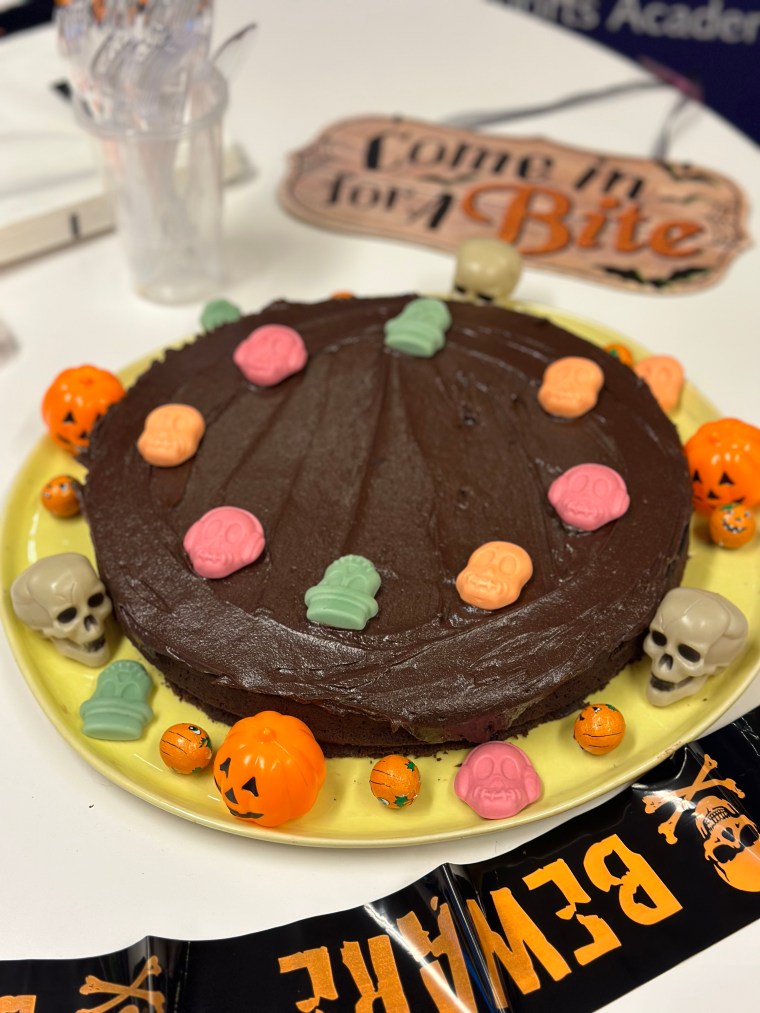
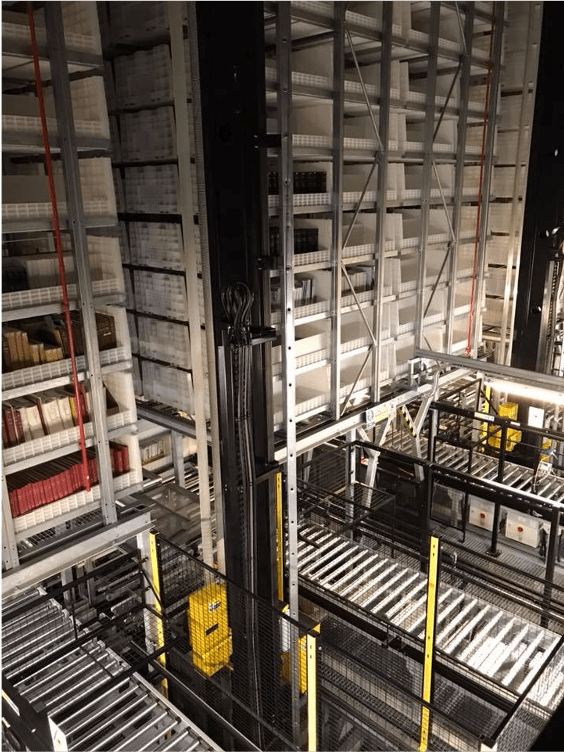
I am likely to be inspired by more libraries in future but everyday there is something about the physical spaces that make me proud to be in this profession. I recently heard and saw some amazing singing for the opening of the ‘Medieval Women in their own words’ exhibition but I am still to see it and I look forward to the guided tour with the curators. I also get to go behind the scenes to basement areas to say hello and support staff on Saturdays and some evenings. It was nice to see the seasonal things that happens by our own staff members. These include puzzle in the staff downtime areas, free library and decorations for day of the dead (it gets better for Christmas!). We recently met informally to make time to meet each other for a chat and catch up. I strongly believe in good team spirit and working having worked in good teams in the past. Although I no longer work with a lot of people – I do appreciate they precious time we spent together as colleagues, and some are also now lifelong friends.
I thank you for bearing with me whilst I write again about libraries and information professional, but hopefully I will find have some social activities and good old fashion fun to share with you soon. Who knows, some of this fun may include time at a library or museum. Public libraries are always at threat of cuts or are sometime misunderstood. Hopefully you can also find the time to visit your local public library and would be surprise on how they have changed in recent times. We also need all of you to continue to support libraries and make sure that are users and here to stay.
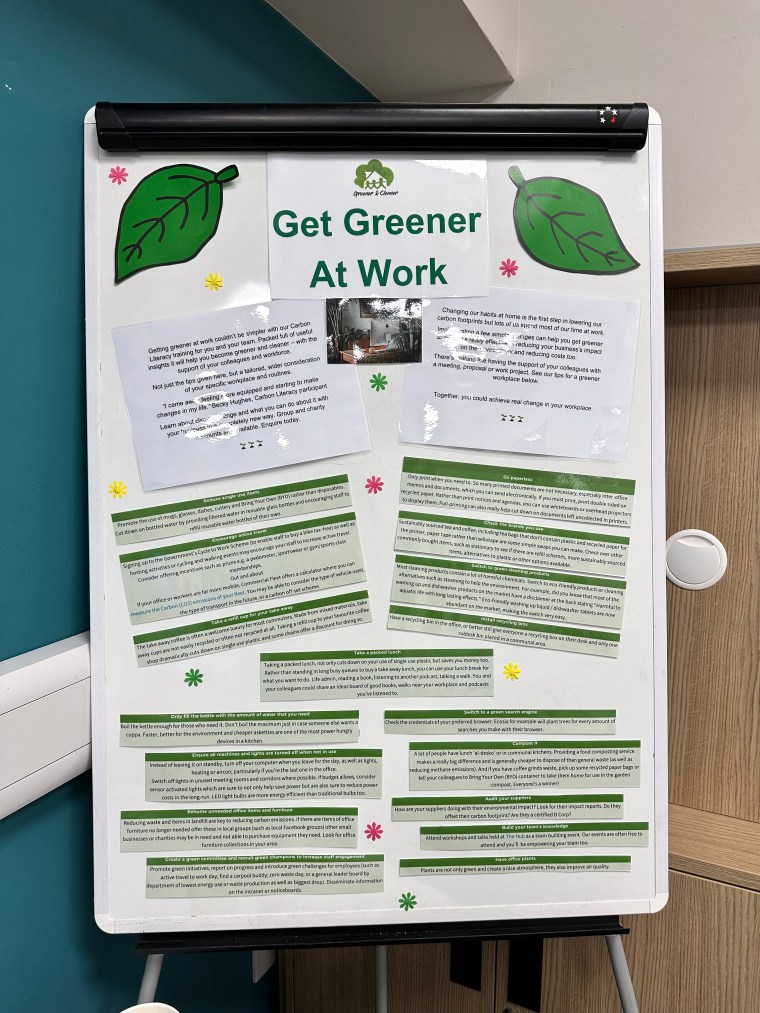
In October, libraries will be celebrating Green Libraries Week from 2-8 October with the theme ‘Go Green at the Library’. Awareness and activities for a more sustainable future are more important than ever with the impact on climate change. There many aspects that we have to remember the impact of good practice will have on our lives, our users live and the work that we do.
The Green Library Manifesto was launched in 2023 with a partnership of many British organisations, including CILIP and The British Library. I also attended the first Green Libraries Conference in March 2023, which was great for hearing all the initiatives and excitement of others sharing their activities and ideas for reaching these shared goals. This year CILIP’s Green Libraries Conference will be held at the British Library in November.
Here are some small ways that I have tried to improve my own carbon footprint or share my knowledge of green libraries and sustainability in the last few months:
Improving our Knowledge and Skills
With entrepreneurs and business who we meet at the Business & IP Centre, we actually have the privilege to meet businesses who try to solve some of the world’s problem with business models or ideas that are sustainable. Sustainability means many and different things to everyone but here is a quote I have used in the past to discuss sustainability:
WHAT DOES “SUSTAINABILITY” MEAN IN BUSINESS?
In business, sustainability refers to doing business without negatively impacting the environment, community, or society as a whole.
Sustainability in business generally addresses two main categories:
The effect business has on the environment
The effect business has on society
Source: HBR Online What is sustainability in business?
For businesses, there are a lot of support for encouraging best practice from organisations such as FSB, Gov.UK, the Carbon Trust and other organisation that help with best practice and insights for leaders and organisations to adapt and implement better sustainable businesses.
Infrastructure and Physical Spaces
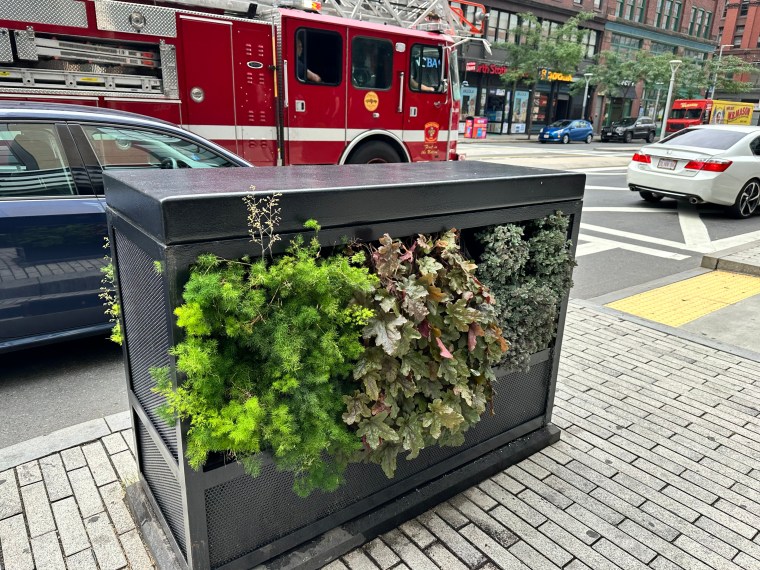
Living more environmentally conscious and compliant can only be achieved if our infrastructure and physical spaces are able to adapt and mitigate against damage and devastation to our natural resources and habitat. Although, one of the most annoying aspects of our infrastructure in the city are the pollution and litter that are times too visible for me. I can’t help picking up some weeds and litter that are frequently left in my neighbourhood. It is disappointing too that the streets are not cleaned regularly and that small items like 100s of cigarette butts can be found if you took a mile walk around my neighbourhood. I do blame the council for not having contracts with cleaning companies that truly care about the environment and for doing more to protect our environment. I recently went to another part of London, and even Boston USA in July, where I felt envy for the clean street they had compared to my own neighbourhood. I know that buildings and infrastructure are expensive but I hope that we can take steps to make improvements.
Positive Action and Collaboration
As with an activism or change, it is actually harder to do on your own. It is great to see that a new generation of consumers are making choices for their future and there are also people of all ages standing up for environmental issues. You may recall about 20 years ago when we were protecting our planet by “Think Before you Print” messages in the office. It did create a shift of mindset for us to not work paper – which eventually saves trees! Likewise, there has been several issues great shifts in our attitude and behaviours for aspects such as plastic pollution and single-use plastics. Most of the people I know now re-use bags or recycle their plastics. At work we have also encouraged the use of re-useable cups. In most public spaces, there are a few bins for our recycling of different materials. This too was a great shift from about 20 years ago. I remember I only had one large bin and just a crate for recycling when I first moved to my current home, but now we have four bins for recycling!
Improving Travel and Accessibility
I am pleased that I use public transport to get to work and I tend to use my car less and less due to restrictions and charges for driving around town. I do still have a car for longer journeys but also for getting items that are larger than usual for a delivery. There are issues with rail transport in the United Kingdom as it is really expensive to use the train for traveling further away from city to city, or up and down the country. If I lived on the European continent, I do believe that I would also use the trains more but the cost and time to travel sometimes do not encourage us to do this as often. Therefore, I know that I use aeroplanes for overseas travel – I do know that I will not be traveling forever but hope to see the countries still on my list and then perhaps slow down to places closer to where I live.
Accessibility sometimes comes at a cost. As I make my way on public transport and travel overseas by planes, trains and boats – I do see that there are issues with accessibility if you have a disability or if you are a bit slower. Hopefully there will be better designs as old ways of traveling are replaced with accessibility in mind.
We have also seen a shift on hybrid services from our workplaces to services being offered online by video conferencing. The impact has improve journey times, enabled us to be open to the world and to choose some lifestyle changes from the time not traveling. However, Technology also has contributed to vast amounts of carbon emissions for servers and other negative energy effects.
Raise aware for the issues on sustainability
The good news about a topic that is talked about and for those who are still learning about it, is that there are of resources by information professionals or resources that can be used for raising awareness and understanding of the topic. There are some great articles and current awareness articles for keeping on track on the latest trends and developments on the topic. As with a living aspect and ecosystem, such as our environment, climate and wellbeing – there has to been a constant conversation and research into new information and evidence of the impact on our lives and the environment around us. For this October, I have little time to cover everything on this big topic but I hope these personal thoughts will help to Celebrate Green Libraries initiatives and action.
In depths of the pandemic, I thought of nice places I would like to be when we get back to normal. One place on top of my list was a trip for a summer holiday to Italy! I still have buckets full of places I would like to visit in Italy. I know I have just returned from the USA but that was partly professional travelling and development, with some time spent with family in relaxing Boston – it didn’t feel too overwhelming, urban and I thoroughly enjoyed my time there. The last couple of weeks spent in Italy was different for me as I did not take any work with me, and it was a holiday. It was slightly different too as it was mainly my husband and I, as we do often go away with family in the past. So here is a recap on how I relaxed and thankfully it all went very smoothly.
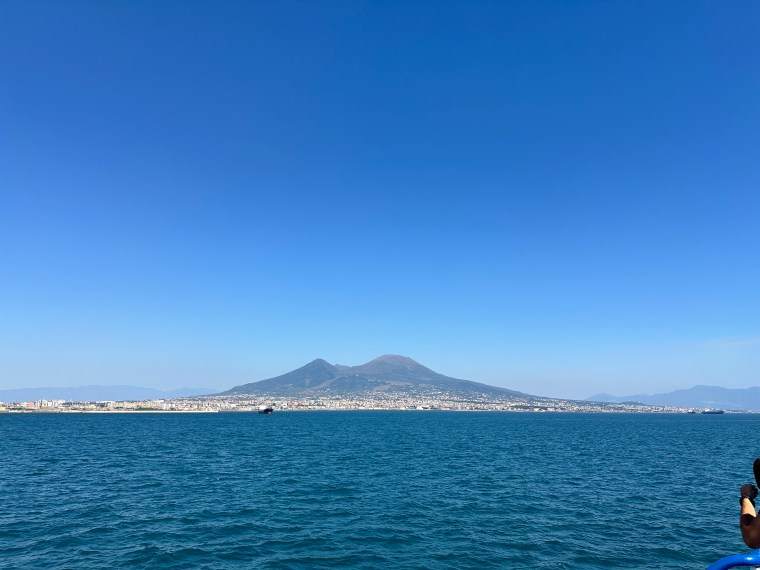
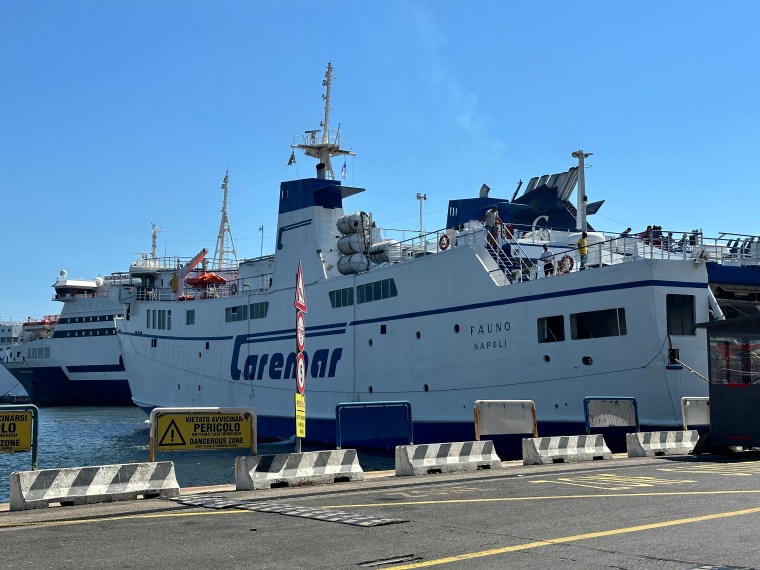
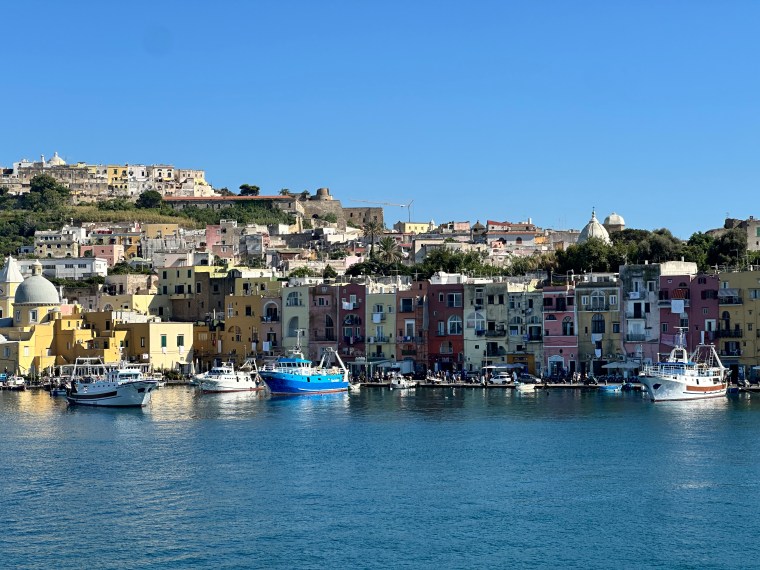
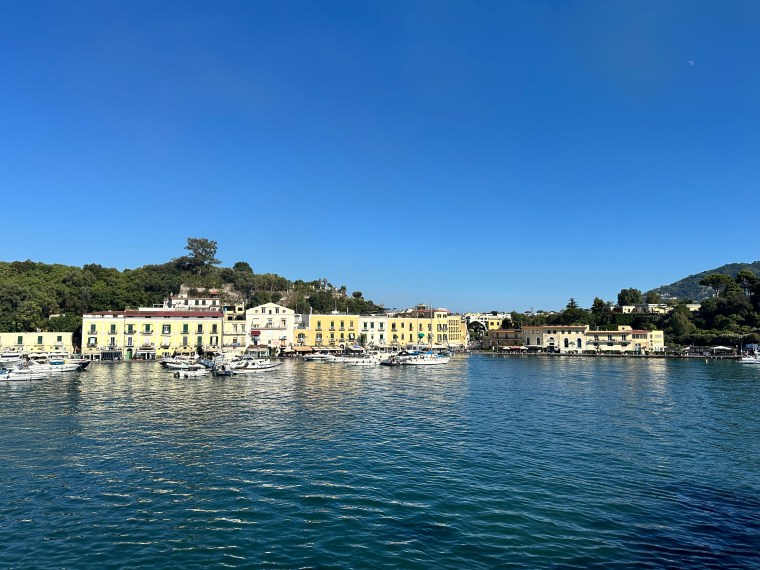
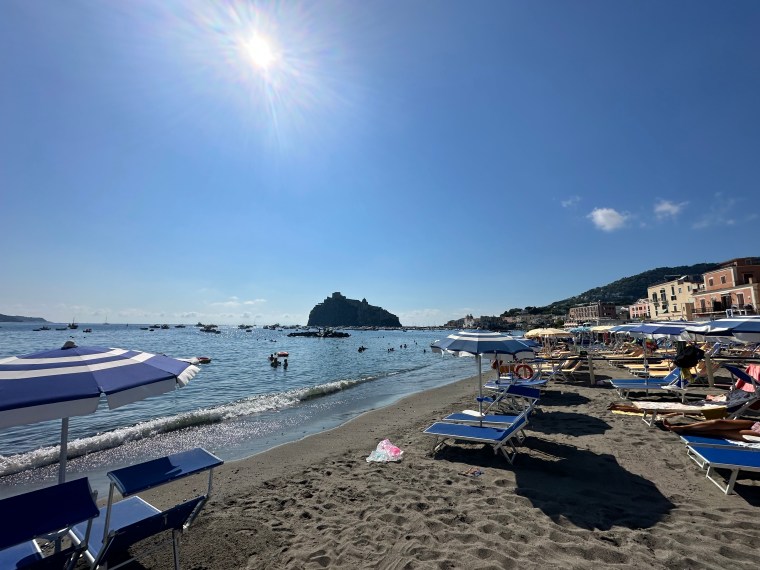
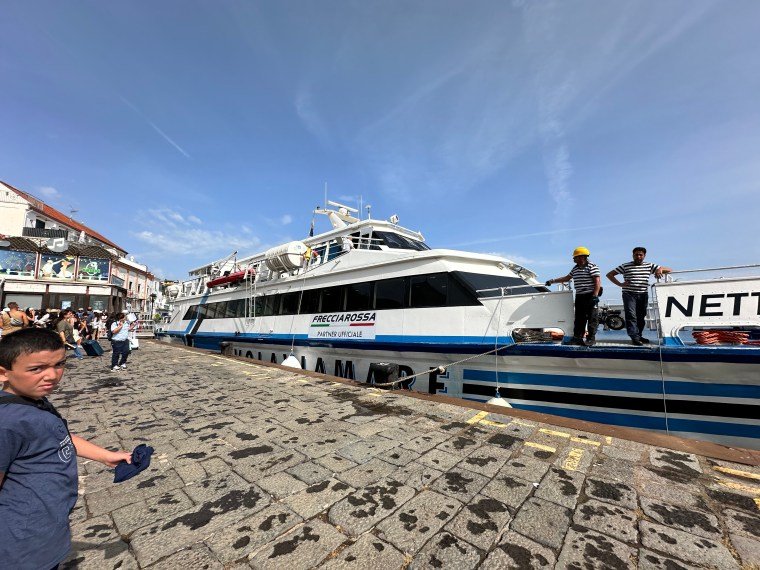
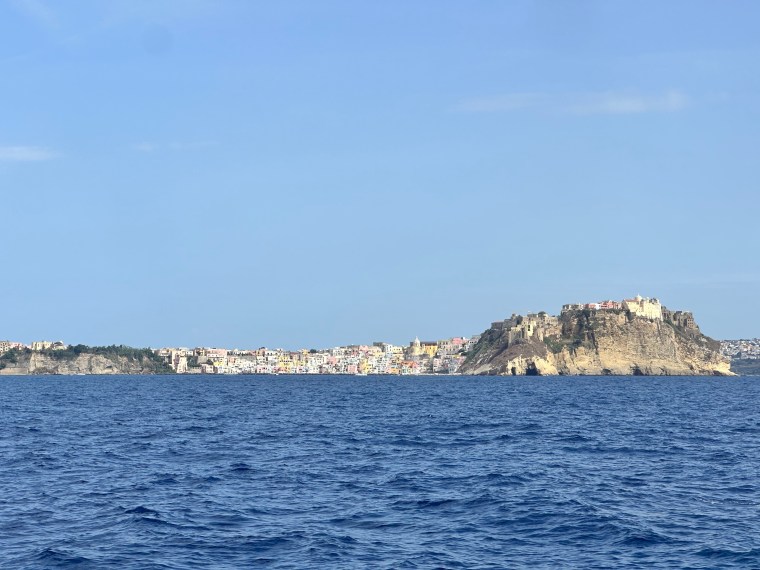
My husband is Italian and had visited Ischia before in the 1980s but I have never been and was looking forward to it. I booked the trip in early Spring so I knew I had something to look forward to even though I have been ‘burning the midnight oil’ with professional commitments. Getting to Ischia was fairly straightforward from flight to airport in Naples then to the port to catch the ferry to the island. From door to hotel, it took about 12 hours but it was good to enjoy the ferry and sights on the way there. It was spectacular to see the Bay of Naples as the ferry left the port with the city buildings covering the hillside, and to the right you can see the volcano Vesuvius in all its magnificence. As we left the bay of Naples, there are a few islands to spot, such as Procida, before we got to Ischia’s port. The ferry trip like I had started my holiday already with the trip past the islands. One aspects I must mention is the colour of the blue skies and the Mediterranean Sea were beautifully blended to a bright blue canvas and it truly was a vision to behold!
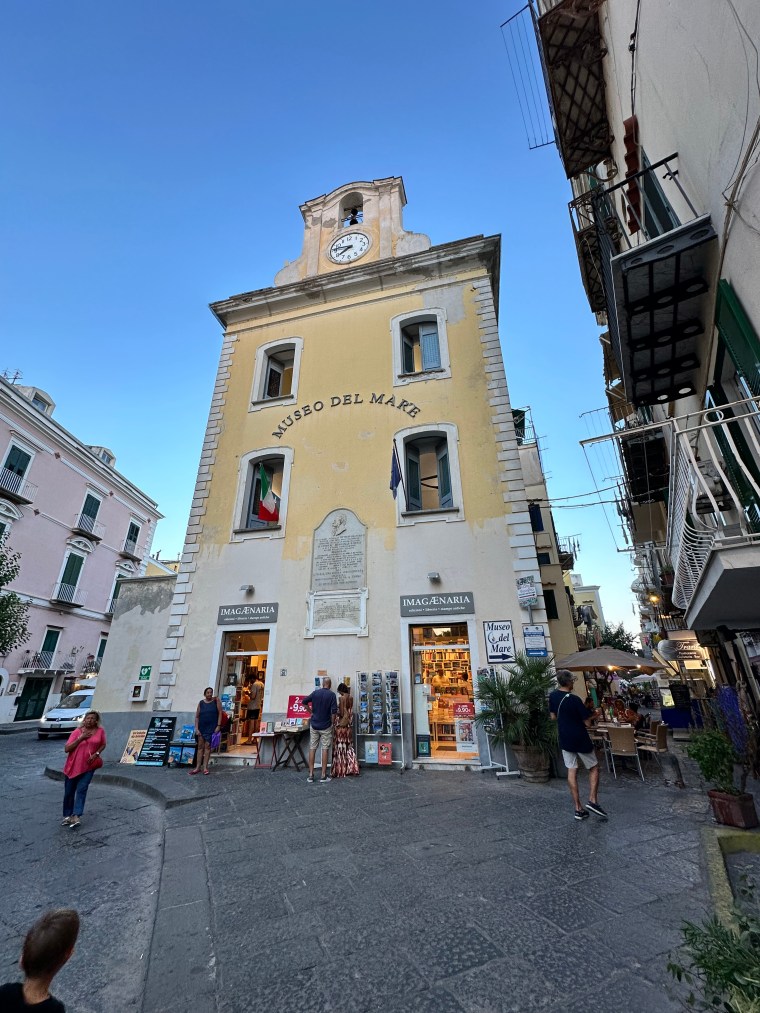
We stayed in a great hotel about 20 minutes from the Port of Ischia and even the taxi ride had me excited as I saw the shops, cafes and places to enjoy great Italian cuisine on the way to the hotel. The floral promenades and typically Italian island streets made we so happy as I knew I can truly take it ease and gear down to slower pace whilst on holiday. I had no choice to take it easy as it was a lot warmer than London and you literally have to have a rest if you are not working as it is too hot to spend time out in the heat of an Italian summer.
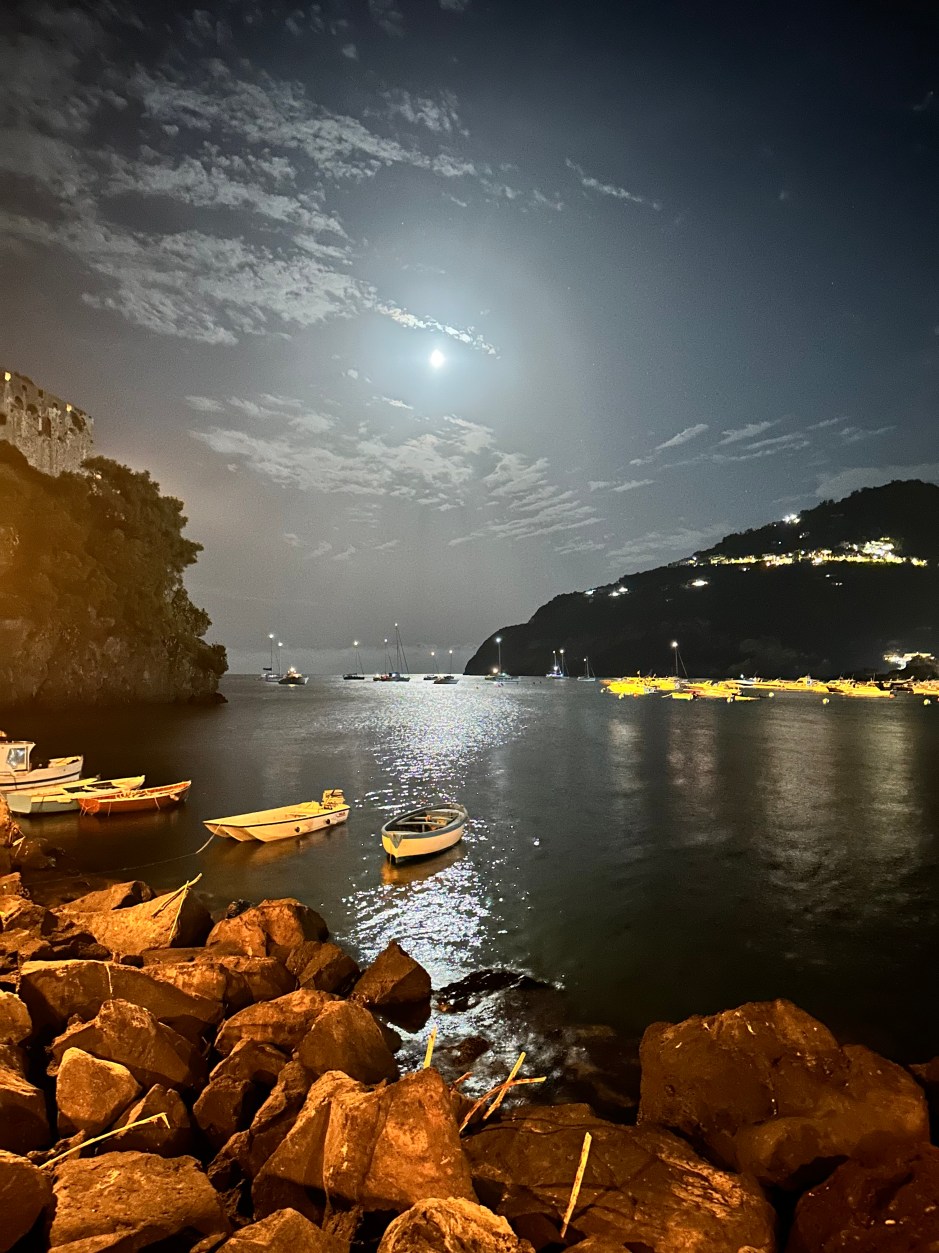
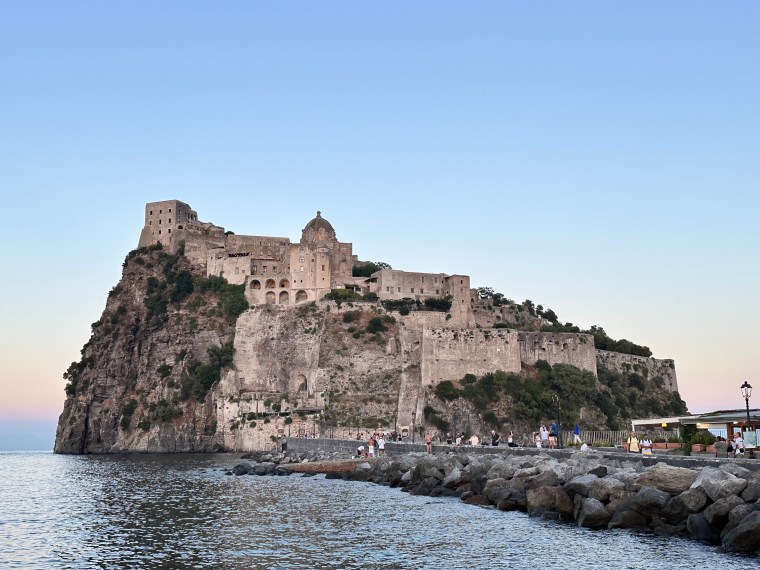
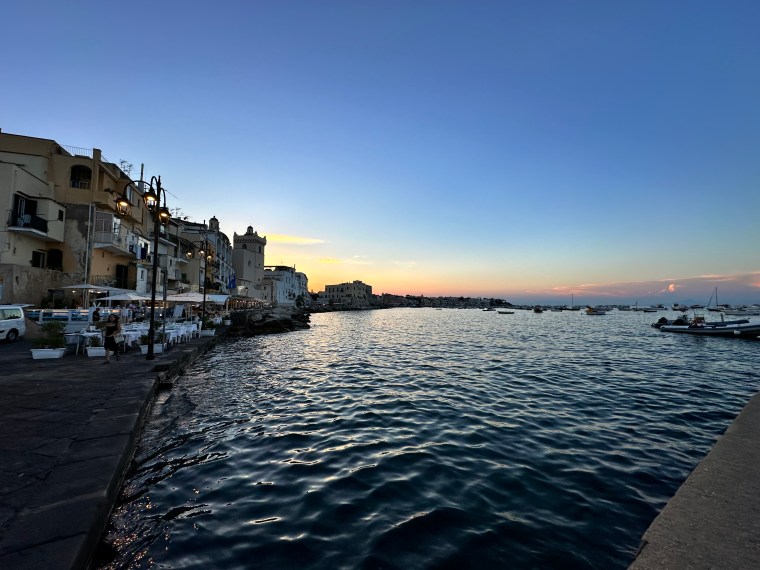
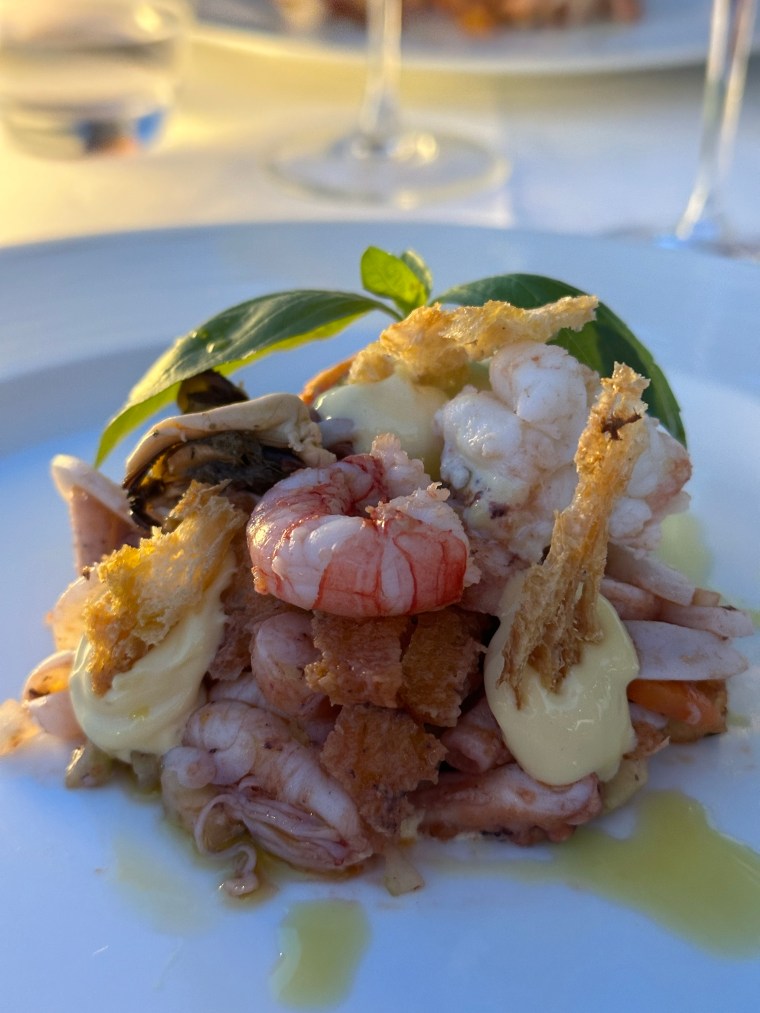
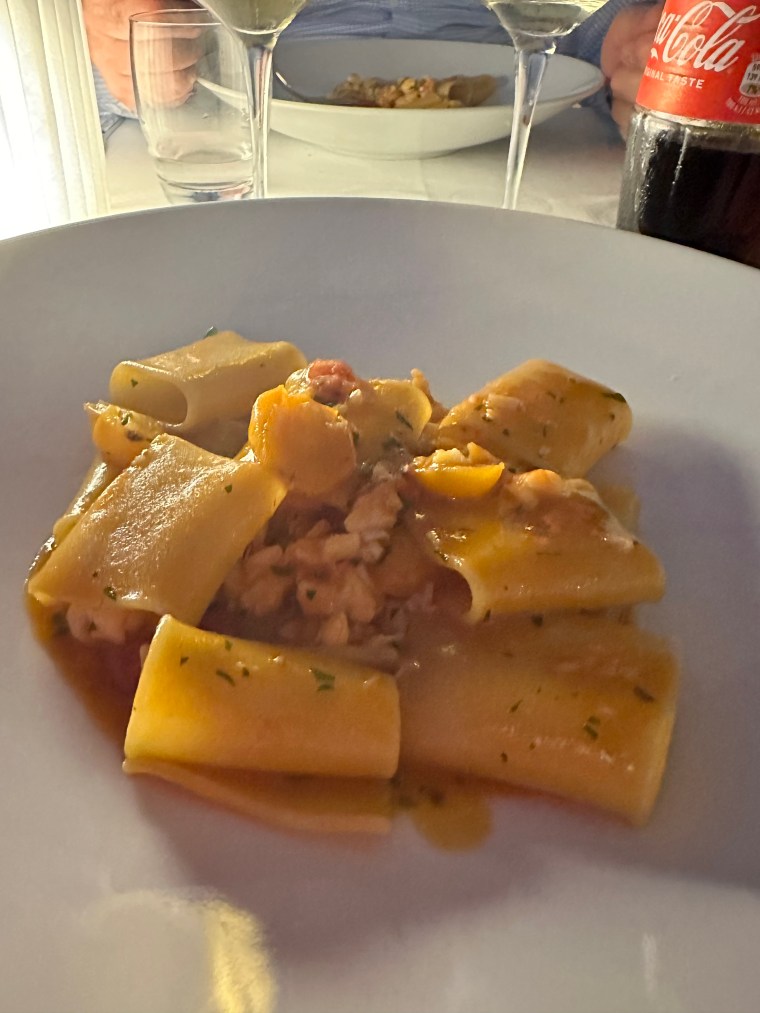
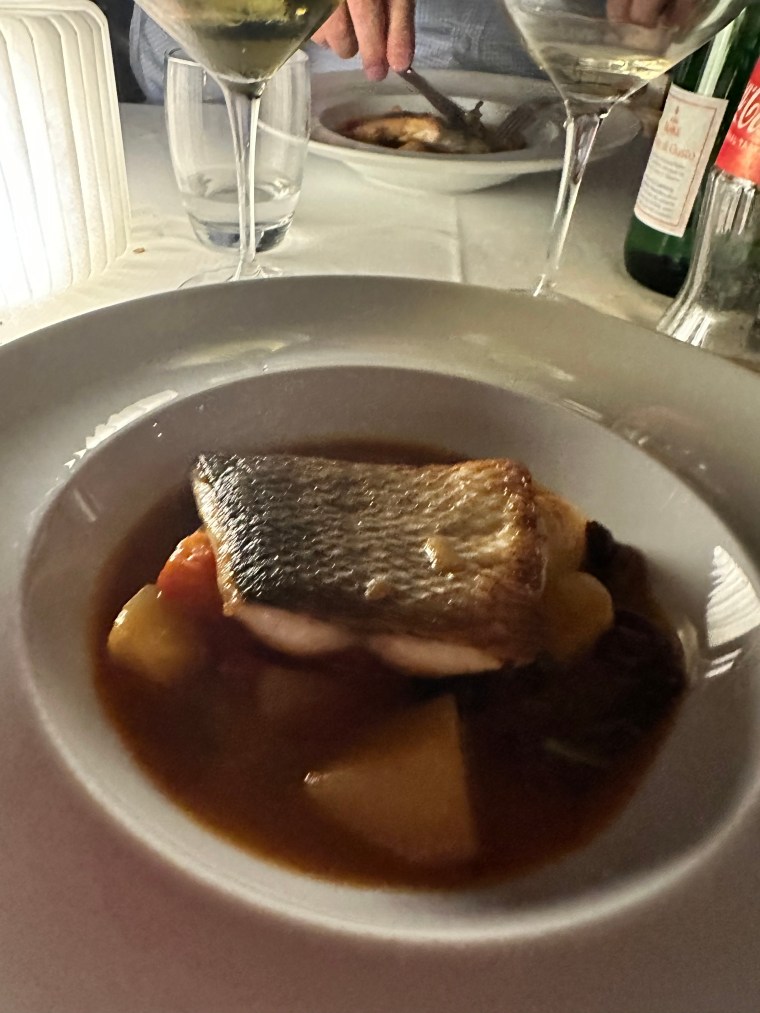
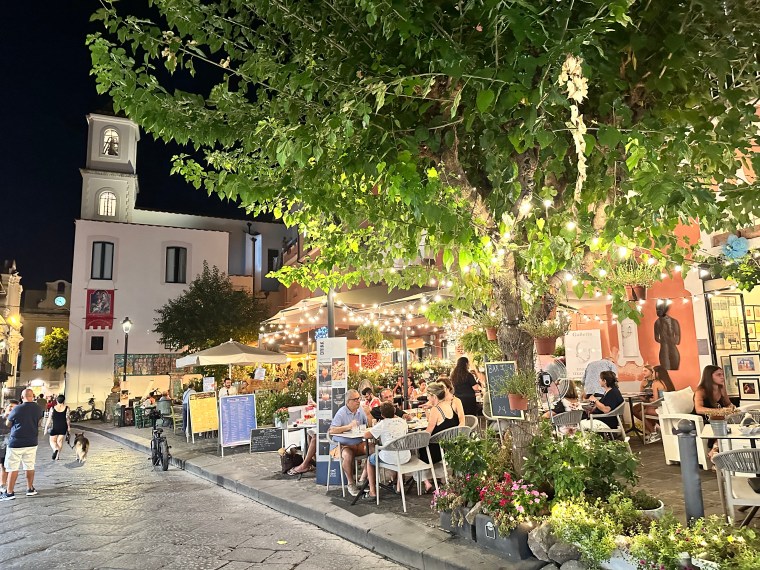
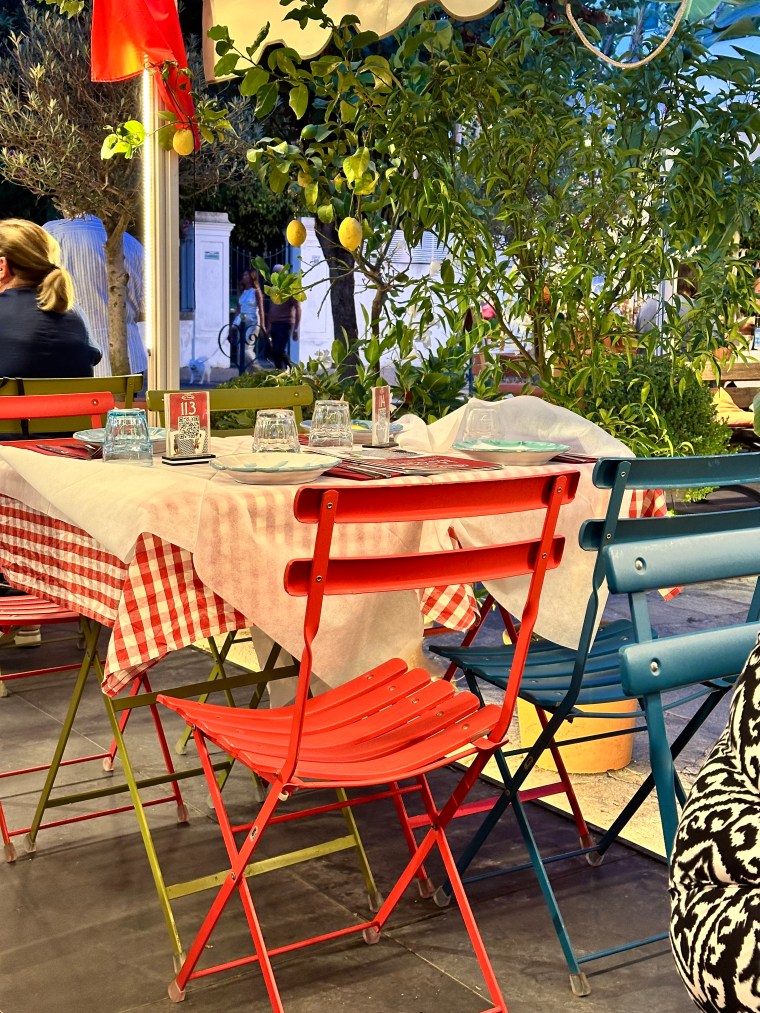
From the first evening, the views across the sea and the nearby hills were amazing. The food was great as usual and it was amazing to savour the local ingredients that definitely tastes better in Italy. It was great to have lots of seafood, regional mozzarella, ice cream and pasta obviously. The nights were cooler for a pre and post dinner or passagiata as the Italians call it. At times it felt like we were straight out of our film set with local children splashing around in the water whilst a few hundred metres away, diners were have meals on the seafront whilst the sun was setting. There was a nice walk after the restaurants to the Aragonese Castle or to the Port at night.
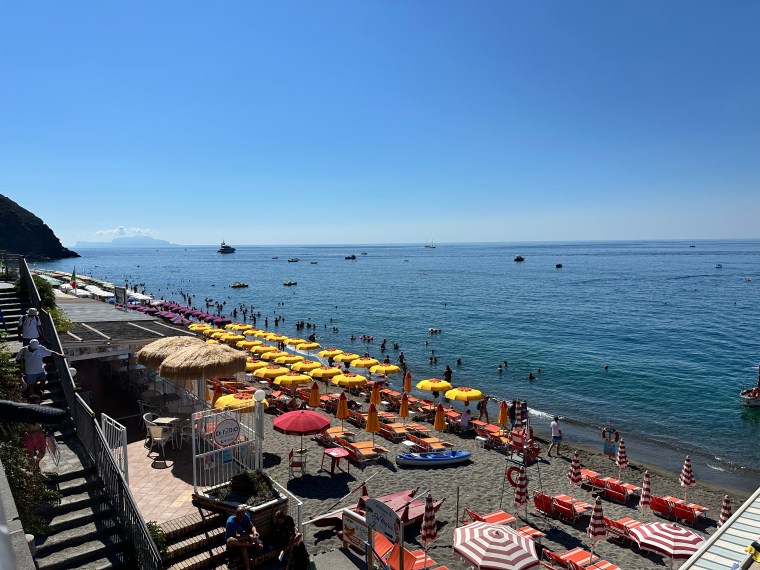
During the day, we mainly stayed around the pool as all the beach clubs were mainly booked in advanced. In the afternoon we went to the parts of the beach that were free for you to pitch your own spot. It was great to be around local or holiday makers. We did venture out on a local bus to Moronti Beach, which one of the island’s largest beaches. It was close to the picturesque Sant’Angelo area and beach. The volcanic beach sand was so hot, you had make sure you wore your beach shoes as I am sure you could burn the sole of your feet. The beach itself was beautiful and was inspired seeing so many people swimming and making the most of the good weather, sunshine and warm water. The bus was not expensive at all but it was a small bus as the streets leading to the beach were sometimes very narrow. I realised then that I probably won’t drive on the island even if I had planned to.
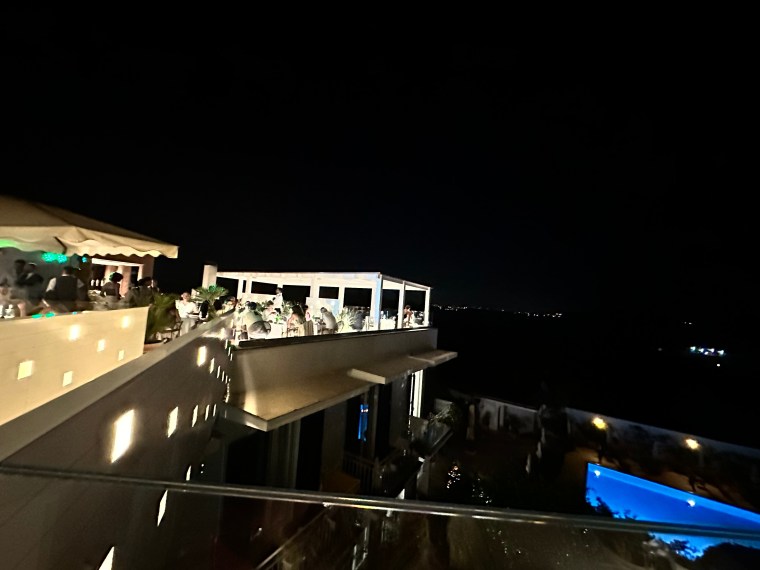
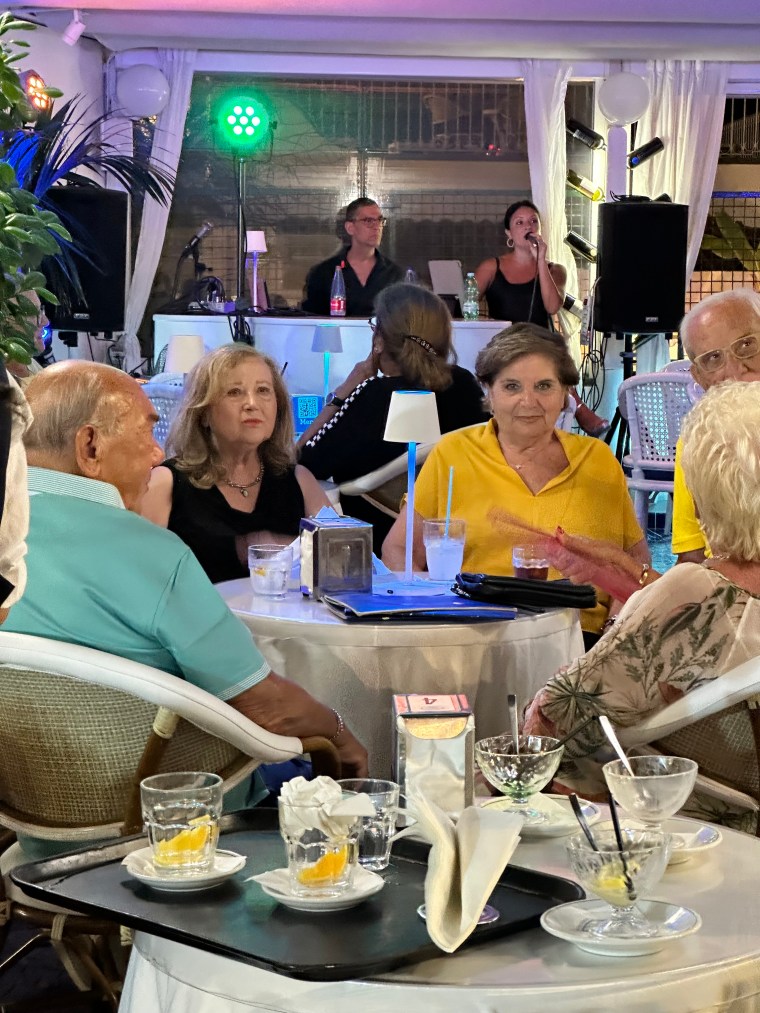
Ferragosto is a holiday that is celebrated annually on the 15th August and I was looking forward to see how it would be whilst on the island. We spent the day around the pool and beach but in the evening, we booked into our hotel’s rooftop restaurant for a special taster menu for the celebration. Whilst there was a DJ and great ambience and amazing views, we could also here the service from the nearest church and the choir singing. It truly was a special way to spent the night and close to midnight there were fireworks around certain parts of the island.
For the next couple of days, we mainly relaxed, went for walks and the hardest decision was where we should go to eat that evening. All in all, I loved Ischia and would to visit again in future years. I still have some other part in my list to see. The hotel was very friendly, welcoming, and we felt really relaxed and rested. I would certainly recommend you visit the island if you have already been to mainland Italy.
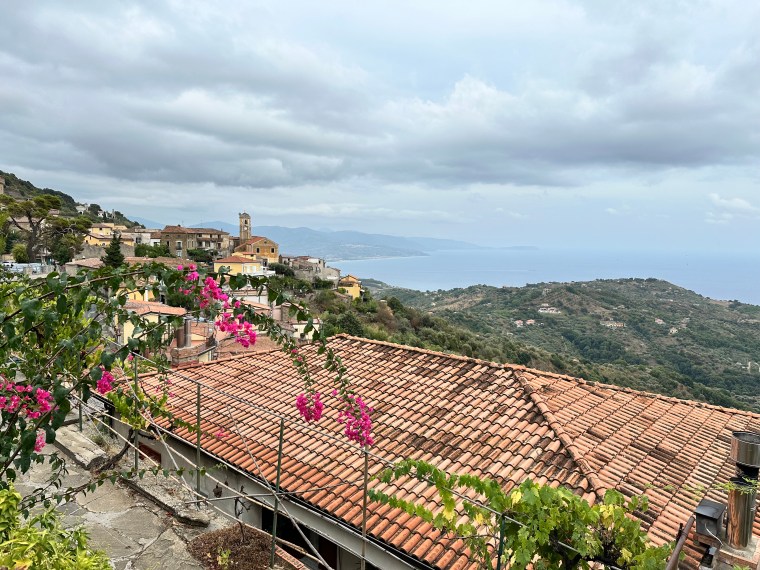
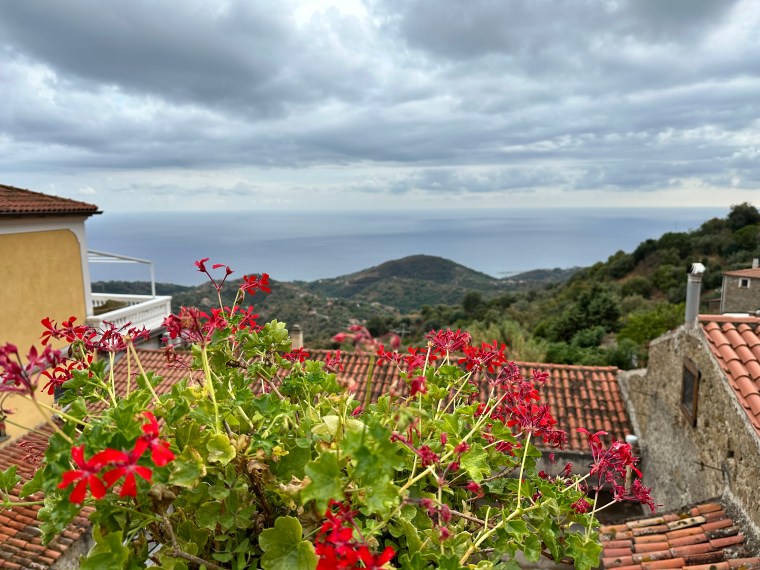
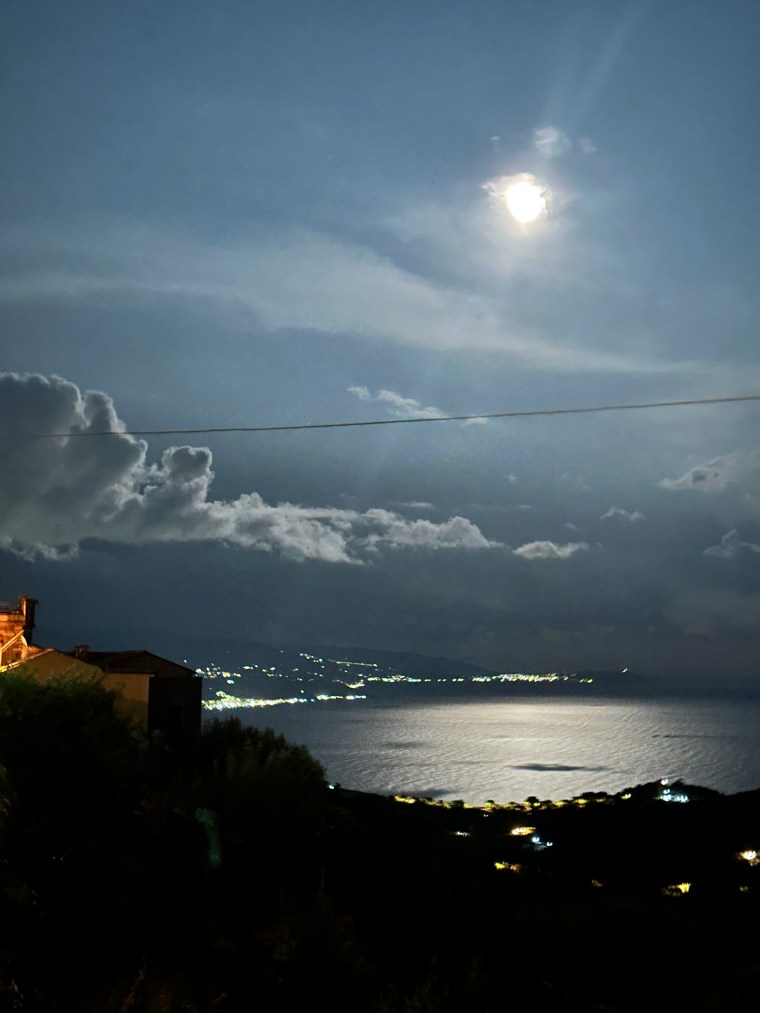
Our adventure, as my husband called it, continued to the mainland. We got the ferry back to Naples and then took a train from Naples to the little hillside village on our next stop for a few days. We stay with some family who were also on holiday in the Campania region but the Salerno Province of Italy. The location was so stunning with views from the hills overlooking the coast along the Mediterranean Sea. It was relaxing to sit and admire the view. The first two nights were stormy with a lightening show in the sky and over the sea but during the day it was sunny and hot.
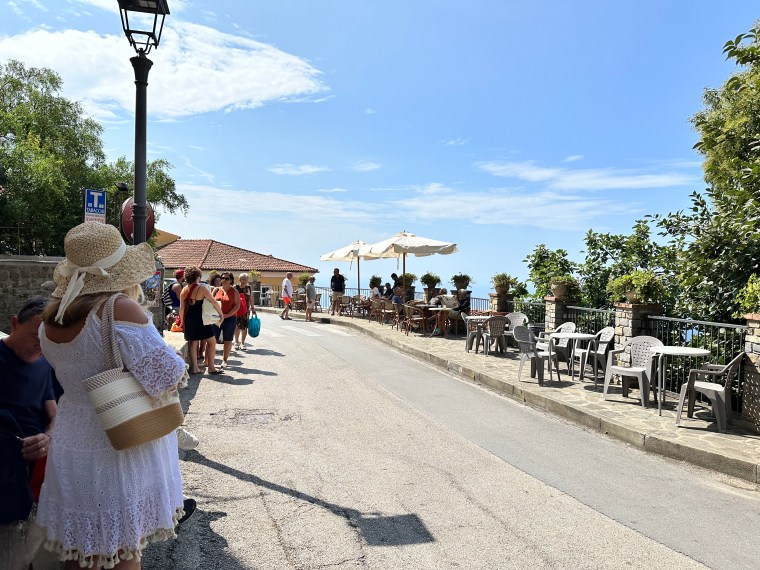
We spent some time around the little village where other were also holidaying and it was nice to see the typical narrow roads and hillside architecture. It really was a coffee culture in the morning and evenings and a great way to get to meet everyone. In the day we also spent some time at Acciarolli beach – it was great and it reminded me of Maracas – a beautiful beach with similar waves in Trinidad. It was good to spend time chatting and enjoying the seaside. The beach clubs were useful if you wanted a cold drink, snack or to use the toilet. They also played music which created a nice beach vibe. I am grateful to our relatives who invited us to this beautiful part of the country and for their hospitality and kindness during this time.
This was exactly the type of holiday I was looking for – where I can just enjoy the views, local delights, rest and relax. I did have a few days in London before I went back to work. I felt so relaxed – I didn’t look at my email until the night before I return to work. When I think back to the lockdown days – I am pleased I had this holiday. I have also since heard my husband say that it was a “really good holiday” and we had an amazing time. I totally agree with him and I look forward to another time when we visit another beautiful part of Italy.
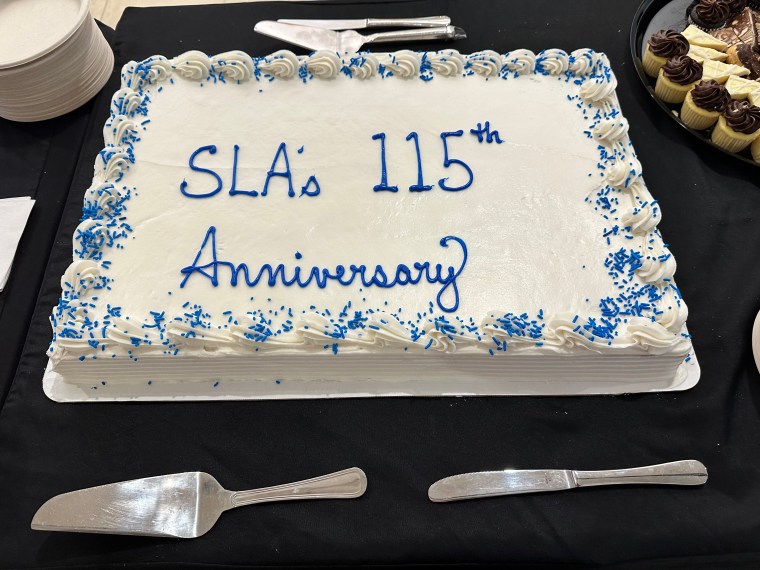
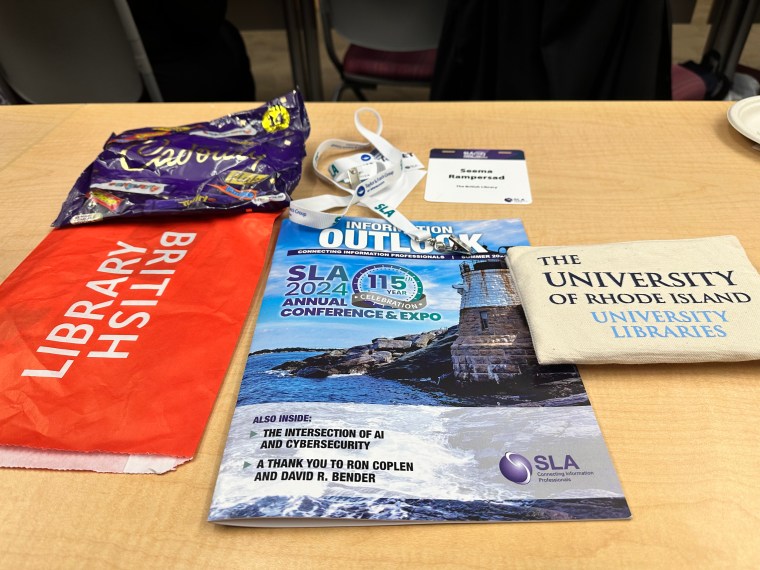
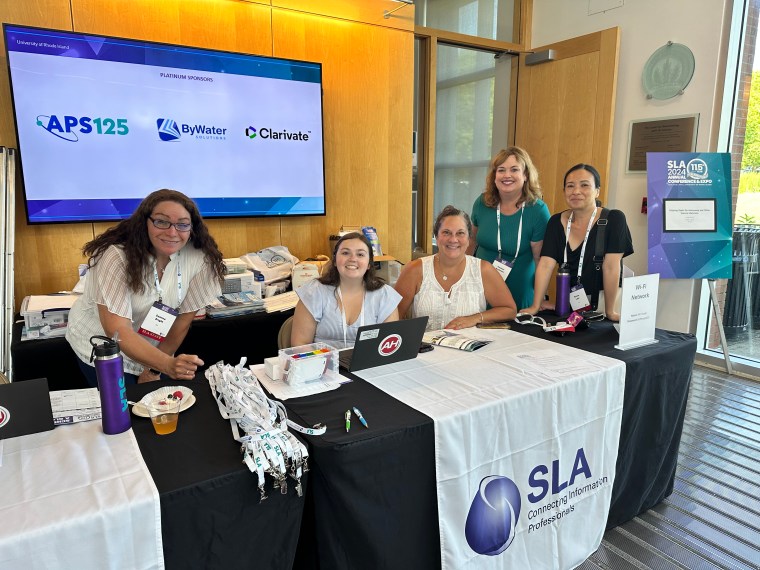
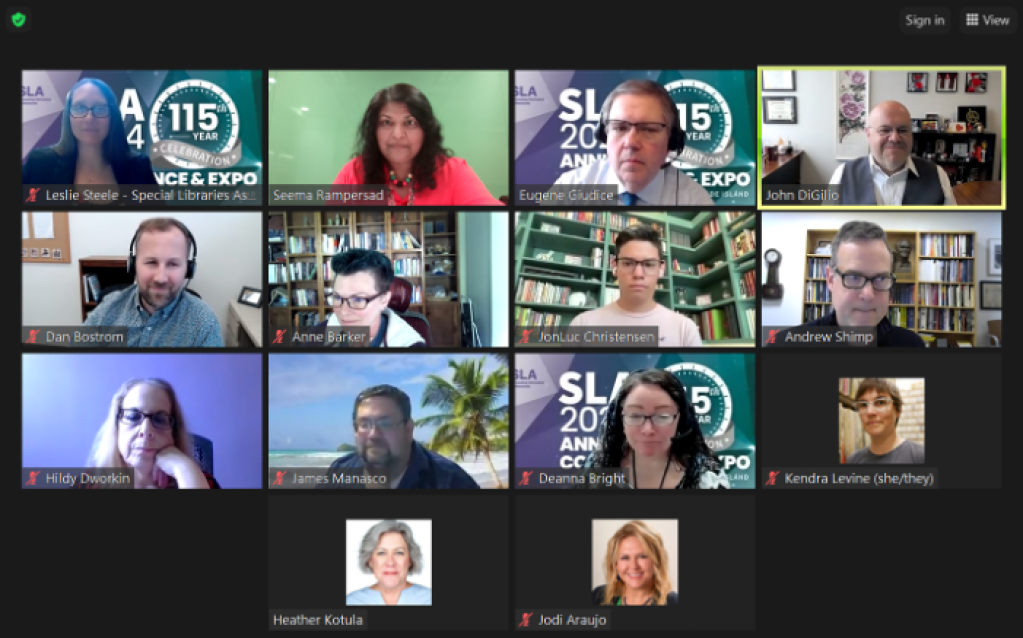
The SLA Conference 2024 was arranged in the University of Rhode Island as it was the perfect venue for us to find a location on the East coast of the USA to host a conference within our budget and for the right size for this year. It was also the 115th anniversary of SLA and I was looking forward to attending as a member of the SLA Conference Committee 2024.
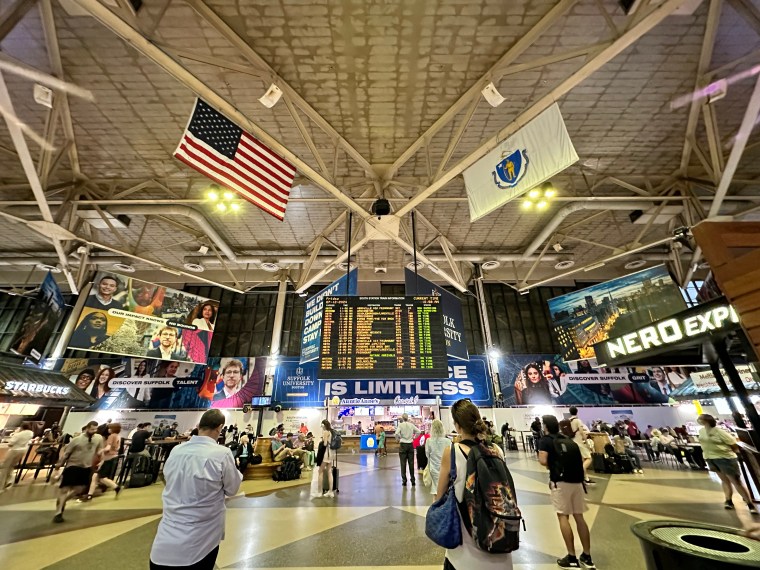
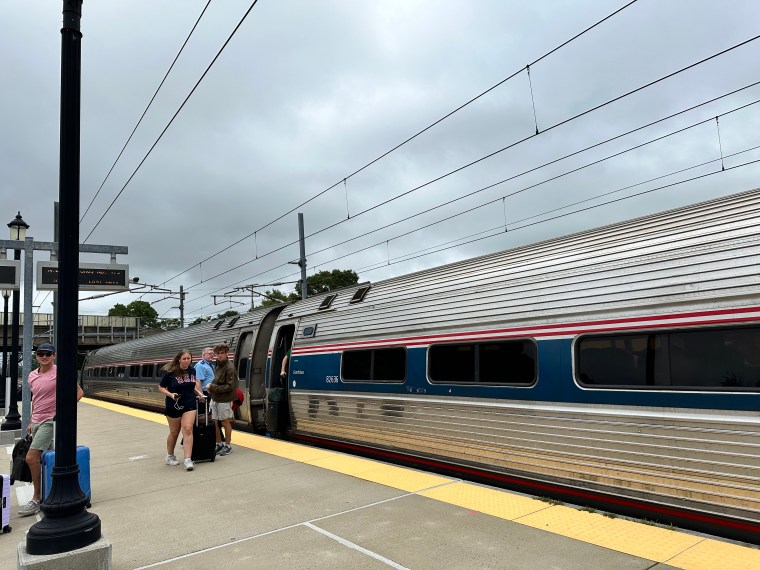
I flew into Boston a couple of days before the start as unable to fly directly to Rhode Island. Boston has always been on my consciousness having friends and family there. It was in a middle of a heatwave when I arrived and it was great to see a very big and modern looking city. Having spent one night there, I made my way by Amtrack train to the University of Rhode Island in Kingston. I was unsure about booking my tickets initially but it all went smoothly in the end and the cost was very reasonable. I got a non-stop train and paid $20.00US extra for business class to be sure that was a reservation to get me there in time. There were several trains and it was not an issue in getting there.
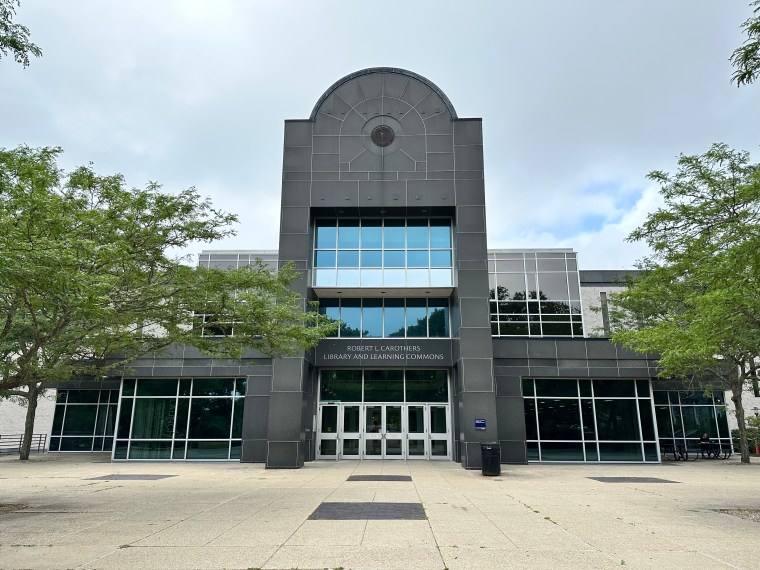
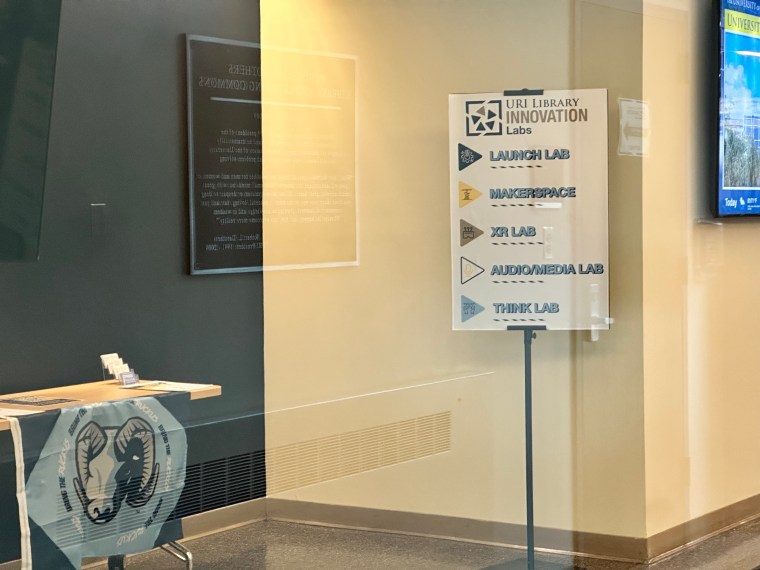
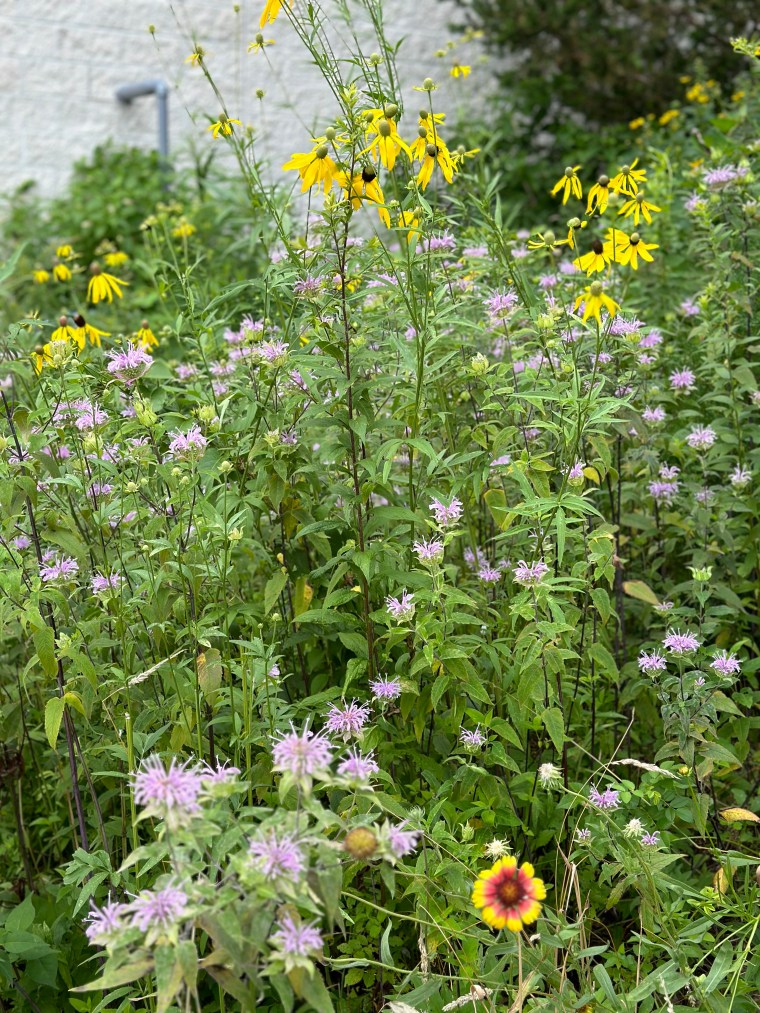
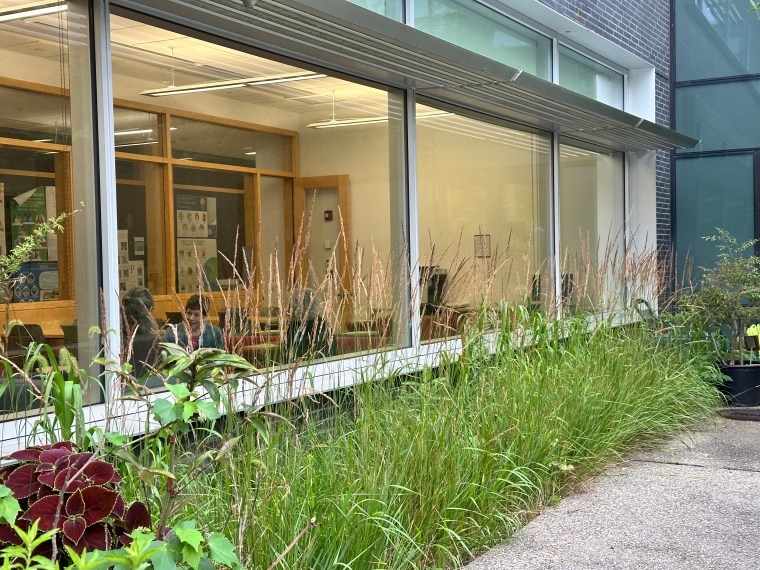
Arriving at the University of Rhode Island was quieter than I have been before – there were some corn fields and forest close by with a campus spread out with several buildings close by. It was great to see the wildflowers and planting in the grounds as well as the various campus buildings from the Library, Business School, Multicultural Centre, and many more that we were to use for the next few days. I saw about five groundhogs and deer on my first few hours around the campus. Obviously, it was very quiet those few days as it is the summer break but it was great to meet SLA staff, friends and colleagues who I have been working with over the last few years. I also stayed in the dorms for the student experience, vicinity to the conference locations as well as the cost was affordable.
My obligations as Past President for SLA meant that I had a Board Meeting on the first day and I was as enthusiastic and grateful as ever on how far we have come and how we have all worked extra hard with our Association Management Company to get to this point in record time. I was pleased to see staff and leaders who work behind the scenes and to meet my fellow board members. I absolutely do not take this for granted! I feel privileged to be given this opportunity for the last three years plus my time with SLA Europe. I am just basically ecstatic that we are doing much better and we can celebrate with members, partners and guest in this learning environment in such a special location. Obviously, we did serious work of strategic planning and building better relationships for the best of SLA for us to last hopefully a long time in future.
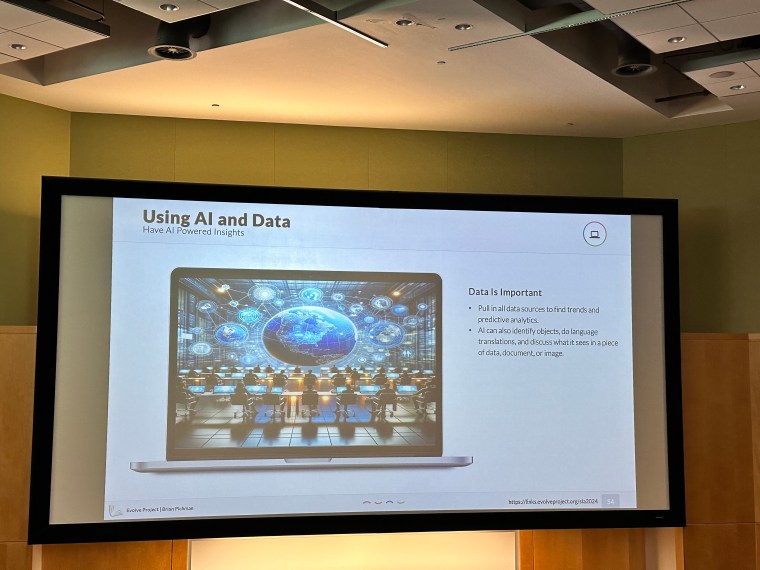
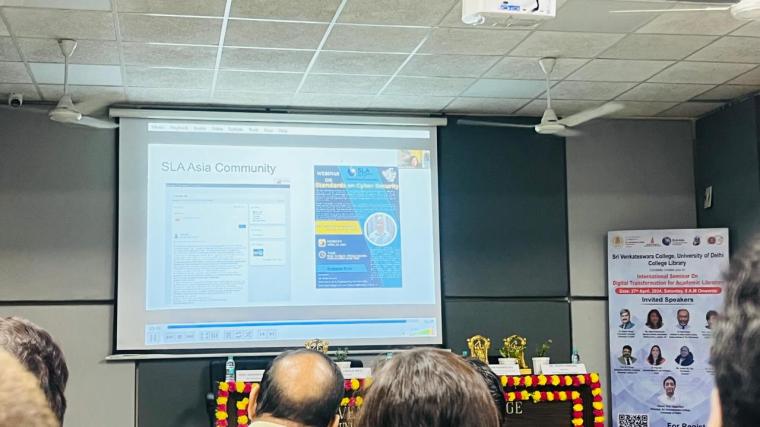
I was truly proud that we were organised a programme in such a short space of time and it definitely felt like we were on the right track to give our conference delegates some great insights, knowledge, experience and take-aways. The SLA conference opening and closing keynote speaker was Brian Pichman who gave a motivational and informative keynote on Artificial Intelligence for Libraries and information professionals. Brian was very cool and genuinely highlighted the current landscape, new technologies pros and cons, and the value of our professional role in this paradigm. It was great to be in the lecture hall and although the seating was very steep – it was nice to see the 300 plus delegates in one space. For the next three days, I attended several talks on Generative AI, Information Literary, News Gathering, Leadership and Career Development, technical standards (e.g. engineering standards by British Standards Institute). We were really happy to have a full exhibition hall and for our partners to full up the exhibition spaces. We have received great feedback from our exhibitors and partners, and we thank them for being with us in 2024!
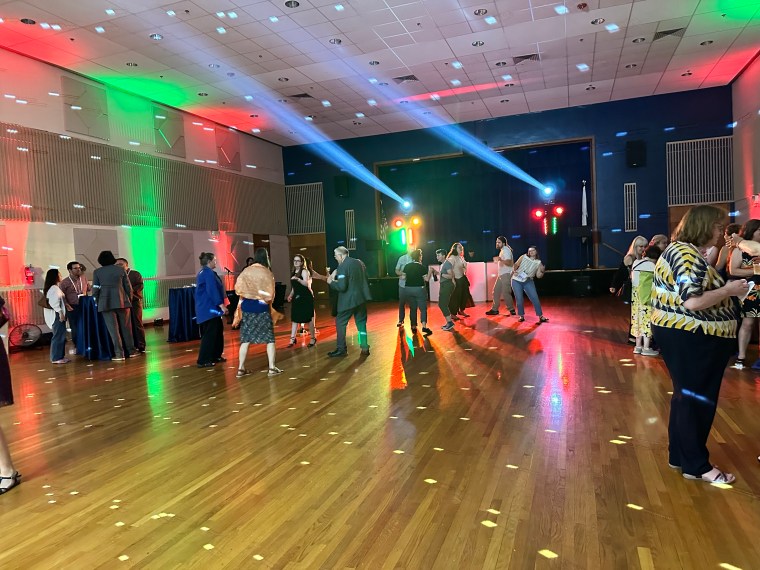
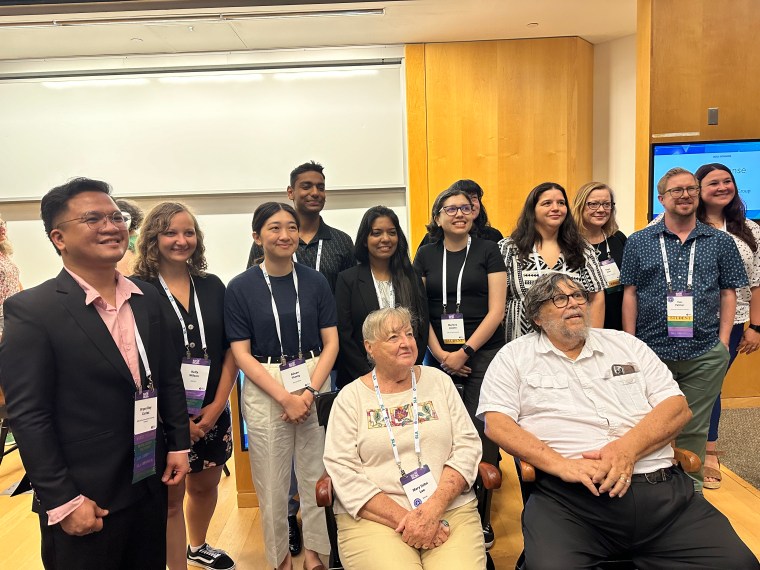
It was not all work…there were many social moments to meet other international professionals from our dorms meeting, international 115th anniversary reception, a quiet chat in the gardens, a bar trip to the hotel venues, to dinner in the University’s dining halls and the famous SLA Dance Party in the ballroom. I haven’t lived in the USA but being in this setting was great for my reality check on the many American school ballrooms movies I have seen in the past. Of course, I loved this part of the conference and it made me happy meeting people and the informal conversations we had. I do feel it is a special time and I will cherish these memories with nice people at the conference. I also have time to meet some British contacts. I look forward to our future endeavours in person or online.
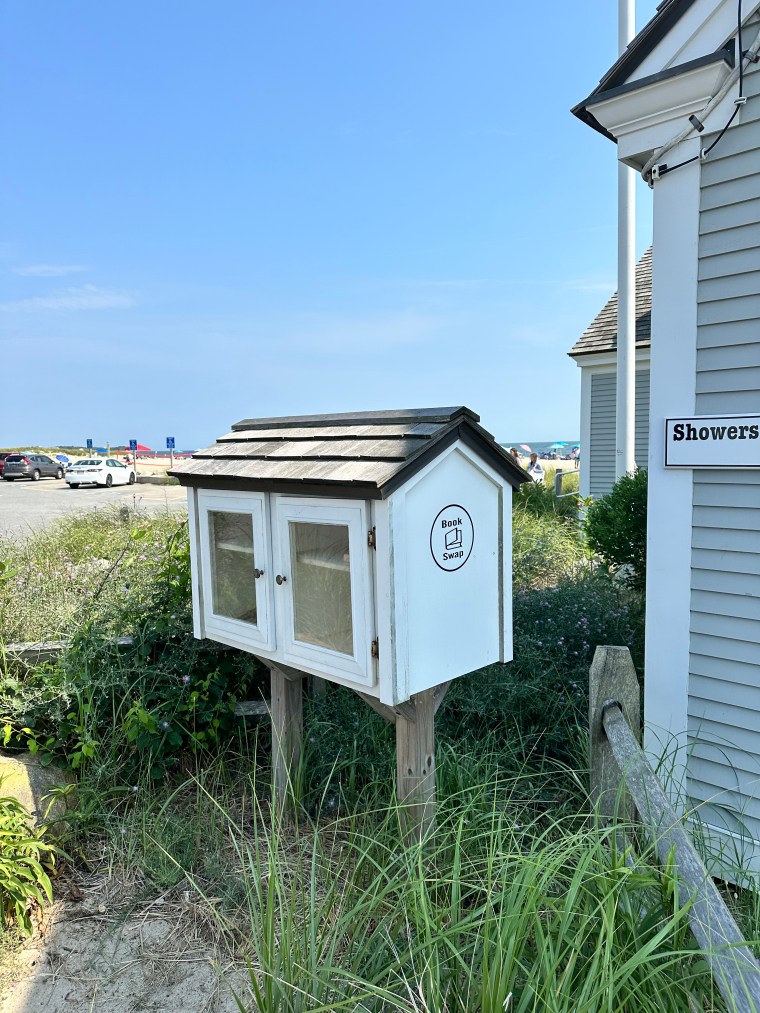
After the conference goodbyes, I was picked up by cousin to spend time with her family just outside Boston. It was great to see more of the countryside in this region, and to have her as a local guide for all the interesting sights, cultural and local knowledge that she was able to share with me. I obviously love the New England side houses and gardens – I never got bored of looking at the various designs and flowers, especially at this time of year when everything was in bloom. We went to Hyannis on Cape Cod where we drove very close to the area where the Kennedy family estates are on the ‘Cape’. It did make me curious to how they would have spent their time in the beautiful part of the country. It was interesting to read on why the Kennedy family have homes there and the glamour they brought to the area. The beaches were also nice – not too built up but relaxing, clean and warm. I would certainly recommend going to there and it really had a good holiday vibe with shops and restaurants not far from the coast.
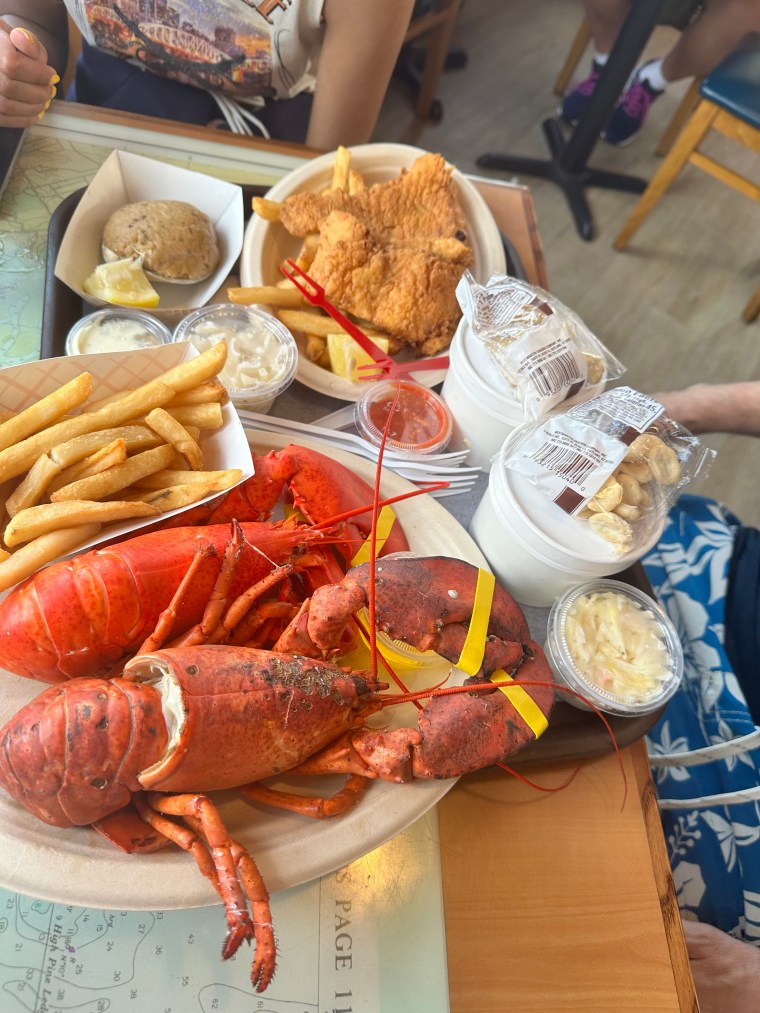
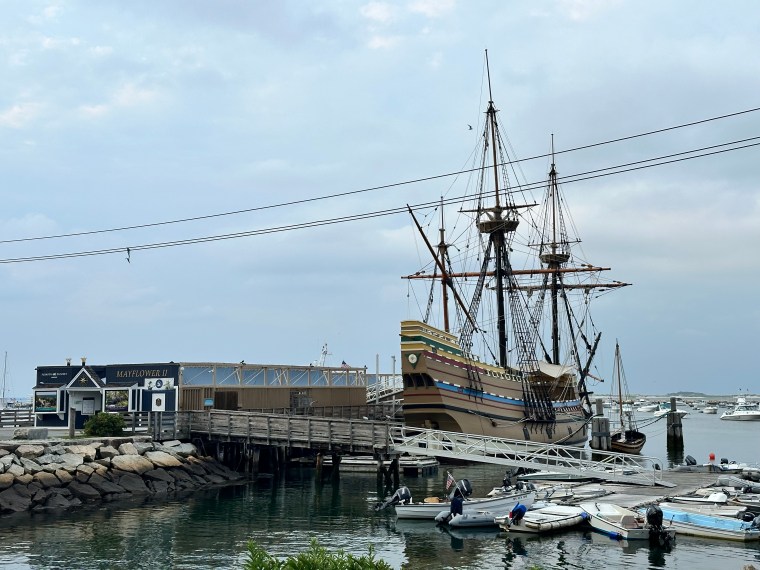
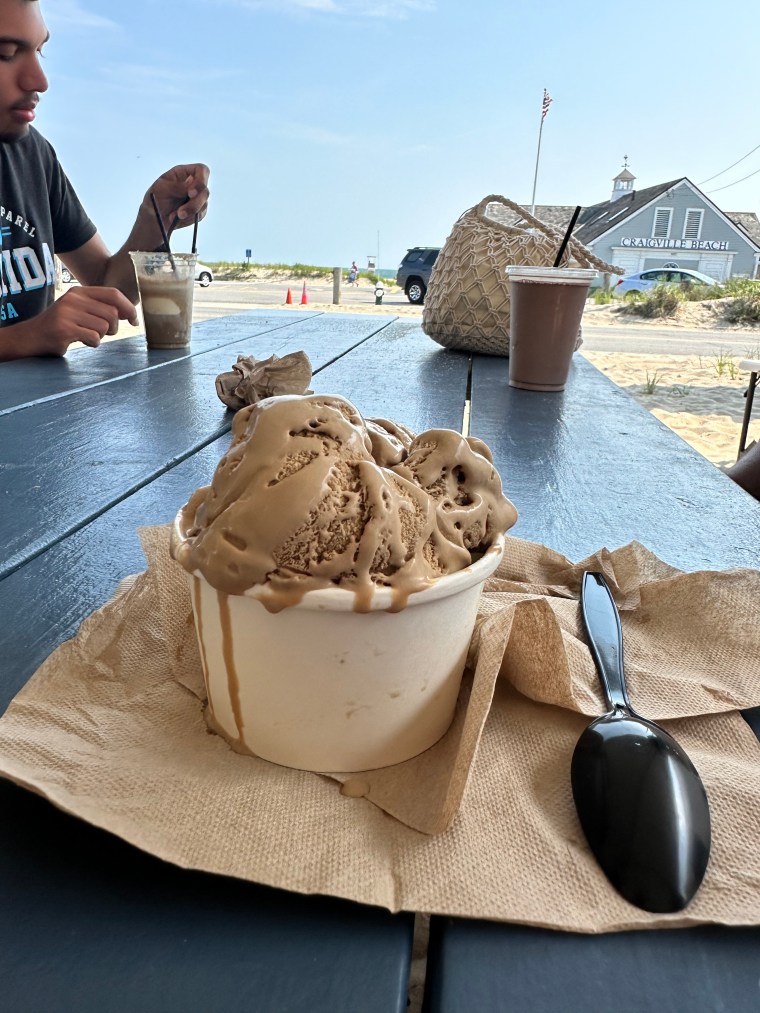
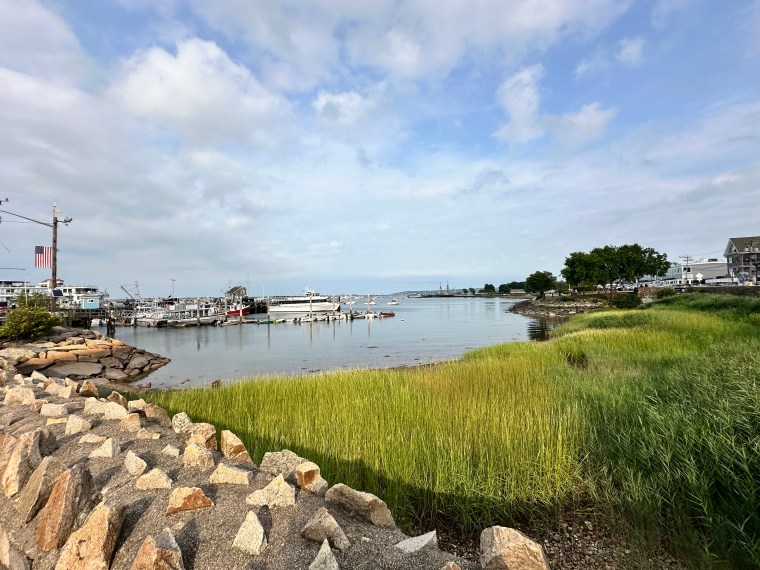
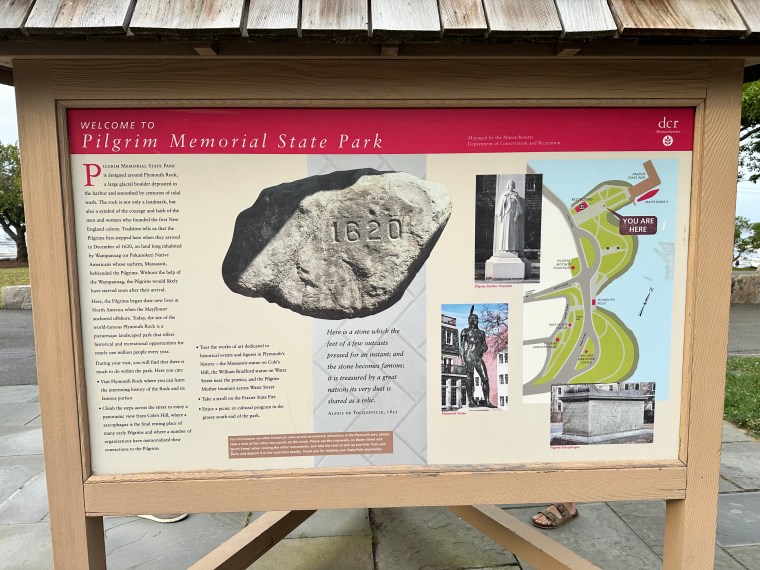
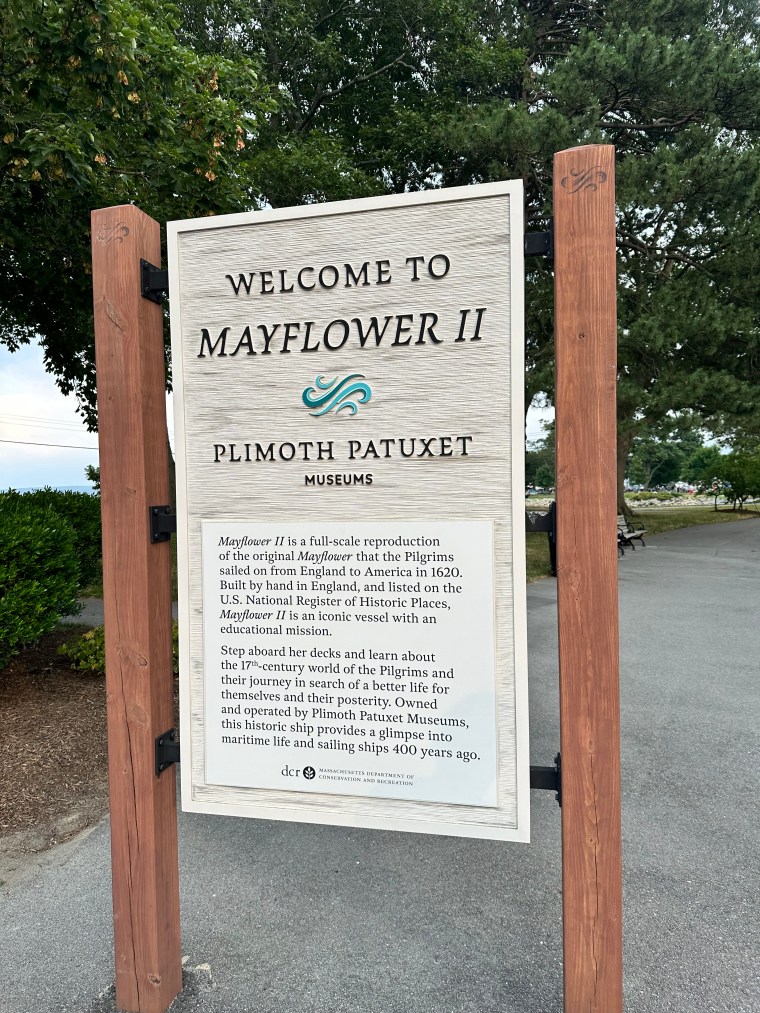
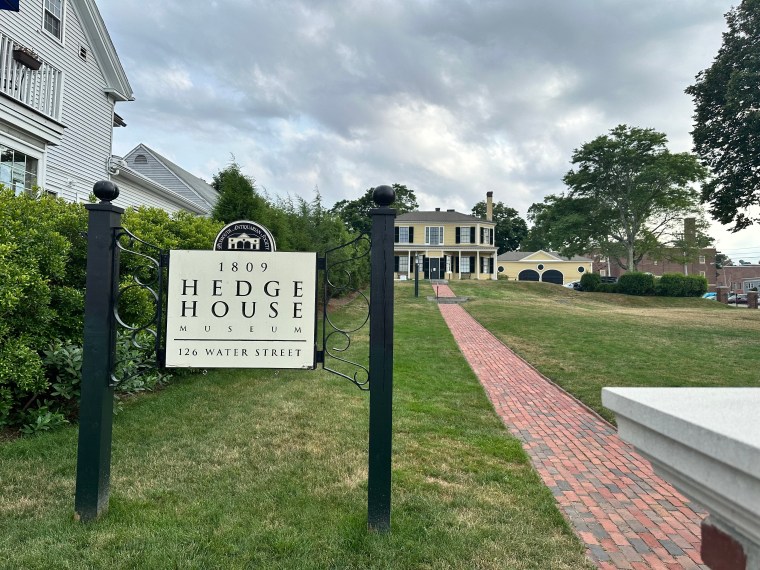
The same day, we also drove to Plymouth which has great significance to the early English Puritan settlers to the region. Ironically, I also learnt about this history when I was in primary school in Trinidad and Tobago (I did go to a private primary school with British and International expats at the time). I remember the visual images like the ones I have shared her and it is hard not to remember the story of the ship Mayflower which took these settlers to America. Plymouth has a famous rock which residents are proud of (as my Plymouth-Trinidadian secondary classmate point out). The story of the indigenous tribe and their relationship and coming together with the settlers is now one of the most endearing stories of the American story. The food on my visit was really good as most of the time I was a guest and it good for people to recommend things to me. The region was famous for lobster, chowder and local specialities and they all takes great. Even the ice cream had nice flavours and as it was so hot – it was good to try them.
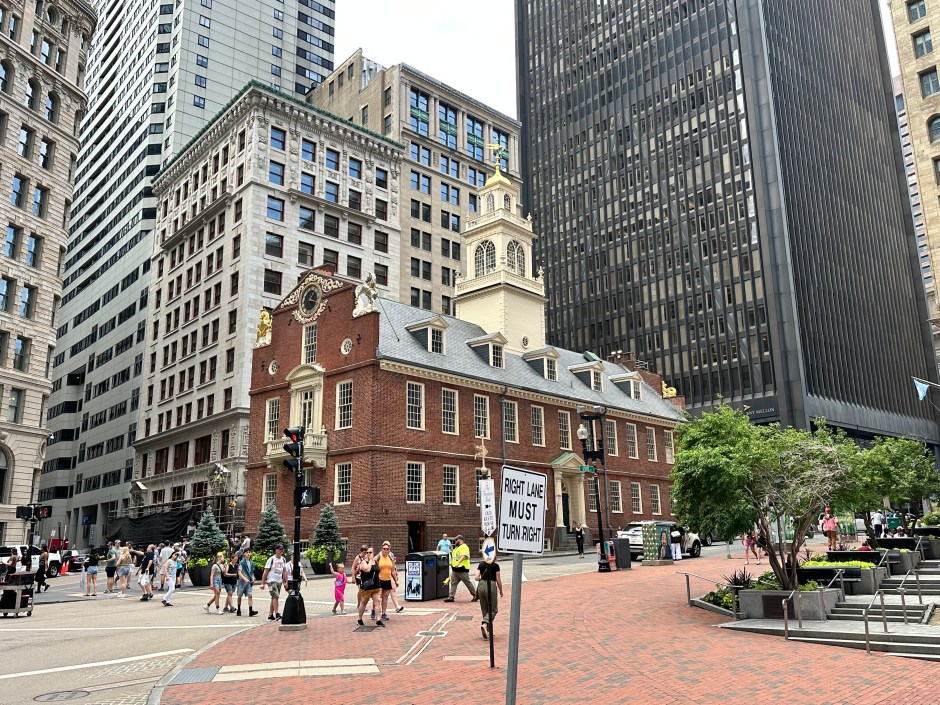
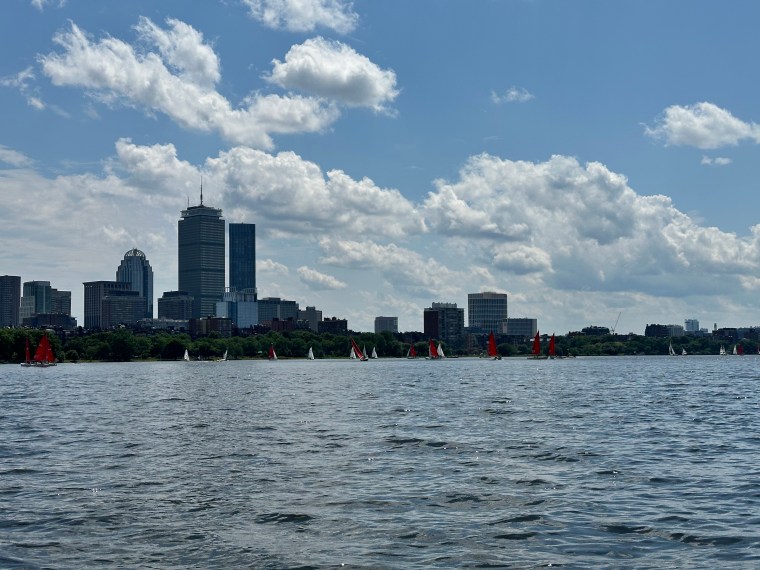
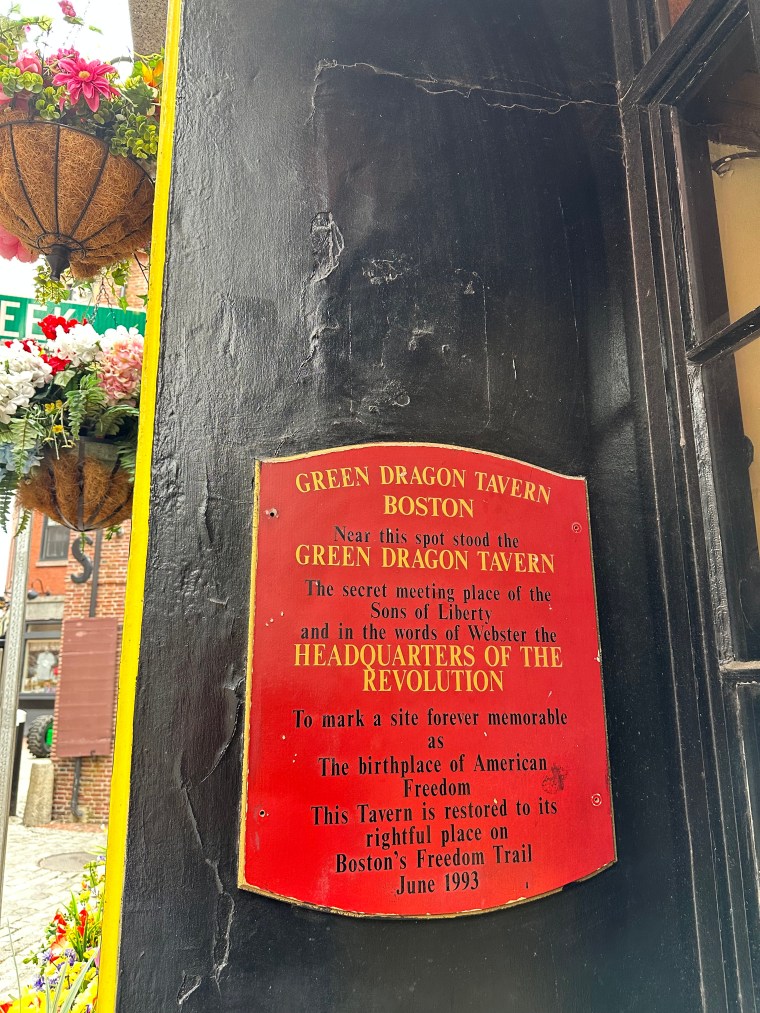
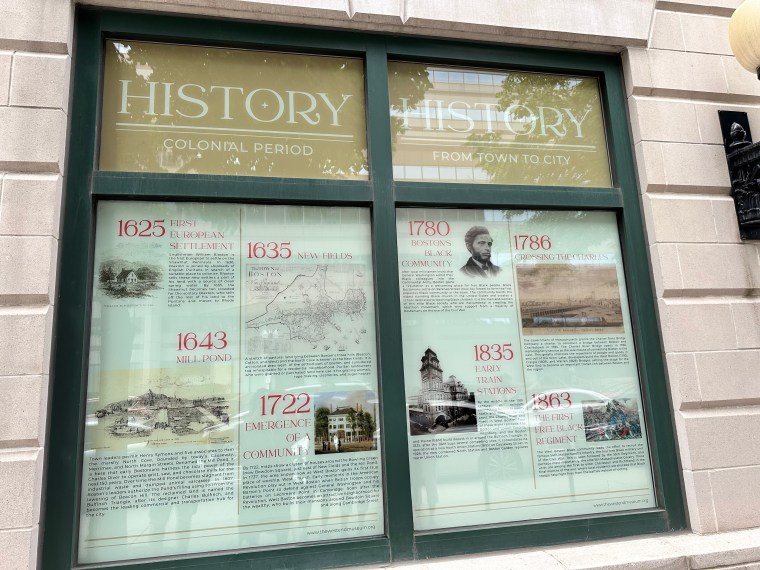
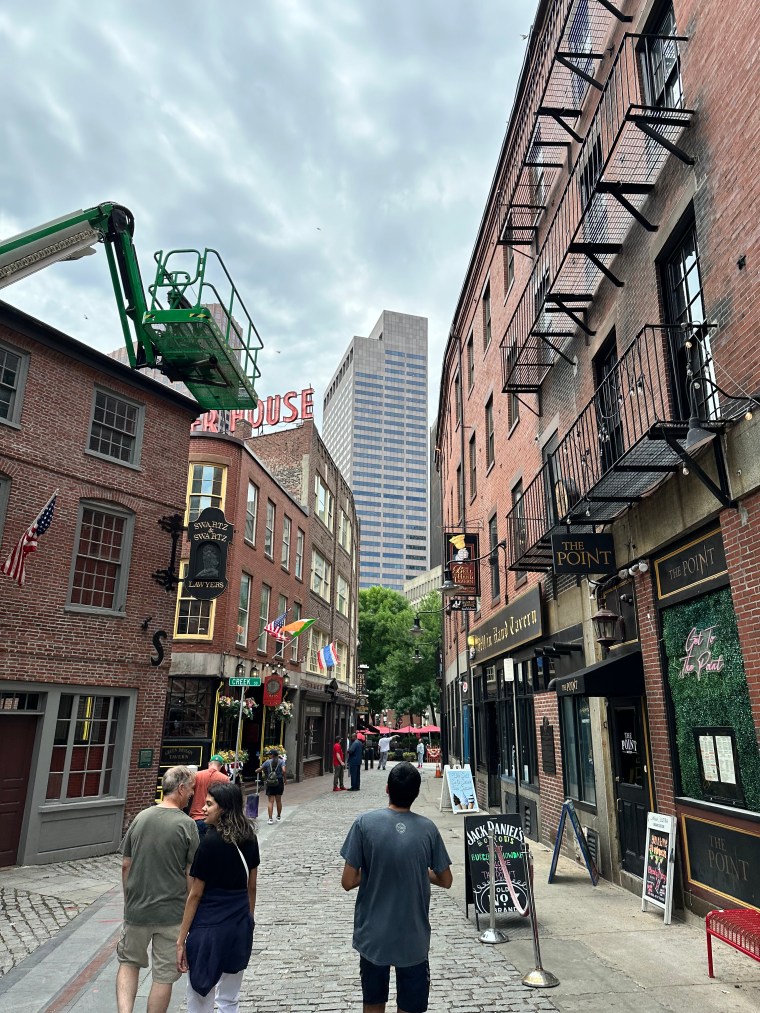
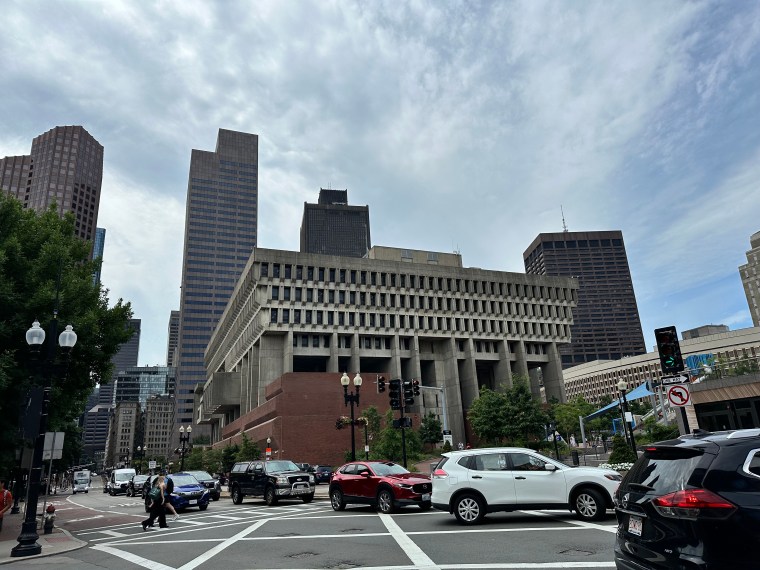
Back in Boston, we spent a day in the city and it was a really contrast to the countryside. There was a lot of modern skyscrapers, but more relatively old and historic buildings for New England. We walked in the Haymarket Part of the city which had a very European design to the buildings and we also did a Duck tour on the city streets and on the river in Boston. It was great to have the tour guide and hear about the history of the city and the buildings in Boston – I do recommend it and it was good to for seeing as much as you can if you time is short.
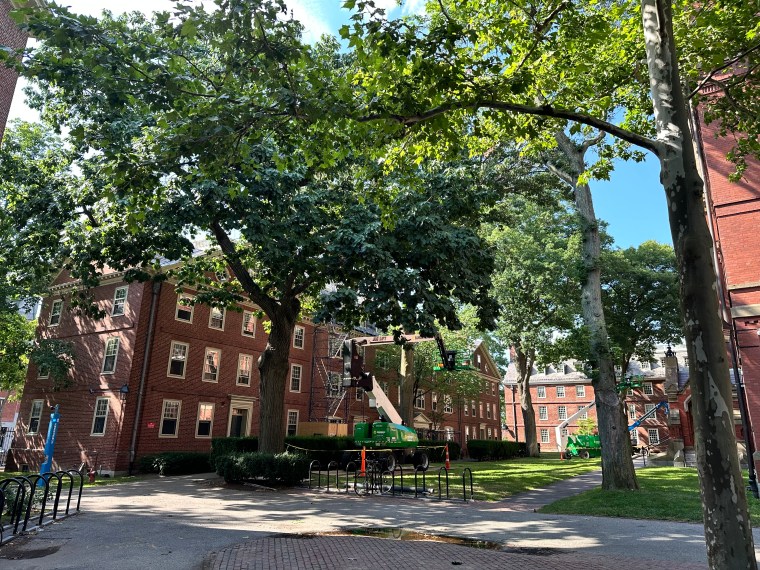
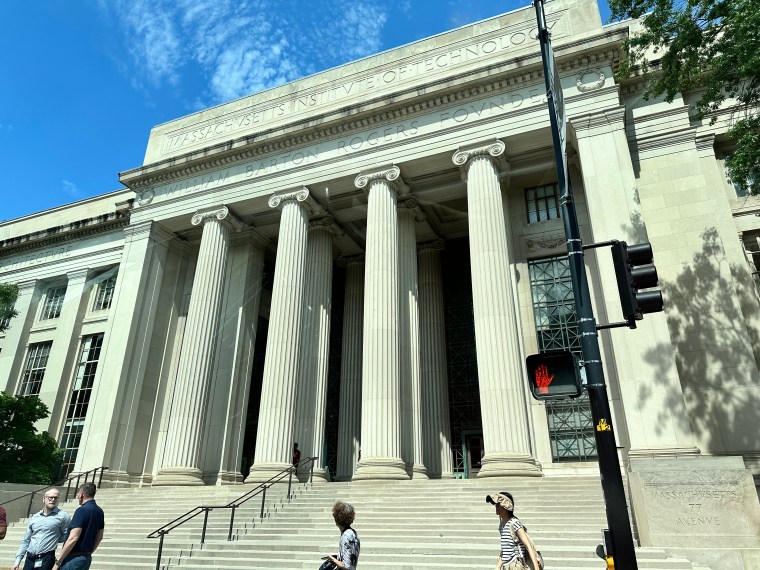
We also went to Cambridge to see MIT and the Harvard Campuses. I used to order publications from Harvard Business School Press and even now, the Harvard Business Review is popular with British Library users. The campus, history and architecture were truly amazing to see and the area has a general buzz for those visiting even if there were no classes on for the summer. I know you can book official tours if you want to see more but I am certainly pleased to visit the campus – even if it was only once in my life.
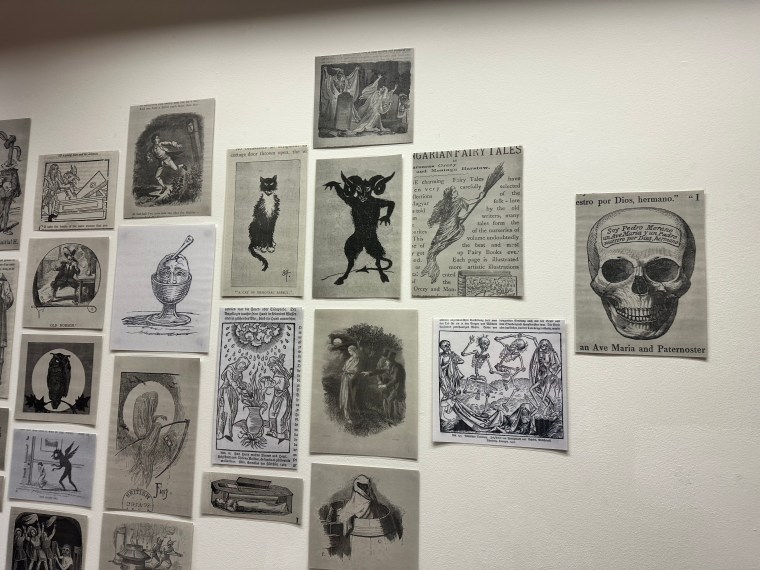
On my last day in Boston, it was recommend that I visit Salem, and it was nice of my family to take me there before we went to the airport. I didn’t know much about Salem but it is a residential and tourist area attraction for the story of the Witch allegations and executions on the 1692. It was a Saturday afternoon and there were lively activities, ghost tours and several museums to visit if you want to do more. I am still a bit busy but it would be nice to read more about the Salem Witch Trials and the wider history of the new England region. They certainly have several places with the names of English towns!
I only had a few days in Boston due to work and family commitments but I certainly like Boston and Rhode Island. Driving around the region was good and perhaps I can visit again another time to spend more time seeing the beautiful architecture, history and gardens in this part of the world.
As I have been busy on all fronts, I try to find time to rest, relax, do some fun things and go to out. The best thing about warmer weather is that it encourages you to go out to explore be it in the city or countryside. There are still parts of England I would like to see and pencilling time to have a break is essential for our wellbeing, enjoyment and peace of mind. I am pleased to say that this exactly what I did.
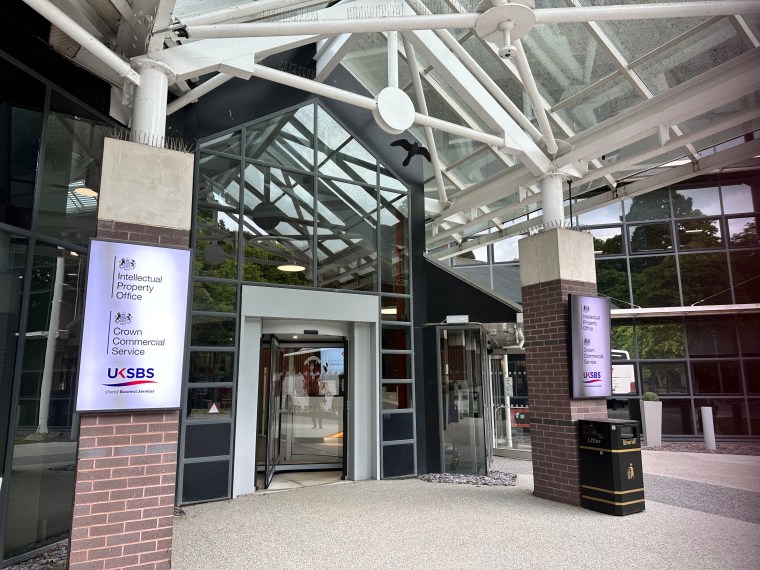
I went to Wales for an Intellectual Property Masterclass training course which I have been meaning to go to for a number of years. It was good to visit Newport again, and this time we were based on the waterfront. The train journey and the views were amazing. I also like that the IPO’s office is in a governmental complex in the same location as the Office of National Statistics (ONS). These are two great governmental department that I have used many times in my career as an information professional. It was also very nice to meet other partners from other locations in the UK. I didn’t venture to Cardiff as I did last time but it was good to see some towns (e.g. Bath Spa) in the train journey that I hope to visit another time.
I have planned a more relaxing getaway in a seaside town but it was reliant on good weather. Luckily the weather was okay for a trip at the end of May to Bournemouth. I have been before but it was a cold windy day to be on a beach. The weather was nice and it was a pleasant time to get out of London – which can be claustrophobic if you stay here all the time. It took about three hours to get there with clear traffic and I can certainly visit again especially if the weather is guaranteed to be good. Bournemouth had a nice seaside but liveable vibe about it and I liked the sandy beaches. I obviously made the most of the views and one of their best restaurants down there. I like looking at the homes and the spaces they have and therefore the drive and country roads are also interesting whilst down there.
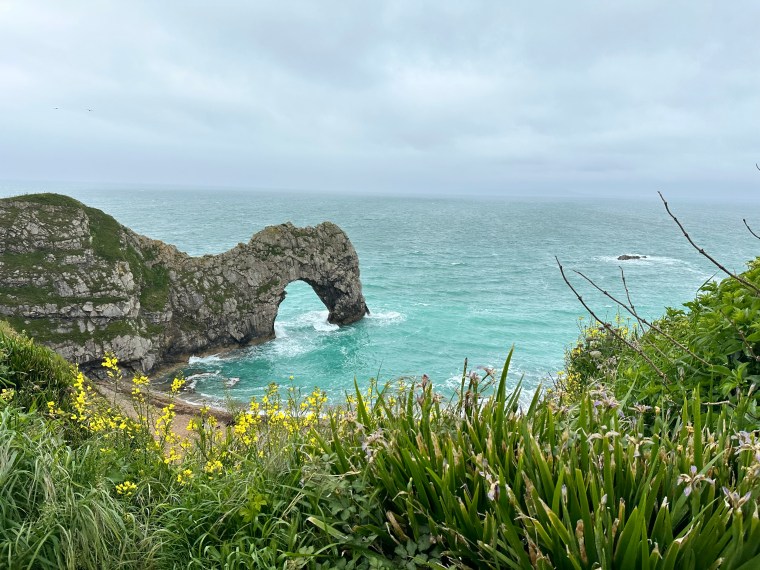
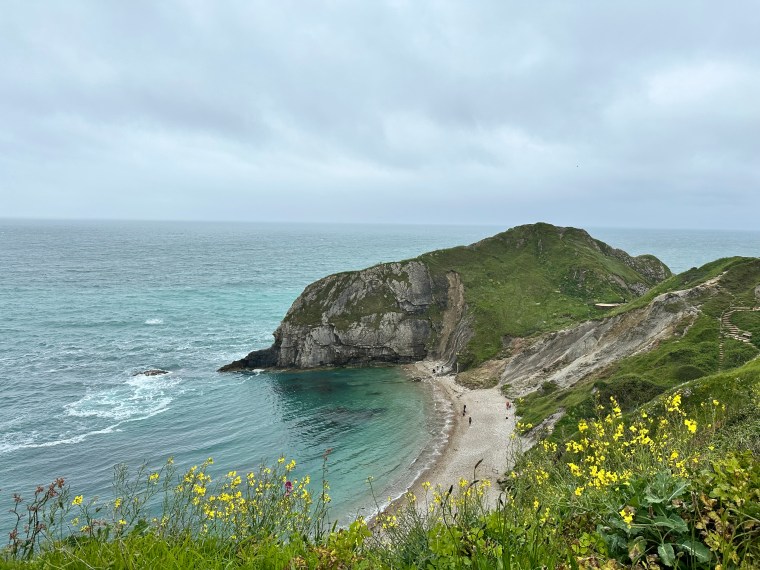
We were on the Dorset coast and the first time I heard about the region was whilst studying Thomas Hardy’s poems. So it was interesting being in Hardy country. Our book actually had an image of the hedgerows and therefore it was truly interesting visit World Heritage site Lulworth Cove (better known as Durdle Door) and Jurassic Coast. The drive was along rural roads to country lanes, and therefore there were some nice sites to see along the way. Durdle Door was really impressive and one of the best social media attractions in the Covid years and therefore I found out about it when most people were visiting it then. The coast is amazing to see and I admired the persons doing the cliff walk on such a really windy day. You really have to be fit and wear the right clothes and gear to do these extraordinary cliff walks.
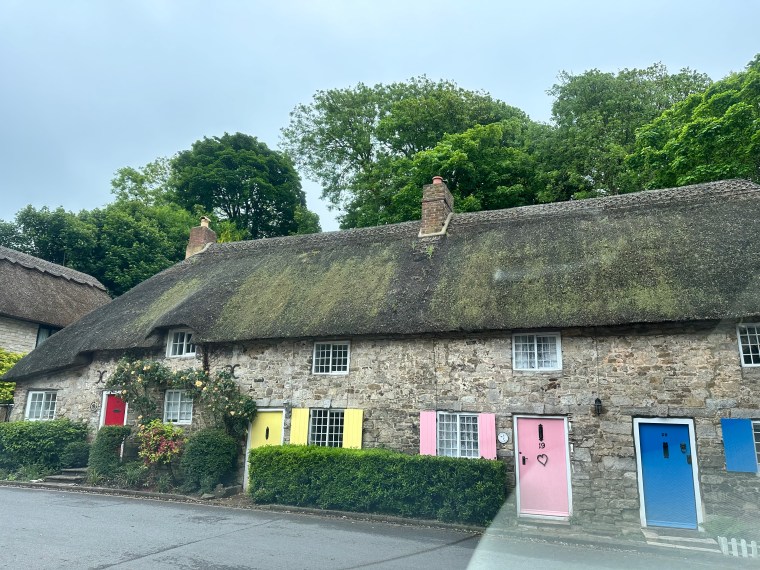
We stopped for a few hours in Shaftesbury on the way back to London. I have seen beautiful photos of the town over the years and it known for being the famous location in Gold Hill for a Hovis Bread advert. Apparently, the advert showed people with a Yorkshire accent but obviously the setting was in Shaftesbury. The drive to Shaftesbury was interesting and seemed popular with local people for the hilly roads, bends and turns!! It was nice to take some photos on Gold Hill and have a wander around for a little while. The Friar’s church was good to see with the views over the rolling hills – which were truly beautiful and picture perfect.
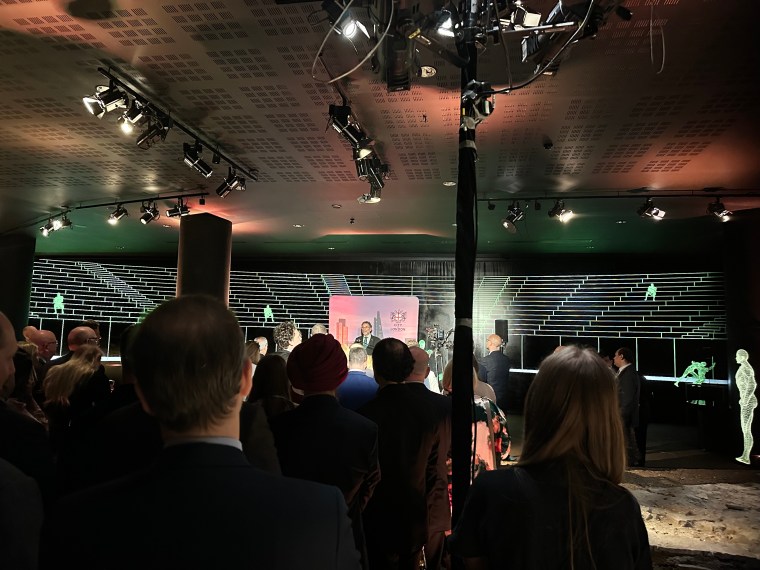
This was a short break outside of London but closer to work and home – I had some other outings. I attended a celebration of SMEs (Small Medium Enterprises) at Small Business Research and Enterprise Centre (SBREC) – previously known as the City Business Library. I have been visiting this library since the 1990s and it is great to see that they are still around. It is great that they are funded and based in the Corporation of London. In a right reflection to the city, it was a pleasure to spend their celebratory event in an old Roman Amphitheatre whilst networking to jazz music from the London Guildhall School. In my past role and currently, we have supported each other for providing research and business support for users. Most frequently, we have been cross-referring to SBREC as we navigate our cyber-attack recovery. It was great to hear about their current strategy for business in the city and best wishes to SBREC and their staff!
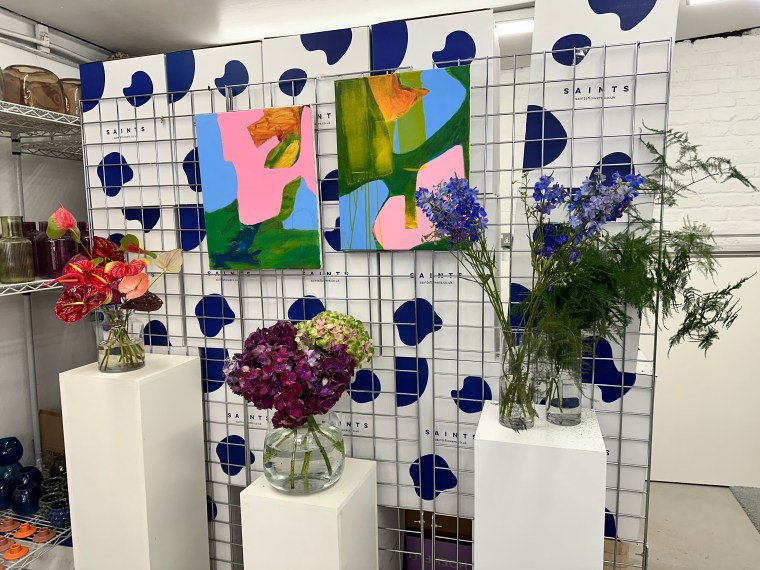
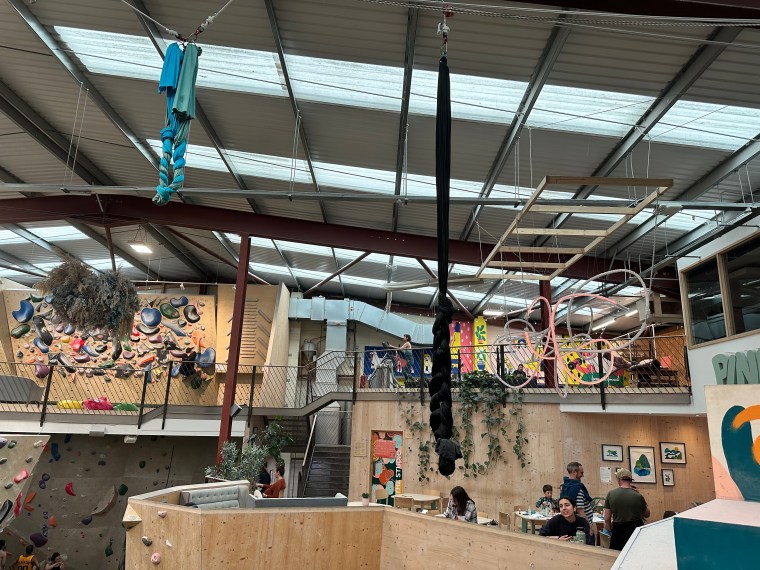
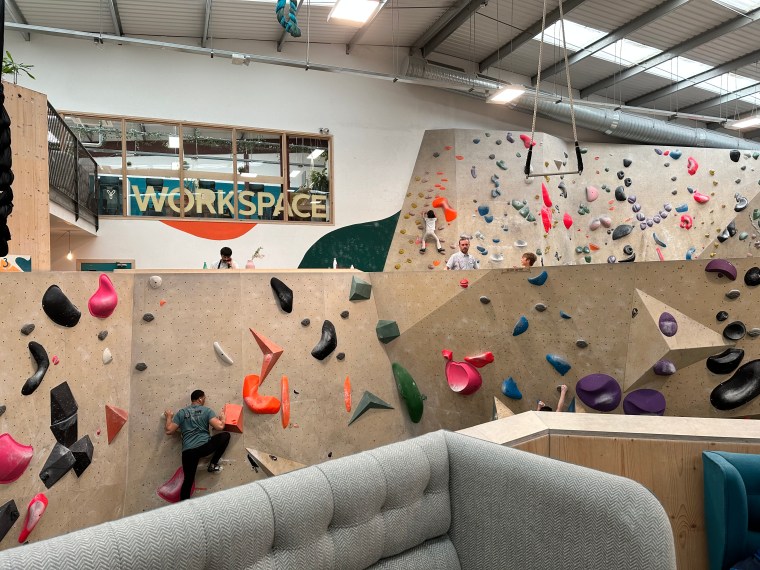
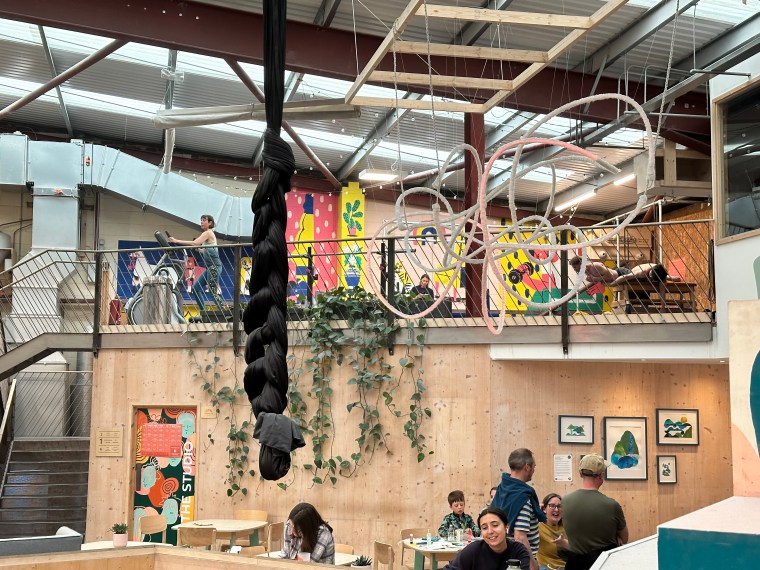
The E17 Art Trail was back aging in June, which celebrates and showcases local artist, arts, crafts and designs. I made time to visit some of the locations in my neighbourhood with a friend who was displaying her artwork in a florist and also checked out the art studios and venues in the vicinity. It was nice to see some of the regenerated areas of Walthamstow and how new businesses are repurposing old and new spaces. There was an established artist space for an exhibition and newer multifunctional spaces such as an indoor climbing wall – which in itself looked like art with the multicoloured climbing wall. The venue also had co-working spaces, a gym, café and family activities. It is great that this has evolved in this area and it was a great use of space as well as building communities around these activities.
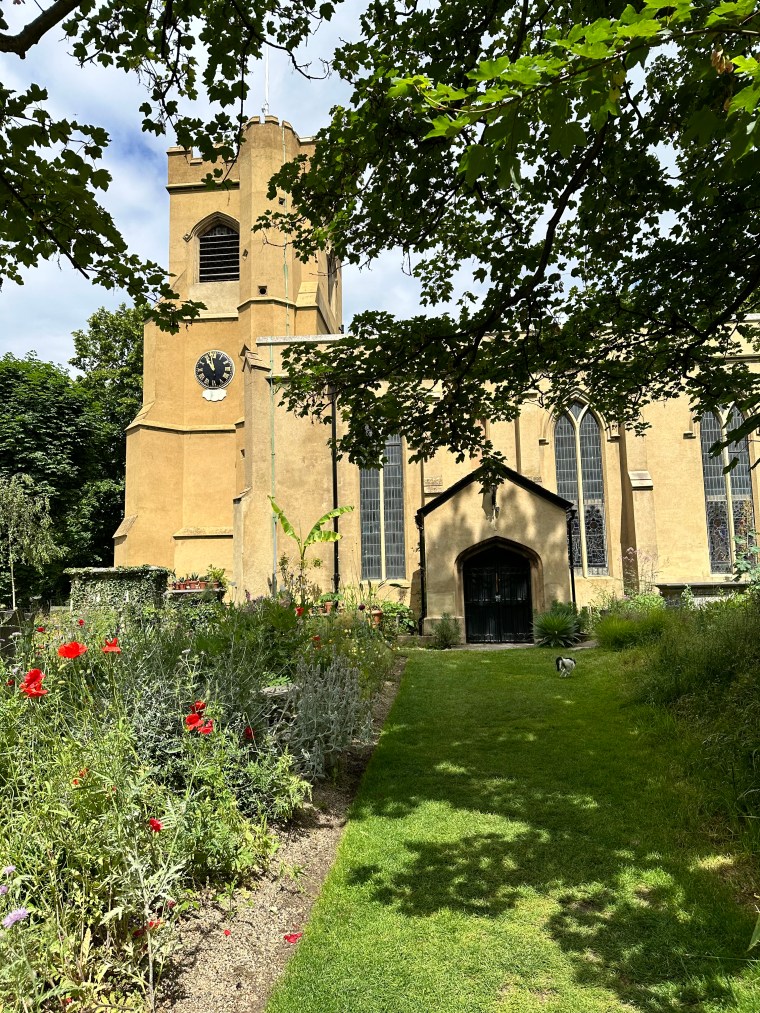
I guess you know by now that I like gardens and plants. It was really good to take some walks around the neighbourhood for longer spells or just for my routine walks. I was planning on visiting a garden in East Grinstead today but I had to change my plans. However, I still have so lovely photos here of the community gardening in a local church and some of the nice plants in the front gardens in my neighbourhood.
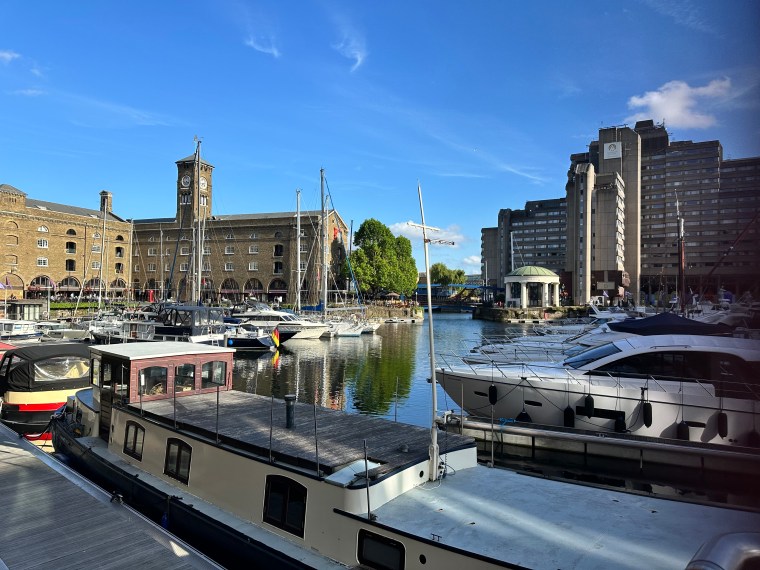
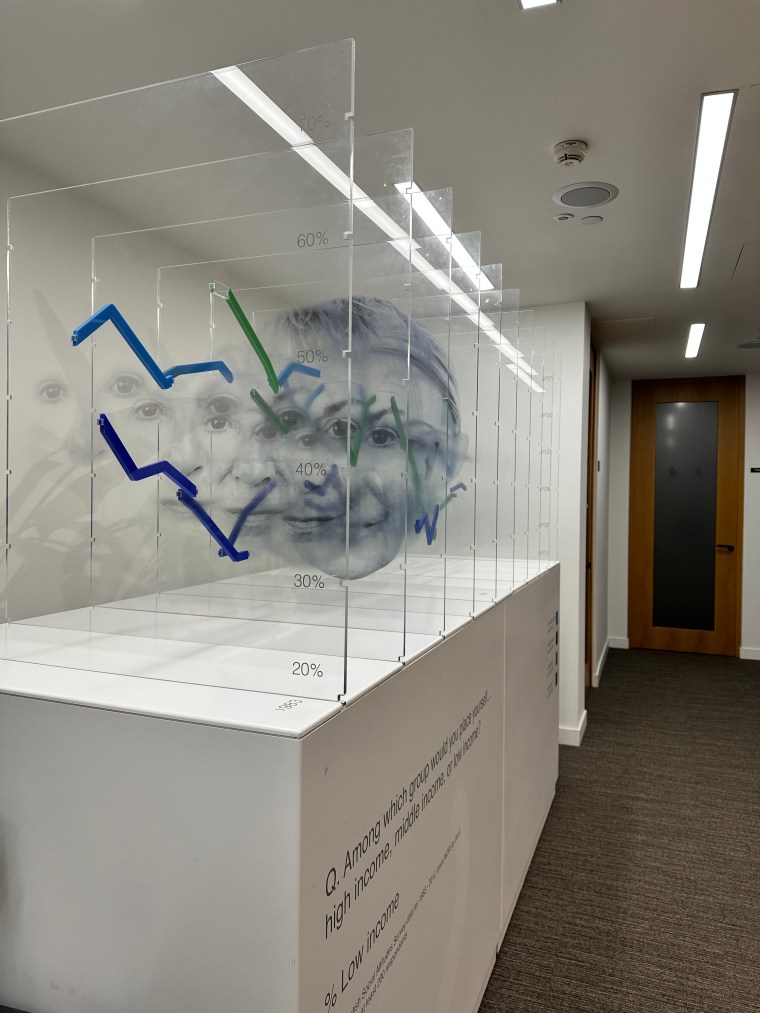
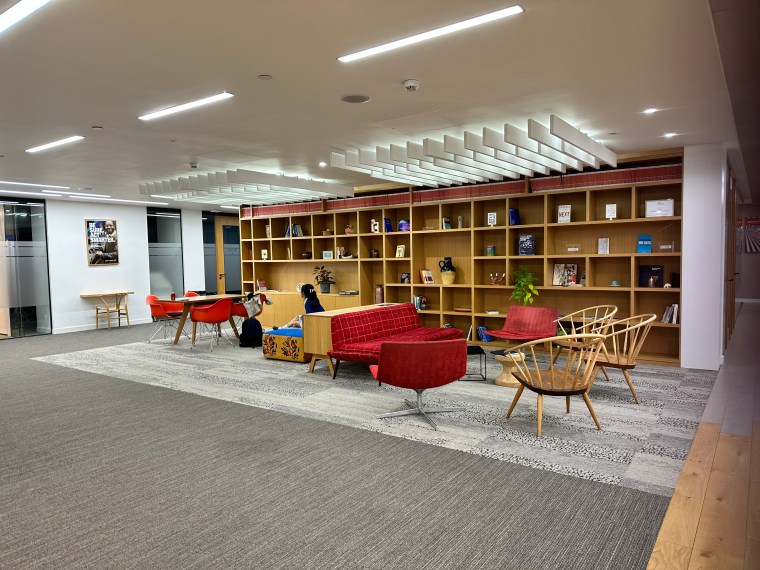
A David Gurteen Knowledge Café at Ipsos was another event I made time for recently. It was in the lovely St Katherine Docks in London. I held a birthday party there once and it had lovely memories for me. It was nice to finally attend David’s café and be inspired but the discussions, meeting new people and seeing a venue and host in town. Ipsos presented some interesting and provocative insights on Demography and Politics in their ‘Ipsos 2024 Generations’ report. The discussion was interesting to hear how the world population figures are being predicted and the impact it may have our own lives and resources. I also live the concept of the Knowledge Café (having hosted one with David at London City Hall and at the British Library). I hope we continue to use these café in-person to share our knowledge, insights and make new connections. Over a decade ago, I met someone at one of these cafés who became a friend who then frequently met me at the British Library, presented a session at City Hall for me and even played in the Notting Hill Carnival with me. This friend passed away about three years ago. So sometimes something as easily accessible as this can have deeper meanings.
I am likely to be a bit busy the next couple of months with work, conference and family. I hope to be able to spend some time balancing all these commitments. Life is short and therefore we have to do everything in moderation but I will certainly make time for balance.
This article is kindly reproduced here with the permission from SLA’s Information Outlook Magazine, Issue: April 2024 on Information Security. Thank you to Leslie Steele for suggesting this article, and for the Editorial Board for the continuous hard work and time.
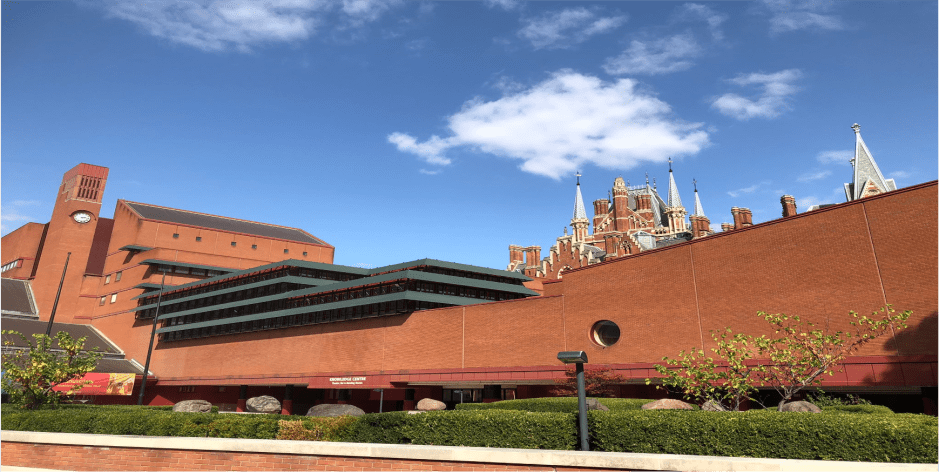
On Saturday, 28th October 2023, I was the Duty Officer managing the services in the Reading Rooms, and therefore made my way to work at the British Library for the start of the day. The night before, I had sent an email from home very late and it would prove to be my last interaction with our technology for several weeks. As I arrived at work there was panic and confusion over a major technology outage, and we were not entirely sure what the full implications were at the time. The previous summer we had experienced some technology issues, and I presumed this incident was related to that problem. I couldn’t even send an email or call colleagues on the telephone using the British Library’s computers.
Thankfully with the help of my colleagues and staff, who knew how to operate without the library’s technology, communicated with me via their smartphones on how we could resume service and open our Reading Rooms despite this challenge. With our website down, we were able to only communicate with our customers and readers verbally or via X (Formerly Twitter). The Wi-Fi was also down so it really was back to basics. The rest of the day passed without a lot of complaints, but I was on edge until we closed as I would have had to deal with any issues without having the answers for the technology problems. At least our readers were physically safe whilst I was on duty. However, I knew this would be an ongoing crisis for my colleagues returning to work on Monday and that we would have to be prepared for the days ahead.
It wasn’t until the third day without technology that we heard from our Gold Leadership Team that this was in fact a ransomware cyber-attack and we were unlikely to get back to normal for not weeks, but months. The initial disruption in hardware and software continued for weeks with no access to the British Library website or intranet. Our personal and customer computers were taken away to be fixed and new software and security updates were installed on our British Library assigned laptops. We had to go into crisis communication mode for those early weeks with staff and teams while still providing service. Some of the most used forms of communication were in-person staff briefings, email communications, and updates in the corporate Knowledge Matters blog.
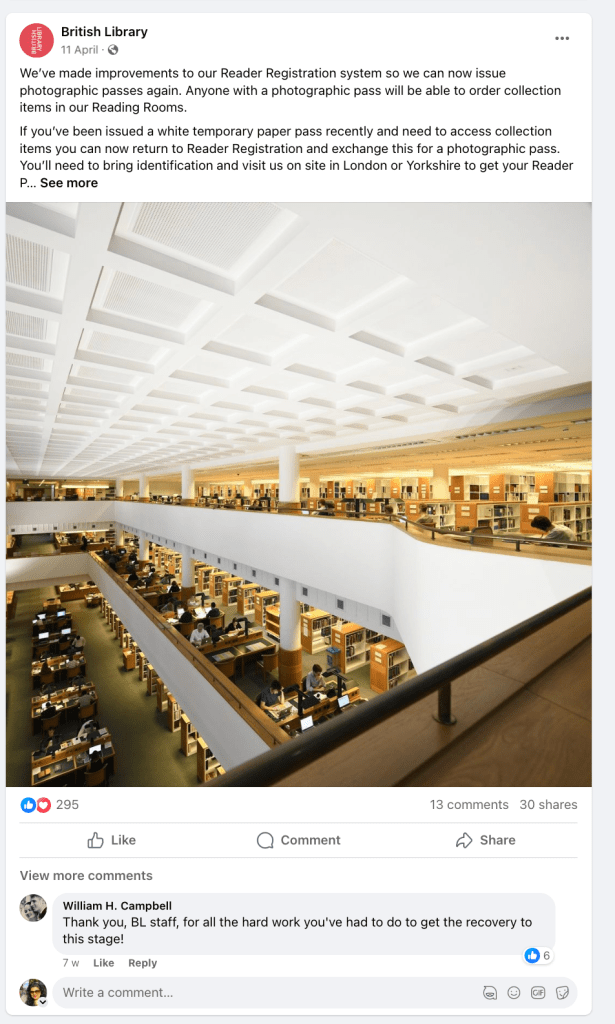
The website eventually resumed in December with access to our catalogue and essential service points and information. The one most significant aspect I miss is the electronic resources for our end-users, and collection items retrieval from our site in Boston Spa. We are still a long way from pre-cyberattack content, data, and technology ability as we were so integrated; we are still unable to print from our staff profiles and while Wi-Fi access has resumed, it is in a temporary capacity compared to prior to the cyberattack. There seems to be a lot of work-arounds in our workflows and we are still apologising to customers who are unaware of the current situation. In the Business & IP Centre, we have continued to run most user services such as workshops, reference enquiries, one-to-one meetings, training, and projects, but we still miss our end-user access to electronic resources and databases.
As the cyberattack is so large-scale and the impact enormous, there has been a lot of media coverage and articles written on the attack. The media coverage made the general public aware that one of the most regarded national institutions was under threat with a ransomware attack by the group for payment within a deadline to the value of £600000 to be paid in Bitcoin. We were also aware that we had to inform staff, ex-staff, and customers of the threat of a ransomware attack especially with regards to their personal data. There were remedial measures put in place and we increased our awareness of some of the risks for data to be leaked on the dark web. Throughout this time, the British Library has been advised by the National Cyber Security Centre (NSCS) and other cybersecurity staff. In addition to being a national institution, I am sure there has been a thorough investigation and assessment on the steps that are required for recovery from the cyberattack. At the beginning of this year, staff were informed of the plan and programme for recovery as well as given an outline of what to expect in the next 18 months. It was at this briefing that the issues of the legacy systems and technology infrastructure were disclosed and the new opportunities for the library to ‘build back better’ or accelerate some of the new technological developments that were on the cards for our strategy to ‘Modernise the Library’. The Rebuild and Renew Programme was launched with more clarity on some of the work that the library implemented in time to build back better prior to the cyberattack.
The Chief Executive Officer, Roly Keating, has always been very vocal on the impact on our services, access to the collection, discovery, research, and the whole mission for sharing the world’s knowledge held in the British Library. There is a great blog post on the impact entitled KnowledgeUnder Attack. I also felt annoyed that this attack had impacted one of the most open libraries in the world, and in the sharing of knowledge and information for our many customers, partners and friends! However, it did highlight a couple of our vulnerabilities: lack of infrastructure development, and lack of investing in dedicated professional staff. There are some uncomfortable readings in the review report, several learning points, and other insights on how one can protect their own investments and risk management in these areas. The review highlights “Although the security measures we had in place on 28 October 2023 were extensive and had been accredited and stress-tested, with the benefit of hindsight there is much we wish we had understood better or had prioritised differently. With that in mind, this section identifies a number of early lessons from this attack which may be helpful for others as they consider their own investments and risk management in these areas.”
As an active library and information professional, I have always been aware of information security. I also helped host some information security related events in the past for SLA Europe, and as part of the Workplace Preparedness Council when we created a template for business continuity where our research mentioned cyber security as one of the threats libraries and research organisations may encounter. One of the other review recommendations is: “practice comprehensive continuity plans: Business Continuity Plans for the total outage of all systems need to be practised regularly, in addition to those relating to individual systems and services“.
With this heightened professional upskilling with SLA and my previous employers, I had looked at the time to see if a Business Continuity Plan was public for the British Library. Due to the sensitive nature of the content, the plan is not public. However, this does not prevent local departments and services from having plans for business continuity in place.
Hopefully, more people will see the importance of these plans and workplace preparedness for crisis management. In some aspects, the cyberattack has had its own challenges for our digital access as we continue to have limited access. Compare this to the recent pandemic in 2020-2021 where we could not get to the physical building, but we still had digital access. These recent crises should warn us that we can never predict but we can certainly prepare and plan for emergencies and future online and physical challenges.
At the MLA|SLA Conference 2023, I also attended a session wherein the panellist presented on ‘Cyber-crime and Information Content’ of an attack at their university. The cyber-criminals were after personal databases, unique research, and intellectual property. It did make me sit up and listen as I realised that criminals will try to attack anyone regardless if you are a research organisation or a bank! Much more so a national institution like the British Library as I was soon to find out a few months later. Ideally, I think as information professionals and good citizens, we should try to protect ourselves and our organisations from these inevitable threats as we live digitally. I have since told my friends that this threat can happen to anyone with data breaches or security risks from our local council, national passports, banking systems, retail, etc. It is obviously terrible when these events happen in our normal lives but it should also be an opportunity for us to promote digital literacy, compliance, good information governance, and security. It makes great financial and economic sense to invest in personal and organisational information security and professionals!
Six months on from the cyberattack, we are still not back to ‘normal’ in many aspects as we await the return of hardware, a fully functioning online presence, and the rebuild of legacy infrastructure. The hardest part is having to spend extra time catching up on the things I can’t easily do whilst in the office or going the extra mile to meet with customers to discuss their research needs and how we can give content and information with these challenges. It has been exhausting at times as we are constantly in a state of change or flux and though I am used to change – we are having to implore all our change management strategies and resilience. It seems we were only just beginning to get back from the ripple effect of the pandemic and now we are getting used to new challenges in the office and library. It is not a normal day in the office.
This has brought about high levels of anxiety and new well-being challenges for staff, customers, and stakeholders as with Public Lending Rights payments. We are certainly a research organisation and the cyberattack has prevented us from doing important work and business for academics and entrepreneurs. I have recently hosted tours from three university groups and partner organisations for projects. We are showing users around virtually and in person but we are still restricted on what we can access.
There is an element of regret that this has happened to us at the British Library. I also am personally annoyed that I am slower in fulfilling my tasks, and our users might not have access to the information they require in person near or far. The 18-page review of the Cyber Attacks aims to share our lessons learnt and encourages you to also be aware of the impact that this has on us; hopefully, you too can mitigate against cyber-attack or criminality. I implore you to be conscious and proactive as an information professional in your role as custodians and curators for specialised libraries, collection management, information, research, data, knowledge, insights, and other high-value assets in your organisations. Together we can empower and enlighten each other to face these threats now and in the future. And despite the disruption and challenges with the cyberattack at the British Library there are several new opportunities to learn and grow from this experience. The insights and learning certainly can make us more aware of dangers but we can develop strength and resilience and good old-fashion knowledge from the experience. The old wise adage resonates now…every cloud has a silver lining.
Just as the development of the Interstate Highway System led to the creation of McDonald’s hamburgers, Holiday Inn and a thousand other new commercial developments that would have been impossible without the Interstate Highway System, in the same way we will see the emergence of information services on a nationwide basis that will be extremely profitable and nearly ubiquitous. – Al Gore, 1993
It seems only appropriate to recognise how long I have been working in the field of library and information this month as I have a vivid memory of when I started my first ‘proper’ job in the office, library and information centre (whatever you want to call it). I have great memories of a time when life seems a little bit simpler, and I was lucky-go-happy in my outlook to life.
The early 1990s was an interesting time to be an information professional as we were on the cusp of developments in technology but we also have traditional collections which still held books, journals, annual reports, newspapers, places to study, work and access to communal computers. The most interest aspect I still mention to today was that the next-best-things we were expecting were the Internet, World Wide Web and cd-roms. Online searching and database creation were truly skills that were in high demand at the time. Most organisations may have had online databases but they were the dial-up version that requires a modem for connection to a remote database, probably hosted in another country. I still tell library users using online resources that we had an ‘online searching room’, which was quiet for staff to do their searches without distractions.
Looking back now, some of my colleagues did not have a computer on their desk if I recall rightly. I remember I had a computer on a small desk next to my normal office desk, and I enjoyed was getting used to using WordPerfect having used Wordstar at university. Email (just internal messages) was in the infancy, and the library management system (LMS) on DOS called Soutron (who are still around today). Nowadays, when someone tells me some of our current databases are taking long to load, I have to point out that in the past I had to sometimes run reports overnight in one of our databases in the early 1990s. Even simple aspects of company accounts had to ordered from Companies Houses, and you may also recall Excel Cards (for company information), had to couriered to the offices if they were needed urgently. I used to put books on a shuttle bus to get from one building to another too.
I am grateful for the training and ability to use library management systems (LMS) like these which helped me to understand acquisitions, serials (useful for SLA membership information renewals), cataloguing, classifications and metadata, financial management and reporting using for reporting on service levels to my manager. Some of these basic aspects are still very important in my current role such as reviewing KPIs. I am still mentioned the great manager I had who helped me learn the practicalities of running a library and information service, and great for the training I received then. I was asked to participate in the recruitment of staff at an early stage and this exposure has helped me to this stage in my career. I have met some amazing people over these years and it is interesting to see how some are still in the industry, but some are doing things that are very different.
Our challenge is to find ways of using the Internet and World Wide Web as a mechanism for learning for understanding, and as a mechanism for “seeing things,” not just as a highway system for haphazard. – Kimberly Rose, 1995
The sourcing of books was different too as we were frequently sent newspaper articles or journals that mentioned a report or article that we then had to source. Some customers obviously had reading lists, such as the HMSO daily list, which they read and then sent the information to be sourced from our procuring services in the library. There were also several telephone calls that I received daily for customers asking to source information, and to order or borrow publications from the information centre. This still helps in my current role for sourcing information in catalogues, other libraries and from publishers.
The reference desk (Quick Enquiry Desk we called it) in the library was one of the most interesting aspects of the information and research work we did at the time. Having started off in a business information library – we were constantly called for financial information from exchange rates, FT indices, share prices, stock exchange data and other financial queries. We also had queries to use the collection and other electronic database at the time. We even had one computer with a modem to access the internet in the library. I do recall my colleagues going to an internet café after work to check it out!
In the 2000s, the industry was changing rapidly with the internet changing the way information was managed, provided and consumed. There were companies in the Dot.com generation, our information providers also changed. However, there was a movement to ‘get rid of libraries’, especially physical ones. This was the period when the library’s hard copy budgets began to shrink as more content was available online, but the age of formal contracts for eprocurement. I remember working with business analysts to understand our workflow for providing library services from enquiry, research to library materials in hand. In came eBooks used by the Learning and Development team but we also had very expensive business information databases for research. The hardest part was the loss of physical spaces and collection depletion, with the physical library not being as prominent space or a hub as it once was for the organisation.
Although by this time we were having knowledge forum and sharing on collaborative networks such as Lotus Notes, and other communities of practices and forums (I remember reading forums in the 1990s). It was heart-wrenching at one point but also exciting to harness the adoption and development of information technology. If you work in libraries long enough, you get to know the collections and users really well – you can even build communities and break down borders! But it was also the era in the early 2000s where were had a truly professional global community where we can ask for help, enquiries, share information and knowledge more easily due to technological advancements.
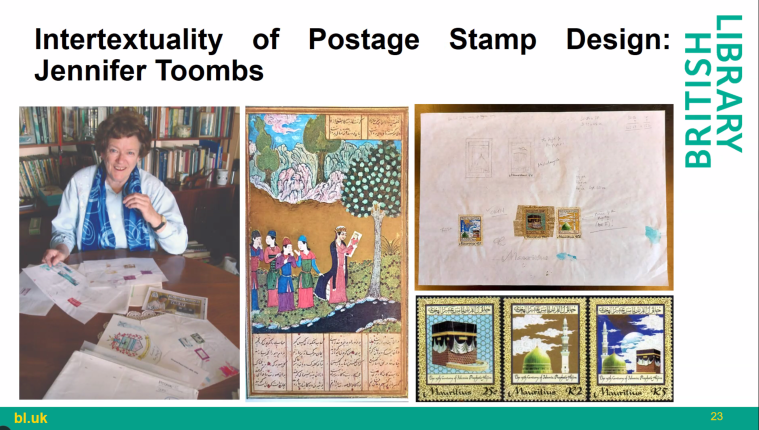
It was also an age for Intranet and Portals with my colleagues worked on projects for introducing the intranet and resources management to the organisation. I probably would have participated more on this project work but I was on maternity leave when the work started. Newer roles also developed in the profession with other professionals using ‘Content’ and ‘Web’ in their job titles, but in hindsight it highlighted the skills and specialism that we had in this field. The word ‘metadata’ and taxonomy were also banished about by others on the bandwagon. However, even in my role in 2024 we are still using these word in the last week, and even today for a presentation I hosted on Philatelic collections at the library.
The age of a virtual library eventually became a reality in the mid-2000s and whatever hard copy collection was left ended up being a closet from my perspective! I didn’t actually mind because I was still very strong online providing information services, research and answering reference queries from the small collection, digital content and even the people-to-people contacts for expertise that users were looking for then (I still also do this in my current role).
“Big data is at the foundation of all the megatrends that are happening today, from social to mobile to cloud to gaming.” – Chris Lynch, Vertica Systems
I first heard about blogs in this period and we started to see a great medium for storytelling and showcase expertise in a particular area from a professional capacity to even stories shared by other library and information professionals. Towards the late 2000s, social media was becoming ubiquitous and popular mainstream in most people’s lives. I was happy to see technology that was initial being used in an office environment was now becoming normalises in our relationships and everyday lives. We started using the words digital and data more with ‘Big Data’ being a hot topic brought about with open-source access, data and the development of apps. Throughout this time we continued to use library management systems and databases. There were still human interactions and perhaps more so as we were able to connect with people on digital channels and social media. I started hosting events on professional topics such as Web 2.0, knowledge management, business and other areas of interest, such as those for staff women networks with my colleagues.
“Hiding within those mounds of data is knowledge that could change the life of a patient, or change the world.” – Atul Butte, Stanford School of Medicine
Moving on to the 2010s was interesting as I went through a few months of redundancy. I still recall my now deceased manager trying to convince our decision-makers that we can still play a role in digital literacy, knowledge management, research, evidence-based, training etc. I also researched the role of an information professional at the time for our trade union response to the redundancy proposals. However, there was still no believe in a future for us then from them. In hindsight, it was a challenging time winding down a service that was in existence for a long time …but it meant I had a new start. I could have changed my direction and profession then but I was determined to see it through as I believed in what we can do then – and more so now and in the future. Take that!
There last 12 years at the British Library has been a time for belonging in the profession. I still get inspired by the collection, our users, our stories, events and being in such a great library. I am still learning something everyday, such as today whilst hosting the Philatelic Collection talk for SLA Europe. I also have a natural enthusiasm for the profession, for people who use and work in libraries having had several changes in the last 30 years. I think I use all the skills acquired over this time from acquisition, cataloguing, research, knowledge sharing, marketing etc. Not forgetting planning, strategic development, management of library and information services.
Obviously, in this time I have grown as a person, especially with my volunteering roles in my community, as well as for my profession. I never anticipated being SLA President in 2023 way back in the late 1990s. However, every day I learn and love to contribute to my profession and the development of others – and this is what I mentioned only a couple of hours ago to the Executive Director and Presidents of SLA.
“Information is the oil of the 21st century, and analytics is the combustion engine.”
– Peter Sondergaard, Gartner Research
There are many memories of this time, the changes, places where I have worked and some of my colleagues are my dear friends. I am not going to give up now but I will look to the future with this enthusiasm and relish on whatever the future holds. I am not going anywhere or changing my course.