Film for the 21st Century – The award goes to…

Now that some of the stardust has settled, I am sure you would have noticed that it is awards season at this time of year. From the Golden Globes, The BAFTAs to the recent Academy Awards…film awards are in full swing. The music awards were also in close succession with the Grammy and the Brit Awards being only a few weeks apart. My interest is personal as I am no expert in the filmmaking industry, but I do like looking at film when I can. Since a child, I have had a keen interest is the US-based awards shows, including the Emmys Awards, as they were usually screened lived to Trinidad and Tobago in the evening.  Without a doubt, the various awards have been on the news a lot in the last few years for the outdated stances in the industry on gender equality, diversity, inclusion, sexual harassment, showcasing professional technical roles (e.g. editing), recognition withheld when it is due, and other contentious topics. The availability of good content in scripts for a diverse representation, role models and storytelling have all been issues which needs to be addressed to propel the changes required in the global industry. These are not just hot topics – they are scorchers! I will come back to this at the end of this post, but there is much to celebrate in the international development of this art form and entertainment industry.


This slideshow requires JavaScript.

True to the style and name of this blog ‘Connecting the Dots’, I wanted to look back at the global innovations in film making, observe the new digital streaming, and resulting industry shifts and adoption by consumers and fans. The history of filmmaking has been a long process with many observations, testing and developments through the century. Precusors to filmmaking are items such as the camera obscura, which has been around since antiquity. I was able to see this fascinating progress on a visit at the now closed Museum of the Moving Image (MOMI) as one of my modules at university. It is in the same spot as the British Film Institute (BFI) now. Eventually modern filmmaking and cinematography developed with many innovations, whereby in 1895 the Lumiere Brothers are credited for inventing the Cinématograph, a combination camera and projector projecting film to a large audience. They have been widely credited for giving film the international recognition it deserves in establishing the mass entertainment industry. There is too much iteration to mention here, but some of the significant ones are mentioned on this film history timeline. Some of the obvious milestones are the silent film ‘Talkies’, the introduction of colour film, first horror film, westerns, musicals, various genres, sub-genres and sub-cultures.
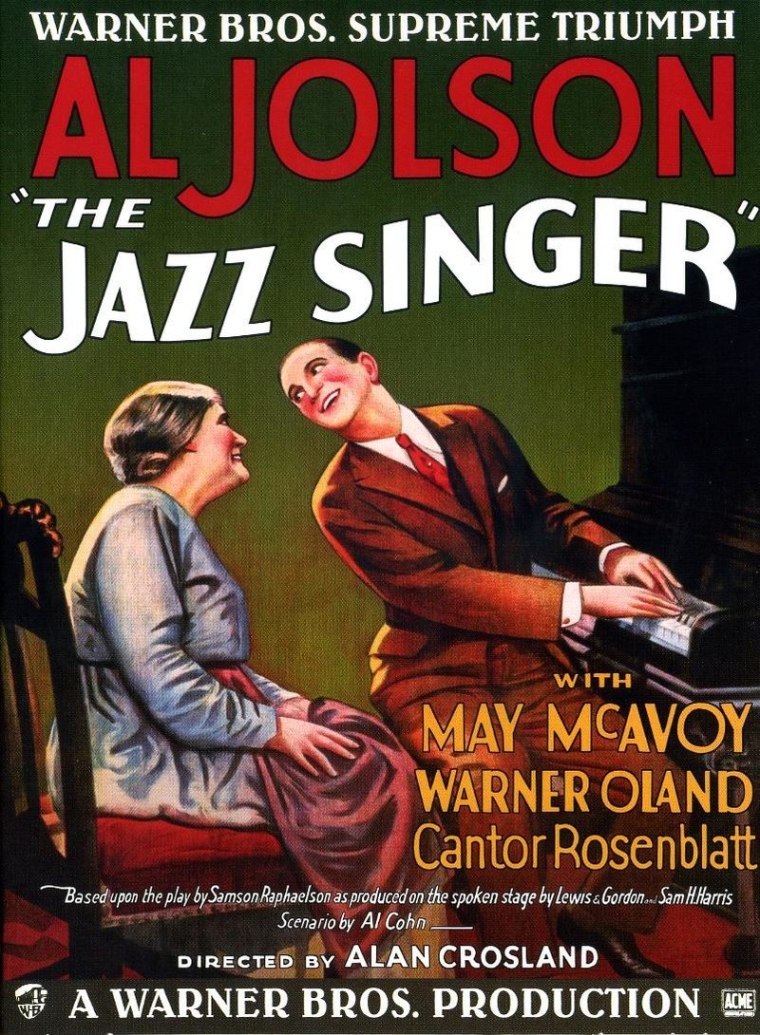
800px-The_Jazz_Singer_1927_Poster
First Picture to feature sound and recorded speech. Source: Wikipedia https://en.wikipedia.org/wiki/The_Jazz_Singer

Obviously the industry is now digitally accessible across the globe, whereby Hollywood in the USA is the top largest producer of film, followed by Bollywood in India and then Nollywood in Nigeria. The industry is massive if you look at the film giants such as Disney, Warner and various studios. There is also a complex process to get these audio visual items distributed into our homes…and now in our palms on smart devices. Most countries also have their own local film creatives, cultural identity and unique industry traits. For example, it is interesting reading about the ‘African Film Revival’ in a brief by Euromonitor as it mentions the benefit for the local economy, the regions and the fact that a lot of film are shot and produced in Africa, which in turn promotes tourism. In the UK, the revenue generates £3.1Billion and IBIS World reports in ‘Motion Picture Production that: “the UK industry attracts a vast amount of inward investment as a result of government incentives, predominantly UK Film Tax Relief. This makes the United Kingdom an attractive location to international film producers. The top four films in the box office for 2016 were US-backed UK films, and according the British Film Institute, the United Kingdom benefited from its highest ever recorded inward investment spend, amounting to £1.35 billion”.


This slideshow requires JavaScript.

As a 70’s baby, I grew up initially with black and white television programming showing English-speaking ‘movies’ (as we still call them), and also going to the cinema or theatre (as they still call them in the USA). We also had a few drive-in cinemas in Trinidad and that was a special treat – I used to like looking at the large outdoor screens from the highway even if we were not going.


This slideshow requires JavaScript.

At home, we saw film programmes at the weekend, in particular ‘Family Theatre’ with a different or series of dedicated family-friendly film, including Hollywood classics such as ‘Laurel and Hardy’. We also had a three-hour slot for an Indian movie on Sunday afternoons. This not only exposed us to the whole Bollywood genre and industry…but also connected us to our very important cultural heritage and identity. My mother frequently took me to the local cinema to see an Indian movie on a Tuesday afternoon. I still see some of my contacts share clips of old Indian movies on social media, just like other English-speaking movies. My relatives have been encouraging me to look at Bollywood film as they are apparently not as melodramatic as they used to be. They are still brilliant for dance choreography, song, Indian fashion and culture. It has a lot of cultural references that an Indo-Trinidadian can relate to, although I am not fluent in the Hindi language. Some of my Black-British friends also said that they look at Bollywood movies, and love the singing and dancing! I obviously went to see other popular films in different genres throughout my childhood with family, friends and my school. We were in the hayday of other popular genres such as Westerns and ‘Kung Fu’ Chinese film.


This slideshow requires JavaScript.

I like looking a European film in their native language and have no problem with subtitles, especially with my Indian movies exposure. In the 1990s, we used to frequently go to the cinema to see European film but these were hi-jacked by family-friendly film outings for a while when my children were younger. I have been trying to change this recently by going to see the beautifully produced international Polish-French award winning film ‘Cold War’ at the cinema.


This slideshow requires JavaScript.

One of the local heroes in my neighbourhood in London is the world famous Alfred Hitchcock who was born in Leytonstone. He is regarded as one of the most influential filmmakers in the history of cinema and is well known as “the Master of Suspense”. His film repertoire is worldclass and classic, and one tip is that you can also spot him in some of the cameo parts he played in his own film. This year, there is apparently going to be an Alfred Hitchcock Festival in my borough. There are some local film groups who have been hosting film festivals for a number of years and I am sure they have already celebrated this giant of a local hero!


This slideshow requires JavaScript.

Thankfully, we also have had developments in home entertainment with the introduction of film in cinefilm, video, cable, DVD and now in film subscription streaming with the likes of Netflix, Amazon Prime and Hulu. Netflix has been pioneering, and is a dominant figure in the global industry by providing streaming direct to customers. They are breaking into the mainstream cinema-going clientele with their own production of the popular film ‘Roma’ – which is in a foreign language, caste and black and white. There is a new impetus for Netflix according to Statista for: …“Netflix’s ability to adapt to changing technologies and consumer demands which made it so successful. This ability to adjust has continued in recent years with the success of the company’s original content and increased focus on providing content around the world. As long as Netflix can continue this trend of innovation, the company will remain an important voice in the entertainment industry”.

IMG_5107
‘A Star is Born’ DVD in the supermarket

I was recently reminded about use of film entertainment in air travelling too. I saw ‘Gone with the Wind’ and some recent releases on my trip to the USA. In-flight entertainment is so popular, that airline Emirates are top at seemingly providing their diverse customers with the latest selection of in-flight movies with its expansive film library. I noticed that there were Bollywood movies in my British Airways flight from Houston – I had never seen that before.

I recently saw at my local cinema the brilliant ‘BlacKkKlansman’ directed by Spike Lee, and also ‘The Green Book’ directed by Peter Farelly. It was super to see these two film with mixed representation but they both received negative press for one reason or another. ‘Black Panther’ was praised and awarded for a number for reasons, and seems to be a remarkable film released recently, but I haven’t seen it as yet.
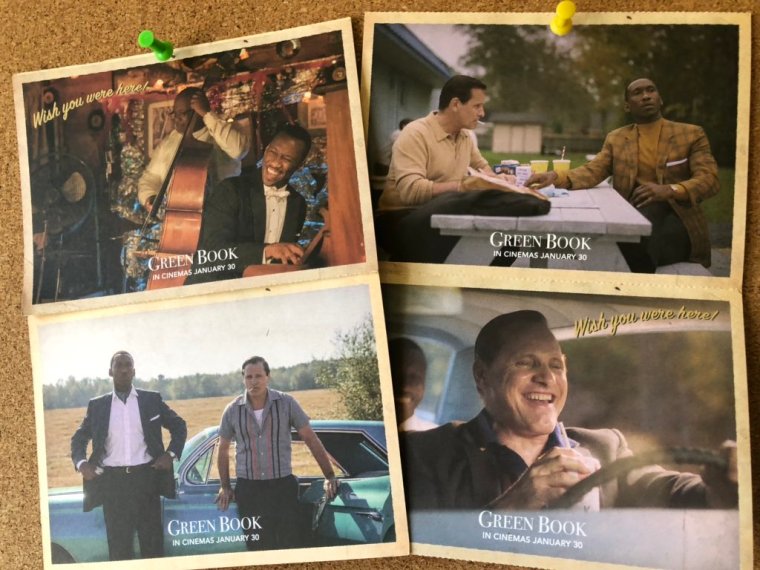
 

FpUG8AFJ
Free Postcards for the Academy Awards Best Picture 2019 – ‘Green Book’.

Unfortunately the film industry has been in the news for negative and discriminatory practices. The gender pay for women has been highlighted for women actors compared to their male counterparts. Only last week there was a piece about women having less roles and opportunities. The industry seems to be structured to benefit those in a privilege position in societies, whereby it does not reflect or take into consideration the demographics of the countries they represent. We may remember the hashtag #OscarssoWhite. Andrew Dickson writes in 2016 ‘New Statesman’ that the British addition to period drama is driving away some of Britain’s best actors: …“a major issue… is the apparently unshakeable addition of British TV and film to corsets-and-cleavage period drama, which has left many BAME actors locked out of the audition room. The BBC is in the middle of a run of literary spin-offs, from War and Peace to The Moonstone. Over on ITV, we have had Victoria and the invincible Downton Abbey”. Dickson also pointed that US cable and online subscription are even more courageous withOrange is the New Black’ which…”has an ethnically kaleidoscopic cast and plotlines that vaults across almost every conceivable question of gender, sexuality, body image and politics”.


This slideshow requires JavaScript.

In the UK in 2017, another piece in the Hollywood Report entitled ‘BAFTA so White (Again)? Insiders say diversity at the U.K.’s biggest film event still isn’t where it should be’, Alex Ritman writes that “BAFTA didn’t get the diversity memo”. Shame. Two years on, there seems to have been some progress at the 2019 BAFTA awards I looked at LIVE on TV, and as reported by the news at the Academy Awards. Of course the industry is not going to change overnight but industry talent and tired audiences like me are restless – there needs to be change. We will have to rely on adventurous industry leaders and creatives for brave and fresh content, script writing and casting. This will enable filmmaking professionals and actors opportunities for a true reality in film roles to ensure that there is a visible balance of everyone’s ability, talent and stories. However, at all costs we should avoid these changes to be just as a token ‘tickbox’ diverse person or statement. Changes should be inclusive and fair by default for a world and audience that are both colourful and diverse. It seems there is a powerful voice calling out for these changes in the press, social media and the public, and rightly so.

 “What we need now is for a change to come, I think the talk is done”.

Actor – David Oyelowo.

It is a very hard discussion to have on all of these issues and it requires a lot of banging on doors, breaking barriers and hard work to create and seek out new, relevant materials and best practices. Hopefully not much more time will be wasted with this knowledge and conscious awareness in the industry. And so, there will be a change in the right direction.


This slideshow requires JavaScript.

As ever, we will all continue to enjoy the film entertainment industry in one form or another with all the rich cultural, artistic and social benefits it brings to everyone in the near and far corners of the world. I am so looking forward to seeing some of the film that won…and lost awards at the various awards ceremony this year. We have a world of choice cinema available to us on various mediums, and a true reflection of the stories around us certainly makes it all very magical.

tIqYFPxF

Let the good times roll – taking the leads in New Orleans and Houston

Laissez les bon temps rouler – Let the good times roll

– New Orleans Cajun French

I can officially now say that I am the President-Elect 2019 for SLA Europe, and one of the recommendations from the Board of Directors was that I should attend the SLA Leadership Summit in New Orleans, USA. Therefore, I started the year with much anticipation with this trip to New Orleans – the Crescent City. These learning and collaboration opportunities don’t come by often, and as a destination, New Orleans has always been on my bucket list. I flew into Louis Armstrong Airport with Geraldine, a Swiss-British SLAer, and it was very nice to be given the pep talk by someone who has been through the role and who had some practical tips with stepping up to share with me. I have mentioned before in this blog that I have been a member of SLA since the early 2000s and still find the organisation beneficial and relevant to my work and profession. I have been able to take on tasks and responsibilities that have developed me personally, and this was an opportunity to hone in on my leadership skills and style. I also was able to fit in some great fun!

This slideshow requires JavaScript.

The Leadership Symposium was three days of full-on meetings, presentations, table topical discussions, group exercises, networking, sharing best practices, knowledge, wisdom and general chat with a wide international network of information professionals. The facilitator Jon Hockman was excellent at enlightening, coercing, motivating, as well as helping us to focus our attention on our leadership missions, professional objectives, and personal goals.

This slideshow requires JavaScript.

I have had some training in the past in my previous full-time and volunteering roles, but this was extra special as I was able to understand SLA better by being engaged at the symposium, participate in meetings, presentations and discussions I had witnessed – but most importantly, I was able to meet fellow professionals face to face. These all made the trip worthwhile and valuable to me.

To reach others, we first have to know ourselves. And to contact the deeper truth of who we are, we must engage in some activity or practice that questions what we assume to be true about ourselves.

– Adapted from A. H. Almaas

This slideshow requires JavaScript.

I am one of those persons who actually does enjoy team building away-days and socialising, so the exercises and meeting new people are tasks that I relished. Most of the attendees were friendly and really pleased to know that I was representing the SLA Europe Chapter, and indirectly, my employers The British Library. They were excited to hear of our forthcoming autumn SLA Europe European Conference in the UK. Also, they were very complimentary and curious to know more after my short talk about our Continuous Professional Development (CPD) events and programmes that we had conducted here over the pond.

Everyone has influence in their association or organisation –

Slide provided by Jon Hockman


This slideshow requires JavaScript.

One of the best aspects of the symposium was an opportunity to see historic and charming New Orleans! I went out on my own on Saturday to soak up the pre-Mardi Gras preparations and mood, especially as the New Orleans Saints were playing that day. For those of you who are not aware – Mardi Gras is the same day as Shrove Tuesday and Carnival Tuesday in Caribbean Carnivals (yeah – party time!). I loved the architecture, street music, art shops, galleries, musically theme bars, restaurants with Cajun and Creole foods, etc.

This slideshow requires JavaScript.

I really was very contented to walk around in awe, from the modern convention district, hotels and commercial centres to the historic colonial building in the French Quarter better know as Vieux Carre (Old Square). Historic signs of indigenous names, colonialism and slavery are very apparent around the Louisiana landscape and buildings, from the shores of the Mississippi straight to the St Louis Cathedral and the Voodoo Cultural Centre. I made sure that I visited the Mississippi River for its significance and impact on American immigrant history. New Orleans is not dissimilar to parts of the Caribbean where I am from, and some of the buildings look like those you may find in colonial Port of Spain. I felt quite at home with the Mardi Gras costumes culture, music, street activity, food, and ethnic make-up in a mixed society.

This slideshow requires JavaScript.

My friends and family were sending me recommendations to try various delicacies such as fried chicken in Treme, Beignets at Café Du Monde, Po’ Boy sandwiches and the lush….King Cake. Luckily the SLA Leadership Symposium had a high-quality King Cake that was ever so light and appealing to the eyes with the three Mardi Gras coloured sugars represented – Purple as Justice, Green as Hope and Gold as Power. I hope to make a King Cake for Mardi Gras this year. This will be a vintage epiphany year as I have eaten King Cake in London with my French friend Veronique, in New Orleans with SLAers, and in Houston with friends. The sweet perfume of the cakes in the local patisseries is something special too!

New Orleans is the birthplace of Jazz and as a final treat, I went along with SLAers Ruth from Sacramento and retiree Janet from New Jersey to the Preservation Jazz Hall Band in the museum-like setting for an authentic live New Orleans Jazz show. It was an awesome, quaint, intimate and once-in-a-lifetime type of gig that I won’t forget. The musicians and singers were of a high calibre and I couldn’t help myself humming along and tapping my toes.

This slideshow requires JavaScript.

New Orleans will have a lasting impact on me for the leadership training and work we carried out over the two days but also for the magical and creative influences it also has on me in terms of its’ culture, identity, and energy. No wonder the saying is appropriate…let the good times roll!

This slideshow requires JavaScript.

Keep your eyes on the stars, and your feet on the ground.

Theodore Roosevelt

Houston was my next stop. It was easy to get an internal flight to a city I had heard a lot about from a neighbour who lived there since the 1980s. I have always been curious as it is not far away from Dallas, which is famous for the well-known 1980s soap opera. On arrival at the airport, it is clean and noticeably very high tech, where I was able to get free Wi-Fi – which is always a bonus when travelling abroad. I also saw only one cowgirl, but apparently, there aren’t many about in the city. It is not Rodeo season too when it is certainly an attraction for music, food, and entertainment from photos I have seen in the past.

This slideshow requires JavaScript.

Although I saw some cows, there were certainly a lot of freeways, shopping malls, restaurants and fields of oilrigs and tanks. Houston is a wealthy city with a steady economy and ‘old money’ from the oil industry. It is also a financial centre, university city and at the cutting edge of medical research with the Texas Medical Center complex hosting 60 medical institutions. I also liked the downtown skyline, the gorgeous architecture, and homes. There were newer neighbourhoods in suburbia, where there are large and expensive homes in gated communities near lakes. My friends told me that your money goes a long way in Houston compared to other cities. It is seventh in the best largest cities in the USA.

This slideshow requires JavaScript.

Houston is famous for NASA’s Mission Control Centre. We have all heard the saying “Houston – we have a problem!” from an astronaut’s message to Houston’s NASA mission control popularised in the film Apollo 13. This is synonymous with problem-solving and working in remote teams. I was really pleased to know that my friend lives close by and we were able to visit the NASA Johnson Space Center. The exhibition areas were curated with mock-ups, film, and simulations that were informative and entertaining for children and adults. I even liked hearing about the mission control problems, such as with Italian Astronaut Luca Parmitano – it was a gripping real-life story of the challenges faced by astronauts and space exploration. It was an informal leadership lesson as it reminded me of the need to have strong individuals but also strong teams to help with problem-solving. One of the clips extols about the need and the steps in failure that NASA has taken so far to get that far in outer space. Their failures have enabled learning and progress.

This slideshow requires JavaScript.

Like magic, that very morning the news in Houston showed a clip of entrepreneur Richard Branson speaking about his Virgin Galactic space tourism programme, and what it is likely to be when it is launched. I thought of this in the real mission control training rooms for astronauts after seeing the various space equipment and components that they must learn to use and get familiar with before they set out for discoveries in a life-challenging, harsh and dangerous space and environment. In a presentation, we were told about the Boeing and Space X programme, the latter by entrepreneur Elon Musk. We were still able to see the actual Mission Control room that is currently used for training but soon it will be used for the MARS space programme by mid-2020. We also saw engineers working on innovative robots and space equipment.

“People actually make sense by thinking about the past,
not about the future….constructing explanations about
past performance often yields new strategies, insights or innovations.”

– Jon Hockman course slide on Leadership.

This slideshow requires JavaScript.

The other remarkable aspect of the tour was seeing the large equipment that has been in outer space but they were now located next to a field of cattle and cows on a heritage farm on the NASA site. There are signs for deer crossing and other wild animals that roam the site – this is ironic for keeping space explorers grounded in the countryside and natural environment in Texas. There are trees planted to honour and show appreciation to astronauts who have passed away. NASA also apparently has a local outreach and competitions programme for schools. Unite, Create and Explore is their mission motto displayed on site to encourage space exploration…and that is a good problem to have!

This slideshow requires JavaScript.

Like New Orleans, I spent some lovely time socialising with my friends and it was amazing checking out the local homes, shopping and leisure areas. There were some cows in a field but also a lot of large shopping areas with the likes of JC Penny, Guillards, Wal-Mart, Costco and very nice entertainment and restaurant areas. The food was amazing and my friends made sure that I tried some of the local dishes!

This slideshow requires JavaScript.

We also took a drive to Galveston, which is on the Gulf of Mexico. I was aware of it by a couple of pop songs, and by looking at the maps of the south of the USA. It is a really nice seaside town with influences from the immigrants who came there – so you can still see French and Spanish architecture, British telephone boxes, and they were also getting ready for Mardi Gras.

This slideshow requires JavaScript.

Both New Orleans and Houston have the crossroads and waterways with the past and present, the wild and the unknown – a coming together with the old and new USA and Europe. I am truly grateful for the learning opportunities and insight this trip gave me and see it as an honour and privilege to continue to serve SLA Europe, its’ board, members, and stakeholders. I hope to see some new contacts, and familiar faces I met on this trip another time at the USA annual conference in 2020.

Disruption and Innovation in Retailing – Online vs the High Street

You may not have missed the news headlines lately about our high streets facing some challenging times. Noone is unaffected and even large ‘safe’ department stores are experiencing disruption in their sales with some of them closing at a very fast rate or on the brink of liquidation. There are lots of factors that may have contributed to poor performance and sales, especially with the current lack of consumer confidence, the weak pound with inflated prices, jobs at risks, high business rates, steep rents and overheads. No wonder accountancy firm BDO published their latest 2018 figures for their high street tracker confirming that footfall was down by 6% than 2017, and that there are further shop closures expected in the future.

10C
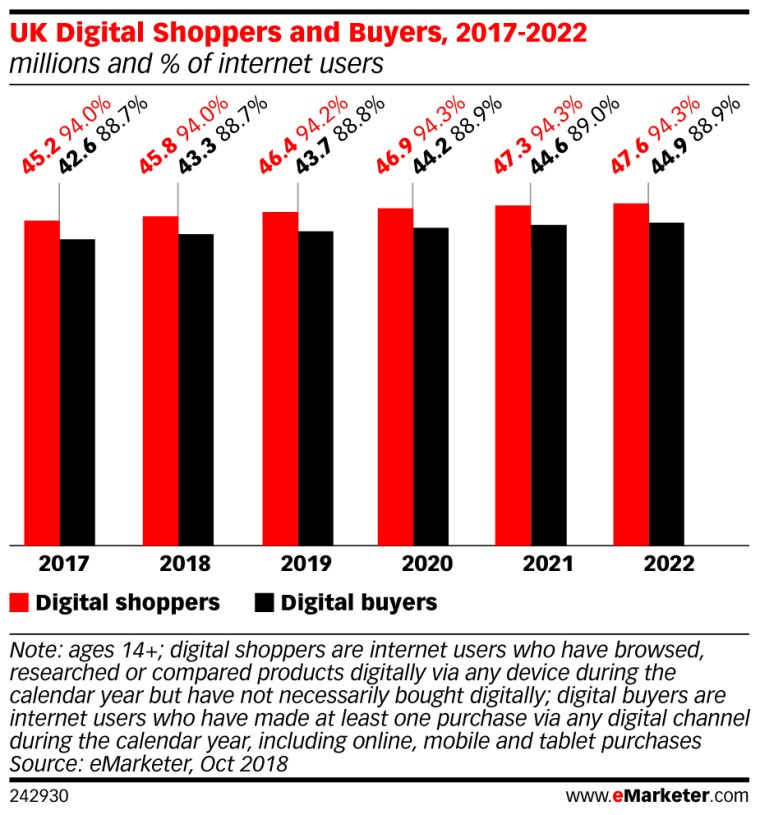
Source: eMarketer


In my research, I saw worrying headlines with the titles ‘Hell on the High Street’ or ‘The Death of the High Street’! However, it is not all doom and gloom. There are some real disruptions…and innovations already changing the way we purchase goods online and in-stores. Without a doubt, online shopping is changing the physical high street but in some cases – it is offering innovative new in-store experiences and also giving consumers more choices and a different shopping experience with the use of new technology and social media.

This slideshow requires JavaScript.

I want to share my observations to highlight the great ways entrepreneurial and creative businesses are proactively changing the high street with the help of regeneration programmes. And I want to stress here that I will always seek to support the high street as it is our living environment and the heart of our communities and local businesses.

This slideshow requires JavaScript.

One of the main factors of the changing high street is the proliferation of online buying. Global Data Online in ‘E-retail in the UK 2018-2023’ reports following “robust growth over the past 10 years, the UK online market is set to top £55.9billion in 2018 and remain on a positive growth trajectory, albeit glowing as the channel matures… the online channel will remain a key driver of total growth in the UK retail market as physical channels underperform due to falling footfall and shoppers seeking convenience and choice online”. More and more we are shopping online, and people are increasingly trusting online channels. The demographic analysis shows that younger people are using mobiles to order more so than compared to older spenders – and the figures are growing with social media penetrating retail markets to drive purchases, especially via the smartphone. Surely you have seen promoted adverts on Facebook and Instagram on your smartphone! We have recently just survived the US influenced Black Friday and Cyber Monday.

This slideshow requires JavaScript.

The Global Data Online report lists the eleven drivers to online shopping and my personal comments are mentioned here too as I can relate to them:

  • Convenience – do shop from home or anywhere with a smartphone
  • Lower Prices – keep track on items for when they are discounted
  • Can shop at any time that suits me – order groceries from home
  • Save time – not spending time and travel costs to supermarket or high street
  • Better selection – competition to have higher quality and quantity
  • Product not available elsewhere – hard to find items so easy on digital
  • Allows me to compare prices – showing virtually without even visiting the shops
  • More product information – descriptions and photos help indeed
  • Prompted by Online promotions – how can you avoid promotions really?
  • Receive an online voucher – spend it when you can…why not!
  • Less likely to forget to buy it – it is in my basket and always there to remind me!

This slideshow requires JavaScript.

This is being silly…but seriously online buying is here to stay. I started using Amazon in the late 1990s to procure books for libraries and our customers. I personally also used to buy music CDs in the early 2000s. I now frequently buy from most online shops or my favourite hunts. Compare this to the 1990s when I used to love browsing the physical shops in my lunch break when I worked near Covent Garden. Now I have a real problem with the shops being at my fingertips 24/7! I sometimes can’t avoid being distracted by push emails, adverts, change of season sales or campaigns. There is now an actual term called ‘impulse buying’ which I certainly do. Are you like me and try to justify your purchases? Yes, I look for bargains and so I try to control my expenditure. Certainly there is a shift in my online buying behaviour on the last 10 years and I am not alone.

This slideshow requires JavaScript.

I do like researching items online such as when I recently needed (another!) pair of shoes for work. I was thinking of going to a shop for some comfortable shoes, but I was browsing online recently and saw the right colour, shape, heel height, size and at a discounted price! Therefore, I was unable to resist buying some new Vagabond shoes for work. One feature I look for in online shopping is ‘Click and Collect’ as I am not able to predict the delivery times to collect packages. This option usually means that you do not pay delivery charges and it is my preferred form of delivery. It really is as easy as that to get what you are looking for!

This slideshow requires JavaScript.

Another major shift is grocery shopping. I remember my friends trying to convince me to buy groceries online circa 2012. I eventually started ordering groceries online and there are some clear benefits for me. Some of these include budgeting better, saving time by ordering at home rather than three hours of shopping in store, and avoiding to buy items in store that I may not need. Sometimes there are issues with items being replaced by either an inferior or even superior product. You might get squashed bread, wilted vegetables or occasionally order the wrong item yourself, but generally I like ordering food online as it frees up my precious time. I still go to the local supermarkets if I want fresh items from the bakery, butcher and to top-up my mid-week groceries. One friend pointed out that this is more environmentally friendly to grocery shop like this as there are less people using cars, or we are walking to local mini-supermarkets and shops for the mid-week shopping.

This slideshow requires JavaScript.

The last main point about online shopping is the ubiquitous Amazon. It is no doubt that Amazon dominates the online cyberspace across devices due to its wide range of products and brand offering. It really is brilliant…but so annoying too! As mentioned above I do remember the earlier days of just buying books, but it is worrying the negative impact it may be having in dominating the retail space and pushing local and smaller shops out of business. Although Amazon says that it is helping small business sellers, there are also big picture issues that they pay little tax whilst their profits are tripling. I have love/hate sentiments about this and so now limit how often I order from them. For example, if I am looking for a book for personal use, I try to use local bookshops but would only use Amazon if I am unable to find the title easily.

Now away from online shopping, the ‘bricks and mortar’ high street is going through some disruption too from this ripple effect. The major retailers are having to innovate and cope with the aftershock of online but high street shops are also changing. For example, pubs are the fastest growing failing businesses but at the same time the pubs that are surviving are gastro-pubs serving food and therefore they tend to employ more people. My local pubs are now used for Quizzes, entertainment and other community initiatives. Coffee shops, artisan, creative makers, boutiques and other start-ups are forging new ground on the high street via pop-up shops, co-working spaces and regeneration of the high street. It is never easy. There are still immense pressures and costs to manage but generally, we are consciously trying to support local businesses by shopping local. In the past there have been the Love Your High Street campaign, and this weekend is the Small Business Saturday initiatives to promote and support local small businesses.

This slideshow requires JavaScript.

I recently presented a webinar with Open to Export whereby food and drink retailers are doing fairly okay on the high street (with exceptions of course). Tobacconists, barbers, coffee shops are some of the growing independent businesses but there are some worst off businesses such as Post Offices (which are having to innovate services), Banks, Photographic services, Travel Agents, Newsagents and even Indian restaurants due to healthier eating habits. One thing is for sure is that shops have to be one step ahead of all the challenges faced by being smart and adaptable to the dynamics of the high street, technology and consumer behaviour. It is brilliant to see creative businesses and artisan shops thriving in some areas brought about by groups of creatives and makers who are proactively engaging with their local community and neighbourhoods. In my neighbourhood, they are also collaborating for the seasonal ‘shop local’ street promotions.

This slideshow requires JavaScript.

I attended a recent presentation where the founder of Workary and Wimbletech spoke of all the benefits of localism and how these groups use their libraries, local councils and commercial co-working hubs to start and grow their business community. This sort of activities are very prominent in my local area and I couldn’t be more pleased and proud. I just don’t have the money to buy things frequently from these businesses but I am certainly rooting for their success and it pains me when a shop do shut down. The shopping mall is also actively changing to host a new coffee shop, local family friendly events and other social activities. It is interesting to observe all of these shopping options as we also have the famous Walthamstow Market adjacent to the shopping mall and the rising number of independent shops. Walthamstow Market is the vibrant and unique longest outdoor street market in Europe and should be a must on your visitor’s list.

This slideshow requires JavaScript.

As we head into the busiest shopping season of the year. It is hard to think we will be exclusively shopping online…or on the high street. I certainly will be looking to mix-up my shopping experiences and try to support these two very different options to make sure that I go with the tech flow, but also to remain human and use these very different two options available to me. Some shops are adopting new technology and surviving brilliantly. Long may they innovate and survive the changes! The robots are not doing it all for us as yet.

This slideshow requires JavaScript.

The Bigger Picture – challenges, benefits and celebrating positivity with Diversity, Inclusion and Equity

Diversity is a fact, inclusion is a practice and equity is a goal –

Dereca Blackmon, Stanford

What do diversity, inclusion and equity really mean? …This is the question we might want to ask ourselves, especially in a diverse digitally connected world in the 21st century. It can be unclear why we even need to discuss this topic but it has been on my radar particularly since I was asked to take part in a SLA Task Force for Diversity and Inclusion in 2016. I was an honour to be asked, and I was unsure if I had anything insightful to contribute but to be honest, I realised that I was already championing the features of Diversity, Inclusion and Equity. We don’t usually need to disclose attributes of people, but for the purpose of this blog post, I have mentioned information on myself and gave a couple of real examples.

30704575_10215663001038257_1230337809080909824_n
SLA Diversity & Inclusion Task Force Participation in 2017

I am a little ahead of the game for some obvious reasons – I am female, an ethnic minority, working mother with a powerful diverse background of being a Trinidadian (other Trinidadians will understand what I mean with regards to diversity), married to a European, living in multicultural London…and I worked in world class libraries. I am heterosexual with no obvious disabilities. However we must remember that there are other areas of diversity and inclusion that is deeper than the physical and obvious. The point of this blog post is to discuss some of the challenging issues we face, but also to find examples of good practices and stress how important it is for information professionals to advocate, champion and stand up for diversity and inclusion for the communities and customers we serve. In this context, I am mainly discussing the business workplace and libraries with some principles for the wider society.

I need to do some more research on an official definition for Diversity, Inclusion and Equity as it tends to cover Equality rights and anti-discrimination policies. However there are some good pointers on this Wikipedia page, and the SLA Caucus page has a good example of the motive behind the topics. The term Equity is used more in the US, where I saw a good example on this voluntary sector site Independent Sector.

Freedom is Indivisible –Nelson Mandela


18222686_10212623229405866_1947407448995988051_n
Found in a Venue in Tottenham

My research also came across a motivating quote on Diversity and Inclusion at the closing keynote at the National Diversity in Libraries Conference, Los Angeles – Bourg, as a white, butch, lesbian, Army veteran, library director, and Hathcock, as a black, straight, cisgender, Christian, Southern, non-director, sat on stage and talked from the heart about the ways in which they are attempting to learn from and with each other along their varying intersections. Their work, said Bourg and Hathcock, begins first and foremost with an acknowledgement that “libraries have never been, are not now, and will never be neutral,” that whiteness sits at the heart of our society and therefore our institutions”.

This puts the topic in context and shows the library and information professional position on Diversity and Inclusion.   There is a quest of best practice by information professionals in being pragmatic with neutrality versus social justice for the communities who we serve in providing facts, unbiased and trusted information. For example, I remember being ‘as nice as apple pie’ serving members of the British National Party in a working library where impartiality and neutrality were the guiding principles. However at the same time, on balance I would advocate for libraries that were cut by mainstream Politicians and government policies. As I am aware, I still try in my own way to reach marginalised library users by stretching out.   There is a need to try to reach as many as possible, regardless of biases and background. This world should be a level playing field where everyone has a voice. We certainly should also stand up if something or if someone was harmful or threatening to others.

This slideshow requires JavaScript.

Looking at ‘The Bigger Picture’ shows that Diversity, Inclusion and Equity are progressive hot topics. It is important for us to think about these terms in the workplace as well as in society. There are a few events that I kept a close eye on social media recently, where there were online events advocating and discussing the topics. The UK Lib Chat Twitter talk on ‘Celebrating Diversity: supporting clients and broadening the profession in libraries’ held some great nuggets of thoughts on how we should implement this in this sector. It was also fabulous to see the tweets (Twitter @StemGameChange) shared for the Gender Diversity in STEM event at the Alan Turing Institute a couple of weeks ago. It was nice for the speakers to invite me in too but I was busy in my normal work, so could not attend. I also refer to CILIP and SLA Connect online community caucus on Diversity and Inclusion for best practices and information.

TDRqucyQ
Gender Equality in STEM at the Alan Turing Institute

So what is the problem? Why do we need to be reminded about Diversity & Inclusion? Harvard Business Review’s ‘Research: People share more information with colleagues of similar backgrounds’ states: “in the workplace, people tend to trust and attribute a higher status to colleagues whose cultural background are similar to their own. As a result, members of the majority national group – and minorities who share cultural similarities with the majority – also share the most information with one another. Whereas minorities with the most cultural differences are often attributed a lower status and information is withheld from them. This withholding can cause those from ‘low status’ minority groups to underperform and never reach their full potential”.

This is just one of the problems. There are other issues around privilege, recruitment, team dynamics, talent development, gender pay-gap, cronyism, cliques, tribes and exclusivity, which act as barriers to diversity and inclusion. There have been some progress and positive steps to have better talent and support systems, but this also requires diversity and inclusion to be fluid enough to filter to the top of teams and even executive boards. There is a lot of research that a more diverse board or top management around the table will have broader viewpoints and experiences, which will heed better business decisions that are best for an organisation.

WordItOut-word-cloud-3367559
Words in this blog…Diversity and Inclusion

Most of the research I read says that it is not always easy to achieve the right balance. “True equality is not taking away for one to give to another. It means having an equal voice, opportunities and rights”. There is a lot written on the ‘privileged’ White Alpha Male – a group that has long been overdone and it can be monotonous for the rest of us in the shadows. It is possible to seek more balance where anyone can get an opportunity to contribute and to harness talent. There is richness in diversity, inclusion and equity in all of this…if we are in it together. The demography, scope and locations of the global consumers are also more diverse in a digital world – and top management have to reflect and understand their audience, staff, customers, clients and stakeholders. We are not forgetting the White Alpha Male – we are simply including him in the mixture with a balanced and broader talent pool. We just have to make room for more diversity and inclusion.

This slideshow requires JavaScript.

In the article ‘While automation eats jobs, it doesn’t eat work’ on Equity: “companies are committed to a diverse work force for varying motivations. Some believe that diverse teams are just smarter and more creative… Other firms, especially technology companies believe that they are disproportionally responsible for designing the future and therefore it’s simply wrong to leave entire communities out of their teams”. There is also a positive outcome when people feel they belong – they perform better.

This slideshow requires JavaScript.

The other aspect of Diversity and Inclusion practices is that there are strategies for a supportive culture, with advocacy to maintain and sustain positive levels. It is recommended that organisations examine themselves and their policies for: “without them, diversity cannot be achieved because people will leave before they are given the opportunity to make a difference”.

Another piece of research by Culture Amp states: “Creating a workplaces that make people feel they belong. Without this, no matter how much diversity you might achieve by the numbers. You may find people feel disconnected, disengaged and prone to leaving your organisation”.

There is another issue of unconscious and conscious bias. There may be physical attributes to humans that make us compassionate and conscious to inclusiveness. At a Public Library Conference in the USA this year, keynote speaker Steve Pemberton (Chief Diversity Officer at GloboForce) explains: “the first picture you see of someone is not the full picture”. We come into this world with visible characteristics and diversity traits… but the real story is below the line: “This things you can’t see would be stunned to see how much commonality there really is, but it requires conversation and willingness to be open and to learn”. So with this in mind – an inclusive environment means providing everyone, no matter who they are with equal access. The richness of inclusion and diversity is below this invisible line: “Top of the waterline are people’s visible traits but below the water line many other invisible traits emerge, such as sexual orientation, beliefs and background”. Pemberton went on to say: “that we need to depend on each other and celebrate our myriad experiences because we all have something new to learn about the world”.

I may be thinking of a Utopian idea…but we can dream, and hopefully we can forget the hostile and divisive hot air that is currently blowing in parts of this world.

In reality, there is still some work to do. Libraries still play a large part in diversity and inclusion, and operate in one of the most open physical and digital areas you would expect to encounter. But we are still a profession in the English-speaking world that has mainly white professionals. It is heart-warming and motivating when I see social media shares from libraries in Trinidad and Tobago for their good work on diversity and inclusion programmes.

1233287_10201623268493718_1785335239_o
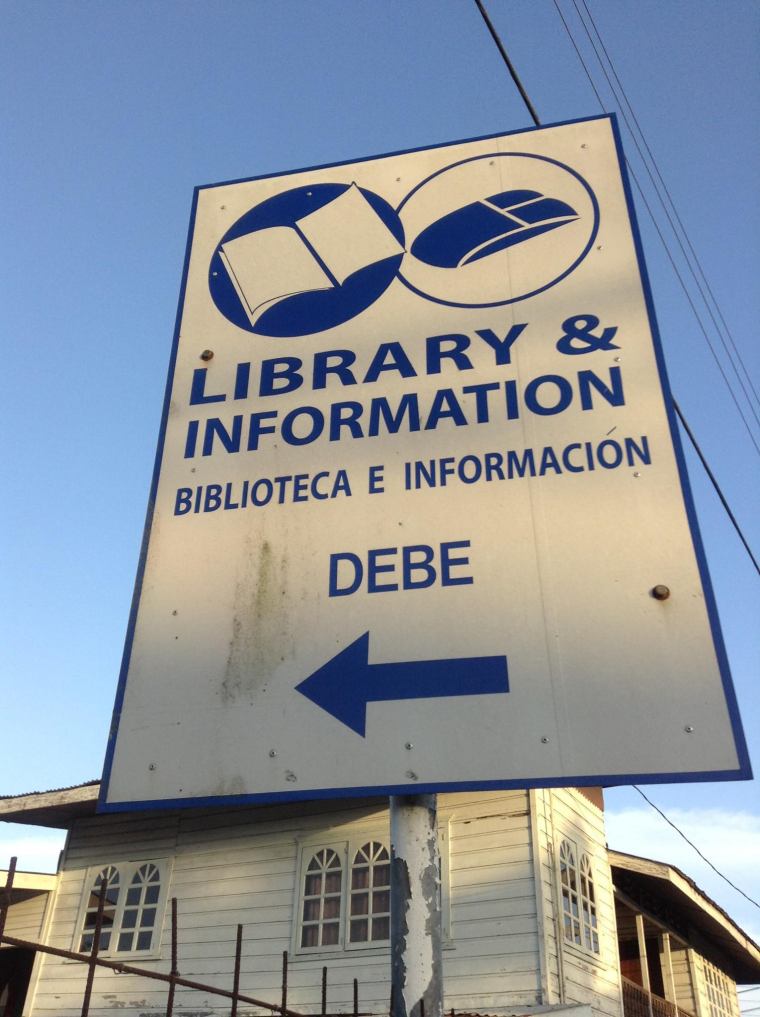
This way – Library sign in  Trinidad & Tobago

There are still vast issues, levels of poverty and access for customers in a ‘first world’ country like the United Kingdom. A multi-cultural and diverse content coverage should be programmed, but there are pressures on public funds. Socio-economic barriers prevent diversity in developing professionals and the communities they serve. Most of these issues are in disadvantaged urban environments where there are discourse for crime, low income families struggles, poverty, underprivileged persons and other societal disparities – therefore librarians act as a haven for promoting diversity and inclusion in their communities. There are other barriers like the digital divide, dyslexia, the elderly, literacy, languages, and physical disabilities. Some will be visible and some below the line. This may be a good point to acknowledge too that there are some people who may never come into the library, but there are still a large proportion of people who do see its’ worth and will continue to use them.

This slideshow requires JavaScript.

Therefore we must continue to be diverse, inclusive and equitable. Outreach and marketing work helps to reach marginalised communities which will foster positive inclusion for developing diverse professionals and customer bases. CILIP has a great page on the work they are doing in their diversity and inclusion programmes. It is motivating as an information professional that we are doing our little bit on the front line to help disadvantaged communities and individuals. It leads to better social cohesion, improve economic prosperity and the possibilities in a more level playing field in a diverse and inclusive society.

There are a lot of best practices out there for professionals and organisations to champion the business and corporate social responsibility (CSR) benefits for Diversity, Inclusion and Equity programming. These types of programmes are leading the way and act as a benchmark to adopt and ‘anchor’ in our businesses and mission. Some of these admirable organisations are Channel Four, Touchstone and Halebury. There are some tips on the CIPD factsheet, and the Gov.UK website as an employer.

This slideshow requires JavaScript.

So what does this all mean to us now? …There are a lot of positive policy, narrative changes, game-changers and professionals working to create more diverse and inclusive work environments. There are also inclusiveness programmes that are trying to balance representation, content, coverage and highlight diverse stories for personnel and patrons for all types of businesses. Some cynics may even be ‘fatigued’ by the words ‘Diversity and Inclusion’ and much more so by an inclusive agenda! However, if we don’t continue to encourage positive policy and action – we will end up with an echo chamber and miss out on the richness of celebrating our differences and similarities.

In the bigger picture – diversity, inclusion and equity have a lot of benefits and are the best ingredients for shared collaboration and empowerment of individuals and organisations. Embedded inclusion with a whirlpool of diverse talent makes life more interesting, and exposes us to fresh perspectives, bringing better understanding and with it respect, compassion and hopefully, greater all-round success.

VYD2m6qm
Welcome.


Fake News – fighting the information war

The news has always been exposed to manipulation to exert power, influence and score political points. It is not a new phenomenon but due to developments in the internet and social media this has been exacerbated as anyone with a smartphone has the ability to share content knowingly or unknowingly. Propaganda, misinformation and censorship are old tricks for information tactics, but in today’s world it is deemed the ‘golden age of fake news, alternative facts and post-truths’. Anyone can disseminate content digitally that may be appropriate or inappropriate. It will also hold the biases and interest of the person(s) sharing it. Sometimes it may be governments or companies that have a vested interest for profit in having us believe false information. The challenge about news in an ideal world is for us is to be truthful, open to criticism and have civilised arguments without inciting harm or violence. Otherwise perpetrators of false news should be prepared to pay the consequences.

u8jc7mFv

The Internet and social media platforms should not take all the blame – there have been positive outcomes if we look back only few years, such as The Arab Spring. Internet credibility was something we had to deal with in the last 20plus years as information and knowledge professionals. The same applies now. The current tone and mood highlights that we should be aware a lot more about ‘Fake News’.

So what is Fake News? Not surprisingly, searching our research databases in the library, there is a lot of commentary and articles on the topic in the last couple of years mainly due to political campaigns on both sides of the Atlantic (and the world no doubt).

Fake News definition:

false, often sensational, information disseminated under the guise of news reporting. Harper Collins 2017.

Webmaster Jeff Wisniewski at the University of Pittsburgh is on point when he writes in Online Searcher.Net Jul-Aug 2017 in A Matter of Trust: a Webmaster Perspective’ – “Fake News, information created that is either deliberately false or intentionally misleading predates our online world. Its’ become such a concern recently because the internet makes it exceptionally easy for misinformation to be created and widely distributed, which in turn makes it harder to verify the presence of the good stuff. If you think this might be problem for the young who haven’t as yet developed these skills: the old, for whom the internet is relatively recent phenomenon; or the less educated, who haven’t been exposed to academic rigor, think again”.

Here I am hoping to highlight some of the issues we all face, and as a reminder that the responsibilities lie in good ethics for companies, politicians, journalists, academics and most importantly – libraries and the role librarians play in empowering over ignorance. It is great to see that a lot of the materials I read refer to digital literacy, fact-checking and searching for quality information. Fake news may be a ‘bad thing’ but it is a blessing too to remind everyone of the underlying skills such as literacy, fact-finding, analysis and even more relevant…critical thinking, which all needs to be honed. Mick O’Leary writes in Information Today Oct 2017 in ‘Fact-checker resist Alternative Facts’– “No, it’s not all the president’s fault, although he is the leader of the pack. People on all sides subordinate facts to passions and politics. Fake news and lies abound, disseminated from all quarters and driven by greed and partisanship”.

2gI9CzZT
London Underground Train Poster

Some of the issues and consequences of Fake News is that it affects our democracy, evidence based-decisions and facts which can be harmful if applied generously. False reporting is blindly encouraging parts of the population to remain ignorant on the issues that directly affect them. There will still be people out there who would fall foul of propagating fake news, but we should not find this discouraging. It is an era of post–truths. With time, we still have the fact-checkers to verify an issue, even if points of view still remain the same. We are a free society after all.

juzKesLj
Free Press.

So why share fake stories? Apparently there is an interesting answer put forward by Jimmy Wales, Founder of Wikipedia. When asked recently about internet users unknowingly sharing false stories – Wales replies “Yes, well, that’s just human life. All of us have a few idiot friends and now they can share stuff on Facebook. The thing is, it is easy to be condescending about these people and to joke about these people. But the truth is, in free societies, people have a right to not be interested in the news. But when you’re not that interested in the news and you do decide, ‘hey, I think I want to find out some information,’ you deserve to get quality information. And that’s what we’ve really been lacking”. So part of the answer may lie with good journalism, collaboration and research skills.

The other issue is with the growth of social media – there is intensity and traction with our biases.   Generally, we follow and connect to people who are similar to us and therefore only see or hear points of views that we are exposed to. Social media tend to be mostly an echo chamber for our own views. We should challenge, discuss and converse with people who have a different perspective, but do try to avoid trolling.

Social media platforms have come under attack with the rise of fake stories. Facebook was aware of this as they placed adverts in national newspapers on the run up to the UK 2017 general elections. Social media precaution has also been in the news recently on the related issue of the use of our data and algorithms. There is a lot of power and money in such large networks of people who are actively engaged on social media. Unfortunately, there will always be predators who want to manipulate us. I have certainly shared my point of view on the recent exposed Windrush Generation scandal. I knew it was a concerning when I saw the Trinidad and Tobago High Commission in London share an update about an amnesty petition in their news feeds. It was one of the saddest and biggest stories being shared by my network on social media, and not just in the UK. This is an example of my social media use for news and for when the lines become blurred between what is relevant to me, and concerning politics. I saw very little fake news on the Windrush Generation. It was mainly real news being shared on social media. All in all, it is a very sad true topic.

bt-26-12371
Empire Windrush Records – http://www.nationalarchives.gov.uk/education/resources/bound-for-britain/source-3/

The other major issue is propaganda and censorship. In time of sensitivities – the truth gets manipulated, measured and withheld which leads to misinformation, propaganda and mistrust. It won’t be uncommon to say that there are also ‘little white lies’. It is an old technique for keeping order or even protecting us from facts, in a twisted way. Fake news may certainly be in our dialogue, but lies are not new. The liar’s tools are new but it is an old problem in the information war. It is also our own responsibility to censor and self-regulate our opinions with time sensitive and appropriate information in relation to our communication strategy, if there is one.

So where do we go from here? Most of the resources I read suggest that we build trust. I do have a personal motto to be as genuine as possible, and seek the truth where I can personally and professionally on social media. Like Jimmy Wales’s article above, Wisniewski also has some good pointers to check information that include:

  • Accuracy – The source is error-free and the information can be verified using other sources.
  • Authority – Where are the author’s other credentials? Are they qualified to write on the topic?
  • Objectivity – Is it clear what the purpose of the content is? It is fact or opinion?
  • Currency – Is the content up-to-date?
  • Comprehensiveness – What depth of information is provided?

This is an opportunity for webmasters, journalists, librarians, and other similar professions to advocate trustworthiness and credibility. It is also timely to promote digital literacy skills for Joe Public, and for students in higher educations. I saw an advert for a library training users to spot fake news which rightly stated – “Fakes News permeates our media. It’s important to learn how to differentiate actual news from fake news, as misunderstanding news can have real-life consequences”. False information is one of the dreaded crimes that a librarian can ever knowingly give to a library user.

GZBV_Hl5
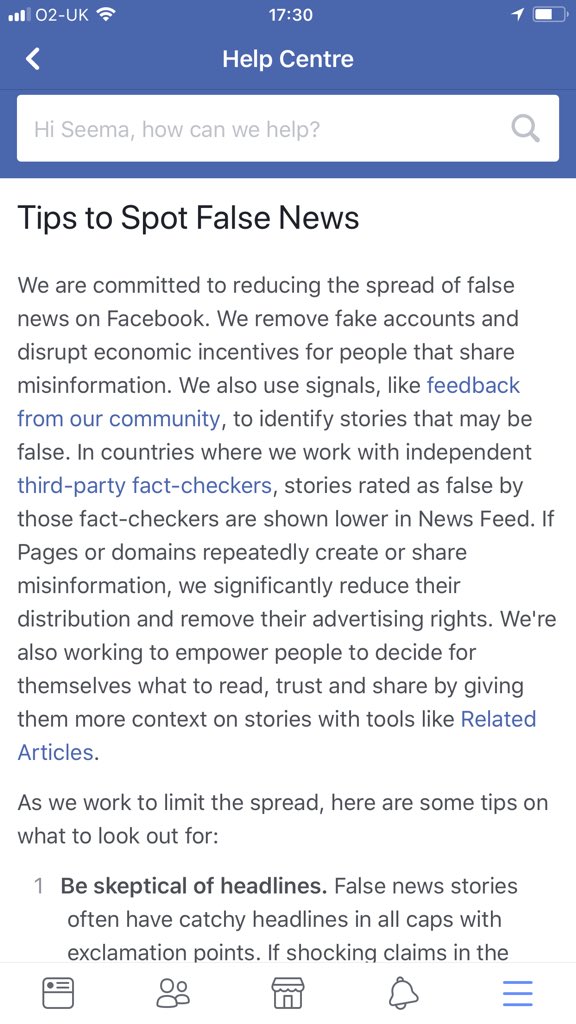
Facebook’s Top Tips to Spot False News

It is also the responsibility of social media platforms to monitor and prevent viral fake news. I read that Facebook have rolled out a tool to mark stories as “disputed” and shows them less frequently on users’ news feeds. Facebook also ran newspaper ads titles ‘Tips for spotting false news’. They want us to get it right as “people want accurate information on Facebook, and so do we’. Among the 10 suggestions included – look at the source of the website, check if the photos are manipulated, check the date of the content, make sure that the article is not satire and be sceptical of headlines. Should you care…if we can get these tips right, it would be good for Facebook too. I can laugh too about meme shares on Facebook like the one below, ‘fake rice‘ and real ‘fake’ people too!

This slideshow requires JavaScript.

So can this really work? There is an argument that journalists embedded in political campaigns used Twitter for timely updates and analysis and therefore they can easily be found on social media in real time right in the heart of the action. Similarly scientists, authors and artists increasing use social media to communicate with each other. The point being is that not all accounts on social media will be untrustworthy. Information literacy is also a key factor for positive changes in the future.

This slideshow requires JavaScript.

Mark Roquet writes in ‘What Happens Now? Fake News, the Gross Internet, and What to do about Information Literacy’ in Info Today March 2018 – “Librarians and other adults have often developed habits that protect us from some of the ugliness of our digital society… We must take some responsibility for the hate and ugliness our students encounter online and equip students with the critical skills and orientations required to fix internet ugliness rather than fall for the worst lines”. Mark also lists other fact-checking and digital skills that we can equip the youth of the future. If we up-skill the next generation, hopefully we can have radical new information literacy skills that prepares students for our current world. It may be in better hands in future.

There are counter fake news initiatives that are being provided by governments everywhere from Sweden, Malaysia, the United Kingdom – and hopefully many more countries. Companies and professionals should also understand that information is integral to the very fabric of our lives. We all have the responsibility and obligation to share and provide content that is truthful…and prevent the dissemination of false information. We may not be able to do so always in the real world, but we should keep our ideals and ethics as life moves more digitally. This is not a war we can win easily, but the consequences and responsibility lie with each one of us to remain truthful when sharing information.

Women’s Health – raising awareness, challenges and opportunities

“I’m interested in Women’s health because I’m a woman.

I’d be a darn fool not to be on my own side.”

– Maya Angelou

I am astonished that women are still struggling to have high levels of healthcare in the 21st century. Yes, we have come a long way in understanding our own bodies and the healthy lifestyles we need to lead, but despite the advances in Women’s Health – there is still progress to be made and we sometimes get a bit complacent with our own lifestyles choices. I don’t think we can ever stop improving our levels in health facilities and education. And so we will always aim to advance health programmes, especially in less developed countries of the world. There is an essential need to be open, transparent and to have this conversation. Our vaginas, breasts…and whole body need attention throughout life.

The last few months has provided a lot of inspiration for me to write this post. I have the following great examples of women helping other women, and also raising awareness in on health issues using traditional and social media to keep us engaged and to get their messages out. These are new channels to reach out to women, and girls. It is also encouragement to take the initative to have ownership of our health and bodies. With women constantly facing challenges in our life cycle – here are some of the amazing examples of positive action where women are helping other women to take control of their own lives and destiny. Some of the health issues on here are easy to write about as I feel compel to share the amazing work going on.

A gynaecologist relative, Dr Sabrina Ramkisson, proactively campaigns to raise awareness on women’s health issues, especially Cervical Cancer Screening. Sabrina regularly use tradition and social media to inform and empower women and girls to stay ahead on their health. She organised a 5K ‘Smearathon’ for women and men last August in the Queen’s Park Savannah in Port of Spain, Trinidad. At the event, there were other gynaecologists to offer advice, on-site smear booths and some fun activities. Sabrina also successfully hosted the digital #SmearforSmear lipstick campaign to remind and encourage women to take a regular smear test to prevent cervical cancer. I was able to take part here in London, and she also shared photos of other women in Trinidad & Tobago and other countries, who smeared their lipstick.   It was a visible bond and showed support for women who took part.

This slideshow requires JavaScript.

There is a decrease in the number of women and girls who are not taking their cervical cancer screening. Therefore, it is with greater impetus and purpose that campaigns like these are being transparent with much fervour. Jo’s Cervical Cancer Trust is a UK charity set up by a co-founder who has survived cancer, and they also aim to raises awareness of cervical cancer with active campaigns. The charity founded the #SmearforSmear campaign which is run in January for Cervical Cancer Awareness. It was an utter pleasure to see #SmearforSmear trending on Twitter last month as the figure for women taking a smear test was in decline.

This slideshow requires JavaScript.

Only yesterday I read an article about comedian Karen Hobbs, who was diagnosed at 24 years with cervical cancer. Luckily she is another cervical cancer survivor, whose blog and performance urge you to not be embarrassed about your smear test. Karen has also been praised by The Eve Appeal for making light the serious topic of cancer.

I also know the lovely Claire Mcdonald, who is working on changing behaviours, cancer prevention and raising awareness in health. Claire and her colleague Sinead recently visited me at the British Library to find lifestyles information for women and girls for their awareness campaigns on Jo’s Trust and Coppafeel, the Breast Cancer Prevention Cancer charity. They were particularly interested in demographics that will help them target their audiences, and their health messages. They were looking at factors such as reproductive behaviours, poverty, income levels, age, geographical locations and other factors that may affect a woman’s health. These bring the questions: Do women share a bath? Would they have time to ‘do the check’ on their breasts? How many persons are having children at a younger age that may prevent cancer? Are they smokers at a higher risk level? Questions needs answers.

WH18
Do the Check! – Coppafeel

The library is useful for helping in researching these issues. For example some golden information nuggets in Mintel’s ‘Marketing to Women February 2017’ are:

  • the age of motherhood continues to rise “although 2015 saw a slight increase in the number of live births, the average age of motherhood continues to rise, reaching 30.3 years”.  
  • social media stars are feeding a culture of health and wellness amongst young women
  • on ‘Period leave’ – the issue of period impacting on women’s sports performance with Heather Watson and Fu Yuanhui both blaming their period for their underperformance, whilst marathon runner, Kiran Gandhi chose to freeblee for the duration of the London event
  • 16-34 years old are most likely to use or be interested in using apps that help anxiety or stress management
  • ‘This Girl Can’ campaign helps to get female more active with 16 million people aged over 16 play sport on a weekly basis

Looking at these lifestyles choices and demographics inform their messages in campaigns. Claire said something touching to me on young women…”You don’t know who is coming up in the world under you and you must take them along”. The best way to prevent poor health is to inform people of good healthy moderate habits. Cancer Research also organise 5K or 10K ‘Race for Life’ runs to raise funds for research, which are very popular with women. As the old adage goes – Prevention is better than cure.


There are still so many women in the world who also cannot afford menstruation products – therefore being open and discussing this in the mainstream is great for breaking barriers.

I also know the founder, Mandu Reid, of the menstrual cup charity ‘The Cup Effect’. Mandu foundered this charity that aims to change menstrual behaviour by empowering women and girls to use a menstrual cup, and protect the environment – that is synchronicity! The charity also uses the income raised to help women in ‘period poverty’ in the UK and in other less well-off parts of the world. Mandu also takes part in active campaigning, and again it was recently publicised in this brilliant article in The Guardian newspaper. To put some zest in this good work – Mandu also invites you to come to her Cupaware Party with friends.

Menstrual Cup
An Ergonomic menstrual cup  
The invention relates to a menstrual cup (10) having a bell-shaped lower part (20), comprising a plurality of non-convex grip surfaces (22, 24) which are distributed in a substantially axisymmetric manner at least over said bell-shaped lower part (20), and designed so as to be able to be pinched by the user’s fingers in order to facilitate the removal of the cup. Source: Espacenet.

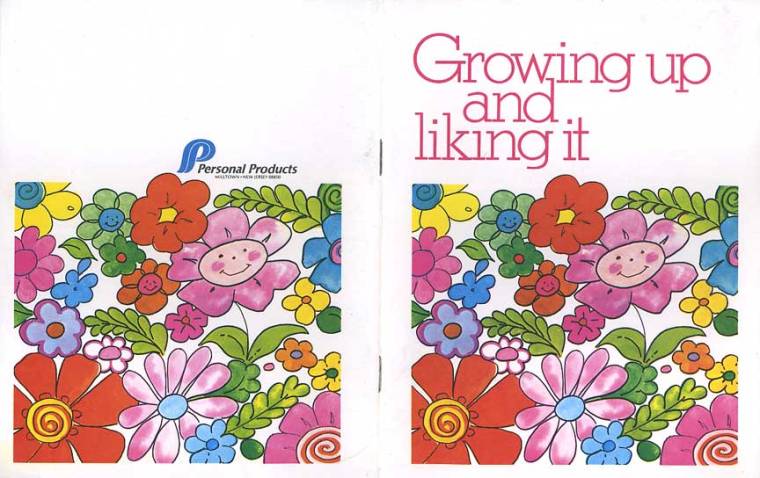
Growing up in Trinidad, the girls in my school and neighbourhood circulated a famous book on puberty called ‘Growing up and liking it’ – see the link for past versions. It was in an easy-to-read format, and was instrumental in educating us on menstruation, pregnancy, menopause and what to expect of our bodies. We were fortunate to have mothers, sisters, aunties, friends and teachers at school to inform us too. Sadly, some countries still don’t have basic adolescent and puberty education, and so these challenges still exist.

WH15
Growing up and liking it – Museum of Menstruation and Women’s Health.       http://www.mum.org/GULIcov.htm

In all these Women Health issues, there are still opportunities to create charitable and profitable businesses. I have recently conducted some business research on these very issues. Again, only recently I have encountered ‘Fab little Bag’ whose mission is to stop pollution caused by flushed sanitary items: to make an awkward disposal into a fab experience…and to break down the barriers to promote female hygiene. You too might start to see their product in toilets across the country. These are the opportunities that entrepreneurial women are taking to help other women.

Women’s Health is too vast to cover as a one-off topic. As we enter the theme ‘Press for Progress’ for International Women’s Month in March 2018 – there is so much we can be thankful for in developments in research, health screening, hygiene etc. It is even better that we can rely on each other to talk, communicate, lobby, and raise awareness on Women’s Health to those near…and far to us. Pressing ahead, looking after ourselves is the best gift we can give ourselves – making time for our health and happiness should be top and number one on our To-Do-List!

Ring out the Old, Ring in with the New

“Ring out the old, ring in the new,
Ring, happy bells, across the snow:
The year is going, let him go;
Ring out the false, ring in the true.”

Alfred Tennyson

I am writing this at a restful festive time after Christmas when most people tend to wind down with family and friends during the season’s celebrations. It is also a time when I mentally close off the year in my mind. I sort of remember things and memories by the year it occurred (be it by association by music, smells or other unconscious triggers). It is also a great time for shopping, spending money on presents, which is great news for the retail industry. I was considering a more serious topic such as what consumer and economic trends to look out for in 2018 as forecasted in some of our business information sources in the library. However, I decided to reflect on a light-hearted look back at an average, but at times, exceptional year for me. I will leave the traditional media and magazines to tell you about the official world review of the year. I am going to cover some of the little things that mattered a lot to me – my iPhone photos are like a visual journal of the year. So, I am ready to say goodbye to 2017.

January – I started with a blog post about ‘Beating the January Blues’, on reflection it seemed that I actually managed to do just that! I saw some amazing Ceilidh dancing at the Southbank on 1st Jan, made my first Gallette Du Rois, celebrated Burns Night with friends, and also had fun at the SLA Europe Quiz. I will be celebrating the Gallette due Rois again, and I am looking forward to the next SLA Europe quiz at a new venue in a few weeks time. You too can join us if you really want to.

February – I seemed to have baked a lot this year going by the photos I’ve taken. I made pancakes for Shrove Tuesday, and a lemon drizzle sponge during a break in February. I attended a Guardian Newspaper supper club at the Geffrye Museum, hosted by the amazing and beautiful Eleanora Galasso, who was also launching her cookbook. Her menu for the evening was interesting and the supper club dining company was friendly. I also went to see Mario Biondi at the Union Chapel. He was great live and used the LIVE feature on Facebook, which also prompted me to use it for the first time to the pleasure of a few of my friends who interacted with me.

March – Spring was in the air and it seems I was getting ready with my neighbours for some neighbourhood spring cleaning, E17 Art Trail plans, and more baking (must do a blog post just on baking!). I also went to Cardiff for the first time for a two-day training course at the Intellectual Property Office. I have now visited three capital cities in the UK, except Belfast. I still want to visit the countryside in Wales again after visiting Monmouthshire over a decade ago.

April – The days got lighter and the spring blooms were out. There were lots of places to see beautiful daffodils and blossoms. I was already beginning to channel the ‘Tree of Life’ submission for the E17 Art Trail by our neighbourhood. We organised a group of volunteers to clean, prepare and source plants for the garden with the advice from the local councillor. I attended Jonathan and Theresa’s fabulous wedding party with the John Ongom Big Band. I went to see the E17 Puppet Show ‘Vikings and Valkyries’ at the William Morris Gallery as they would be performing a street theatre in June for us. I also had a girly R&R (Rest and Relaxation) day with friends in Essex with cream tea as a treat.

May – I prepared a lot for the E17 Art Trail garden and it seemed to go according to plan. It is amazing when you depend on people to work with you voluntary…and you do actually pull off something out of nothing! My neighbours were brilliant and created fabulous designs on terracotta pots and donated plants for our garden. That was heart-warming. It’s December now, and the last time I looked at the garden, there were only about three plant pots that were missing or damaged. The space is used more than before and we have since received further funding to redevelopment and redesign the space. Luckily we have an expert resident architect to help and advise us with the redesign.

I also went to Dublin in May and it was an amazing experience! I was warmly welcomed by my friend Lina, and also the Irish library and information professional community as an SLA Europe representative. I blogged about my trip here.  I still think of the Irish green fields I saw on my trip to and from Dublin to Galway.

June – The launch of the much anticipated E17 Art Trail and we were pleased with our participation in Poets’ Corner E17. Walthamstow went wild for the 1000 Swifts and other collaborative and community creative activities and events. We had lovely weather for the ‘Vikings and Valkyries’ street puppet show on our newly pedestrianised street in the neighbourhood. We also held a fabulous street party.

July – One of the major highlights of my year! I went home to Trinidad and Tobago for my 30th School Reunion. My schoolmates chatted, praised, danced and re-acquainted ourselves, as well as made new memories. After 18 months of planning by a small group, it was amazing and much appreciated. It was also a special time to spend with family and friends. Regardless of all the problems in the country and this world – I see the beauty in this small Caribbean island and know that it is a place I can always proudly call home.

August – It is normally depressing coming back after a summer holiday but I had the Notting Hill Carnival to look forward to. After the Grenfell Tower fire tragedy – it was a devastating and shameful reminder of the disparity in one of the richest part of London in the 21st century. Notting Hill Carnival itself was good fun on a very sunny day and I loved our costumes to the ‘First People’ theme. Two annoying factors were the real threat of an acid attack, and the false reporting of an acid attack. You can never win here.

September – It was back to school, back to work and back to routine. I baked my first Coffee and Walnut cake for the library’s fundraising Macmillan Coffee and Cakes afternoon. As I wasn’t in the office – I still don’t know how it tasted! I also went to Derby for the first time to settle my son into university. It seems like a nice city, if a little quieter than other major cities. I hope to explore more of Derbyshire next year.

October – The darker months were here again and there were Halloween celebrations in town. I went to see the Basquait ‘Boom for Real’ exhibition and Banksy’s Basquait tribute graffiti, which were brilliant. Also at the Barbican, I saw Annoshka Shankar’s live accompaniment to the digitally restored 1920s silent film ‘Shiraz’. It was an unforgettable experience. I also had luck on my side at the SLA Europe gin tasting event, as I won a raffle for three flavours of gin, which I am hoping to try soon.

November – I was lucky and happy to return to Trinidad again for a family wedding and reception. I don’t usually go often and it was worth going to see a modern Indian-Trinidadian wedding and reception. The merging of the east and west cultural influences is special. It was nice to spend time with loved ones again and I had a mini reunion with some school friends. I witnessed some fabulous wedding business ideas and event planners for our unique Trini wedding. It was nice again to dress-up, have my hair and make-up done by professionals. I received nice comments on my outfits. The bride and groom looked utterly beautiful in all the wedding celebrations.

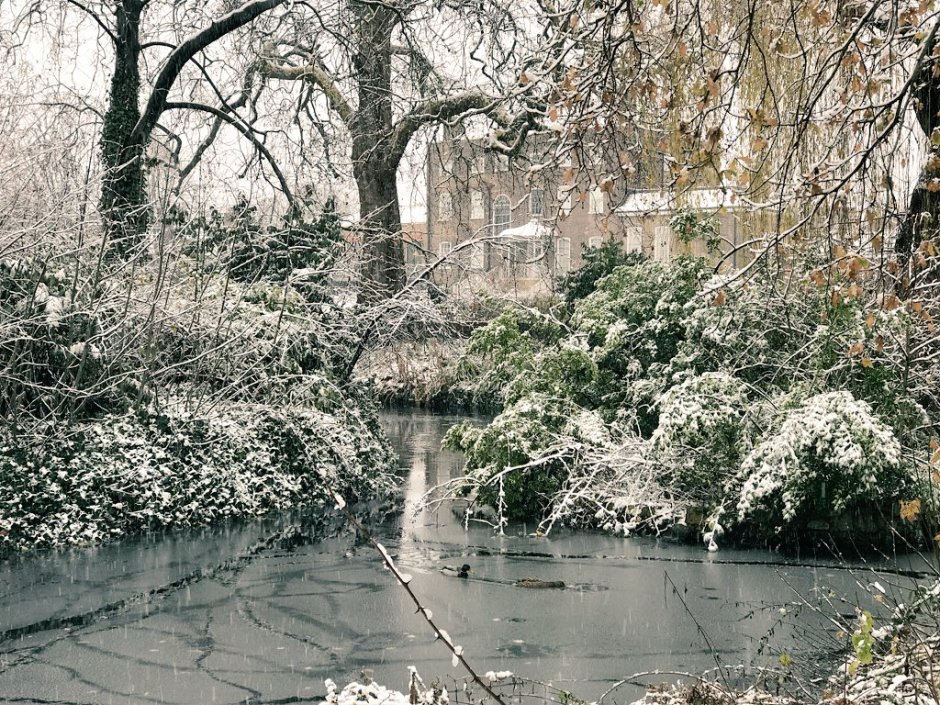
December – Back to work and lots of activities in the library. It was also a reality check to come back from the tropics to very snowy weather. I went to the newly opened Walthamstow Wetlands for a Christmas Carols concert. I had fun at the YSBD Christmas Party theme disco, and so I danced to the end of the year. I have not taken part or planned much in my community this month as I was away, and we are taking a break. Personally and honestly, I feel that something is amiss.

So this sums up an average year for me and I am grateful for the good health and happiness we have. As the days slowly wind up in December, I looked to see what would be the serious United Nations theme for 2018, but apparently there is no theme. We can make it up as we go along! But I am looking forward to their theme for 2019, which will be the year of indigenous languages (hopefully I am still alive!). We do still have high levels of poverty, inequality, prejudices, environmental causes, Brexit, ever-present troubles in the Middle East and parts of the world to keep us preoccupied.

However, we can bring in some new perspectives, peace and control with our personal New Year’s resolutions and hopes. I always try a few new things. For example, I had always hoped to read more each year…and out of the blue recently – one of my neighbours created a book club, which I am a part of. I now make time to read leisurely and have read three books. This blog was also my resolution for 2016, and thankfully I have been able to carry it on for almost two years. The feedback received is motivating and makes it all worthwhile.

‘Old year’s night’ as we say in the Caribbean, is one way to say a fond farewell to another year. I understand in Italy they literally practice ‘out with the old, in with the new’ by throwing out rubbish on New Year’s Eve to be collected. I hope to do some of that! I still hope to exercise more, learn new skills, and visit parts of the United Kingdom in 2018 that I haven’t been before. I usually spend New Year’s Eve in a house party with close family and friends. In a Princely way…we will be partying like it is 2017 as we say hello to 2018! Soon, all across the world, we’ll watch images of the skies lit up with fireworks to ring in 2018 with a bang. There is nothing left for me to do but to wish you a happy and healthy new year.

1926913_10204950085022052_6477619099047176520_n

On the agenda…Planet Earth

Om Sam Maa Sinchantu Murutah Sam Poosha Sam Brihaspatih –

May the five elements of Air, Water, Fire, Earth and Sky make my body healthy and strong.

Line from a Hindu Mantra.

We rely on the Earth for our own wellbeing, inner peace and life. In the last few months, you may have noticed that there has been devastating damage and loss to human life, property and the Earth by natural disasters exasperated by climate change. If you did not notice this in the news or social media – you must have been on another planet! I have started with this mantra as we said it at a prayer meeting which was a serene and gentle reminder that we are vulnerable mortals.  Just as nature can have a detrimental effect of loss and damage on us – we too must try to show some respect to the Earth. It is not too much for us in return to respect it and take small positive steps to sustain it for future generations and life as we know it. I will discuss some small environmental thoughts and ideas that have been bothering me.

yU0EfMcl.jpg-large
South East England

It seems that the environmental issues have come to a head recently with this year’s natural disasters.  Sadly, we all know that this is not the end of this type of devastation and all around the Earth… we will continue to have floods, earthquakes, hurricanes, avalanches, Tsunamis, droughts, etc. I will discuss briefly these big local and global issues, and acknowledge that it should not just be on the agenda…but remain a standing item on our consciousness.   I have little power to do much on a grand scale but in terms of raising awareness and acknowledgement of these issues, it is the least I can do.

First to note down, is the issue of plastics pollution. Plastics and tin cans are frequently dumped in my neighbourhood by street-drinkers and passersby.  Littering really aggravates me. I frequently get dirty fingertips from picking up discarded bottles, cans, plastic cups and other litter on my merry walks around town. I normally have to put them in the closest recycling bins that I can find. Plastic take away cups are also dumped near King’s Cross St Pancras as there are not many bins possibly due to security reasons.  I generally have to resist myself from picking up discarded cups left near the station’s Taxi rank.


This slideshow requires JavaScript.

One solution to plastics pollution is the simple ethos of the three 3Rs – Reduce, Recycle and Reuse. It is better for us to practice these three Rs whether it is on a personal, commercial or larger countrywide infrastructure level.  In my initial research, I soon realized that this is not just a local level but also a global issue.  As a global community, there are already some discussions and work in progress to solve this in a collaborative and forward thinking way. We still have a long way to go on this issue.

Larger white goods and household trash (no fluffy word) are also frequently dumped in my neighbourhood.  Like-minded passionate environmental digital champions such as @Littergram and @CleanupWalthamForest frequently report ‘fly-tipping’ in neighbourhoods to local authorities.  This is a local problem but there are also global questions. I recently looked at a BBC documentary ‘Inside Story: A Week in a Toxic Waste Dump’ by Reggie Yates which mentioned the direct impact of our developed world consumption for white and electronic goods, which eventually leads to Third World toxic graveyards that affect lesser developed countries.  So to be clear…this is not an isolated issue.  There are reactive and circular factors that affect us and our world when it comes to consumption of goods. I visited my nearest recycling waste plant London Energy about five years ago, and it was an eye-opener on recycling, the circular economy and waste management on a large-scale urban city. We still have issues with dumping, litter and flytipping regardless of local authority run initiatives. Education and public information awareness may be the answer to solve these pollution problems, but it also requires behaviour change by citizens (culprits may be a better word).


This slideshow requires JavaScript.

Somewhere along the way on this Earth, plastics make their way from urban and rural environments to our seas and oceans.  In Plastics waste inputs from land into the Ocean Science Magazine 13 February 2015, reports that ‘80% of marine debris originates from land with 275million metric tons (MT) of plastics waste was generated in 1992 coastal countries in 2010, with 4.8 to 12.7 million MT entering the ocean’.  This horrendous amount of pollution is predicted to increase in future.

In recent weeks, plastics pollution has also been highlighted by Sir David Attenborough, naturalist and broadcaster, in Blue Planet. I was so pleased to see this conversation ramped up a few octaves and is still ongoing.  Sir Attenborough said that “everyone one of us’ has a responsibility to reduce plastics ending up in the ocean.  It is one world. And it is in our care for the first time in the history of humanity for the first time in 500 million years, one species has the future in the palm of its hands.  I just hope (humanity) realizes that this is the case.”

iEixdOKV.jpg-large
Shared by my contacts on Facebook

Another exemplary organization I found in my research is The Ellen McArthur Foundation, which has been raising awareness on the ocean plastics issue and the circular economy.  In ‘Speaker: Recycling alone won’t solve ocean pollution’ Plastic News 25 September 2017, this foundation explains “plastic bottles caps and closures can easily become separated from their bottles and are particularly dangerous for seabirds, who see them floating and mistake them for food…..an estimate 90% of seabirds have plastics in their guts”. Seabirds are not the only species affected by plastics pollution – fishes and marine life may also ingest small plastic debris.  Apparently, Asian countries have the highest levels of plastics pollution. This may also end up in our own ecosystem and human food chain!

A paradigm shift is essential – and there is a warning that “our waste will continue to grow with the increased population and increased per capita consumption associated with economic growth, especially in urban areas and developing African countries”. Some behavioural change is required, and slowly this can change with education, positive attitudes and action. There has already been progress, for example, with the Plastic Bag ban or tariff introduced in some countries, so change can happen.

Five years ago at the London Energy tour, the Public Relations Manager told us that she felt that there was too much packaging in UK supermarkets. I always remember this too.  However, again with small steps, positive change can happen – behaviour and commercial initiatives can change pollution for the better.   For example, The Ellen MacArthur Foundation launched ‘The New Plastics Economy Innovation Prize’ for rethinking of the design and materials of plastic packaging – with categories in rethinking grocery shopping, redesigning, sachets and reinventing coffee-on-the-go. At their awards ceremony at the ‘Our Oceans’ conference, the commissioner reportedly said “bringing your fish home in a plastic bag one year and bring the plastic bag home in the fish the next is the reality. The rethink design awards show how innovation can inspire redesign, reduction of waste and re-utilization”.


This slideshow requires JavaScript.

This is only one aspect of the Earth’s vulnerable environment that has captured my attention in recent months.  Climate change has also come to the front of my attention due to Earthquakes in Mexico and India, and hurricanes in the USA and in my beloved Caribbean. I tend to keep an eye on the storms in the Caribbean, but the hurricanes this year has been devastating in American and the Caribbean. The relentless and catastrophic damage to Texas, Barbuda, Puerto Rico and other countries in the region as witnessed on social media in real time was very sad and worrying to see.


This slideshow requires JavaScript.

In the insurance industry magazine Reactions 2nd October 2017 Grappling with Irma Climate Change Link’, a Research Fellow at the University College London said that “warmer Atlantic sea surface temperatures mean more active hurricane seasons and stronger storms”. After the damage to property, lives, homes and the land caused by Hurricane Harvey, Lloyd’s of London issued a statement calling for greater industry awareness over changing weather patterns.  The statement said: “We know that climate is changing and with it traditional weather patterns.  The costs of natural disasters are on the rise, with direct losses in the past decade estimated at $1.4 Trn US Dollars globally”. There is no doubt about the financial and human cost.

All this damage is harder for smaller Caribbean Islands – there is a call for more disaster planning, a “wake up call”, a marshal plan as penned by billionaire entrepreneur Richard Branson, whose own island was affect with by the hurricane this year. It is best explained on Caribbean Intelligence’s site as “a fresh approach to coping with all Mother Nature has to throw at the archipelago of territories prone to geo-faults and Cross-Atlantic high winds”. No time for wasting, there must be a coordinated approach to helping these beautiful islands in the Caribbean…and also the US states affected by these mighty hurricanes now and in the future.

As I reflect, I have experienced a terrifying Earthquake in Italy in 2009 and a hurricane as a child in Trinidad in the early 1970s.  The earth’s environment and sustainability is a big topic for just me to battle, and perhaps for you alone too. Optimistically, it is the little actions we should aim to take as often as we can to change course. Otherwise there will be dire consequences that inaction would lead to, should we ignore it. There will be even worst results for the environment and humans…if we do nothing. The United Nations is actively working to solve some of these issues and see their #BeatPollution hashtag on social media.

However small we may do to reduce, recycle and reuse with care for our world, it would eventually have a big impact on our lives, wellbeing and future generations for a better livable environment. We currently have a responsibility of leaving the Earth in a better state than when we arrived on it.  This is the universal language that we must try to speak, understand and live by. Earth is the very thing that sustains us. Therefore, it should stay on our agenda.

This slideshow requires JavaScript.

Notting Hill Carnival – free to dance on the streets

Notting Hill Carnival is the largest street theatre of its kind in Europe having been developed since the late 1950s in London. It is a great participation celebration for Caribbean heritage, culture and identity that has gradually been adopted and inclusive of other similar cultures in the city. I have blogged about Trinidad Carnival here, and the two carnivals are similar but have their own idiosyncrasies and dynamics. The background and roots of this Carnival is European. Europeans celebrated Carnival before lent for Mardi Gras in the Caribbean colonies, this was eventually practised by the African slaves who brought their own rich African traditions, dance, music and song to the party.  Trinidad carnival is the inspiration for the Notting Hill Carnival but it certainly is a different story.

This slideshow requires JavaScript.

Calypso and Caribbean culture came with immigrants in the Windrush years from the Caribbean, and it is even noted that Lord Kitchener wrote the words to ‘London is the place for me whilst on his journey on a ship across the Atlantic Ocean. There was a high number of Trinidadian immigrants who settled in Notting Hill in the 1950s, which was a relatively run down and cheap area to live at the time. These black communities were intimidated by white youths from ‘Teddy Boy’ gangs in 1958, which caused the Race Riots of 1958. The first ‘Caribbean Carnival’ was organised in 1959 for the black community to help with the legal costs of the arrests made that year. The ‘Caribbean Carnival’ was the brainchild of Claudia Jones, a social activist and writer, who arranged the first carnival indoors in cold January 1959 at the St Pancras Hall in King’s Cross, London. I saw notes that it was in a cabaret style, with a Carnival beauty queen competition, steel pans and a dance hall as the grand finale. This carried on for a few years but did not last as Claudia Jones passed away suddenly and unexpectedly in 1964. Eventually the Carnival moved to Notting Hill where most of the Trinidadians immigrants lived, and then was held in the summer. Fifty years on – it has become a part of the social and cultural calendar for Caribbean, Latin American and African descendants and communities. It has also been laced with race and police tensions throughout this time, which I will mention later.

This year is the 51st year of the carnival, and I will be celebrating it in Notting Hill with family and friends. It is a time of year when you will get messages asking if you are taking part in ‘Mas’ as we fondly call it. Our key community leaders chose a band theme when costumes are prepared, materials sourced, created, and then put it all together in the three months leading up to the bank holiday weekend for Notting Hill carnival. There is a lot more that goes on behind the scene, such as the registering of the band with the London Notting Hill Carnival Enterprises, security passes, vehicle hire, food, drinks, DJs, sound systems, etc. We have intentionally kept our band low-key, affordable and non-commercial with a more close-knit group of volunteers and Mas players. This year we are calling our band theme ‘Mas liberation’, with our costumes designs based on Native American Indians attire. I love digging deeper – I will therefore be channelling my inner Pocahontas as we celebrate the 400th death anniversary in the United Kingdom. We have been dressed as  Cleopatras, Sun Goddesses, Sailors, Queen of Hearts, Aliens, for example in past Carnivals. There certainly is community spirit as you volunteer to help in the creation of the costumes in a team effort, and we tend to meet regularly before and during Carnival.   Generally it is good, happy fun in surprisingly…a Carnival atmosphere.

This slideshow requires JavaScript.

I have honestly witnessed both the good and bad side of Carnival. It has always been a ‘resistance festival and art form’. There are times when you see scenes, and can be in a scary situation, usually later in the evening when the tension and pressure builds with youths and the police. There are some carnivals when the tension is more apparent than others – I distinctly remember the 2011 Carnival being a bit tenser as it was just after the London Riots. Our sound system truck was directed to an alternative route and it took a long time getting home with several helicopters circulating overhead – it felt like a war zone, but I was there with people who were close to me so I kept safe. With a large crowd of one million plus people, there are sometimes scuffles by youths, firm control by the police, body searches, and therefore you really should go with friends to enjoy it and to be safe. It is not all cautionary, we do dance and be merry with spectators…and the police too.

21121836_10213697940792979_1507516625_n
Our Carnival Band photo used in British Transport Police Poster for 2017.

Notting Hill is great for signifying creativity, social cohesion, cultural identity and race relations in the capital. It was reported by the LDA that it brings in approximately £93Million to the UK economy. In ‘The Midnight Robber – the artist of Notting Hill’ published in 2007 for City Hall by Lesley Ferris and Adela Ruth Tompsett, the ex-mayor of London Ken Livingstone states that “London is the home to some of the world’s finest Carnival artists who are now in demand across the world serving as cultural ambassadors for London, the UK and the African diaspora”.

This Carnival has grown organically into a successful and important celebration of the UK’s history with its former colonies, and these new London communities. It should be supported, celebrated and evolve into something that has a lasting legacy rather than just the negative rhetoric that is perpetuated by an ignorant media and some politicians. The Carnival doesn’t look like it will stop in the near future, and frankly…it shouldn’t for the thousands of people who go to this part of London to enjoy it. As quoted on the Black Cultural Archives“Carnival is now part of our English heritage, it is about freedom of expression on the streets. Britain would be a very gloomy place without it.” Winston Findlay, Source: Carnival: a photographic and testimonial history of the Notting Hill Carnival by Ismail Blagrove Jr.

This slideshow requires JavaScript.

Calypso, soca, reggae, steel pan, dance and now samba too are some of the other art forms that I look forward to at Notting Hill Carnival, and you get to see and be part of the crowd engagement on this grand scale. As my research reveals, Trinidadians started the Notting Hill Carnival but other West Indian countries joined in the celebrations, such as the Jamaicans with their sound systems in 1975. The Brazilians, Africans and other communities also add some spices over the years. I remember observing this difference in my first carnival here in 1990. As we know now, Carnival is celebrated all across the world such as in Canada for Caribana, Labor Day in New York, Miami, Japan and my British-Trinidadian friends have been on cultural exchange trips to China too. Rihanna has in recent years been ‘breaking the internet’ (like Kim Kardashian) with her Carnival costumes at Barbados’s Crop Over festival. Have a look at the Carnevale Network social media site too, as they are great for sharing news and longer pieces on the global Carnival scene.

This slideshow requires JavaScript.

It is also a time for Caribbean artists to collaborate with their UK counterparts. I just came back from a soca music gig in London and it certainly put us in the mood for Carnival. It is amazing to see so many people dancing to soca and some dancehall, the crowd may be young British…but they knew all the words and moves to the dance tunes. This is scaled up a thousand times for the masqueraders on the road in Notting Hill.

This slideshow requires JavaScript.

“Carnival is always telling you something. It is a language, if you can understand the language then you can read Carnival” – Clary Salandy, Artist and Theatre Designer.

Carnival also means art, creativity and business. Trinidadian-born Clary Salandy is one of many artists and theatre designers who has worked and showcased her costumes in the UK and internationally for various Carnivals, parades, festivals and community art projects. She engages with the local community to pass on her craft but also believes in this as an art form that includes the community as mention in ‘Incremental Art: Negotiating the route to London’s Notting Hill Carnival’ by Lesley Ferris. I only just discovered her too when I saw her featured in the British Airways in-flight magazine this summer. Clary Salandy has a great way to describe her costumes – “A costume is like a visual poem, whether you are 2 or 88”.

The current political mood and devastating situation with the fire at Grenfell in close proximity has highlighted the Notting Hill Carnival this year, and some parts of the population want the carnival to fail. However, Carnival is a symbol and beacon of hope, unity, brotherhood and Britain at its’ multicultural best. All the critics should remember that, and hope it heals rather than it hurts.

This slideshow requires JavaScript.

“Notting Hill as a Place held a special symbolic significance for the West Indians who regarded it as, in the words of one leader, the nearest thing they had to a liberated territory – implicit references to battles they had fought there against white racists in 1958, and against the police in 1970 and 1976. The carnival continued to exist, its greatest political achievement being that it survived at all, in the face of formidable opposition and pressures operating to subvert it all the time.” Abner Cohen

Regardless of the negative media coverage – Carnival is in healthy hands with young designers and masquerade bands. The Internet and social media have also given traction to the positive benefits for Carnival as an art form, empowerment, freedom and cultural identity. The most difficult part is the obvious media bias, misinformation and tension created by the police and delinquents. Sadly, we know that there is some crime and anti-social behaviour – it has always been a tradition of resistance. However, I have been going to the Notting Hill Carnival and would like to advocate that it is mainly a great, peaceful and happy experience where you can feel connected to that rich heritage, and forget the past troubles. There is no better way to share the Carnival’s brilliance but in a cosmopolitan and tolerant city.

This slideshow requires JavaScript.

I clearly recall that Carnival was used as a positive showcase of multicultural and tolerant Britain in the run up to London 2012. It seems to have changed since then. Ferris states, “Many felt that London’s successful bid for the London 2012 Olympics was enhanced by the Carnival art, which demonstrated a vibrant artistic diversity in the nation’s capital. But there is still a long way to go.”

Understanding, acceptance versus bias and other cultural differences means that it will continue to be controversial in this country (have a look at the news and hashtag #NottingHill on Twitter!). Carnival is not mainstream in this country (as it comes out of European Roman Catholic traditions), but Carnival is still celebrated by various communities across the UK, such as in Leeds, Birmingham and other cities holding annual Caribbean Carnivals. We know that we lack funding and support, but for those who understand and want to be part of this special festival and celebration – we ask that you join us in making a new happier and diverse history for generations to come. It is our time to be free and identify with what is ours too. What better way than with everybody dancing on the street!

This slideshow requires JavaScript.

Steady Progress – a lifetime of learning

This month I am coming to you LIVE from my homeland of Trinidad and Tobago, the twin islands in the Caribbean.  I don’t visit home very often so I will definitely indulge myself here and share some photos of the country with you.


This slideshow requires JavaScript.

I am here for my 30th School Anniversary Reunion and a holiday.  Therefore, I have been thinking of my schooling and education in general.  I was fortunate to have my nursery school closeby and my first primary school, Esperanza Presbyterian School, only two houses away from my home.  The motto of this primary school is ‘Knowledge is Power’, and still is today. I was an average achieving child and the teaching focus was on Mathematics. It was fun to go home during breaks, lunchtime and even to use our own toilet.  I remember putting on my mother’s lipstick sometimes in breaks, and doing the privileged things you would do if you live two houses away from your primary school.  I quite liked the school and have fab memories of playing in the school yard at weekends and during the holidays with other children in my neighbourhood.


At the age of seven, I changed schools to attend a private school called Sevilla School for the employees of the now defunct sugar producing company Caroni (1975) Limited. I initially had some difficulty adjusting to the new teaching styles, and a curriculum that was focussed on literacy more so than mathematics. Reading out loud in front of classmates was a dread for me, but my Grade Three teacher, Mrs Lalla, recognized that I needed some extra help.  To assist me with my literacy, she allowed me to take home a book from the school library in the head teacher’s office (Mrs L. L. Mike) to read at home with my mother.  It was not all scary as my forte at that time was in mathematics, learnt at my previous school, and I distinctly remembered getting the equations finished and correct before all my classmates in that grade.  I even received an award, which was the book of the story of Heidi, in my first year in this new school for mathematics at the end of year prize giving ceremony.

The next three years at primary school I eventually caught up in my literacy levels. So much so that I received a prize for ‘Steady Progress’ in my last year, which was a book of Girl Stories which I still have.  My sister on the other hand, had adjusted very quickly to her new school and was very academically inclined.  She won prizes every year in our new school including three prizes one year for Mathematics, Good Citizenship and Perfect Attendance.  There is a Caroni (1975) Limited corporate news article on her in a family album, and I am very proud of her even today.


My next school was Holy Faith Convent, Couva – a secondary school for girls that has been one of the top performing schools in Trinidad.  I had seven happy and memorable years growing up and learning at this school.  Recently, our 30th anniversary school reunion was suggested and organized after most of the school mates joined a Facebook Group.  A few hardworking, committed and kind schoolmates volunteered to help plan and organize our reunion with meetings internationally via Skype, What’s App, email etc. I personally want to thank the main organisers for a terrific weekend for re-connecting with our ‘sisters’, as we fondly like to call ourselves.


This slideshow requires JavaScript.

There are so many wonderful, innocent, brilliant and funny memories we shared at school that it was no surprise that when we all met again after 30 years a couple of weeks ago – we chatted non-stop, and carried on like we haven’t been apart for decades. Some of us have kept in touch over the years, others have fallen off the radar, and three schoolmates sadly have died.  Regardless of time, we share memories and an understanding of a special formative time in our development. Our school song was excellent for transporting us back to those days and reinforcing us with the kind ethos of the school.  Attending an event like this gives you a perspective on where you came from, the journey you made and the road ahead. I was proud to see the girls, now women, and hear about our struggles, the challenges and achievements.  It makes you realise the importance of roots, genuine friends and that basic right…a good education. Learning never really stops.

Thirty years ago our Graduation theme was a ‘Time to Remember’ (my chosen suggestion as it was a song title by Billy Joel).  Our valedictorian then and now is the Honourable Judge Marlene Smith.  Marlene reminded us of her speech and linked it back to us 30 years on to the present with her recital and understanding of T. S. Eliot’s ‘The Four Quartets’ – it all seemed to make sense with time. We are very proud of Marlene and she also came from my village in Trinidad.

Time present and time past
Are both perhaps present in time future
And time future contained in time past.
If all time is eternally present
All time is unredeemable.
What might have been is an abstraction
Remaining a perpetual possibility
Only in a world of speculation.
What might have been and what has been
Point to one end, which is always present.
Footfalls echo in the memory
Down the passage which we did not take
Towards the door we never opened
Into the rose-garden. My words echo
Thus, in your mind.

…T.S. Eliot

We also had thoughts on the current way of the world, gratitude for and anecdotes on our teachers, the nuns in the school convent, praise and even some heckling for our fellow schoolmates.  There was excellent food, drinks, steel pan band, DJ, photographer, songs by students and teachers, and dancing until 2am. The venue was on the East coast of Trinidad and was great for relaxing as well as seeing each other over two days. It was utter fun and I am so glad I came to Trinidad for the reunion – do watch out as we are planning a school reunion in London and Paris in 2021.


This slideshow requires JavaScript.

On the Sunday morning after our reunion, one of my schoolmates offered to lead us on a hike in a nearby rain forest near Salybia. It was an offer I could not refuse as I was looking for something exactly like that for my children to experience.  Akeeta Ali, our hike leader, was amazing and clear at giving us instructions from the onset, pointing out risks, tips and the promise of the beautiful Waterfall at the end of the trail. The trail was wild, muddy, wet, humid and you certainly had to watch your step and hold tight at most times – frequently using the roots of ginormous trees to pull you up or their root groves for support.  The sound of the rivers, birds, animals, fishes and the wind were also spectacular.

Like with most things in life – some of the novice hikers went at a slower pace while the more confident and experienced ones went ahead.  Certainly there was teamwork and camaraderie as we formed groups, and it was good to see the novices take the lead at times within the group.  All in all – I loved every moment of it and the experience was worth it for the beautiful waterfall at the end. We then had to make our way back with the whole exercise lasting about three hours. This is a great exercise for team building and I am pleased I had experienced this type of nature exploration as a child growing up in Trinidad.


This slideshow requires JavaScript.

I am still on holiday in Trinidad and Tobago and there is no place like home!  A place where you have nothing to prove to anyone – you can just be yourself.  I love coming home to Trinidad and Tobago for this reason and it is very nice to spend time with family and friends you haven’t seen for a long time.  The country is also in constant development and it is amazing to see new roads, buildings, shopping malls, foods, musical styles, and reacquaint oneself with the familiar.  It isn’t always a perfect paradise here – there are high levels of crimes for a small island and litter annoys me as much as it does in London – but hopefully this can be changed with some extra pride and public awareness campaigns.


This slideshow requires JavaScript.

As I literally switch off here, most of the year we are busy with work and our own busy interests – but being on holiday is a dedicated period when we can enjoy going at a slower pace, take it easy and to simply relax. My holiday in Trinidad & Tobago is certainly a time for me to rest, before I get ready, steady and get going again in this wild world.