Film for the 21st Century – The award goes to…

Now that some of the stardust has settled, I am sure you would have noticed that it is awards season at this time of year. From the Golden Globes, The BAFTAs to the recent Academy Awards…film awards are in full swing. The music awards were also in close succession with the Grammy and the Brit Awards being only a few weeks apart. My interest is personal as I am no expert in the filmmaking industry, but I do like looking at film when I can. Since a child, I have had a keen interest is the US-based awards shows, including the Emmys Awards, as they were usually screened lived to Trinidad and Tobago in the evening.  Without a doubt, the various awards have been on the news a lot in the last few years for the outdated stances in the industry on gender equality, diversity, inclusion, sexual harassment, showcasing professional technical roles (e.g. editing), recognition withheld when it is due, and other contentious topics. The availability of good content in scripts for a diverse representation, role models and storytelling have all been issues which needs to be addressed to propel the changes required in the global industry. These are not just hot topics – they are scorchers! I will come back to this at the end of this post, but there is much to celebrate in the international development of this art form and entertainment industry.


This slideshow requires JavaScript.

True to the style and name of this blog ‘Connecting the Dots’, I wanted to look back at the global innovations in film making, observe the new digital streaming, and resulting industry shifts and adoption by consumers and fans. The history of filmmaking has been a long process with many observations, testing and developments through the century. Precusors to filmmaking are items such as the camera obscura, which has been around since antiquity. I was able to see this fascinating progress on a visit at the now closed Museum of the Moving Image (MOMI) as one of my modules at university. It is in the same spot as the British Film Institute (BFI) now. Eventually modern filmmaking and cinematography developed with many innovations, whereby in 1895 the Lumiere Brothers are credited for inventing the Cinématograph, a combination camera and projector projecting film to a large audience. They have been widely credited for giving film the international recognition it deserves in establishing the mass entertainment industry. There is too much iteration to mention here, but some of the significant ones are mentioned on this film history timeline. Some of the obvious milestones are the silent film ‘Talkies’, the introduction of colour film, first horror film, westerns, musicals, various genres, sub-genres and sub-cultures.

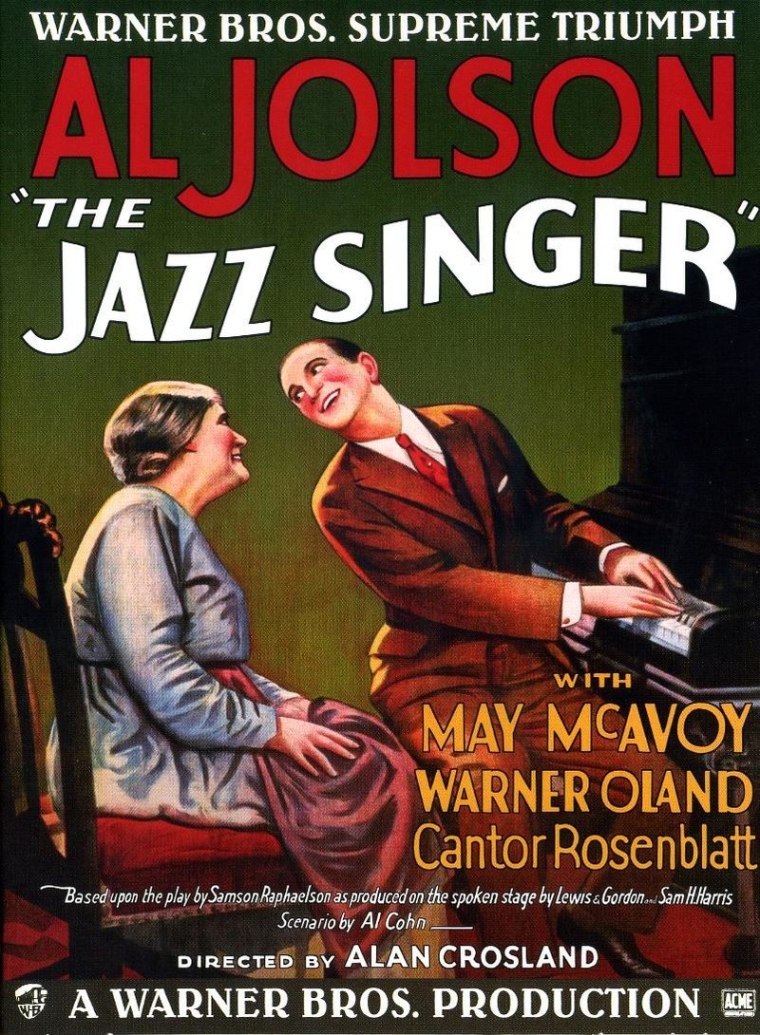
800px-The_Jazz_Singer_1927_Poster
First Picture to feature sound and recorded speech. Source: Wikipedia https://en.wikipedia.org/wiki/The_Jazz_Singer

Obviously the industry is now digitally accessible across the globe, whereby Hollywood in the USA is the top largest producer of film, followed by Bollywood in India and then Nollywood in Nigeria. The industry is massive if you look at the film giants such as Disney, Warner and various studios. There is also a complex process to get these audio visual items distributed into our homes…and now in our palms on smart devices. Most countries also have their own local film creatives, cultural identity and unique industry traits. For example, it is interesting reading about the ‘African Film Revival’ in a brief by Euromonitor as it mentions the benefit for the local economy, the regions and the fact that a lot of film are shot and produced in Africa, which in turn promotes tourism. In the UK, the revenue generates £3.1Billion and IBIS World reports in ‘Motion Picture Production that: “the UK industry attracts a vast amount of inward investment as a result of government incentives, predominantly UK Film Tax Relief. This makes the United Kingdom an attractive location to international film producers. The top four films in the box office for 2016 were US-backed UK films, and according the British Film Institute, the United Kingdom benefited from its highest ever recorded inward investment spend, amounting to £1.35 billion”.


This slideshow requires JavaScript.

As a 70’s baby, I grew up initially with black and white television programming showing English-speaking ‘movies’ (as we still call them), and also going to the cinema or theatre (as they still call them in the USA). We also had a few drive-in cinemas in Trinidad and that was a special treat – I used to like looking at the large outdoor screens from the highway even if we were not going.


This slideshow requires JavaScript.

At home, we saw film programmes at the weekend, in particular ‘Family Theatre’ with a different or series of dedicated family-friendly film, including Hollywood classics such as ‘Laurel and Hardy’. We also had a three-hour slot for an Indian movie on Sunday afternoons. This not only exposed us to the whole Bollywood genre and industry…but also connected us to our very important cultural heritage and identity. My mother frequently took me to the local cinema to see an Indian movie on a Tuesday afternoon. I still see some of my contacts share clips of old Indian movies on social media, just like other English-speaking movies. My relatives have been encouraging me to look at Bollywood film as they are apparently not as melodramatic as they used to be. They are still brilliant for dance choreography, song, Indian fashion and culture. It has a lot of cultural references that an Indo-Trinidadian can relate to, although I am not fluent in the Hindi language. Some of my Black-British friends also said that they look at Bollywood movies, and love the singing and dancing! I obviously went to see other popular films in different genres throughout my childhood with family, friends and my school. We were in the hayday of other popular genres such as Westerns and ‘Kung Fu’ Chinese film.


This slideshow requires JavaScript.

I like looking a European film in their native language and have no problem with subtitles, especially with my Indian movies exposure. In the 1990s, we used to frequently go to the cinema to see European film but these were hi-jacked by family-friendly film outings for a while when my children were younger. I have been trying to change this recently by going to see the beautifully produced international Polish-French award winning film ‘Cold War’ at the cinema.


This slideshow requires JavaScript.

One of the local heroes in my neighbourhood in London is the world famous Alfred Hitchcock who was born in Leytonstone. He is regarded as one of the most influential filmmakers in the history of cinema and is well known as “the Master of Suspense”. His film repertoire is worldclass and classic, and one tip is that you can also spot him in some of the cameo parts he played in his own film. This year, there is apparently going to be an Alfred Hitchcock Festival in my borough. There are some local film groups who have been hosting film festivals for a number of years and I am sure they have already celebrated this giant of a local hero!


This slideshow requires JavaScript.

Thankfully, we also have had developments in home entertainment with the introduction of film in cinefilm, video, cable, DVD and now in film subscription streaming with the likes of Netflix, Amazon Prime and Hulu. Netflix has been pioneering, and is a dominant figure in the global industry by providing streaming direct to customers. They are breaking into the mainstream cinema-going clientele with their own production of the popular film ‘Roma’ – which is in a foreign language, caste and black and white. There is a new impetus for Netflix according to Statista for: …“Netflix’s ability to adapt to changing technologies and consumer demands which made it so successful. This ability to adjust has continued in recent years with the success of the company’s original content and increased focus on providing content around the world. As long as Netflix can continue this trend of innovation, the company will remain an important voice in the entertainment industry”.

IMG_5107
‘A Star is Born’ DVD in the supermarket

I was recently reminded about use of film entertainment in air travelling too. I saw ‘Gone with the Wind’ and some recent releases on my trip to the USA. In-flight entertainment is so popular, that airline Emirates are top at seemingly providing their diverse customers with the latest selection of in-flight movies with its expansive film library. I noticed that there were Bollywood movies in my British Airways flight from Houston – I had never seen that before.

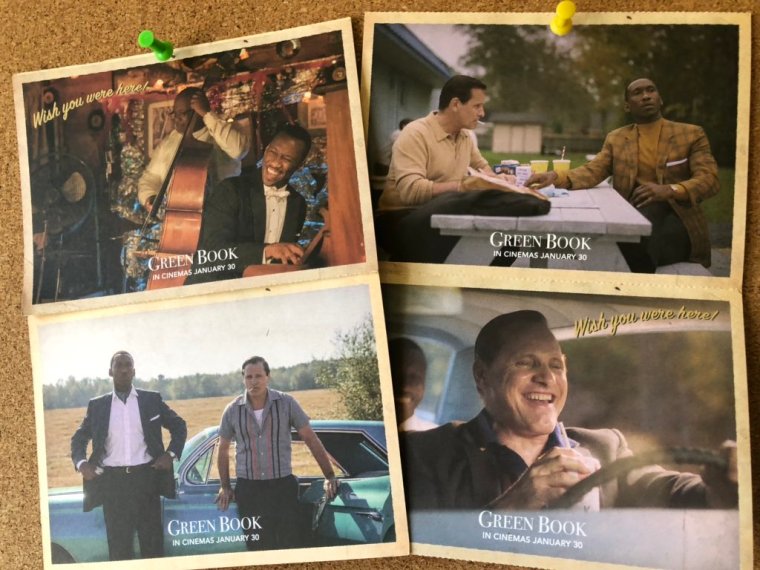
I recently saw at my local cinema the brilliant ‘BlacKkKlansman’ directed by Spike Lee, and also ‘The Green Book’ directed by Peter Farelly. It was super to see these two film with mixed representation but they both received negative press for one reason or another. ‘Black Panther’ was praised and awarded for a number for reasons, and seems to be a remarkable film released recently, but I haven’t seen it as yet.


FpUG8AFJ
Free Postcards for the Academy Awards Best Picture 2019 – ‘Green Book’.

Unfortunately the film industry has been in the news for negative and discriminatory practices. The gender pay for women has been highlighted for women actors compared to their male counterparts. Only last week there was a piece about women having less roles and opportunities. The industry seems to be structured to benefit those in a privilege position in societies, whereby it does not reflect or take into consideration the demographics of the countries they represent. We may remember the hashtag #OscarssoWhite. Andrew Dickson writes in 2016 ‘New Statesman’ that the British addition to period drama is driving away some of Britain’s best actors: …“a major issue… is the apparently unshakeable addition of British TV and film to corsets-and-cleavage period drama, which has left many BAME actors locked out of the audition room. The BBC is in the middle of a run of literary spin-offs, from War and Peace to The Moonstone. Over on ITV, we have had Victoria and the invincible Downton Abbey”. Dickson also pointed that US cable and online subscription are even more courageous withOrange is the New Black’ which…”has an ethnically kaleidoscopic cast and plotlines that vaults across almost every conceivable question of gender, sexuality, body image and politics”.


This slideshow requires JavaScript.

In the UK in 2017, another piece in the Hollywood Report entitled ‘BAFTA so White (Again)? Insiders say diversity at the U.K.’s biggest film event still isn’t where it should be’, Alex Ritman writes that “BAFTA didn’t get the diversity memo”. Shame. Two years on, there seems to have been some progress at the 2019 BAFTA awards I looked at LIVE on TV, and as reported by the news at the Academy Awards. Of course the industry is not going to change overnight but industry talent and tired audiences like me are restless – there needs to be change. We will have to rely on adventurous industry leaders and creatives for brave and fresh content, script writing and casting. This will enable filmmaking professionals and actors opportunities for a true reality in film roles to ensure that there is a visible balance of everyone’s ability, talent and stories. However, at all costs we should avoid these changes to be just as a token ‘tickbox’ diverse person or statement. Changes should be inclusive and fair by default for a world and audience that are both colourful and diverse. It seems there is a powerful voice calling out for these changes in the press, social media and the public, and rightly so.

 “What we need now is for a change to come, I think the talk is done”.

Actor – David Oyelowo.

It is a very hard discussion to have on all of these issues and it requires a lot of banging on doors, breaking barriers and hard work to create and seek out new, relevant materials and best practices. Hopefully not much more time will be wasted with this knowledge and conscious awareness in the industry. And so, there will be a change in the right direction.


This slideshow requires JavaScript.

As ever, we will all continue to enjoy the film entertainment industry in one form or another with all the rich cultural, artistic and social benefits it brings to everyone in the near and far corners of the world. I am so looking forward to seeing some of the film that won…and lost awards at the various awards ceremony this year. We have a world of choice cinema available to us on various mediums, and a true reflection of the stories around us certainly makes it all very magical.

tIqYFPxF

Let the good times roll – taking the leads in New Orleans and Houston

Laissez les bon temps rouler – Let the good times roll

– New Orleans Cajun French

I can officially now say that I am the President-Elect 2019 for SLA Europe, and one of the recommendations from the Board of Directors was that I should attend the SLA Leadership Summit in New Orleans, USA. Therefore, I started the year with much anticipation with this trip to New Orleans – the Crescent City. These learning and collaboration opportunities don’t come by often, and as a destination, New Orleans has always been on my bucket list. I flew into Louis Armstrong Airport with Geraldine, a Swiss-British SLAer, and it was very nice to be given the pep talk by someone who has been through the role and who had some practical tips with stepping up to share with me. I have mentioned before in this blog that I have been a member of SLA since the early 2000s and still find the organisation beneficial and relevant to my work and profession. I have been able to take on tasks and responsibilities that have developed me personally, and this was an opportunity to hone in on my leadership skills and style. I also was able to fit in some great fun!

This slideshow requires JavaScript.

The Leadership Symposium was three days of full-on meetings, presentations, table topical discussions, group exercises, networking, sharing best practices, knowledge, wisdom and general chat with a wide international network of information professionals. The facilitator Jon Hockman was excellent at enlightening, coercing, motivating, as well as helping us to focus our attention on our leadership missions, professional objectives, and personal goals.

This slideshow requires JavaScript.

I have had some training in the past in my previous full-time and volunteering roles, but this was extra special as I was able to understand SLA better by being engaged at the symposium, participate in meetings, presentations and discussions I had witnessed – but most importantly, I was able to meet fellow professionals face to face. These all made the trip worthwhile and valuable to me.

To reach others, we first have to know ourselves. And to contact the deeper truth of who we are, we must engage in some activity or practice that questions what we assume to be true about ourselves.

– Adapted from A. H. Almaas

This slideshow requires JavaScript.

I am one of those persons who actually does enjoy team building away-days and socialising, so the exercises and meeting new people are tasks that I relished. Most of the attendees were friendly and really pleased to know that I was representing the SLA Europe Chapter, and indirectly, my employers The British Library. They were excited to hear of our forthcoming autumn SLA Europe European Conference in the UK. Also, they were very complimentary and curious to know more after my short talk about our Continuous Professional Development (CPD) events and programmes that we had conducted here over the pond.

Everyone has influence in their association or organisation –

Slide provided by Jon Hockman


This slideshow requires JavaScript.

One of the best aspects of the symposium was an opportunity to see historic and charming New Orleans! I went out on my own on Saturday to soak up the pre-Mardi Gras preparations and mood, especially as the New Orleans Saints were playing that day. For those of you who are not aware – Mardi Gras is the same day as Shrove Tuesday and Carnival Tuesday in Caribbean Carnivals (yeah – party time!). I loved the architecture, street music, art shops, galleries, musically theme bars, restaurants with Cajun and Creole foods, etc.

This slideshow requires JavaScript.

I really was very contented to walk around in awe, from the modern convention district, hotels and commercial centres to the historic colonial building in the French Quarter better know as Vieux Carre (Old Square). Historic signs of indigenous names, colonialism and slavery are very apparent around the Louisiana landscape and buildings, from the shores of the Mississippi straight to the St Louis Cathedral and the Voodoo Cultural Centre. I made sure that I visited the Mississippi River for its significance and impact on American immigrant history. New Orleans is not dissimilar to parts of the Caribbean where I am from, and some of the buildings look like those you may find in colonial Port of Spain. I felt quite at home with the Mardi Gras costumes culture, music, street activity, food, and ethnic make-up in a mixed society.

This slideshow requires JavaScript.

My friends and family were sending me recommendations to try various delicacies such as fried chicken in Treme, Beignets at Café Du Monde, Po’ Boy sandwiches and the lush….King Cake. Luckily the SLA Leadership Symposium had a high-quality King Cake that was ever so light and appealing to the eyes with the three Mardi Gras coloured sugars represented – Purple as Justice, Green as Hope and Gold as Power. I hope to make a King Cake for Mardi Gras this year. This will be a vintage epiphany year as I have eaten King Cake in London with my French friend Veronique, in New Orleans with SLAers, and in Houston with friends. The sweet perfume of the cakes in the local patisseries is something special too!

New Orleans is the birthplace of Jazz and as a final treat, I went along with SLAers Ruth from Sacramento and retiree Janet from New Jersey to the Preservation Jazz Hall Band in the museum-like setting for an authentic live New Orleans Jazz show. It was an awesome, quaint, intimate and once-in-a-lifetime type of gig that I won’t forget. The musicians and singers were of a high calibre and I couldn’t help myself humming along and tapping my toes.

This slideshow requires JavaScript.

New Orleans will have a lasting impact on me for the leadership training and work we carried out over the two days but also for the magical and creative influences it also has on me in terms of its’ culture, identity, and energy. No wonder the saying is appropriate…let the good times roll!

This slideshow requires JavaScript.

Keep your eyes on the stars, and your feet on the ground.

Theodore Roosevelt

Houston was my next stop. It was easy to get an internal flight to a city I had heard a lot about from a neighbour who lived there since the 1980s. I have always been curious as it is not far away from Dallas, which is famous for the well-known 1980s soap opera. On arrival at the airport, it is clean and noticeably very high tech, where I was able to get free Wi-Fi – which is always a bonus when travelling abroad. I also saw only one cowgirl, but apparently, there aren’t many about in the city. It is not Rodeo season too when it is certainly an attraction for music, food, and entertainment from photos I have seen in the past.

This slideshow requires JavaScript.

Although I saw some cows, there were certainly a lot of freeways, shopping malls, restaurants and fields of oilrigs and tanks. Houston is a wealthy city with a steady economy and ‘old money’ from the oil industry. It is also a financial centre, university city and at the cutting edge of medical research with the Texas Medical Center complex hosting 60 medical institutions. I also liked the downtown skyline, the gorgeous architecture, and homes. There were newer neighbourhoods in suburbia, where there are large and expensive homes in gated communities near lakes. My friends told me that your money goes a long way in Houston compared to other cities. It is seventh in the best largest cities in the USA.

This slideshow requires JavaScript.

Houston is famous for NASA’s Mission Control Centre. We have all heard the saying “Houston – we have a problem!” from an astronaut’s message to Houston’s NASA mission control popularised in the film Apollo 13. This is synonymous with problem-solving and working in remote teams. I was really pleased to know that my friend lives close by and we were able to visit the NASA Johnson Space Center. The exhibition areas were curated with mock-ups, film, and simulations that were informative and entertaining for children and adults. I even liked hearing about the mission control problems, such as with Italian Astronaut Luca Parmitano – it was a gripping real-life story of the challenges faced by astronauts and space exploration. It was an informal leadership lesson as it reminded me of the need to have strong individuals but also strong teams to help with problem-solving. One of the clips extols about the need and the steps in failure that NASA has taken so far to get that far in outer space. Their failures have enabled learning and progress.

This slideshow requires JavaScript.

Like magic, that very morning the news in Houston showed a clip of entrepreneur Richard Branson speaking about his Virgin Galactic space tourism programme, and what it is likely to be when it is launched. I thought of this in the real mission control training rooms for astronauts after seeing the various space equipment and components that they must learn to use and get familiar with before they set out for discoveries in a life-challenging, harsh and dangerous space and environment. In a presentation, we were told about the Boeing and Space X programme, the latter by entrepreneur Elon Musk. We were still able to see the actual Mission Control room that is currently used for training but soon it will be used for the MARS space programme by mid-2020. We also saw engineers working on innovative robots and space equipment.

“People actually make sense by thinking about the past,
not about the future….constructing explanations about
past performance often yields new strategies, insights or innovations.”

– Jon Hockman course slide on Leadership.

This slideshow requires JavaScript.

The other remarkable aspect of the tour was seeing the large equipment that has been in outer space but they were now located next to a field of cattle and cows on a heritage farm on the NASA site. There are signs for deer crossing and other wild animals that roam the site – this is ironic for keeping space explorers grounded in the countryside and natural environment in Texas. There are trees planted to honour and show appreciation to astronauts who have passed away. NASA also apparently has a local outreach and competitions programme for schools. Unite, Create and Explore is their mission motto displayed on site to encourage space exploration…and that is a good problem to have!

This slideshow requires JavaScript.

Like New Orleans, I spent some lovely time socialising with my friends and it was amazing checking out the local homes, shopping and leisure areas. There were some cows in a field but also a lot of large shopping areas with the likes of JC Penny, Guillards, Wal-Mart, Costco and very nice entertainment and restaurant areas. The food was amazing and my friends made sure that I tried some of the local dishes!

This slideshow requires JavaScript.

We also took a drive to Galveston, which is on the Gulf of Mexico. I was aware of it by a couple of pop songs, and by looking at the maps of the south of the USA. It is a really nice seaside town with influences from the immigrants who came there – so you can still see French and Spanish architecture, British telephone boxes, and they were also getting ready for Mardi Gras.

This slideshow requires JavaScript.

Both New Orleans and Houston have the crossroads and waterways with the past and present, the wild and the unknown – a coming together with the old and new USA and Europe. I am truly grateful for the learning opportunities and insight this trip gave me and see it as an honour and privilege to continue to serve SLA Europe, its’ board, members, and stakeholders. I hope to see some new contacts, and familiar faces I met on this trip another time at the USA annual conference in 2020.

Calendar Love – focus on time throughout the year

‘Calendar Love’ is a term I have been using for about 7 years on Twitter whereby I willingly only shared small information bites about my calendar in my home.  In the early days of Twitter, this was the only personal detail I was willing to share with persons I don’t know, haven’t met, plus I knew this information would be in the public domain. As the social media platform developed, I have since shared many photos of food, cakes, vegetables, flowers etc. I still share ‘Calendar Love’ on the 1st of each month – it has actually helped me appreciate and explore what I might know about the image, motivates me to learn more about the subject, place and artist who created it. I will elaborate below on my favourite calendars over the last few years that I can remember,  and those that I have shared monthly on Twitter. I will continue to share about Calendars like this in the New Year too…and as long as Twitter is still in existence. But seriously, modern calendars are very popular for business, fundraising, promoting the arts, artists and raising awareness.  They also are popular items to purchase in shops and online which stay with you throughout the year.


This slideshow requires JavaScript.

After researching calendars (Romans called the first day of the month Calends) recently,  it is clear that the topic is a big deal in all ancient and modern civilisations throughout history for time management, as well as for understanding the world in terms of scientific evidence for the cycle of life. There are many reasons for us to note the importance of calendars for keeping track of time, organising one’s own life, business appointments, time management, prioritising and planning, maintaining religious and political order, festivals, navigation, travel etc.  In addition to the bigger picture universal dance of the planets on where we live.

Time has been recorded and organised by humanity over time itself and in tune with the order (at times disorder) with nature and science – be it by the sun and the moon, day and night and other environmental and cosmic energies. Early farmers and travellers would be governed by the daylight and moonlight, obviously they would have noticed the changing of the seasons and the position of the sun and moon (especially without modern electricity). This is engagingly explained in this video ‘The brief history of the Calendar and Time Keeping’ by lecturer Donna Caroll of Maastricht University. It is brilliant and has more details than I can possibly tell you! It is also excellent for nature, history, astronomy, maths and physics fans.

800px-Pope_Gregory_XIII
Pope Gregory. Source Wikipedia. https://en.wikipedia.org/wiki/Gregorian_calendar

So from sundials, using human hands and other earlier timekeeping tools, eventually the Gregorian calendar, as we know calendars now, was made popular across the world. The adoption of calendars and timekeeping systems were accelerated with developments and inventions, such as clocks and compasses, which were used in navigation across the seas, and throughout the introduction and development of rail travel. The rest is history and time was standardised. We still have to rely on official international dates to keep track of time and special days from non-fixed religious to secular days such as: Easter, Mardi Gras (Christian calendar), Diwali (Hindu calendar), Eid (Arabic Calendar), Chunnak/Hanukkah (Jewish Calendar), sporting fixtures, festivals events, celebrations, anniversaries etc.


This slideshow requires JavaScript.

Right up to date, Calendars are used digitally and/or in paper materials by most of us. There is a large market for printing and digital programming calendars for personal and business use. This brings a paper versus digital debate, but I think both formats for personal and business use have their place, purpose and time. No pun intended!


This slideshow requires JavaScript.

I was able to find market research for the calendar industry published by William & Marshall Strategy for the UK and other global markets. It was actually difficult to pinpoint the retail sale of printed calendars in the current research sources I have access to in the library.  This is because calendars are produced under a niche market for paper products, and usually are categorised within the stationery or cards market. Nowadays, calendars can be purchased as popular presents in shops and online, especially this time of year. Some companies have actually jumped on the ‘Advent’ Calendar bandwagon to promote products. Mintel reports pre-Christmas ‘Adult Adventing’ is a thing: For brands there is also a strategic element that can come from offering advent calendars, which is exposure to various products. Sampling is a great way to drive interest and how a consumer discovers new products”.

You can also personalise calendars with your own designs, images and photos to meet new digital trends in the need for stylish and personalised alternatives. Shops in Trinidad & Tobago tend to give you calendars as gifts during the festive season, and the same with the Italian shops in Bedford, England. They mainly have religious images on them the last time I received one.


This slideshow requires JavaScript.

Ironically, not all of us want to be controlled by calendars and time. I can’t possibly be that free of ‘time schedules’ at present due to work and other commitments, but ironically the watchmakers Quartz have blogged about ‘Improving your social life by changing the way you schedule it’. The piece explains the term Chronemics – “which studies time and our relationship to it, and how it affects communication—would call this (sic) living on ‘event time’- letting your actions be dictated by the flow of your day, or by natural events, like the sun’s rise or slow disappearance, rather than the clock’s ticking”. This lack of clock-watching or time keeping would be such a luxury…but for now, we need calendars!

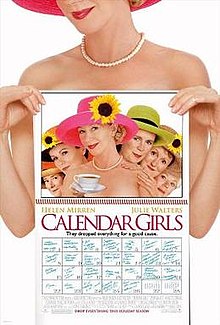
220px-Calendar_Girls
Calendar Girls

Calendars are also very good for creative businesses and we buy a design that really resonates with us.  We love creating and buying them for fundraising appeals. When I was fundraising for a local charity, our joint-chair was a graphic designer who thought of producing a calendar with major relevant celebrations and to create awareness on topics during the year. There was a lot of research work involved with all the factual information to incorporate into a calendar’s design, as well as making it aesthetically pleasing to the eye. No wonder that I look forward to receiving a new calendar at home each year.  We’ve heard about the film ‘Calendar Girl’ (which I haven’t seen as yet). Calendars are still a fab fundraising idea and a good revenue generator. As this Australian story of spunky firemen fundraising for local youths from the sale of their calendars. Calendars are also used effectively for raising awareness on social and politics issues, for example, the Macedonian Twitter Calendar combines nude art with information and fundraising. Now in its’ fifth edition, the Macedonian calendar has been donating the money from calendar sales to support various humanitarian causes over the years. You can also donate online without purchasing the calendar.

02fevruari
Source: Macedonia Twitter Calendar http://goli.n.ie.mk/2019/gallery.html

So now you know why I love calendars! Here are some of my favourite calendars at home over the last few years that I can remember, especially since starting my ‘Calendar Love’ tweets at the beginning of each month in the last few years:

Robert Doisneau – Year 2001 was a curated black and white photographic calendar entitled ‘Playground’ with photos of children that captured the humour, irony and emotion of their everyday lives mainly around Paris. Coincidently, I went to Paris for the first time that year and was inspired to take my own black and white photos there too.


This slideshow requires JavaScript.

Beryl Cook – Beryl was one of the first calendars I tweeted about each month and her images were funny and naughty. I frequently discovered digital artwork in online shops to link to my tweets, and also discovered a lot of art museums and online shops would have more details on the paintings about her and other artists.

Cook-Tea
Beryl Cook’s painting. Source: Wikipedia.

Alias – This German Street Artist was very edgy and used to thrill me each month as his images were very thought provoking on social and political issues. He frequently had images of children in very dangerous situations, which made me nervous but also concerned.

Alias_Boy_Sitting_Bomb_Street_Art_Berlin_Blog_post-1
Alias – Berlin Street Artist. Source – https://www.widewalls.ch/artist/alias/

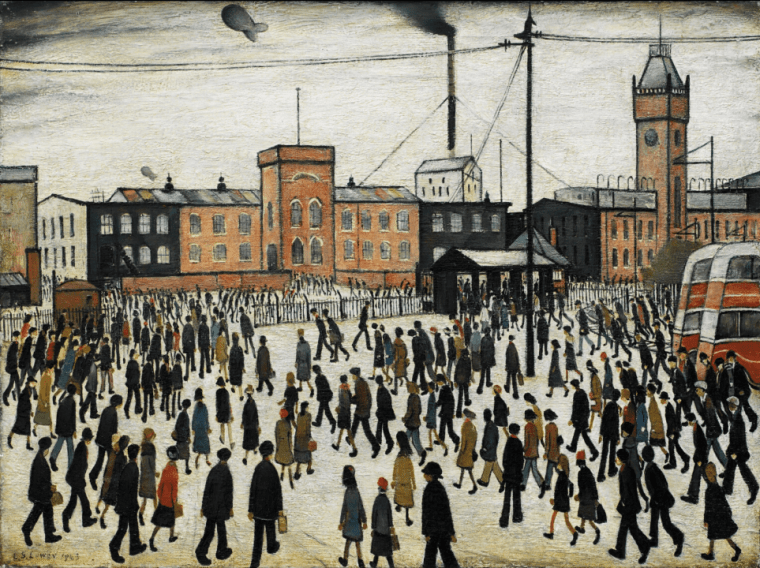
L.S. Lowry – Lowry was an artist I didn’t know much about prior to receiving the calendar, and he pictures were so representative of Manchester. I saw the landscape from his viewpoint as they showed the city’s industrial setting. I found out that year that he has a museum in Manchester and still hope to visit it one day. I also discovered that his mother suffered from depression and he painted in the evening after caring for her. He also suffered depression after her death. It was great he was successful despite his struggles.

Going_to_Work_-_L_S_Lowry

L.S. Lowry – ‘Going to Work’ 1943. Source: Wikipedia.

Claude Monet – Monet’s calendar was very nice to have, but sorry to say – it was underwhelming sometimes as I unable to distinguish his various water lily ponds (such a philistine I hear you say). However, I know now that he had a whole series of ‘Water Lilies’, and he painted them in the later part of his life when he had cataracts. The same year there was also a major exhibition in town and it felt good to know we had his calendar that same year. I was privileged enough to see one of his paints in the William Morris Gallery recently.

AAX
Origin Claude Monet painting now in The William Morris Gallery for the ‘Enchanted Garden’ exhibition.

Emma Scutt – A local artist from Walthamstow, Emma paints a lot of local landmarks and her attention to detail is amazing! She can be found in arts and crafts pop-up markets and her work is also stocked in local shops. I like that Emma shares her Calendar picture each month. I wasn’t even aware of her and her work before I started tweeting about Calendars but it is nice when I can rely in her timely shares, or the British Library tweeters to share information on the first of each month in true ‘Calends’ style!

This slideshow requires JavaScript.

Miroslav Sasek – Sasek is a Czech artist who apparently travel the world.  His New York City illustrations calendar 2017 was a souvenir we bought from the New York Public Library shop. As usually, I didn’t know much about Sasek before obtaining the calendar but I soon realised more about his work on global cities. It was such a pleasure to discover some of his wider international work and humour. Guess what too!? …We also have his London 2019 calendar but it will not be for tweeting as there is apparently another I will be sharing information about.

This slideshow requires JavaScript.

Japanese Woodblock – This was my calendar for 2018 and again it introduced me to a new style of art and the calendar actually had a short poem, which was a bonus! It contained images from masterful Japanese artists such as Katsushika Hokusai and Utagawa Hiroshige. The artworks feature elegant irises, cascading waterfalls and snowy landscapes, all created in a mesmerizing style and displayed with vibrant colours. Sometimes I think of Hokusai and how he started painting late in life – maybe one day I can too! He work is also popular and I can recognise replicates of his work better.

This slideshow requires JavaScript.

The next few days I will be getting use to new calendars at home and in the office.  I will also have digital versions at hand on my smartphone as well as my office computer. There is no way I can avoid using a calendar – I need them to keep me in check, organised and plan ahead. We all do! It is a joy to see a new image every month in my arty calendars and to know that it is a fresh start, a new season or even a new year. There are so many personal and business benefits for our timekeeping systems to work. With time ticking and the 2020s on the horizon, we can only take each day at a time. But do remember to say “Pinch Punch!” or “White Rabbit” on the first of each Calendar month.

This slideshow requires JavaScript.

Beautiful Creatures – making up is easy

‘I believe that all women are pretty without make up – but with the right make up can be pretty powerful.’

– Bobbi Brown, Cosmetics Entrepreneur

Make up has always been used by men and women to enhance our physical appearance for aesthetics and theatrics whether it is for pleasing ourselves, to attract others or to keep up with fashion. Doing our make up is not only a habit that is used to express ourselves, there has been numerous innovations throughout time in what is now a profitable cosmetics industry.

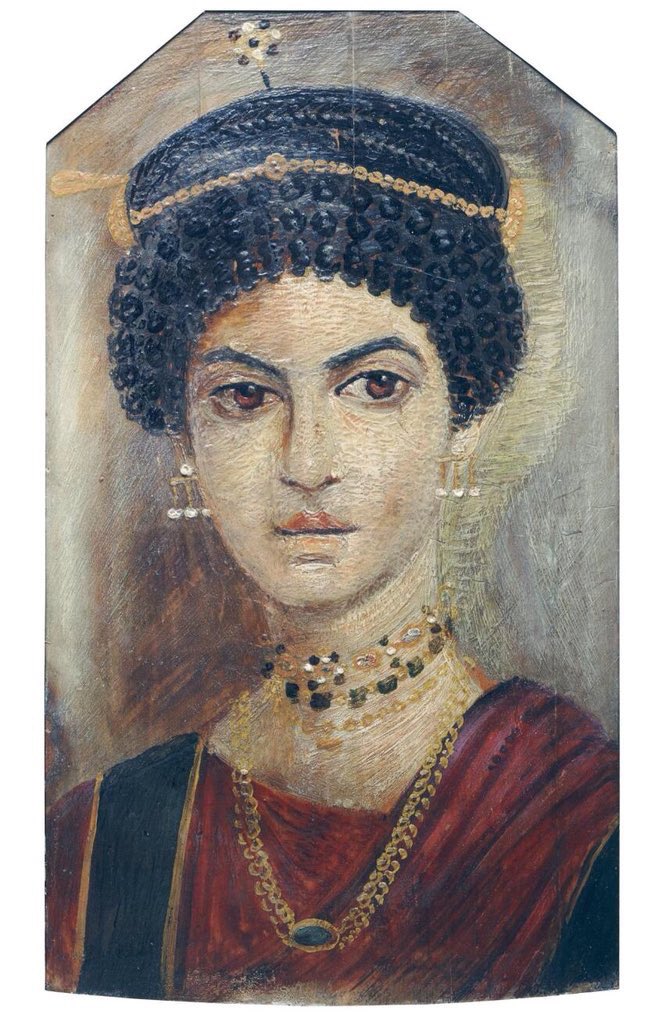
OAZJ98y6
Goddess – Roman Egyptian shared on Museum Week

In the book Painted Faces – A Colourful History of Cosmetics by Susan Steward, she writes: “In the past, cosmetics were just as likely to be worn as visible markers of social status or religious expression of gender, wealth, health and wellbeing: that is to say, the meaning beyond mere decoration. Women and, at certain times in history, men have applied cosmetics to improve. Alter, even to camouflage or disguise their appearance and have used cosmetics extensively to as a clue to their health, wealth and social status”. There is a long history of body adoration in all civilisations and make up has seen many innovations and developments in it base products. Susan Stewart continues “Dispute the rhetoric, in reality cosmetics formed an integral part of culture of the great civilisations of Greece and Rome under a variety of aromatic herbs, plants roots, flowers, woods, fruits, seeds, and gum resins for cosmetic purposes’. Even in the Roman times, beauty products were sold almost door to door by street traders as well as at regular markets in the town forums. The books presents the popularity and importance of cosmetics then: “In fact cosmetics, through increased trade brought about by the Roman Empire, became quite widely available. In short, in terms of cost and availability – there was something for everyone and everyone used cosmetics”.

This slideshow requires JavaScript.

With this in mind, there is no wonder I have a natural love of making up when I can. I already mentioned in this blog that in my childhood, I used to go home in my lunch break in my first primary school, and would occasionally put on my mother’s lipstick. I also used to like when our neighbour gave me a haircut and then I would get to wear a little lipstick that day. I also loved nail polish but in secondary school – there was a strict ban on makeup and nail polish at school. It is self-explanatory why I wear them most of the time now! My mother has a lot of sisters and this too influenced me to like ‘girly things’. Seriously though, in the late 1970s and early 1980s, my aunties would give us or pass on clothes, but also send packets of high-end branded makeup from Canada, such as Estee Lauder, Clinique, and Dior. I actually used to play with some expensive products then, and later realised that those products were high quality and expensive!

This slideshow requires JavaScript.

Avon was also sold by women agents who came ‘house to house’ in our village. Avon are still a business that has some beneficial strengths for cosmetics sellers, as well as buyers. There direct selling models are still unique today and is particularly useful for empowering women in developing countries. Marketline ‘Avon Products Inc’ reports: “Avon is the 5th largest beauty company in the world and is by far the biggest direct selling enterprise globally with 6.4 million active representatives, who then turn around and sell Avon’s lipstick and lotions to the end user”. The company went through a period of change at the 2000s but it seems to have survived with its’ core offering: “changing lifestyle and rising disposable income are leading to growth in cosmetics and personal grooming market. Increasing demand for events and parties with an increased number of beauty conscious customers, social status and emergence of ecommerce are aiding market growth. Unique business model supported by a portfolio of well-recognised brands in the market, has been enabling Avon to sustain its competitive position in the market”.

Therefore, Avon is a business model that enables women across the globe to ‘earn something on the side’ to supplement their income. I was truly surprised about 6 years ago when a local contact asked me to have a browse of her Avon catalogue. I have a constant demand for nail polish, so I ordered some good and reasonably priced Avon gel nail polish. I bought it intentionally to support her. I also met an employee of Avon doing research in the library where I was more than happy to tell her how well the brand is recognised and commended their Corporate Social Responsibility programme. Long may they reign with their flexible business model opportunities and branded products.

This slideshow requires JavaScript.

I have always worn a bit of makeup, but in the 1990’s makeup in the UK was not a big deal and I noticed that not everyone was ‘into it’. However in the last 10 years or so, cosmetics has seen a revival since the flamboyant New Romantics day of the 1980s. This has been helped with social media and the Internet. According to Global Data Online, millennials are spending more and engaging a lot on cosmetic products: “S-Commerce (social media commerce) is becoming integrated into everyday life and could be a long-term game-change”. Cosmetic fans are consuming, writing, reviewing it, promoting makeup on social media by blogging, producing videos, demonstrating live tutorials, and creating other exciting content.

Instagram is buzzing with beautiful tips and product reviews. I know that some people feel the pressure of social media and absolutely loath it, but for those who can handle its’ faults – it is great for getting creative ideas, especially for make-up. There are some good recommended blogs and web resources that are informative as well as full of inspirational ideas. Some of these are Marie Claire Best Beauty Blog, BBC Article and Guardian writer Sali Hughes on Beauty.

This slideshow requires JavaScript.

Superstar Rihanna has also created her own brand of makeup called ‘Fenty Beauty – beauty for all with a “focus on embracing products for a wide range of traditionally hard to match skin tones, creating formulas that work for all women and pinpointing universal shades”. The launch of Fenty Beauty was a sign of movement in the beauty industry, pushing more content for diversity in terms of colour, especially in foundation lines.

This slideshow requires JavaScript.

In Trinidad and Tobago, we have a long standing and strong makeup brand called Sacha Cosmetics. I remember buying some items in the late 1980s, especially as the colours are suited to women of colour. The founders of Sacha Cosmetics have received awards for innovation in products and entrepreneurial substance. I was also told by my friends that the company is one of the bestselling online cosmetics and has a successful market in the Caribbean, North American and Panama. My friend recently gave me some Sacha makeup that are world-class and ethically made cruelty-free.

This slideshow requires JavaScript.

Cosmetic are popular everywhere in the world and there is a thriving market for makeup artists. A lot of people have their makeup done by professionals for special occasions, and thay can come to you at your mutual convenience. Makeup artists can freelance and it is a viable business. You can also book a appointment on an app, or with a department store like Blow Ltd via Debenhams. If you prefer a more tradition make up advice or session with an expert, some makeup brands have them in store in their shops, such as in Chanel and MAC in St Pancras train station.

When I got into the music industry, I wasn’t focused on being the most famous artist or even getting a major record deal. It was just to make music on my own terms or create my own image, do my own hair, do my own makeup. – Janelle Monae

We can’t really wear makeup all the time, especially in our downtime. However, it is super that everyone can look after themselves with some TLC, and apply a little bit of makeup, if and when require. Makeup will always be important for personal and social reasons as it is a way to feel good about oneself, express individuality, allure confidence and make that fashion statement.

This slideshow requires JavaScript.

Makeup Is Art, Beauty Is Spirit.


The Bigger Picture – challenges, benefits and celebrating positivity with Diversity, Inclusion and Equity

Diversity is a fact, inclusion is a practice and equity is a goal –

Dereca Blackmon, Stanford

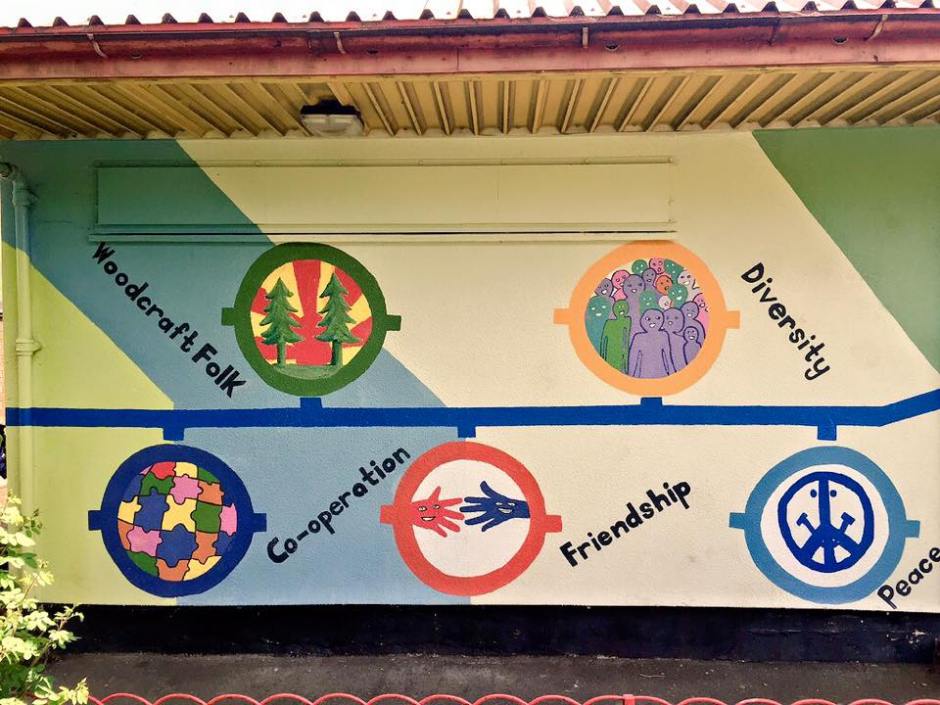
What do diversity, inclusion and equity really mean? …This is the question we might want to ask ourselves, especially in a diverse digitally connected world in the 21st century. It can be unclear why we even need to discuss this topic but it has been on my radar particularly since I was asked to take part in a SLA Task Force for Diversity and Inclusion in 2016. I was an honour to be asked, and I was unsure if I had anything insightful to contribute but to be honest, I realised that I was already championing the features of Diversity, Inclusion and Equity. We don’t usually need to disclose attributes of people, but for the purpose of this blog post, I have mentioned information on myself and gave a couple of real examples.

30704575_10215663001038257_1230337809080909824_n
SLA Diversity & Inclusion Task Force Participation in 2017

I am a little ahead of the game for some obvious reasons – I am female, an ethnic minority, working mother with a powerful diverse background of being a Trinidadian (other Trinidadians will understand what I mean with regards to diversity), married to a European, living in multicultural London…and I worked in world class libraries. I am heterosexual with no obvious disabilities. However we must remember that there are other areas of diversity and inclusion that is deeper than the physical and obvious. The point of this blog post is to discuss some of the challenging issues we face, but also to find examples of good practices and stress how important it is for information professionals to advocate, champion and stand up for diversity and inclusion for the communities and customers we serve. In this context, I am mainly discussing the business workplace and libraries with some principles for the wider society.
I need to do some more research on an official definition for Diversity, Inclusion and Equity as it tends to cover Equality rights and anti-discrimination policies. However there are some good pointers on this Wikipedia page, and the SLA Caucus page has a good example of the motive behind the topics. The term Equity is used more in the US, where I saw a good example on this voluntary sector site Independent Sector.

Freedom is Indivisible –Nelson Mandela


18222686_10212623229405866_1947407448995988051_n
Found in a Venue in Tottenham

My research also came across a motivating quote on Diversity and Inclusion at the closing keynote at the National Diversity in Libraries Conference, Los Angeles – Bourg, as a white, butch, lesbian, Army veteran, library director, and Hathcock, as a black, straight, cisgender, Christian, Southern, non-director, sat on stage and talked from the heart about the ways in which they are attempting to learn from and with each other along their varying intersections. Their work, said Bourg and Hathcock, begins first and foremost with an acknowledgement that “libraries have never been, are not now, and will never be neutral,” that whiteness sits at the heart of our society and therefore our institutions”.

This puts the topic in context and shows the library and information professional position on Diversity and Inclusion.   There is a quest of best practice by information professionals in being pragmatic with neutrality versus social justice for the communities who we serve in providing facts, unbiased and trusted information. For example, I remember being ‘as nice as apple pie’ serving members of the British National Party in a working library where impartiality and neutrality were the guiding principles. However at the same time, on balance I would advocate for libraries that were cut by mainstream Politicians and government policies. As I am aware, I still try in my own way to reach marginalised library users by stretching out.   There is a need to try to reach as many as possible, regardless of biases and background. This world should be a level playing field where everyone has a voice. We certainly should also stand up if something or if someone was harmful or threatening to others.

This slideshow requires JavaScript.

Looking at ‘The Bigger Picture’ shows that Diversity, Inclusion and Equity are progressive hot topics. It is important for us to think about these terms in the workplace as well as in society. There are a few events that I kept a close eye on social media recently, where there were online events advocating and discussing the topics. The UK Lib Chat Twitter talk on ‘Celebrating Diversity: supporting clients and broadening the profession in libraries’ held some great nuggets of thoughts on how we should implement this in this sector. It was also fabulous to see the tweets (Twitter @StemGameChange) shared for the Gender Diversity in STEM event at the Alan Turing Institute a couple of weeks ago. It was nice for the speakers to invite me in too but I was busy in my normal work, so could not attend. I also refer to CILIP and SLA Connect online community caucus on Diversity and Inclusion for best practices and information.

TDRqucyQ
Gender Equality in STEM at the Alan Turing Institute

So what is the problem? Why do we need to be reminded about Diversity & Inclusion? Harvard Business Review’s ‘Research: People share more information with colleagues of similar backgrounds’ states: “in the workplace, people tend to trust and attribute a higher status to colleagues whose cultural background are similar to their own. As a result, members of the majority national group – and minorities who share cultural similarities with the majority – also share the most information with one another. Whereas minorities with the most cultural differences are often attributed a lower status and information is withheld from them. This withholding can cause those from ‘low status’ minority groups to underperform and never reach their full potential”.

This is just one of the problems. There are other issues around privilege, recruitment, team dynamics, talent development, gender pay-gap, cronyism, cliques, tribes and exclusivity, which act as barriers to diversity and inclusion. There have been some progress and positive steps to have better talent and support systems, but this also requires diversity and inclusion to be fluid enough to filter to the top of teams and even executive boards. There is a lot of research that a more diverse board or top management around the table will have broader viewpoints and experiences, which will heed better business decisions that are best for an organisation.

WordItOut-word-cloud-3367559
Words in this blog…Diversity and Inclusion

Most of the research I read says that it is not always easy to achieve the right balance. “True equality is not taking away for one to give to another. It means having an equal voice, opportunities and rights”. There is a lot written on the ‘privileged’ White Alpha Male – a group that has long been overdone and it can be monotonous for the rest of us in the shadows. It is possible to seek more balance where anyone can get an opportunity to contribute and to harness talent. There is richness in diversity, inclusion and equity in all of this…if we are in it together. The demography, scope and locations of the global consumers are also more diverse in a digital world – and top management have to reflect and understand their audience, staff, customers, clients and stakeholders. We are not forgetting the White Alpha Male – we are simply including him in the mixture with a balanced and broader talent pool. We just have to make room for more diversity and inclusion.

This slideshow requires JavaScript.

In the article ‘While automation eats jobs, it doesn’t eat work’ on Equity: “companies are committed to a diverse work force for varying motivations. Some believe that diverse teams are just smarter and more creative… Other firms, especially technology companies believe that they are disproportionally responsible for designing the future and therefore it’s simply wrong to leave entire communities out of their teams”. There is also a positive outcome when people feel they belong – they perform better.

This slideshow requires JavaScript.

The other aspect of Diversity and Inclusion practices is that there are strategies for a supportive culture, with advocacy to maintain and sustain positive levels. It is recommended that organisations examine themselves and their policies for: “without them, diversity cannot be achieved because people will leave before they are given the opportunity to make a difference”.

Another piece of research by Culture Amp states: “Creating a workplaces that make people feel they belong. Without this, no matter how much diversity you might achieve by the numbers. You may find people feel disconnected, disengaged and prone to leaving your organisation”.

There is another issue of unconscious and conscious bias. There may be physical attributes to humans that make us compassionate and conscious to inclusiveness. At a Public Library Conference in the USA this year, keynote speaker Steve Pemberton (Chief Diversity Officer at GloboForce) explains: “the first picture you see of someone is not the full picture”. We come into this world with visible characteristics and diversity traits… but the real story is below the line: “This things you can’t see would be stunned to see how much commonality there really is, but it requires conversation and willingness to be open and to learn”. So with this in mind – an inclusive environment means providing everyone, no matter who they are with equal access. The richness of inclusion and diversity is below this invisible line: “Top of the waterline are people’s visible traits but below the water line many other invisible traits emerge, such as sexual orientation, beliefs and background”. Pemberton went on to say: “that we need to depend on each other and celebrate our myriad experiences because we all have something new to learn about the world”.

I may be thinking of a Utopian idea…but we can dream, and hopefully we can forget the hostile and divisive hot air that is currently blowing in parts of this world.

In reality, there is still some work to do. Libraries still play a large part in diversity and inclusion, and operate in one of the most open physical and digital areas you would expect to encounter. But we are still a profession in the English-speaking world that has mainly white professionals. It is heart-warming and motivating when I see social media shares from libraries in Trinidad and Tobago for their good work on diversity and inclusion programmes.

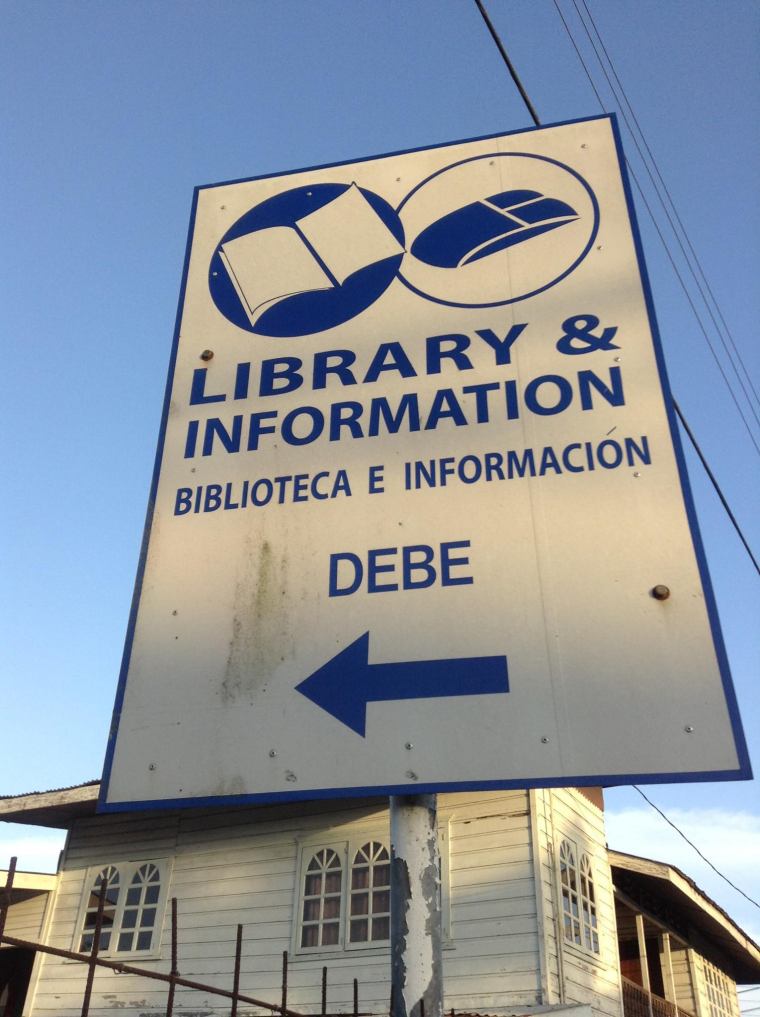
1233287_10201623268493718_1785335239_o
This way – Library sign in  Trinidad & Tobago

There are still vast issues, levels of poverty and access for customers in a ‘first world’ country like the United Kingdom. A multi-cultural and diverse content coverage should be programmed, but there are pressures on public funds. Socio-economic barriers prevent diversity in developing professionals and the communities they serve. Most of these issues are in disadvantaged urban environments where there are discourse for crime, low income families struggles, poverty, underprivileged persons and other societal disparities – therefore librarians act as a haven for promoting diversity and inclusion in their communities. There are other barriers like the digital divide, dyslexia, the elderly, literacy, languages, and physical disabilities. Some will be visible and some below the line. This may be a good point to acknowledge too that there are some people who may never come into the library, but there are still a large proportion of people who do see its’ worth and will continue to use them.

This slideshow requires JavaScript.

Therefore we must continue to be diverse, inclusive and equitable. Outreach and marketing work helps to reach marginalised communities which will foster positive inclusion for developing diverse professionals and customer bases. CILIP has a great page on the work they are doing in their diversity and inclusion programmes. It is motivating as an information professional that we are doing our little bit on the front line to help disadvantaged communities and individuals. It leads to better social cohesion, improve economic prosperity and the possibilities in a more level playing field in a diverse and inclusive society.

There are a lot of best practices out there for professionals and organisations to champion the business and corporate social responsibility (CSR) benefits for Diversity, Inclusion and Equity programming. These types of programmes are leading the way and act as a benchmark to adopt and ‘anchor’ in our businesses and mission. Some of these admirable organisations are Channel Four, Touchstone and Halebury. There are some tips on the CIPD factsheet, and the Gov.UK website as an employer.

This slideshow requires JavaScript.

So what does this all mean to us now? …There are a lot of positive policy, narrative changes, game-changers and professionals working to create more diverse and inclusive work environments. There are also inclusiveness programmes that are trying to balance representation, content, coverage and highlight diverse stories for personnel and patrons for all types of businesses. Some cynics may even be ‘fatigued’ by the words ‘Diversity and Inclusion’ and much more so by an inclusive agenda! However, if we don’t continue to encourage positive policy and action – we will end up with an echo chamber and miss out on the richness of celebrating our differences and similarities.

In the bigger picture – diversity, inclusion and equity have a lot of benefits and are the best ingredients for shared collaboration and empowerment of individuals and organisations. Embedded inclusion with a whirlpool of diverse talent makes life more interesting, and exposes us to fresh perspectives, bringing better understanding and with it respect, compassion and hopefully, greater all-round success.

VYD2m6qm
Welcome.


All you read is love – a reading challenge

One in six adults struggles to read. Reading Ahead supports young people and adults who struggle with the written word or who don’t read for pleasure. Reading Groups for Everyone celebrates all the good things that happen when people come together to share reading and Reading Well supports people’s health and wellbeing. Because everything changes when we read.

– The Reading Agency


It is always a challenge to read novels for leisure if you live a busy life at work, home and socially. If you know me, it would be evident that I spend a lot of my spare time listening to music, catching up on current affairs and pop culture. Therefore finding the time to read can be scarce and finding a good book is also a task. I may also work as an information professional in a library, but we are usually providing factual information and there is no time for lightweight fictional or even non-fictional novels during the day. Despite all this, I still want to make sure I spend some of my time reading those best selling books written and sold that are frequently presented to us as books we need to read before we die in a list.

This slideshow requires JavaScript.

Reading is beneficial to all of us regardless of age. So, one of my resounding wish each year is to read more novels. I obviously support reading and literacy for libraries, bookshops, the book industry and general community building. Reading challenges such as the Summer Reading challenge, and young people after-school programmes have also been set up by organisations to help children with their literacy. The Literacy Trust also has their ‘young reader programmes’ whereby corporations (such as KPMG’s Family for Literacy) help in encouraging young children to read…and it is also a good business Corporate Social Responsibly (CSR) initiative.

6PKShMSY
Hatchards, St Pancras Station

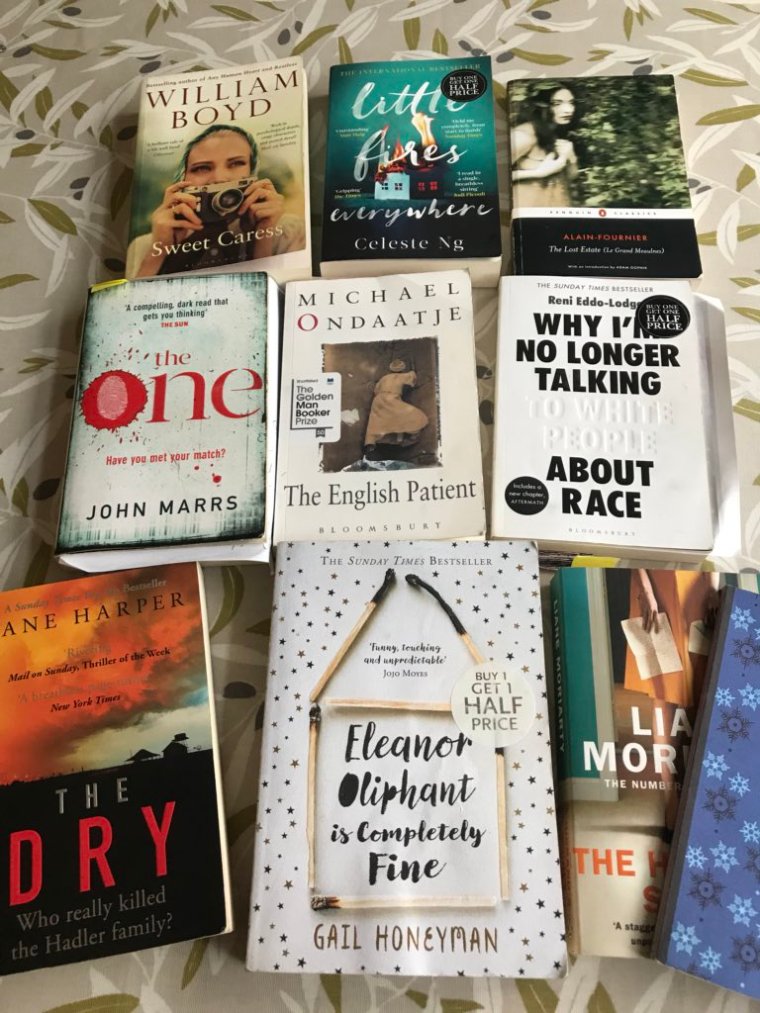
It was a real pleasure to receive a suggestion from our neighbourhood that we should form a new neigbourhood book club. We all agreed that when we joined that it was because it was not a snobby club, and we already knew each other well enough to feel comfortable to do this together. We started the book club about a year ago and it has been really good for me in terms of reading commitments to get the book completed for our discussion at the monthly book club meeting. We usually meet over some drinks in a local pub and dissect the book of the month. The books suggested by other book-clubbers may not have been ones I would have tried but after hearing pitches from other members, it helped us to decide which book to try. We do go deep into our literary critique of the characters in the story, setting, style of writing, offer any likes and dislikes about the book in question. We also catch up on what is happening in our neighbourhood, and wherever the conversation may leads us. It is only a short walk back to our homes at the end of the evening.

This slideshow requires JavaScript.

Given the choice with eBooks and kindles – I also know that I still prefer buying traditional hard copy books. Some of the book clubbers use a kindle. It is also interesting that some of the books have been made, or are about to be made into films, such as the Man Booker 50 Prize winner ‘The English Patient’ and ‘Eleanor Oliphant is completely fine. I also saw that Reese Wetherspoon has set up her own book club ‘Hello Sunshine‘ recently. All good for brilliant reading and researching material for film scripts!

This slideshow requires JavaScript.

Seriously, some of the great factors for the book club have been (1) for me to read regularly as a literature fan (2) help me support local bookshops (3) pass on books to friends and family and (4) stay in touch with the lifelong learning benefits of reading. It is also an interesting sense of camaraderie to know that a group of you are reading the same book and you are going to discuss it together. It does feel like schoolwork and homework sometimes when you have to meet the deadline! Having a book club definitely is a great incentive for reading, fun socialising and for community building. There are some fabulous tips about reading groups in the Reading Agency’s website.

This slideshow requires JavaScript.

I wasn’t always good a reading. I mentioned before that my first primary school focussed on maths but my second school focussed on literacy. After joining a new school at seven years old, I had to do extra reading with my mother to catch up with classmates for about a year. However as a teenager, I loved reading romantic fiction with other girls from school and in my neighbourhood. Yes, we studied serious English Literature up to A-levels but we still circulated and shared romantic novels such as Mills and Boon. I think I must have read about 1000 books in the 1980s! We didn’t have neighbourhood libraries to borrow books from then, neither mobile libraries. These books we good for light reading – but also increased my vocabulary and exposed other cultures, languages and places to me. I know that the romantic content and formulae story lines we not realistic, nor a true representation of real couples’ lives – but they were a fun way to spend a day or two reading. Another book club member mentioned that she loved reading and swapping these romantic novels when she was younger with her grandmother.

A male information professional friend who worked in Westminster Libraries in the 1990’s said that the Chinese community in Chinatown still borrowed a lot of Mills & Boon, and I think romantic novels are still kept in many local libraries to encourage writing them too. One of the book club suggestions I read recently reminded me of a Mills & Boon! Never mind. The main point is…I am reading novels regularly again.

This slideshow requires JavaScript.

I am due to recommend a book for my book and may suggest ‘The Lonely Londoners’ which is currently in the Windrush exhibition at the British Library. And I can’t remember if I have read it before. Or another book to suggest is ‘House of Mr Biswas’ by V.S. Naipaul, who recently passed away. We obviously studied him at school in Trinidad and being an exceptional writer – since his death, there are a few people who have told me how great a writer he really was. It was great to see Twitter light up with tweets about his books and their importance, as well as comments on his controversial personality. In July, the British Library usually hosts Africa Writes, which is interesting for books by other diverse writers. To be honest – I always come across something interesting and inspiring to reading in the library. It’s just the time required to read these good books!

This slideshow requires JavaScript.

As with everything, there are always persons who are less fortunate than us and any help with reading is a bonus. In our neighbourhood, we recently received a donated decorated reading bench and a children’s Little Free Library. It is brilliant to see people having a break to read and to receive donations. There was some vandalising of the books but hopefully this does not occur often. There are other free libraries in my neighbourhood for adults, the local library is well-stocked and the bookshop still has an immense presence and customers.

This slideshow requires JavaScript.

Another neighbour hosts a Rock and Roll Book Club with talks and events in the local bookstore. These are great initiatives that help in keeping physical spaces like shops, libraries and hard copy books thriving. Digital formats and cyberspace are great for literacy but they are too broad topics to delve into now, so they are other stories for another blog post in the future.

This slideshow requires JavaScript.

One good point about social media is seeing what other people are reading, or what is recommend by peers and libraries. The Orkney library (@OrkneyLibrary) always find interesting and funny trends to tweet to promote their books. In the meantime, I am happy that I am frequently reading for leisure and enlightenment with my book club – some of the books have been interesting for imagination as well as thought provoking. It also is a fun community initiative, and I get to support local bookshops.

ycMi-Bme
Read over a year

You never really stop learning and comprehending language and vocabulary. Reading new stories to understanding human behaviour is always exciting and informative too.  Therefore, there will always be a long list of books I still want to read. You may also have a list. Even if there is no book club – I’ll just have to make time, as reading should always be one of my top priorities.

“A reader lives a thousand lives before he dies, said Jojen. The man who never reads lives only one.”

George R.R. Martin, A Dance with Dragons

Baking – the secrets of success

Baking may be regarded as a science, but it the chemistry between the ingredients and the cook that gives desserts life. Baking is done out of love, to share with family and friends…to see them smile.

Anna Olson

There is something symbolic about cakes – they are made up of rich ingredients, made with love, beautifully designed and even better for us to taste and devour. It may be a naughty treat but we love cakes and desserts for social occasions. It is a fabulous time for us to share these fabulous concoctions with our dearest in celebration, or purely as an indulgent comfort. You may even want to eat your cake all by yourself…and that is perfectly alright too.

This slideshow requires JavaScript.

The market for cakes is booming and there are lots of innovations in the marketplace too. According to Mintel market research, the market for cakes is valued at £2.23 billion in the UK and it is predicted that over the next five years sales are forecast to increase by 6% to reach £2.36 billion in 2022. The reports states that 52% of people have bought a celebration/party cake in the last 3 months to December 2017. Cakes are also considered an essential part of special occasions. And apparently, most women think that high-quality ingredients and visual appeal are the most important factors. In terms of tastes and lifestyle choices, you can now buy all types of cakes – vegan, eggless, gluten-free and the good old-fashioned ones. There are many obvious reasons that we love cake, and the high street and pop-up stalls are reflecting our love of these old and new favourites.

This slideshow requires JavaScript.

Baking has so much excitement to it. It brings back childhood memories for me. I remember helping my mother and her sisters with their baking. They would give us some of the easy tasks to make us feel part of the process, such as cracking each egg individually to check if they were okay. Later on, baking cakes for Christmas was one of the most cherished memories I have with spending time with my mother. We were also told stories of older generations who baked with makeshift ovens made out of old steel drums, clay ovens or brick ovens.

Cakes are healthy too, you just eat a small slice.

– Mary Berry

Some of us may have had more baking experience in our ‘Home Economics’ classes in secondary school. I didn’t do this subject for O’Levels examinations in school but I still had a passion for baking and cooking at home, which I continued to develop more in my twenties. I have been taking photos of my earlier cakes before the advent of digital camera and smartphones. Instagram, blogs and other social media are one of the great contributing factors for the success of a new younger generation baking, and even taking up baking up as careers. Baking have also been helped with popular television shows such as the Great British Bake-Off (GBBO). I must admit I have never looked at a show but I have bought a book by winner Edd Kimber for inspiration a few years ago.

This slideshow requires JavaScript.

When baking, you really have to follow those tried and tested recipes. I still like referring to old favourites that my mother and friends have shared with me.   The Naparima Girls School cookbook was an old favourite for Caribbean recipes. I have also used the Internet to search for a particular type of cake – such as walnut and carrot cake, and for this chocolate Buntz cake I recently made. British chefs Delia Smith and Nigella Lawson are guaranteed to give you ideas, as well as the technical know-how on creating your perfect cakes. I have been speaking to a few young bakers – and they say that they tweak and innovate to make recipes their own. This is a sign of a confident baker!

This slideshow requires JavaScript.

There lots of competition in the market and so having your own style and brand is important. The recipe and the technical procedures for making these gorgeous creations are really important in business – they are your trade secrets. It is also recommend that you protect your brand by having your own trade mark and logos. There is the well-known case of the Jaffa Cake, which anyone can make as the initial producers McVitie’s did not trademark the name “Jaffa Cakes”, and so other biscuit manufacturers and supermarkets have made similar products under the same name.

Your recipes can also be your signature style. At the recent wedding of the Duke and Duchess of Sussex, baker Claire Ptak had her trade mark buttercream icing which makes you want to try her unique cakes. It is good to see that she had books you can buy and also the wedding cake recipe is listed on Hello’s website. I might just have to try this lemon and elderflower cake!

Cakes are also great for raising funds and other charitable causes. We had cake sales in primary and secondary school. Many schools have cakes at their fairs and a lot of organisations also hold fundraising days for raising funds for particular great causes. I am always happy to make cakes for charity and street parties. The array of cakes at these occasions make our eyes glow and our taste buds explode! Apple Day is a local community day held at the Vestry Museum in Autumn, when there are so many innovative and varied ways to create cakes out of apples.

This slideshow requires JavaScript.

Cakes are also a metaphor for knowledge management. I remember discussing the recipe for cake at a Knowledge Management forum held by David Gurteen or my ex-employers – the point being is that the recipe is shared but the know-how and the practical steps, sourcing ingredients and techniques are added-value insights and skills. This type of tacit knowledge we may want to share verbally with our friends, and may even show them baking tricks. Still, we may ‘follow the recipe to the T’, but our cakes may look differently for reasons unknown. There may be other factors contributing to changes such as the oven, temperature, process, ingredients, tools etc. These challenges certainly make baking interesting.

A cake is a very good test of an oven: if it browns too much on one side and not on the other, it’s not your fault you need to have your oven checked.

Delia Smith

This slideshow requires JavaScript.

Cakes are great for selling in pop-up shops, market stalls and in artisan bakeries, whether on the high street or made-to-order. Cupcakes have had a revival over the last decade and had inspired a new generation of bakers, entrepreneurs and cake aficionados. Seriously…who doesn’t like cake?

Having cakes as a business certainly changes things for me I don’t now sit at home doing a cake for the fun of it anymore. But it’s an extremely happy and pleasureable business to run because people are generally buying cakes for celebrations.

Jane Asher


This slideshow requires JavaScript.

There are some tremendous bakers out there and they are far better than I can possibly be. I still bake regularly at home when I have guests, or for a particular occasion. There are some fabulous gadgets and kitchen aids on the market and it has always been one of my ambitions to own a fancy kitchen aid. Maybe one day I will own one of those bad-boys!

Cakes are so visually appealing. I sometimes feel bad sharing photos of food on social media, but then I see other inspirational cakes by foodies. I too get inspired and want to try new recipes or flavours. The best thing about baking is that there is an interesting reward at the end for your efforts. Enjoying the occasional cake with family and friends are some of the best moments in life.

Let’s face it, a nice creamy chocolate cake does a lot for a lot of people;

it does for me.     Audrey Hepburn

This slideshow requires JavaScript.

Fake News – fighting the information war

The news has always been exposed to manipulation to exert power, influence and score political points. It is not a new phenomenon but due to developments in the internet and social media this has been exacerbated as anyone with a smartphone has the ability to share content knowingly or unknowingly. Propaganda, misinformation and censorship are old tricks for information tactics, but in today’s world it is deemed the ‘golden age of fake news, alternative facts and post-truths’. Anyone can disseminate content digitally that may be appropriate or inappropriate. It will also hold the biases and interest of the person(s) sharing it. Sometimes it may be governments or companies that have a vested interest for profit in having us believe false information. The challenge about news in an ideal world is for us is to be truthful, open to criticism and have civilised arguments without inciting harm or violence. Otherwise perpetrators of false news should be prepared to pay the consequences.

u8jc7mFv

The Internet and social media platforms should not take all the blame – there have been positive outcomes if we look back only few years, such as The Arab Spring. Internet credibility was something we had to deal with in the last 20plus years as information and knowledge professionals. The same applies now. The current tone and mood highlights that we should be aware a lot more about ‘Fake News’.

So what is Fake News? Not surprisingly, searching our research databases in the library, there is a lot of commentary and articles on the topic in the last couple of years mainly due to political campaigns on both sides of the Atlantic (and the world no doubt).

Fake News definition:

false, often sensational, information disseminated under the guise of news reporting. Harper Collins 2017.

Webmaster Jeff Wisniewski at the University of Pittsburgh is on point when he writes in Online Searcher.Net Jul-Aug 2017 in A Matter of Trust: a Webmaster Perspective’ – “Fake News, information created that is either deliberately false or intentionally misleading predates our online world. Its’ become such a concern recently because the internet makes it exceptionally easy for misinformation to be created and widely distributed, which in turn makes it harder to verify the presence of the good stuff. If you think this might be problem for the young who haven’t as yet developed these skills: the old, for whom the internet is relatively recent phenomenon; or the less educated, who haven’t been exposed to academic rigor, think again”.

Here I am hoping to highlight some of the issues we all face, and as a reminder that the responsibilities lie in good ethics for companies, politicians, journalists, academics and most importantly – libraries and the role librarians play in empowering over ignorance. It is great to see that a lot of the materials I read refer to digital literacy, fact-checking and searching for quality information. Fake news may be a ‘bad thing’ but it is a blessing too to remind everyone of the underlying skills such as literacy, fact-finding, analysis and even more relevant…critical thinking, which all needs to be honed. Mick O’Leary writes in Information Today Oct 2017 in ‘Fact-checker resist Alternative Facts’– “No, it’s not all the president’s fault, although he is the leader of the pack. People on all sides subordinate facts to passions and politics. Fake news and lies abound, disseminated from all quarters and driven by greed and partisanship”.

2gI9CzZT
London Underground Train Poster

Some of the issues and consequences of Fake News is that it affects our democracy, evidence based-decisions and facts which can be harmful if applied generously. False reporting is blindly encouraging parts of the population to remain ignorant on the issues that directly affect them. There will still be people out there who would fall foul of propagating fake news, but we should not find this discouraging. It is an era of post–truths. With time, we still have the fact-checkers to verify an issue, even if points of view still remain the same. We are a free society after all.

juzKesLj
Free Press.

So why share fake stories? Apparently there is an interesting answer put forward by Jimmy Wales, Founder of Wikipedia. When asked recently about internet users unknowingly sharing false stories – Wales replies “Yes, well, that’s just human life. All of us have a few idiot friends and now they can share stuff on Facebook. The thing is, it is easy to be condescending about these people and to joke about these people. But the truth is, in free societies, people have a right to not be interested in the news. But when you’re not that interested in the news and you do decide, ‘hey, I think I want to find out some information,’ you deserve to get quality information. And that’s what we’ve really been lacking”. So part of the answer may lie with good journalism, collaboration and research skills.

The other issue is with the growth of social media – there is intensity and traction with our biases.   Generally, we follow and connect to people who are similar to us and therefore only see or hear points of views that we are exposed to. Social media tend to be mostly an echo chamber for our own views. We should challenge, discuss and converse with people who have a different perspective, but do try to avoid trolling.

Social media platforms have come under attack with the rise of fake stories. Facebook was aware of this as they placed adverts in national newspapers on the run up to the UK 2017 general elections. Social media precaution has also been in the news recently on the related issue of the use of our data and algorithms. There is a lot of power and money in such large networks of people who are actively engaged on social media. Unfortunately, there will always be predators who want to manipulate us. I have certainly shared my point of view on the recent exposed Windrush Generation scandal. I knew it was a concerning when I saw the Trinidad and Tobago High Commission in London share an update about an amnesty petition in their news feeds. It was one of the saddest and biggest stories being shared by my network on social media, and not just in the UK. This is an example of my social media use for news and for when the lines become blurred between what is relevant to me, and concerning politics. I saw very little fake news on the Windrush Generation. It was mainly real news being shared on social media. All in all, it is a very sad true topic.

bt-26-12371
Empire Windrush Records – http://www.nationalarchives.gov.uk/education/resources/bound-for-britain/source-3/

The other major issue is propaganda and censorship. In time of sensitivities – the truth gets manipulated, measured and withheld which leads to misinformation, propaganda and mistrust. It won’t be uncommon to say that there are also ‘little white lies’. It is an old technique for keeping order or even protecting us from facts, in a twisted way. Fake news may certainly be in our dialogue, but lies are not new. The liar’s tools are new but it is an old problem in the information war. It is also our own responsibility to censor and self-regulate our opinions with time sensitive and appropriate information in relation to our communication strategy, if there is one.

So where do we go from here? Most of the resources I read suggest that we build trust. I do have a personal motto to be as genuine as possible, and seek the truth where I can personally and professionally on social media. Like Jimmy Wales’s article above, Wisniewski also has some good pointers to check information that include:

  • Accuracy – The source is error-free and the information can be verified using other sources.
  • Authority – Where are the author’s other credentials? Are they qualified to write on the topic?
  • Objectivity – Is it clear what the purpose of the content is? It is fact or opinion?
  • Currency – Is the content up-to-date?
  • Comprehensiveness – What depth of information is provided?

This is an opportunity for webmasters, journalists, librarians, and other similar professions to advocate trustworthiness and credibility. It is also timely to promote digital literacy skills for Joe Public, and for students in higher educations. I saw an advert for a library training users to spot fake news which rightly stated – “Fakes News permeates our media. It’s important to learn how to differentiate actual news from fake news, as misunderstanding news can have real-life consequences”. False information is one of the dreaded crimes that a librarian can ever knowingly give to a library user.

GZBV_Hl5
Facebook’s Top Tips to Spot False News

It is also the responsibility of social media platforms to monitor and prevent viral fake news. I read that Facebook have rolled out a tool to mark stories as “disputed” and shows them less frequently on users’ news feeds. Facebook also ran newspaper ads titles ‘Tips for spotting false news’. They want us to get it right as “people want accurate information on Facebook, and so do we’. Among the 10 suggestions included – look at the source of the website, check if the photos are manipulated, check the date of the content, make sure that the article is not satire and be sceptical of headlines. Should you care…if we can get these tips right, it would be good for Facebook too. I can laugh too about meme shares on Facebook like the one below, ‘fake rice‘ and real ‘fake’ people too!

This slideshow requires JavaScript.

So can this really work? There is an argument that journalists embedded in political campaigns used Twitter for timely updates and analysis and therefore they can easily be found on social media in real time right in the heart of the action. Similarly scientists, authors and artists increasing use social media to communicate with each other. The point being is that not all accounts on social media will be untrustworthy. Information literacy is also a key factor for positive changes in the future.

This slideshow requires JavaScript.

Mark Roquet writes in ‘What Happens Now? Fake News, the Gross Internet, and What to do about Information Literacy’ in Info Today March 2018 – “Librarians and other adults have often developed habits that protect us from some of the ugliness of our digital society… We must take some responsibility for the hate and ugliness our students encounter online and equip students with the critical skills and orientations required to fix internet ugliness rather than fall for the worst lines”. Mark also lists other fact-checking and digital skills that we can equip the youth of the future. If we up-skill the next generation, hopefully we can have radical new information literacy skills that prepares students for our current world. It may be in better hands in future.

There are counter fake news initiatives that are being provided by governments everywhere from Sweden, Malaysia, the United Kingdom – and hopefully many more countries. Companies and professionals should also understand that information is integral to the very fabric of our lives. We all have the responsibility and obligation to share and provide content that is truthful…and prevent the dissemination of false information. We may not be able to do so always in the real world, but we should keep our ideals and ethics as life moves more digitally. This is not a war we can win easily, but the consequences and responsibility lie with each one of us to remain truthful when sharing information.

Shake, Rattle and Roll – Dance until you drop

Dance, when you’re broken open. Dance, as if you’ve torn the bandage off. Dance in the Middle of the fighting. Dance in your blood. Dance when you’re perfectly free.

– Rumi

I have now come to the point in life where wisdom makes me see and appreciate the more important and finer things in humanity and life – Dance is one of them. Those of you who have known me since a child would recall that I have always loved dancing. We have danced together in our homes, schools, at parties, clubs, on the street and even in our kitchens. My parents were keen dancers and even my mother showed us the steps to calypso and meringue dancing. Apparently, my paternal grandmother was a dancer, which explains a lot of my family’s enjoyment in dancing – it must be in our DNA. My only regret is that when asked by parents on whether I wanted to take classical Indian Dance lessons…I said no. Recently my mother reminded me of this to my horror and deep regret. However, it seems like every week this month I have been to a musical event or dance show at the theatre. That is exactly the way I like my social life – with some form of dance or music.

This slideshow requires JavaScript.

In this post I would like to cover some of my thoughts and activities on dancing. As an art form, we should support the performing arts, venues and persons who facilitate and teach dancing for its real cultural, financial and emotional value. Dancing also helps us lead healthy lives, feel happy, keep us entertained and improve our general well-being regardless of age, background, geographic locations, ethnicity etc.

Dance is like time itself. Just like our solar system – dancing has been around for as long as humanity as an art form of performance, expression, social interaction, connection, rituals, entertainment, spirituality and a reflection of life. According to Dancefacts, the oldest evidence of dancing comes from the UNESCO listed 9000 year old cave painting that are found in Bhimbetka, India. The rock painting depicts scenes from hunting, childbirth, religious rites, burials and most importantly, communal drinking and dancing.

Rock_Shelter_8,_Bhimbetka_02
Bhimbetka Cave Drawing, India

Fast forward to the ancient Egyptians and Greeks also showed proof of the development of dance in their culture – most notably at the start if the ancient Olympic Games. Dance integrated with drama in theatre, music and other celebrations through to the western world with ballet in the 18th century. Other 20th century two-person classic dances such as the waltz, foxtrot, tango, Charleston, swing, hip hop, breakdancing etc may be more familiar to us. Dance is ever evolving with new trends, moves, beats and influences. There is a 21st century fascination with popular viewing of dance competitions in our living rooms with the television programmes like ‘Strictly Come Dancing’ in the UK and ‘Dancing with the Stars’ in the USA. We still go to see dance in theatres that tell us stories, showcase professional talent, or simply, we participate in dance to celebrate life.

This slideshow requires JavaScript.

My parents would take me to see dance live shows in Trinidad such as the ‘Mastana Bahar Pageant’ and touring Indian dancers. African dance traditions are also celebrated in the ‘Best Village’ competitions that I saw on Fridays on television and inspire Carnival moves like the Moko Jumbies. There was also a Latin dance tutorial television series on Monday nights, but I can’t remember the title of the show. Dance is still very much part of the social life in Trinidad and integral to the Trinidadian psyche. There are few people there who cannot move in time to the beat regardless of background or age.

This slideshow requires JavaScript.


Let us read, and let us dance.

These two amusements will never do any harm to the world.

– Voltaire

Currently, Dance is an important part of our both our everyday sports and culture without us noticing it. It makes up a large amount of a theatre repertoire with music, acting and other stage production. According to Statista, 22% of the UK population went to a ballet, a dance performance or an opera annually. In 2016, 7.9% of adults participated in a form of dance other than for fitness. Dance has also evolved and morphed into some major fitness exercises such as Zumba, Body Step, Street Dance, Soca dance etc. According to Statista, “the most common reasons to choose a style of dance fitness is the music, of which Fitsteps and Zumba appear to be on the rise in popularity among dance fitness professionals”.

In terms of my own fitness goals – I should try to make time for dance fitness lessons and will try to be more proactive about this as a new Salsa class has started in my neighbourhood. I am certainly a freestyle dancer as I have little professional experience. However, I have immense admiration for professional dancers who have followed that dream and trained long and hard.

I took salsa lessons locally between 2001-2003 every week, and even went to some central London dance venue as I got to a fairly good level. However, I haven’t taken dance lessons since then…but may take up salsa lessons locally again with ‘The Salsaman’ dance trainer. There are also a few local community dance groups in my neighbourhood that use social media to effectively promote their classes. Zumba is another fitness-dance form that has taken over the world in the last decade.

This slideshow requires JavaScript.

Big business also uses dance for capturing our attention with engaging adverts. Multivitamin brand Berocca introduced a new brand character, Roccy the Chameleon, in March 2017. Their effective use of the eye-catching Chameleon dancing and body popping moves to Punjabi music, communicated how the brands supplements can help to combat tiredness and fatigue, and ended with the tagline ‘Be more Berocca’. They also ran a marketing campaign that was supported with social media activity, and ran advertisements on the London Underground to target commuters who are a key audience, according to Mintel (Vitamin & Supplements 2017). There are other fabulous creative uses of dance in advertising, such as some of my favourites like Guinness, Adidas, Pepsi.

In my work-life, I have taken part in line dancing, loved the Big Dance initiative and attended a Georgian Dance talk and demonstration. Dance is serious stuff too!

This slideshow requires JavaScript.

If you are in contact with me via social media, you would see that I am frequently out ‘socially’ at local events and Caribbean parties. All good for the the nighttime economy. In the last few weeks, I have attend the following events where I was able to have a little dance:

3 March – YSBD (You should be Dancing title inspired by Saturday Night Fever) which occurs regularly at the Walthamstow Trades Hall. It is usually for adults with cheap entry fee and drinks. I also don’t have very far to go for a fabulous little boogie.

10 March – Chutney in London at Funky Brown in North London was an opportunity to catch up with my West Indian friends and to enjoy some Chutney Indian Caribbean fusion music and dance.

16 March – Rose and Crown for a birthday party where the DJ were playing Northern Soul Music and general British Pop music. I can always judge a fab party when I stay later than I intended.

4 & 23 March – Mirth Marvel Maud theatre for live band Dennis Rollins and Funky Funk, which eventually got us all to our feet. And Jazzy B’s DJ set, the entrepreneur and musician behind Soul II Soul, who played some fabulous soul and neo-soul music. There was one track (I wasn’t aware off) which had the crowd buzzing.

17 March – ‘Tango after Dark’ show by Sadler’s Well at the Peacock Theatre. This was an Argentinian touring group with sizzling dance choreography accompanied by a live band and singers. It was a treat to see, and reminded me of other gorgeous Latin dance troupes ‘Brasil Basiliero’ and ‘Havana Rakathan’. I also have been to see Swan Lake by Walthamstow’s Sir Matthew Bourne a couple of years ago. So do keep an eye out for Sadler’s Well shows.

This slideshow requires JavaScript.

And those who were seen dancing were thought to be insane by those who could not hear the music. – Friedrich Nietzsche

These are just simple ways I can still enjoy my passion for dance with music, and it certainly won’t be the last I mention it. Again, I find that there is so much on dance that I can write about. I am sure to return to the topic again. Dance will continue to fulfil us with joy, entertainment, inspiration, enlightenment, togetherness and connectivity with other cultures, humans and music. We should seek to support dance companies, professionals and the art form itself. If like me, you just like to have a little boogie when you can – just do it! And be sure to dance until you drop.

This slideshow requires JavaScript.

Women’s Health – raising awareness, challenges and opportunities

“I’m interested in Women’s health because I’m a woman.

I’d be a darn fool not to be on my own side.”

– Maya Angelou

I am astonished that women are still struggling to have high levels of healthcare in the 21st century. Yes, we have come a long way in understanding our own bodies and the healthy lifestyles we need to lead, but despite the advances in Women’s Health – there is still progress to be made and we sometimes get a bit complacent with our own lifestyles choices. I don’t think we can ever stop improving our levels in health facilities and education. And so we will always aim to advance health programmes, especially in less developed countries of the world. There is an essential need to be open, transparent and to have this conversation. Our vaginas, breasts…and whole body need attention throughout life.

The last few months has provided a lot of inspiration for me to write this post. I have the following great examples of women helping other women, and also raising awareness in on health issues using traditional and social media to keep us engaged and to get their messages out. These are new channels to reach out to women, and girls. It is also encouragement to take the initative to have ownership of our health and bodies. With women constantly facing challenges in our life cycle – here are some of the amazing examples of positive action where women are helping other women to take control of their own lives and destiny. Some of the health issues on here are easy to write about as I feel compel to share the amazing work going on.

A gynaecologist relative, Dr Sabrina Ramkisson, proactively campaigns to raise awareness on women’s health issues, especially Cervical Cancer Screening. Sabrina regularly use tradition and social media to inform and empower women and girls to stay ahead on their health. She organised a 5K ‘Smearathon’ for women and men last August in the Queen’s Park Savannah in Port of Spain, Trinidad. At the event, there were other gynaecologists to offer advice, on-site smear booths and some fun activities. Sabrina also successfully hosted the digital #SmearforSmear lipstick campaign to remind and encourage women to take a regular smear test to prevent cervical cancer. I was able to take part here in London, and she also shared photos of other women in Trinidad & Tobago and other countries, who smeared their lipstick.   It was a visible bond and showed support for women who took part.

This slideshow requires JavaScript.

There is a decrease in the number of women and girls who are not taking their cervical cancer screening. Therefore, it is with greater impetus and purpose that campaigns like these are being transparent with much fervour. Jo’s Cervical Cancer Trust is a UK charity set up by a co-founder who has survived cancer, and they also aim to raises awareness of cervical cancer with active campaigns. The charity founded the #SmearforSmear campaign which is run in January for Cervical Cancer Awareness. It was an utter pleasure to see #SmearforSmear trending on Twitter last month as the figure for women taking a smear test was in decline.

This slideshow requires JavaScript.

Only yesterday I read an article about comedian Karen Hobbs, who was diagnosed at 24 years with cervical cancer. Luckily she is another cervical cancer survivor, whose blog and performance urge you to not be embarrassed about your smear test. Karen has also been praised by The Eve Appeal for making light the serious topic of cancer.

I also know the lovely Claire Mcdonald, who is working on changing behaviours, cancer prevention and raising awareness in health. Claire and her colleague Sinead recently visited me at the British Library to find lifestyles information for women and girls for their awareness campaigns on Jo’s Trust and Coppafeel, the Breast Cancer Prevention Cancer charity. They were particularly interested in demographics that will help them target their audiences, and their health messages. They were looking at factors such as reproductive behaviours, poverty, income levels, age, geographical locations and other factors that may affect a woman’s health. These bring the questions: Do women share a bath? Would they have time to ‘do the check’ on their breasts? How many persons are having children at a younger age that may prevent cancer? Are they smokers at a higher risk level? Questions needs answers.

WH18
Do the Check! – Coppafeel

The library is useful for helping in researching these issues. For example some golden information nuggets in Mintel’s ‘Marketing to Women February 2017’ are:

  • the age of motherhood continues to rise “although 2015 saw a slight increase in the number of live births, the average age of motherhood continues to rise, reaching 30.3 years”.  
  • social media stars are feeding a culture of health and wellness amongst young women
  • on ‘Period leave’ – the issue of period impacting on women’s sports performance with Heather Watson and Fu Yuanhui both blaming their period for their underperformance, whilst marathon runner, Kiran Gandhi chose to freeblee for the duration of the London event
  • 16-34 years old are most likely to use or be interested in using apps that help anxiety or stress management
  • ‘This Girl Can’ campaign helps to get female more active with 16 million people aged over 16 play sport on a weekly basis

Looking at these lifestyles choices and demographics inform their messages in campaigns. Claire said something touching to me on young women…”You don’t know who is coming up in the world under you and you must take them along”. The best way to prevent poor health is to inform people of good healthy moderate habits. Cancer Research also organise 5K or 10K ‘Race for Life’ runs to raise funds for research, which are very popular with women. As the old adage goes – Prevention is better than cure.


There are still so many women in the world who also cannot afford menstruation products – therefore being open and discussing this in the mainstream is great for breaking barriers.

I also know the founder, Mandu Reid, of the menstrual cup charity ‘The Cup Effect’. Mandu foundered this charity that aims to change menstrual behaviour by empowering women and girls to use a menstrual cup, and protect the environment – that is synchronicity! The charity also uses the income raised to help women in ‘period poverty’ in the UK and in other less well-off parts of the world. Mandu also takes part in active campaigning, and again it was recently publicised in this brilliant article in The Guardian newspaper. To put some zest in this good work – Mandu also invites you to come to her Cupaware Party with friends.

Menstrual Cup
An Ergonomic menstrual cup  
The invention relates to a menstrual cup (10) having a bell-shaped lower part (20), comprising a plurality of non-convex grip surfaces (22, 24) which are distributed in a substantially axisymmetric manner at least over said bell-shaped lower part (20), and designed so as to be able to be pinched by the user’s fingers in order to facilitate the removal of the cup. Source: Espacenet.

Growing up in Trinidad, the girls in my school and neighbourhood circulated a famous book on puberty called ‘Growing up and liking it’ – see the link for past versions. It was in an easy-to-read format, and was instrumental in educating us on menstruation, pregnancy, menopause and what to expect of our bodies. We were fortunate to have mothers, sisters, aunties, friends and teachers at school to inform us too. Sadly, some countries still don’t have basic adolescent and puberty education, and so these challenges still exist.

WH15
Growing up and liking it – Museum of Menstruation and Women’s Health.       http://www.mum.org/GULIcov.htm

In all these Women Health issues, there are still opportunities to create charitable and profitable businesses. I have recently conducted some business research on these very issues. Again, only recently I have encountered ‘Fab little Bag’ whose mission is to stop pollution caused by flushed sanitary items: to make an awkward disposal into a fab experience…and to break down the barriers to promote female hygiene. You too might start to see their product in toilets across the country. These are the opportunities that entrepreneurial women are taking to help other women.

Women’s Health is too vast to cover as a one-off topic. As we enter the theme ‘Press for Progress’ for International Women’s Month in March 2018 – there is so much we can be thankful for in developments in research, health screening, hygiene etc. It is even better that we can rely on each other to talk, communicate, lobby, and raise awareness on Women’s Health to those near…and far to us. Pressing ahead, looking after ourselves is the best gift we can give ourselves – making time for our health and happiness should be top and number one on our To-Do-List!